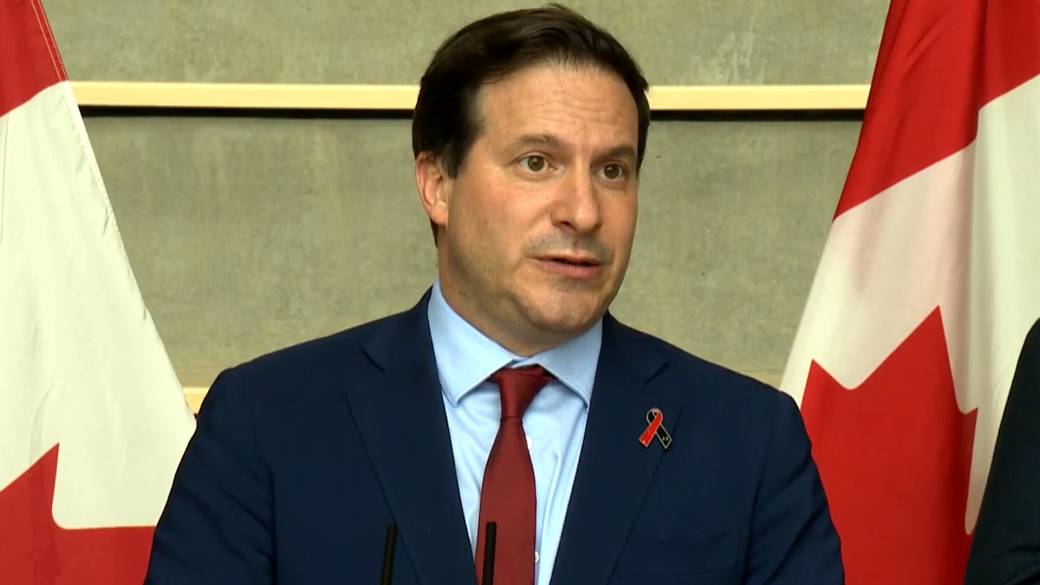
Supreme Court of Canada to hear challenge of Ottawa’s firearms ban | Globalnews.ca


The Supreme Court of Canada agreed on Thursday to hear a challenge of a Liberal government ban on firearms models and variants it considers fit for the battlefield, not hunting and sport shooting.

Supreme Court of Canada to hear challenge of Ottawa’s firearms ban  | Globalnews.ca

The government banned the use, sale and importation of 1,500 firearms models and variants in May 2020. The move was generally applauded by gun control advocates as a first step toward removing firearms used in mass shootings from circulation.

In October 2023, a Federal Court judge dismissed a request to strike down the ban as unlawful and beyond the scope of the powers delegated to the federal cabinet.

A not-for-profit advocacy organization, firearm owners, businesses, hunters, and recreational and sport shooters appealed the ruling.

In April 2025, the Federal Court of Appeal rejected that challenge, saying the Federal Court delivered “thorough and persuasive” reasons.

Story continues below advertisement

The list of guns outlawed by the Liberal government has grown to more than 2,500 varieties of what it calls assault-style firearms.

Government officials say some 19,000 unique makes and models of non-restricted firearms remain available for hunting or sport shooting in Canada.


Click to play video: 'Gun control: Canada adding 179 types of firearms to prohibited weapon list'


Gun control: Canada adding 179 types of firearms to prohibited weapon list


The Canadian Coalition for Firearm Rights said in a statement it was “thrilled” with the court’s decision to hear the appeal.

Get daily Canada news delivered to your inbox so you'll never miss the day's top stories.

Get daily National news

Get daily Canada news delivered to your inbox so you’ll never miss the day’s top stories.

“This is a pivotal moment not only for the hundreds of thousands of licensed firearms owners affected by the ban, but for the rule of law and the proper limits of executive power in our democracy,” the statement said.

The group said its challenge is focused on questions about the government’s authority to make decisions through orders issued by the federal cabinet.

Story continues below advertisement

The coalition says such orders are “executive instruments meant for implementation and administration, not for enacting broad, permanent changes that affect thousands of law-abiding citizens and ban billions in private property.”

A spokesperson for Public Safety Minister Gary Anandasangaree did not immediately respond to a request for comment.

Prohibited firearms and devices must be disposed of — or deactivated — by the end of an amnesty period on Oct. 30.

The government is implementing a buyback program that offers gun owners money for turning in or permanently deactivating firearms.


Click to play video: 'Gun buyback under scrutiny as costs and impact are debated'


Gun buyback under scrutiny as costs and impact are debated


Individuals have until the end of the month to declare interest.

A key element of the case before the Federal Court of Appeal was whether the government adhered to a provision of the law forbidding it from using regulations to outlaw a firearm if it deems the gun “reasonable for use in Canada for hunting or sporting purposes.”

Story continues below advertisement

Writing on behalf of a unanimous three-judge panel, Court of Appeal Chief Justice Yves de Montigny said he was not persuaded that the government erred in considering public safety in assessing whether the prohibited firearms were reasonable for use in Canada for such purposes.

“It may well be that, from the sole perspective of a sensible hunter or sportsman, it makes no sense to ban firearms that are well suited or even specifically designed for hunting or sport purposes,” he wrote.

The federal cabinet is the most senior policy-making body in government and, because of its role at the apex of the executive branch, is best situated to develop government policy and to assess the public interest, de Montigny added.

“Surely, the inherent danger that some firearms pose to public safety because of their lethality and their ability to injure or kill a large number of people in a short period of time, the fact that they have been used in mass shootings in Canada and abroad, the fact that they are disproportionate for civilian use, and the increasing demand for measures to address gun violence are all valid considerations in determining whether their use is reasonable for hunting and sporting purposes,” he wrote.

— With files from Anja Karadeglija

&copy 2026 The Canadian Press


Sask. government creates exemptions for Assault-Style Firearms Compensation Program | Globalnews.ca


Saskatchewan is introducing a new way for gun owners to keep their firearms in the face of the ongoing federal government’s Assault-Style Firearms Compensation Program.

Supreme Court of Canada to hear challenge of Ottawa’s firearms ban  | Globalnews.ca

Weeks ahead of the compensation program closing, the provincial government passed an amendment to the Saskatchewan Firearms Act.

The amendment will allow gun owners to store prohibited firearms under the compensation program on behalf of the province through a certificate of exemption.

“No one is going to take the guns away in Saskatchewan,” said Saskatchewan Premier Scott Moe.

“We are approaching this new prime minister and his government on a case-by-case basis. This would be one of the points where we don’t agree and we would ask him to, you know, repeal this law.”

The province says these certificates will remain in place for firearms owners until the federal government offers compensation for the market value, as determined by the Saskatchewan Firearms Commissioner.

Story continues below advertisement

Some experts say this could mean illegal guns could be kept legally by their owners even though it is prohibited to use them.

Get daily Canada news delivered to your inbox so you'll never miss the day's top stories.

Get daily National news

Get daily Canada news delivered to your inbox so you’ll never miss the day’s top stories.

“I don’t think that the provincial government can force the federal government to pay compensation if they don’t want to,” says Saskatchewan Wildlife Federation recreational firearm committee chairman Gil White.

“They can definitely say they’re worth this much and we’re going to store them in the individual’s home until you pay the compensation, which could be indefinitely.”

According to White, it is unlikely that the federal government will be able to afford compensating some guns at the price the Saskatchewan government appraises them.


“They’re gonna very quickly run out of money and there’ll be no money for compensation,” said White.

Compensation was a major point of contention for some gun owners during the launch of the federal government’s program.

“If people are interested in compensation, I think it’s a good step, because there are a lot of guns that are unvalued,” said Saskatoon gun owner Kendrick Walker.

However, keeping the guns or more money is still not enough for some gun owners.

“I think it is the same alternative, it’s just perhaps a bit fairer to the citizens of Saskatchewan, but otherwise, it is still the same thing. It’s still expropriation,” says Walker.

Story continues below advertisement

In the coming weeks, firearms owners and businesses will be able to request certificates and appraisals for all firearms, ammunition and accessories impacted by federal legislation.

March 31 is the federal government’s compensation program deadline for applying to be compensated.

&copy 2026 Global News, a division of Corus Entertainment Inc.


Tumbler Ridge shooting: What we know about the firearms and gun laws | Globalnews.ca


The deadly mass shooting in Tumbler Ridge, B.C., has sparked questions about Canada’s firearm seizure regulations and so-called “red flag” laws that allow the removal of guns in a case of mental health concerns.

Supreme Court of Canada to hear challenge of Ottawa’s firearms ban  | Globalnews.ca

The RCMP has provided few details so far about the firearms used in the shooting and how the shooter, identified by RCMP as 18-year-old Jesse Van Rootselaar, acquired them.

Officials said Wednesday that firearms were seized from the family home “a couple of years ago” but were later returned after a successful court petition to get them back.

It is not yet clear if those firearms included the ones used in Tuesday’s shooting, which RCMP confirmed were a long gun and a modified handgun.

“Police have attended that residence in the past, approximately a couple years ago, where firearms were seized under the Criminal Code,” Dep. Comm. Dwayne McDonald, the B.C. RCMP commanding officer, said in a media briefing.

Story continues below advertisement

“I can say that at a later point in time, the lawful owner of those firearms petitioned for those firearms to be returned, and they were.”


Click to play video: 'Tumbler Ridge shooting: 5 teens, teacher dead as RCMP identify shooter'


Tumbler Ridge shooting: 5 teens, teacher dead as RCMP identify shooter


McDonald added that the shooter had a firearms licence that expired “I believe” in 2024 and did not have any firearms currently registered. He also said the shooter had a history of mental health issues and was known to police.

“Police had attended that residence on multiple occasions over the past several years, dealing with concerns of mental health with respect to our suspect,” he said.

“I can say that on different occasions the suspect was apprehended for assessment and follow-up” under B.C.’s Mental Health Act, he added, and had been taken to hospital “in some circumstances.”

B.C. Premier David Eby told reporters Wednesday evening he had “a lot of questions” when asked about the seizure and return of firearms from the home.

Story continues below advertisement

“I know the people of Tumbler Ridge have a lot of questions. I’m sure the families have a lot of questions,” he said.

What are Canada’s ‘red flag’ laws?

Section 117.04 of the Criminal Code allows for the seizure of firearms by a peace officer, even without a warrant, if there are “reasonable grounds” to believe a person poses a safety risk to themselves or others by possessing those firearms.

For news impacting Canada and around the world, sign up for breaking news alerts delivered directly to you when they happen.

Get breaking National news

For news impacting Canada and around the world, sign up for breaking news alerts delivered directly to you when they happen.

If any firearms, weapons or firearms licences are seized, a judge will have to review the evidence behind the seizure at a hearing within 30 days. The judge will then determine whether the items should be forfeited or destroyed, or issue a prohibition order that forbids the person in question from possession for up to five years.

The previous Liberal government in 2023 passed Bill C-21, which updated Canada’s “red flag” laws to allow anyone — including civilians, such as a family member — to apply to a court for an emergency prohibition order if there is a safety concern. The applicant must prove with evidence that a person poses a risk to themself or anyone else.

Story continues below advertisement


Click to play video: 'Canada’s firearms legislation: Proposed handgun bill to include ‘red flag laws,’ Mendicino says'


Canada’s firearms legislation: Proposed handgun bill to include ‘red flag laws,’ Mendicino says


That order, if issued by a judge, directs the removal of the person’s firearms, firearm licence and any other weapons for up to 30 days. A hearing may also be set to determine if a longer-term prohibition of up to five years should be issued.

An application can also be made for an emergency limitations on access order, which would direct a person living with someone under a prohibition order to store their firearms in another location for up to 30 days. A longer-term order may also be considered in these cases.

Firearms may also be seized if police determine firearms are being improperly stored, or if an unlicensed member of a household has access to a gun safe in the home, among “so many other factors,” lawyers and firearms instructors told Global News.

“If there’s a continued safety concern, the police can intervene once again,” said Rob Dhanu, a defence lawyer and former federal Crown prosecutor based in Abbotsford, B.C.

Story continues below advertisement

“It’s all about balancing … public safety concerns with the individual rights of Canadian citizens.”

Prohibition orders can be appealed under the Criminal Code, which requires a hearing where the person must prove there is no longer a danger posed by themself or someone else in the home.

In a mental health scenario, the firearms may be returned if “you can prove that … the individual is now medicated properly and there haven’t been any incidents or events for the last couple of years,” said Dan Jones, who chairs the justice studies program at NorQuest College in Edmonton and is a retired 25-year veteran of the Edmonton Police Service.

“The other one would be potentially if the person who owned the firearms and the person who had the issues around mental health … no longer lived at that address. That’s another way to get them back…. So it’s dependent upon the situation. Every situation is going to have a little bit of a difference, but also they’re going to have some similarities when it comes to ensuring the safety of the individual, to people in the home, and people in public.”


Click to play video: 'Mass shootings and mental health stigma'


Mass shootings and mental health stigma


However, lawyers say judges are very cautious when it comes to mental health cases because it can be difficult to predict how people will behave in the future.

Story continues below advertisement

“In my experience, it’s very rare for somebody to get the firearms back, regardless of where they were seized,” said Jerry Steele, a Vancouver-based defence lawyer who has experience arguing weapons cases.

“Particularly in youth cases, it’s very, very rare to see those firearms return.”

B.C. MLA Elenore Sturko, an independent who previously served as an RCMP officer, told reporters Thursday she has questions about why the firearms were returned to the home of the Tumbler Ridge shooter.


“It is someone’s legal right to make an application to have those firearms returned,” she said. “So for what reason they were returned, what arguments were made, who those firearms belong to and whether or not they were the firearms used in the commission of this horrible attack, those are questions that need to be answered.”

Sturko added that the confirmation of multiple mental health interventions by police may require B.C. Attorney General Nikki Sharma to seek changes to the Criminal Code, particularly Section 117.04.

“If this is a law that needs changing and we need to toughen up the ability for someone who potentially poses a risk to have firearms returned to their home, she needs to go to Ottawa and have this law toughened up,” she said.

Jones, however, said it’s difficult to see where the law could be strengthened further.

Story continues below advertisement

“You can never 100 per cent say something is not going to go wrong, and I think that’s [true] in any situation where there are firearms in a home,” he said.

“There is always potential, right? Because firearms are firearms. And that is why we have strict firearms laws.”

— with files from Global’s Jillian Piper and Rumina Daya