My Husband Died Over 10 Months Ago – Here’s The Uncomfortable Truth Gen Xers Like Me Inevitably Face After Loss


I knew for two years — from the moment I saw images from his colonoscopy scans — that my husband Rich was going to die. So 10 months after we buried him, it’s the silence that has surprised me more than the loss.

I expected the house to be quiet. I knew I would no longer hear him shuffle into the kitchen to make his tea in the morning, or keep me company with stories about the latest book he was reading. That silence, I had prepared for. The silence I didn’t expect was from other people.

I can count on two hands the number of phone calls I’ve received in the past year — roughly one a month. That level of loneliness is unbearable. To be fair, I’ve received hundreds of texts over the last 2 years and 10 months, from Rich’s initial diagnosis to his death. But when I receive a text message asking, “How are you?” I never know how to answer.

It is an impossible question when your person has died. How could I possibly express my broken heart and loneliness with my texting thumbs?

I regularly hear the ding of a text that says, “Thinking of you.” And then… nothing. No way to hear the care or concern in someone’s voice. No space to feel accompanied.

I try to respond politely: “Thank you, it’s been so hard.” Sometimes I send a heart emoji. Sometimes I send my favorite grief emoji: tears in the eyes.

Over time, I’ve realized that we have replaced the most human form of care — voice — with the safest and most distant one — text. And when someone is grieving, that shift matters more than we want to admit.

The problem with the “How are you?” text is this: What does the sender expect a grieving person to type back?

“I’m shattered.”
“I’m crying in the frozen pizza aisle.”
“I miss driving together, holding hands, and singing along to the Beatles station.”
“I eat 90% of my meals alone now.”

Instead, we default to performance:
“I’m hanging in there.”
“Doing OK, all things considered.”
“Taking it day by day.”

My Husband Died Over 10 Months Ago – Here’s The Uncomfortable Truth Gen Xers Like Me Inevitably Face After Loss

Photo Courtesy Of Kim Brandt

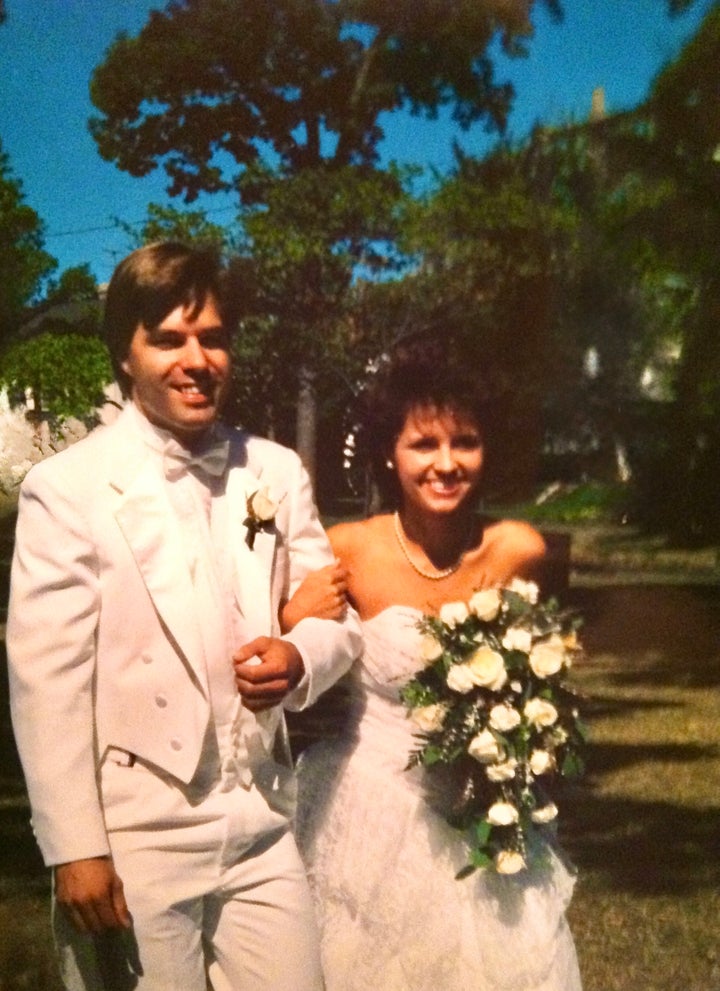
The author and Rich on their wedding day in August of 1988 in Highland Park, Illinois.

Texting offers no space for long pauses before the truth emerges. No way to hear when a voice cracks. No room for tears. No space for the sacred awkwardness that often precedes real connection.

Texting doesn’t just limit expression — it actively encourages emotional containment. And in grief, containment is the opposite of what heals.

Texting protects the sender, not the grieving. I say this with compassion, because I’ve been on both sides. But the uncomfortable truth is that the choice to send a text is often less about caring for the grieving person and more about managing the discomfort of the person who is reaching out. Sending a text message requires no vulnerability, no emotional risk.

To the grieving person, texting can send a message of: “I want to show I care. But I’m afraid of saying the wrong thing. I don’t know how to handle your pain. I don’t want to hear you cry.”

But grief doesn’t need perfection or protection. Grief needs presence. Grief needs to be witnessed.

There is something sacred about hearing someone’s voice. When someone calls after a loss, something different happens. You hear care and concern in their tone. You hear sincerity. You hear love. And they hear you. They hear when your voice trembles. They hear when you go quiet. They hear when the brave façade slips. They hear you mention your loved one’s name.

Even when we say, “I’m OK,” our voices tell the truth our words cannot. This allows for healing. Text allows for avoidance.

Boomers and Gen Xers remember a time when we picked up the phone. We sat on the couch with the cord stretched across the room, talking to people who mattered. Bad news traveled through our voices, not screens. Grief was met with conversation, not three dots and a heart emoji.

I’m not saying texting is bad. It’s just not enough. Not for grief.

If you care about someone who is grieving, just make the call. And not just once. Not only in the first few weeks. Grief lasts far longer than most people’s attention spans.

One of the most meaningful things my sister-in-law Ellen asks when she and my brother call is, “How are you doing right now — today?” Other questions you might ask include: “What’s been hardest this week?” Do you want to talk about him?” “Do you want distraction or company?” Let the grieving person lead.

People mean well, but some phrases unintentionally wound: “He’s in a better place.” “At least you had time to say goodbye.” “You’re so strong.”

When people tell me I’m strong, I feel pressure to perform strength instead of honesty.

  • “This is unfair.”
  • “I’m so sorry.”
  • “I miss him too.”
  • “I can’t imagine how hard this is.”
  • “I’m not going anywhere.”
  • “Tell me more about the time you and Rich…”

Early in grief, curiosity can feel like intrusion:

“What are you going to do with your finances or taxes?”
“Will you get a job, sell the house, move?”
“Did you get a mortgage or pay it off?”
“Do you think you’ll remarry someday?”

Be mindful of the difference between questions that open the door and questions that put one foot in the door when you haven’t been invited in.

The last time the author and Rich voted together, before taking a walk at Lake Michigan.

Photo Courtesy Of Kim Brandt

The last time the author and Rich voted together, before taking a walk at Lake Michigan.

Accept that discomfort is part of love. Calling someone who is grieving will feel awkward. You may sit in silence. You might hear tears and not know what to do. That discomfort is not failure. It is the cost of caring.

If someone is in your inner circle, call them. Keep calling or schedule a call. If someone is a close acquaintance, text — but consider leaving a voice message too. If the grieving person has ever shown you kindness, return that kindness during the worst season of their life. Let them hear your voice. Let them know they are not alone.

Most of us were never taught how to show up for grief. But we can choose differently. We can choose to call. We can choose to listen. We can choose to risk awkwardness.

Because years from now, the grieving person will not remember the texts. But they will remember who called. They will remember who showed up. They will remember who stayed. And sometimes, when we feel alone in our grief, the sound of another human being saying, “I’m here,” is the only thing that still connects our hearts.

Kim Brandt is a writer, yoga therapist and Pilates instructor whose work explores grief, healing and human connection. After losing her husband to colorectal cancer in April of 2025, she began writing about caregiving, love, and life after loss. She lives in Illinois, where she is building a wellness community focused on resilience and repurposing life’s transitions.

Do you have a compelling personal story you’d like to see published on HuffPost? Find out what we’re looking for here and send us a pitch at pitch@huffpost.com.

Help and support:

  • Mind, open Monday to Friday, 9am-6pm on 0300 123 3393.
  • Samaritans offers a listening service which is open 24 hours a day, on 116 123 (UK and ROI – this number is FREE to call and will not appear on your phone bill).
  • CALM (the Campaign Against Living Miserably) offer a helpline open 5pm-midnight, 365 days a year, on 0800 58 58 58, and a webchat service.
  • The Mix is a free support service for people under 25. Call 0808 808 4994 or email help@themix.org.uk
  • Rethink Mental Illness offers practical help through its advice line which can be reached on 0808 801 0525 (Monday to Friday 10am-4pm). More info can be found on rethink.org.



Experts explain the various faces of grief | Globalnews.ca


When you lose a loved one, your world can change within a matter of seconds. How a person responds to death is a totally unique experience that can come in many forms.

Experts explain the various faces of grief  | Globalnews.ca

“Some people are more emotional … some people more cerebral…. There’s no right or wrong way; it’s how it works,” explains Brenda Gibbs, owner of Living and Loss Grief Counselling.

The “five stages of grief” are often listed as denial, anger, bargaining, depression and acceptance. But the truth is, this is not necessarily how we cope with losing a loved one.

Get breaking Canada news delivered to your inbox as it happens so you won't miss a trending story.

Get breaking National news

Get breaking Canada news delivered to your inbox as it happens so you won’t miss a trending story.

“That sort of five stages of grief has largely been debunked…. Those were actually written to help a dying person see what stages they’re going through,” says legacy guide and celebrant Karla Combres, who works with individuals and families to help define and create lasting legacies. “The truth is, it’s messy, it’s not linear, you might feel one thing one second, another thing this, you might go back, you might go forth.”

Story continues below advertisement

And we do not grieve just the dead. Some grieve relationships ending, losing a job or even a child moving out on their own. But the common thread among all grief is the element of support needed to heal. That’s why community gatherings like “Death Cafes” were created to help people feel seen during a time that feels isolating.


“There are community gatherings meant truly just to normalize dying and death…. It’s very open-ended, usually. No proselytizing, no selling of products,” Combres says.

At the end of the day, the best way to help someone in their grief journey is to simply reach out.

“It’s about just checking in. How is your day today? If you want to offer help, be specific,” Gibbs says.

Read more:

The cost of dying in Saskatchewan

&copy 2026 Global News, a division of Corus Entertainment Inc.


Before My 15-Year-Old Died, I Never Said The S-Word. What A Grave Mistake That Was


Early in the morning of Nov. 10, 2017, I got the phone call every parent dreads and none of us are ever prepared for. On that November morning, my oldest daughter, 15-year old Parker Lily, lost the battle with her mental health that we thought she’d been winning. Since that call, my family and I have been trying to rebuild our lives.

For years, I carried around the same tacit misconception many people do about suicide: if someone seems depressed, dejected or hopeless, you don’t say the S-word. You definitely don’t ask if they’re thinking about taking their own life. The worry behind this misconception is simple: you don’t want to put the idea of suicide into their head.

I’m here to tell you, as a father whose life was split into “before” and “after” by that phone call, the opposite is true.

If you take nothing else from what I’m about to say, take this: you will not cause suicide by asking someone directly if they’re thinking about it.

The mental health world has firmly renounced the idea of not asking someone directly. And I’m hoping to get as many people as possible to understand this and to jettison silence. You might be the lifeline they didn’t know they were allowed to grab.

Parker wasn’t a “statistic.” She was my daughter. She was also a force of nature.

Even as a little girl, she was formidable: curious, larger than life and constantly creating. Almost from the time she could walk, teachers were telling us how gifted she was as an artist, how she possessed a level of abstract thinking way beyond her years.

She was a protective, loving big sister to her siblings Rory and Hudson. She was fiercely loyal, cared deeply about her family and friends and had an antipathy for injustice that would light up a room, or a dinner table argument.

She was also very funny. At four, she was already asking big questions like, “Why can’t I eat ice cream for breakfast?” and delivering them with a level of confidence that made you think, “Honestly, why can’t you?”

In later years, you would have seen a bright, artsy teenager who was thriving at her Maryland high school; a place structured specifically for kids battling mental health issues. She made friends, acted in plays, created art and seemed, finally, to be hitting her stride. From the inside, there was a lot more going on.

Parker struggled with her mental health. There were moods we didn’t understand, self-harm, a stay in a psych ward. There were shifts in medications, potential diagnoses (bipolar? borderline personality disorder?) that were terrifying to hear attached to your child. There were stretches when she seemed to be climbing out of it – when we allowed ourselves to think, “She’s winning. We’re over the worst of it.”

We wanted that to be true so badly.

The morning she died, my phone rang with a Maryland number I didn’t recognise. I almost didn’t pick up. But I did pick up, and I heard an officer tell me Parker had taken her own life. Her roommate had found her. The police hadn’t been able to reach her mother, Deb, my ex-wife. I heard a voice come out of my mouth that said: “I’ll tell Deb.”

My brain split. Part of me was insistent that this had to be a mistake, a sick joke. The other part was already running toward the house where Deb and the kids were sleeping, knowing I had to wake them up and say the words out loud.

On my way there, I found myself standing on a corner, outside of myself, waiting for a traffic light to change. The bus stop, the police precinct, the blue sky: None of it made sense. Parker was gone. There was no right side up.

Then something overwhelmed me, rushing past the horror. It was the first of many to follow. It was a wave of grief. Grief that manifested itself as pure love.

I’m not ascribing any mystical significance to the experience. I was reacting to massive trauma. Adrenaline, flooding brain chemicals, my emotions, my memories, all working together to keep me from completely losing my grip. That’s a perfectly reasonable explanation.

But in that moment, Parker came to me – from my heart, my mind, my soul – and gave me the courage to go to her mother, to her siblings, and tell them that she was gone.

That was the beginning of “After.”

Before My 15-Year-Old Died, I Never Said The S-Word. What A Grave Mistake That Was

Photo Courtesy Of Alex Koltchak

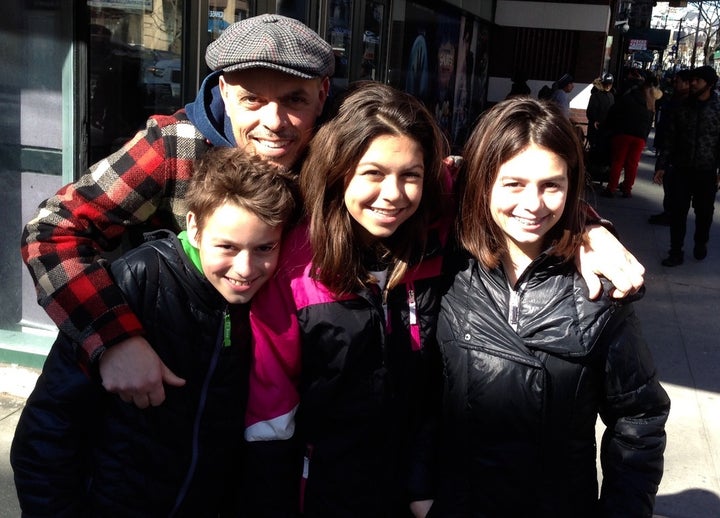
The author’s last picture with all three of his kids

In the months after Parker’s death, I started going to support groups for people left behind after suicide. I walked into those rooms feeling that my story was unique, my pain singular. I walked out realising that suicide is heartbreakingly common, and that most people don’t talk about it.

I heard story after story, each different in details but similar in impact: the shock, the guilt, the endless replaying of “What did I miss?” and “Why didn’t I…?” and “If only I’d said X, or done Y.”

The numbers are brutal, especially for young people. Too many of our kids are battling suicidal thoughts, and far too many of them are doing it in silence because they’re ashamed or scared, or because the adults around them are too terrified to even think about, let alone name what might be happening.

Then, in the spring of 2022, my daughter Rory wrote a college essay about living in the shadow of Parker’s death and her own mental health struggles. Reading her words – raw, direct, courageous – awoke something in me.

She talked about not knowing how to be anyone but “Parker’s sister,” about trying to figure out who she was in the wreckage. It knocked something loose in me.

I realised I couldn’t keep expecting my kids to tell the truth about their pain if I was going to stay quiet about mine. It was time to confront the silence and guilt that take over after suicide, and to make sure that people who feel pulled toward that edge know they are not alone. There is zero shame in asking for help.

So, I started telling my story.

At first, it wasn’t a show. It was just me, at a table late at night, scribbling memories and fragments: Parker as a little girl insisting on ice cream, Parker drawing on every surface in the apartment, Parker in a hospital gown apologising for being sick, Parker onstage at school and absolutely owning it.

I wrote about the day of the phone call and the immediate aftermath: the wake, and what it feels like to stand over your child’s body. What it feels like to see your grief mirrored by the family and friends surrounding you.

Over time, those pages turned into a script – a one-man show about a family punched through the heart by suicide, and the love that somehow keeps flowing regardless.

It’s a family portrait and a love letter to Parker. It’s also a survival story. Not a triumphant “and then everything was fine” survival, but the kind where you limp forward, fall down and keep getting up because there are still people who need you, who love you. I called it “Bent Through Glass” because life is unspeakably fragile, the world a place of broken shards despite our best efforts. And also, and more importantly, because even when glass fractures or breaks, it never ceases to refract the light around us.

If Parker can no longer be here, then what I want is for her story to help someone else stay.

If you’ve lost someone to suicide, you might be in the same loop I was:

How did I not see it coming? How did I let it happen? What kind of parent, partner, friend does this make me?

I don’t have answers that make those questions disappear. What I’ve learned is that the questions themselves are a vacuum. “Why?” is eternal, possessing an infinite array of answers. I spent years asking why, only to be dragged deeper into a lightless hole, every time.

The only thing that has any consistency for me now is this: don’t turn away from it. Turn toward it. That means turning toward your own grief instead of stuffing it down and pretending you’re “fine.” It means turning toward the people around you who are hurting, instead of looking away because you’re afraid of saying the wrong thing.

And it especially means this: if you think someone you love might be suicidal, say the word. Ask the question.

You are not going to “give them the idea.” If they are in that kind of pain, the idea is already there. What you might give them is permission to tell the truth out loud. Ask directly: “Are you thinking about killing yourself?” If the answer is yes:

  • Stay.
  • Tell them you’re grateful they told you.
  • Help them reach out to trained support: a crisis line (in the U.S., you can call or text 988), a therapist, a doctor, a trusted adult, whoever is available and trained to help.

You don’t have to fix them. You’re not a superhero. You’re a human being saying, “I see you, and I’m not going anywhere.”

If you’re the one in that dark place right now, hovering on the edge of thoughts you don’t want to admit even to yourself, this is what I want to say as a father:

Stay. Stay long enough to tell one person. Stay long enough to make one call or send one text. Stay long enough to get through this hour, and then the next one.

You are not weak for needing help. You are not a burden for feeling this way. There is no shame in saying, “I can’t hold this alone.”

When I step out under the lights and tell this story, I’m not doing it because I enjoy reliving the worst day of my life. I’m doing it because, in the aftermath of Parker’s death and Rory and Hudson’s struggles, it’s clear to me that silence around suicide is killing people.

We cannot afford that silence anymore. We never could.

Alex Koltchak is a writer, filmmaker, actor, performer, and stand-up comedian. His one-man show, Bent Through Glass, is being staged at The 30th Street Theater in NYC from April 1-25, 2026, with the aim of performing the work nationally.


My Senior Dog Couldn’t Walk Anymore. Before She Died, She Led Me To My Husband.


“JUST BRING BACK MY MAYAAAAAAAA,” I sobbed into the phone to my then-boyfriend of two years, Tom.

He had just left our East London apartment for a two-hour journey to the specialty vet hospital, where our 13-year-old paralysed chiweenie waited to be picked up. Housebound with Covid, I waited impatiently for him to return with the love of my life.

Tom knew that Maya had always been my soulmate. She had been at my side since I was 19 and going to college in Greenwich Village. She gently snorted in my bag as I snuck past security into my film class, where a treat from my professor awaited her. Bouncy and bright, Maya romped through the city with me, often drawing adoration from passersby for her cuteness.

We were inseparable. I would wake to the surge of traffic or the rumble of street construction below, Maya nuzzled into my dark hair. Up we went to the coffee shop’s takeout window, where, surprise, surprise, more treats were ready for her taking. On the subway, to friends’ houses, on road trips across state lines, and on flights home to sunny, smoggy Los Angeles, Maya came along every step of the way.

During Hurricane Sandy, it was Maya and me against the world. No power, no running water. Maya and I traipsed along the Westside Highway at twilight, a Blessed Virgin Mary candle ablaze as a torch, walking past what felt like a post-apocalyptic downtown.

Maya even moved across the pond with me to London when I turned 30 – a reset after a five-year relationship abruptly ended.

She first moved in with my mum, who FaceTimed me at least four times a day while I spent the longest three months of my life waiting for her to arrive.

When she finally did, I felt whole, like I could exhale and lean into my new London chapter.

A few months later, Maya, almost 12, lost mobility in her back legs. I placed her in a leather duffel bag (unzipped, of course), threw in some blankets and rushed into the November night to the same specialty vet hospital, which would become our refuge for the next three years.

Still in my yoga pants and sweatshirt from that afternoon, the only thing I could think about was getting Maya better. I kept reassuring her, “It’s OK, it’s going to be OK,” even though I was ultimately reassuring myself. Stroking her soft face and trying to keep the tears back, I knew our lives would never be the same.

“Intervertebral disc disease,” the neurologist said. “She needs a spinal fusion immediately.” With only a 50% chance of regaining movement in her hind legs, I began to prepare for whatever came next.

Maya glowed in her new neon pink set of wheels. She zipped along the Hackney Canals with even more flair than before, drawing even more smiles in her new form than she had on four legs.

It was during this period that I met Tom. We both swiped right, and I planned for him to meet Maya on our third date. By then, I had accumulated a handful of dog sitters for her. While she could be home alone for up to four hours, for special nights out, I needed backup.

Maya was still figuring out her new self and was scooting all over the apartment in her white puffy diapers. As soon as I brought Tom up to meet her, Maya had an accident all over a floor pillow. Embarrassed, I began to apologise.

“It is not a bother,” he laughed as he picked her up. “Come on, you. Let’s get you cleaned up,” he cooed as he reached for the kitchen roll.

It was at that moment that I knew Tom was here to stay. During lockdown, he would drive from the other side of London and spend the entire weekend with us, giving Maya baths, making a duvet fort for her so we could watch The Twilight Zone, and going for long walks with Maya rolling beside us. He would even adorn her with origami crowns. My plus-one became a plus-two.

My Senior Dog Couldn’t Walk Anymore. Before She Died, She Led Me To My Husband.

Photo Courtesy Of Jordan Ashley

Tom and Maya in our yard in London, December 2020.

On our first family holiday in summer 2020, we rented a cottage in the Cotswolds, where Maya rolled in green fields sprinkled with cows grazing. When she grew tired and needed a rest, Tom would scoop her up in his arms, like a bride being carried over the threshold, and blow on her face to cool her down.

When the three of us finally moved in together, our priority was securing a ground-floor apartment so Maya could come and go with ease. Our entire existence centered on Maya. It was never just Tom and me, but rather the three of us, moving as an imperfect unit into this new, cohesive life together.

As our love deepened, Maya’s age began to catch up with her. Despite being the ultimate roller girl, more health issues began to pile on: hyperparathyroidism, myoclonic seizures, pancreatitis and blindness. During this time, she would be up all night, distressed, howling and crying.

We took turns, surviving on three hours of sleep, our collective mental health wearing down, yet we persevered. On these late nights, I would turn on sound bath playlists, sing to her and do everything in my power to keep her settled on the futon we had set up in the living room. We would not give up on our Maya.

In January 2024, we celebrated her 16th birthday together. Our only measure of time was her comfort. As long as she was still eating, still bright-eyed and not in pain, we kept going. She had traded in her wheels for a stroller, and we pushed her everywhere, her head poking out to take in the breeze.

Maya was on a cocktail of medication, and our lives revolved around the rituals of caring for her – giving her syringes of medicine, hiding pills in peanut butter, cooking for her. She was a metronome, and our lives played to her rhythm.

Maya flew home with me that spring. By now, she could not be left alone, so it was easier to travel with her to ensure round-the-clock care. During this time, I felt Maya’s clock was running out.

Maya's 15th birthday party in London, February 2024.

Photo Courtesy Of Jordan Ashley

Maya’s 15th birthday party in London, February 2024.

I knew an engagement was just around the corner. I had found the ring in his sock drawer, and I kept saying how important it was to me to have Maya at our wedding. She would be the bouquet, as I dreamed of carrying her down the aisle.

Tom would not be marrying just me; he would also be making a vow to her.

Within 48 hours of returning to the UK, Maya was rushed to the emergency vet because she could no longer breathe on her own. We began Googling videos on how to build an oxygen chamber at home from a plastic storage container. Tom found all the parts we would need and was ready to pick up the oxygen tank when the call came. It was time.

We sat with her on our laps for five hours, crying as we looked through all the photos of our many adventures over the years: Maya gliding in Williamsburg, a soggy Tom holding an even soggier Maya after a lake dip, Maya in her skulls and crossbones sweater, us singing happy birthday to her. And then my worst fear finally happened. Her spirit had grown too big for her now very tired body.

I was devastated. I don’t remember getting into the car or Tom driving us home. He held my hand and, through his own tears, led me into our now very empty apartment. Even though he was tucking me into bed and telling me to try to rest, I felt truly alone for the first time in 16-and-a-half years.

The engagement came six weeks later, while I was waiting for a taxi to Heathrow to fly back to New York. It would be the first time I would be in the city without her. Maya’s vet gave me an envelope of bluebells to plant in her honour. On that solo trip back to NYC, I walked down Sixth Avenue, turned left onto 13th Street, and stood in front of the apartment where Maya and I first became inseparable.

Maya's representation at the author's wedding in the Cotswolds, July 2025.

Photo Courtesy Of Jordan Ashley

Maya’s representation at the author’s wedding in the Cotswolds, July 2025.

Maya had always been my constant, my heartbeat outside my body. Losing her was like losing a piece of myself, the glue that held my world together. Kneeling, I spread some dirt beneath a tree and scattered the seeds.

Across the ocean, I knew my person was waiting for me. His love for Maya over those four years was one of the greatest acts of devotion I had ever witnessed. Our love for her and the shared grief of her absence would now be a journey Tom and I would navigate – together.

Jordan Ashley, Ph.D., is a writer and the founder and executive director of Souljourn Yoga Foundation, a nonprofit creating transformational yoga retreats that support girls’ education worldwide. Learn more at souljournyoga.com.

Do you have a compelling personal story you’d like to see published on HuffPost? Find out what we’re looking for here and send us a pitch at pitch@huffpost.com.