‘No Platform Gets A Free Pass’: Government Plans New Crackdown On AI Chatbots And Social Media


The government is set to announce new plans to crack down on online platforms in a bid to keep children safe.

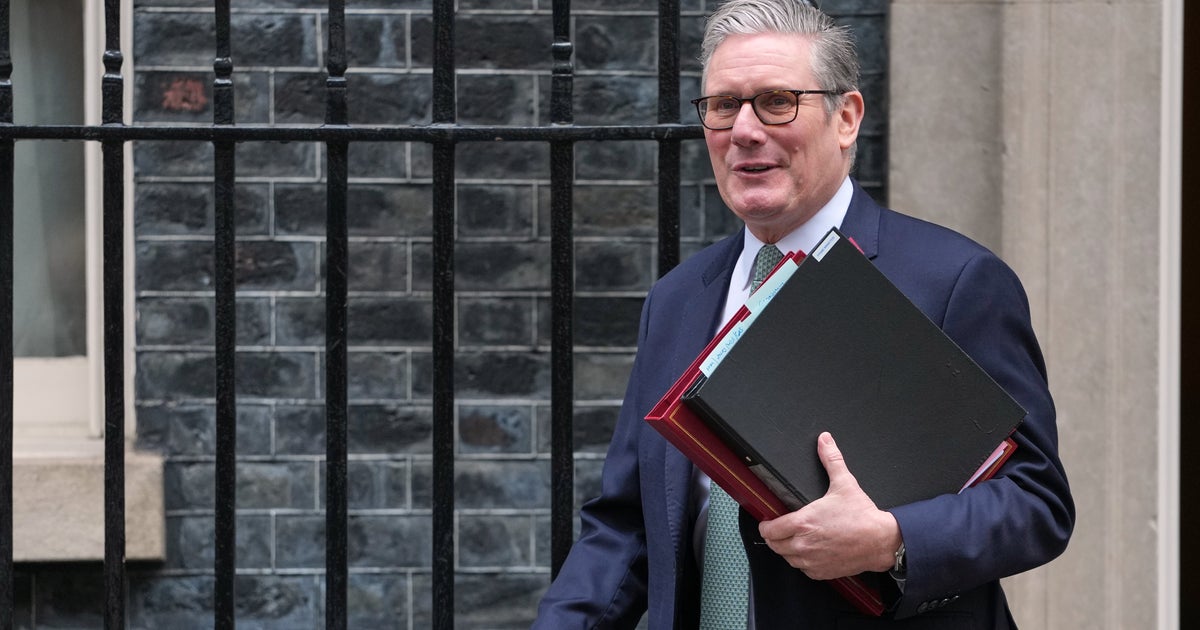
Shortly after Labour successfully pushed X to limit AI bot Grok’s powers to post non-consensual, intimate images of people, prime minister Keir Starmer on Monday will unveil his strategy to help younger generations navigate the internet.

The government plans to shut a legal loophole and force all AI chatbot providers to abide by illegal content duties in the Online Safety Act, or risk breaking the law, with an amendment to the Crime and Policing Bill.

Ministers will also be able to implement changes to legislation on social media quickly with new powers in the Children’s Wellbeing and Schools Bill, if supported by MPs.

That could include setting a minimum age limit for social media and restricting features like infinite scrolling.

Any such changes to the law will be based on the outcomes in the government’s digital wellbeing consultation, which will launch in March, with parents, young people and civil society groups.

Ministers will consult on how best to ensure tech companies can safeguard children from sending or receiving nude images, and confront the full range of risks they might face online.

The government will also look at how to preserve vital data online if linked to a child’s death.

Starmer pledged: “Technology is moving really fast, and the law has got to keep up. With my government, Britain will be a leader not a follower when it comes to online safety.

“The action we took on Grok sent a clear message that no platform gets a free pass.

“Today we are closing loopholes that put children at risk, and laying the groundwork for further action.

“We are acting to protect children’s wellbeing and help parents to navigate the minefield of social media.”

Technology secretary Liz Kendall said: “We will not wait to take the action families need, so we will tighten the rules on AI chatbots and we are laying the ground so we can act at pace on the results of the consultation on young people and social media.

“We are determined to give children the childhood they deserve and to prepare them for the future at time of rapid technological change.”

The Department for Science, Innovation and Technology has launched the “You Won’t Know Until You Ask” campaign, too.

This will offer practical guidance on safety settings and conversation prompts to use with children to discuss the subject matter.

Tory shadow education secretary Laura Trott described the announcement as “more smoke and mirrors from a government that has chosen inaction when it comes to stopping under-16s accessing social media”.

“Claiming they are taking ‘immediate action’ is simply not credible when their so-called urgent consultation does not even exist,” Trott said.

“Labour have repeatedly said they do not have a view on whether under-16s should be prevented from accessing social media. That is not good enough. I am clear that we should stop under-16s accessing these platforms.

“The evidence of harm is clear and parents, teachers and children themselves have made their voices heard. Britain is lagging behind while other countries have recognised the risks and begun to act.”

She added: “Dressing this up as progress while refusing to grasp the central issue risks becoming a Trojan horse for further delay.”

The Lib Dems’ spokesperson for education Munira Wilson said this was proof the government was still “kicking the can down the road”.

She said: “There is no time to waste, but the government continues to kick the can down the road. We need a much clearer, firm timeline for when they will take action.

“Parliament deserves a real say and the chance to properly scrutinise the Government’s plans. Instead, the prime minister is desperate to buy himself time with his MPs with an approach that will limit oversight now and in the future.

“Time for a concrete plan by working with us on future-proof protections.”


Elon Musk’s xAI faces threat of NAACP lawsuit over air pollution from Mississippi data center


Nikolas Kokovlis | Nurphoto | Getty Images

Elon Musk’s xAI, which merged with SpaceX last week, is facing increased pressure from environmental and civil rights groups over pollution concerns, this time at the company’s facility in Southaven, Mississippi.

On Friday, the Southern Environmental Law Center and Earthjustice, on behalf of the NAACP, sent a notice of intent to sue xAI and subsidiary MZ Tech LLC, saying the company’s use of dozens of natural gas-burning turbines requires a federal permit, violates the Clean Air Act and harms nearby communities.

Pollution from the turbines, which xAI has also used in Memphis, Tennessee, for its Colossus 1 and Colossus 2 data centers, has been a major source of local contention for more than a year.

Plans for a third data center in Southaven, located about 20 miles from Memphis, were announced early this year, when Mississippi Republican Governor Tate Reeves said he expected the project to create “hundreds of permanent jobs throughout DeSoto County.”

Launched by Musk in 2023, xAI is trying to compete with OpenAI, Anthropic and Google in the booming generative AI market. On Feb. 2, Musk said SpaceX, his rocket maker and defense contractor, acquired xAI in a deal that valued the combined entity at $1.25 trillion.

Musk is banking on the area in and around Memphis as the foundation of his AI ambitions, and he’s been flouting environmental rules in order to develop as quickly as possible. Musk’s social network X, formerly Twitter, is also owned by xAI, which created the Grok AI chatbot and image generator.

XAI is currently under a myriad of government investigations in Europe, Asia and the U.S. after Grok enabled users to easily create and share deepfake porn, including explicit imagery depicting child sexual abuse.

Last year, residents in the majority-Black community of Boxtown in South Memphis testified at public hearings about a stench in the air, and the impact of worsening smog on their health caused by xAI’s use of natural gas turbines. Research by scientists at the University of Tennessee also found that xAI’s turbine use added to air pollution woes in the area.

Environmental advocates, including the NAACP, had previously said they would sue to stop xAI’s un-permitted use of the turbines in Memphis. But they stopped short of filing a legal complaint after Shelby County’s health department allowed xAI to treat the turbines as temporary, non-road engines, and issued permits for their use.

At the federal level, the EPA recently clarified gray areas of the law and said these turbines can’t be categorized as temporary non-road engines. Nonetheless, xAI has been using the turbines across state lines without obtaining federal permits.

XAI didn’t immediately respond to a request for comment.

Noise pollution from the turbines has also been a source of local consternation. Jason Haley, a Southaven resident, told CNBC the turbines make headache-inducing noises around the clock that he can hear inside his home.

Haley is part of a group called Safe and Sound which documents the decibel levels, and is pressing local officials to stop xAI from making so much noise, especially overnight, with its turbines.

Mississippi officials will hold a public hearing, scheduled for Tuesday, for community members who wish to express their concerns about xAI’s expansion plans in the area. The hearing will focus on whether the state should give xAI permission to install and run 41 permanent turbines at its Southaven facility, Mississippi Today previously reported.

Similar community dynamics are playing out across the U.S. as tech giants rush to construct massive data centers, which can strain local energy and water supply and cause prices to increase.

In November, Microsoft ended efforts to build a data center in Wisconsin due to the community’s vocal opposition. Amazon also pulled out of plans for a data center in Arizona after community protests.

In terms of Musk’s Southaven project, Patrick Anderson, a senior attorney with SELC, said xAI “has to follow the law, just like any other company.”

“And when it flouts the Clean Air Act’s bedrock protections against unpermitted emissions, it puts the health and welfare of ordinary citizens at risk,” Anderson said in an email. “That’s why we intend to hold xAI accountable here.”

The Mississippi Department of Environmental Quality did not immediately respond to requests for comment.

Read the environmental groups’ notice of intent to sue xAI here: