Trump’s New Tariff Threat Could Upend Global Trade Again. Here’s What You Need To Know


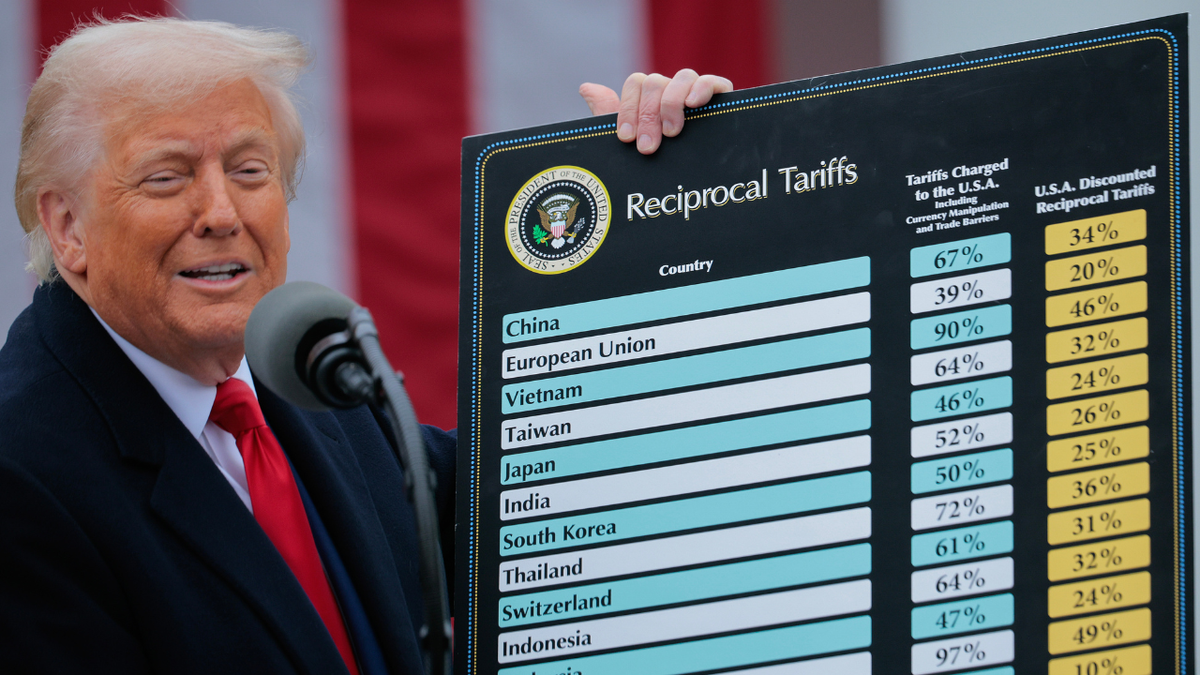
Donald Trump has threatened to turn international trade upside again by announcing plans to slap 15% tariffs on all foreign goods imported to the US.

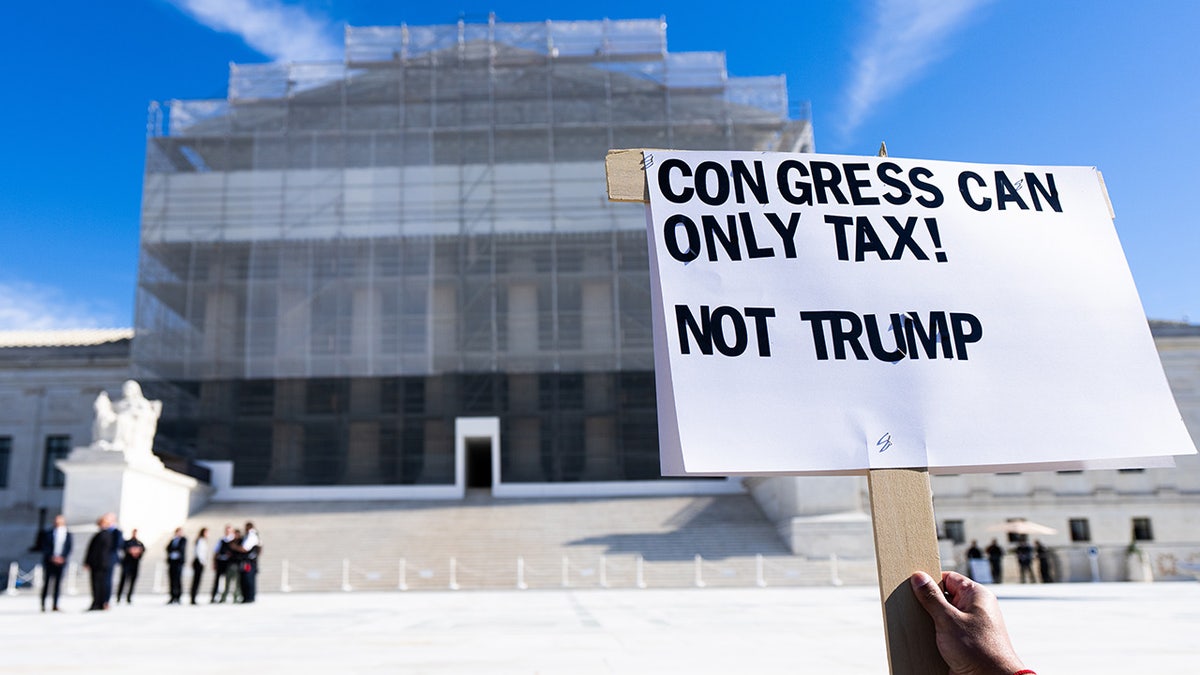
The sudden announcement came after the US Supreme Court scrapped Trump’s previous 10% levy, saying he did not have authority to impose such a sweeping rule.

Now, countries around the world are nervously waiting to see if the US president will follow through on his warning.

Here’s what you need to know.

What Did The Supreme Court Rule?

In a 6-3 decision, the justices said Trump had overstepped when he announced his plans to impose sweeping tariffs last April.

At the time, he was using a 1977 law called the International Emergency Economic Powers Act.

Government data shows the US has already collected at least $130 billion (£96.4 billion) so far.

But the justices said it was up to Congress, not the president, to impose such sweeping tariffs.

They said nothing in the law Trump used to enact his dramatic trade policy granted him such powers.

How Has Trump Reacted?

Pretty badly. In a press conference on Friday, he attacked those who voted against him in the Supreme Court.

He said he was ashamed of “certain members of the court”, alluding to the three conservative judges who rejected his plans, while calling the three liberal judges “a disgrace”.

Trump furiously announced that he would replace the old levy – now scrapped – with another 10% global tariff, this time using other laws.

He declared that he would use a law which has never been deployed before, a temporary solution under Section 122 of the 1974 Trade Act which allows him to increase levies for five months before Congress has to have a say.

Then on Saturday, he wrote on Truth Social that this would be hiked up to the maximum allowed – 15%.

It remains unclear exactly when these new tariffs might come in.

Trump said his administration had decided to press ahead with this drastic move after the review of the Supreme Court’s “ridiculous, poorly written, and extraordinarily anti-American decision on Tariffs”.

Why Is This So Important To Trump?

Trump has put the economy at the heart of his plan for governance.

These sweeping tariffs were his way to force businesses to enact “America First” by producing and investing in the US first.

So the Supreme Court’s move goes straight to the heart of his agenda.

It was a major moment to see the president’s power reined in, too.

Trump has repeatedly exercised his presidential authority and rarely faced any backlash or checks on his powers since returning to office last January.

There’s a chance the US might have to give back the money it raised, which would cause further embarrassment for the president.

What Has The UK Said About Tariffs?

The UK used to have a special deal with the States which meant Trump slapped just a 10% levy on all of its goods at a time when he was forcing much higher rates on other countries.

On Friday, a government spokesperson said: “This is a matter for the US to determine but we will continue to support UK businesses as further details are announced.

“Under any scenario, we expect our privileged trading position with the US to continue and will work with the administration to understand how the ruling will affect tariffs for the UK and the rest of the world.”

Education secretary Bridget Phillipson failed to rule out UK retaliation if the tariffs go ahead.

She told Sky News: “We always stand up for what’s right for Britain. And I think the prime minister demonstrated that with the approach he took around Greenland.

“But the reality is that if you want to get things done, it’s better to do that behind the scenes.”

She added: “You get more done when you have serious conversations, often not in front of cameras or out there in the public, but actually behind the scenes, working closely with between governments.

“And we do have a really strong relationship with the US, that is something that is not about one president or one prime minister.

“It’s about that long standing and enduring relationship that is right for our country and is right for national security, and also really important at a time when we see significant global instability that we work together on those key questions like defence.”


Trump says he’s increasing global tariffs to 15% – National | Globalnews.ca


U.S. President Donald Trump announced Saturday morning that he is raising his new global tariffs to 15 per cent from 10 per cent.

Trump says he’s increasing global tariffs to 15% – National | Globalnews.ca

Trump first unveiled the new import levy on Friday, following a U.S. Supreme Court ruling that outlawed his initial tariff program. He said Saturday’s increase would take effect immediately, describing the new rate as “fully allowed” and “legally tested.”

In a social media post, Trump called the Supreme Court decision “ridiculous, poorly written, and extraordinarily anti-American.” He also claimed his new tariffs are based on “thorough, detailed and complete review” of the court’s decision, and accused trade partners of “‘ripping’ the U.S. off for decades, without retribution (until I came along!).”

For news impacting Canada and around the world, sign up for breaking news alerts delivered directly to you when they happen.

Get breaking National news

For news impacting Canada and around the world, sign up for breaking news alerts delivered directly to you when they happen.

The new tariff, which lasts 150 days, starts Tuesday.

Trump’s announcement follows Friday’s U.S. Supreme Court ruling that he overstepped his presidential authority by imposing tariffs on Canada, Mexico and other countries under emergency powers.

Story continues below advertisement

Trump is pushing back against that decision, saying his administration is developing alternative processes for imposing tariffs, a cornerstone of his economic policy.

“During the next short number of months, the Trump Administration will determine and issue the new and legally permissible Tariffs, which will continue our extraordinarily successful process of Making America Great Again,” he said on social media.

The White House has also said the new tariff will not apply to goods compliant with the Canada-U.S.-Mexico Agreement on free trade (CUSMA), which is expected to be reviewed later this year.

Trump also said other industry-specific tariffs, including those targeting steel, aluminum, automobiles and lumber, remain unaffected by the court’s decision.

More to come.

– With files from Global News’ Ariel Rabinovitch and Sean Boynton


&copy 2026 Global News, a division of Corus Entertainment Inc.


Trump keeps carveout under CUSMA in new 10 per cent global tariff – National | Globalnews.ca


The majority of Canadian exports will remain exempted from Donald Trump’s new 10 per cent global levy, as the U.S. president pivots after the Supreme Court dealt a blow to his plans to realign global trade.

Trump says he’s increasing global tariffs to 15% – National | Globalnews.ca

A fact sheet from the White House said the latest tariff will not hit goods compliant under the Canada-U.S.-Mexico agreement on trade, known as CUSMA.

The duty will also not be applied on top of sector-specific tariffs like steel, aluminum and automobiles.

Trump signed an executive order Friday to enact the worldwide tariff beginning on Tuesday using Section 122 of the 1974 Trade Act. That duty can only stay in place for 150 days, unless Congress votes to extend it.

“Those members of the Supreme Court who voted against our very acceptable and proper method of TARIFFS should be ashamed of themselves,” Trump posted on social media.

Story continues below advertisement

“Their decision was ridiculous but, now the adjustment process begins, and we will do everything possible to take in even more money than we were taking in before!”


Click to play video: 'Supreme Court strikes down Trump’s global tariffs'


Supreme Court strikes down Trump’s global tariffs


Earlier Friday, the U.S. Supreme Court concluded it was not legal for Trump to use the International Emergency Economic Powers Act, better known as IEEPA, for his “Liberation Day” tariffs and fentanyl-related duties on Canada, Mexico and China.

Trump declared an emergency at the northern border related to the flow of fentanyl in order to use IEEPA to hit Canada with 35 per cent tariffs. Those duties did not apply to goods compliant under CUSMA.

Get the day's top news, political, economic, and current affairs headlines, delivered to your inbox once a day.

Get daily National news

Get the day’s top news, political, economic, and current affairs headlines, delivered to your inbox once a day.

In a 6-3 ruling, the court said the U.S. Constitution “very clearly” gives Congress power over taxes and tariffs. Chief Justice John Roberts wrote “the Framers did not vest any part of the taxing power in the Executive Branch.”

Story continues below advertisement

The ruling did not say whether companies hammered by those tariffs should get refunds. As of December, federal data showed US$133 billion had been collected.

The court’s decision “reinforces Canada’s position that the IEEPA tariffs imposed by the United States are unjustified,” said Canada-U.S. Trade Minister Dominic LeBlanc in a post on social media.

“While Canada has the best trade deal with the United States of any trading partner, we recognize that critical work lies ahead to support Canadian businesses and workers who remain affected by Section 232 tariffs on steel, aluminum and automotive sectors,” LeBlanc said.

During a 40-minute press conference Friday afternoon, Trump lashed out at the Supreme Court justices and said the decision was “incorrect.” Trump also denigrated Europe as too “woke” and took aim at Canada, saying the country ripped off the U.S. and stole car plants.


Click to play video: 'Trump ‘disagrees’ with Supreme Court ruling, imposes new 10% global tariff ‘effective immediately’'


Trump ‘disagrees’ with Supreme Court ruling, imposes new 10% global tariff ‘effective immediately’


Trump claimed that Canada said it hoped he would win at the Supreme Court “because if you don’t win you’ll actually be able to charge us, with additional work, higher tariffs.”

Story continues below advertisement

LeBlanc spoke with U.S. Trade Representative Jamieson Greer by phone recently. When asked for comment on Trump’s claim about Canada, LeBlanc’s office referred to his social media statement.

Greer told “Fox News” Friday that while the 10 per cent tariff is in place, the Trump administration will begin investigations of countries under Section 301 of the Trade Act of 1974.

That allows a president to take trade actions if the investigation finds a trading partner’s policies are unreasonable and discriminatory, but it would take months and include a period for public comment.

Friday’s ruling will have little effect on the Canadian economy since most of its exports to the U.S. are shielded by the CUSMA carveout, said CIBC chief economist Avery Shenfeld.

Candace Laing, president and CEO of the Canadian Chamber of Commerce, said it’s “not the last chapter of this never-ending story.” She cautioned that Canada should prepare for “new, blunter mechanisms to be used to reassert trade pressure.”

Trump’s tariffs and threats of annexation have rattled Canada ahead of a mandatory review of the CUSMA trilateral trade pact later this year. Trump has called the trade agreement “irrelevant” and said it may have served its purpose.


Click to play video: 'SCOTUS rules Trump’s tariffs overstepped his authority, but what does that mean for Canada?'


SCOTUS rules Trump’s tariffs overstepped his authority, but what does that mean for Canada?


A successful CUSMA review must see Trump’s separate sectoral tariffs dropped, said Conservative Leader Pierre Poilievre in a social media post.

Story continues below advertisement

Poilievre criticized Prime Minister Mark Carney for not securing a deal with the Trump administration.

“The truth is no one can control what President Trump will say or do and so we must instead focus on what we can control,” Poilievre said. “We must unblock our energy and minerals, unleash our economy, and bolster our military and self-reliance for leverage to fight for tariff-free trade with the U.S.”

The Supreme Court’s decision is a win for U.S. separation of powers and the American and Canadian economies, said George Mason University law professor Ilya Somin, who represented small businesses pushing back on the tariffs.

“But also for the rule of law,” Somin told The Canadian Press. “The rule of law is at odds with a system under which the president can impose any tariffs he wants on any country for any reason at any time.”

—With files from Craig Lord, Kyle Duggan and The Associated Press


&copy 2026 The Canadian Press


Public consultations underway on future of Alberta’s Fortress Mountain Resort | Globalnews.ca


Public consultations are underway for a proposed all-seasons resort in Alberta’s Kananaskis Country.

Trump says he’s increasing global tariffs to 15% – National | Globalnews.ca

In December, the Alberta government announced plans to create three new all-season resort areas in the province, which it claims will create thousands of jobs and billions of dollars in economic benefits.

The designation of Castle, Fortress and Nakiska as all-season resorts will be the first ones on provincial lands in Alberta, but, as part of the change in designation, some of provincial park boundaries have also been adjusted.


A map shows some of the all-season developments being planned at Fortress Mountain, a former ski hill, located about 125 kilometres west of Calgary.

Global News

On Friday, an open house was held at Calgary’s Mount Royal University to discuss the plans for Fortress Mountain, a former ski hill, located about 125 km west of Calgary, that closed its lift in 2004 and now only offers Cat skiing.

Story continues below advertisement

Plans to revitalize the area include hotels, gondolas, trail networks and private real estate sales.

Get the day's top news, political, economic, and current affairs headlines, delivered to your inbox once a day.

Get daily National news

Get the day’s top news, political, economic, and current affairs headlines, delivered to your inbox once a day.

The proponents claim the project will create over 1,000 jobs.


An open house to discuss the development plans for an all-season resort at Fortress Mountain, was held at Calgary’s Mount Royal University on Friday.

Global News

“What we’re doing right now, we’re trying to figure out exactly where the points are that Albertans generally would like to see as part of this project or not see as part of this project and we really want to get as much information we possibly can,” said David McKenna of Ridge North America, who is working with Western Securities to develop the resort.


The ski lift at Fortress Mountain was shut down in 2004 and now the operators of the hill only offer Cat skiing.

Global News

However, others are concerned about the impact the year-round attraction will have on local wildlife and plant life.

Story continues below advertisement

“The environmental assessment that was done failed to answer many of those questions and is insufficient, so given the fact that we don’t really know — we don’t have answers to any of our questions so we cannot support the development as it’s proposed,” said Gareth Thomson with the Biosphere Institute of the Bow Valley, adding that Kananaskis Country already receives 5 million visitors per year.

“That’s a million more than the National Park (Banff) and the mind boggles when you think about the transportation traffic, log jams on a busy weekend in the summer,” added Thomson.

“Fortress overlaps with important wildlife habitat for multiple species of which include grizzly bears and wolverine,” said Chloe Hahn of the Canadian Parks and Wilderness Society. “We also have critical habitat for threatened bull trout overlapping with the site.”

The next round of public consultations is scheduled for Feb. 23 in Edmonton.


Click to play video: 'Three Alberta ski resorts receive all-season designation'


Three Alberta ski resorts receive all-season designation


&copy 2026 Global News, a division of Corus Entertainment Inc.


Supreme Court strikes down Trump tariffs, rebuking president’s signature economic policy


Supreme Court strikes down Trump tariffs, rebuking president’s signature economic policy

The Supreme Court on Friday struck down a huge chunk of President Donald Trump’s far-reaching tariff agenda, delivering a major rebuke of the president’s key economic policy.

The law that undergirds those import duties “does not authorize the President to impose tariffs,” the majority ruled 6-3 in the long-awaited decision.

The ruling is a massive loss for Trump, who has made tariffs — and his asserted power to impose them on any country at any time, without congressional input — a central feature of his second presidential term.

Trump’s legal stance “would represent a transformative expansion of the President’s authority over tariff policy,” the majority concluded. And they highlighted that Trump imposed the tariffs without Congress, which has the power to tax under the Constitution.

Chief Justice John Roberts delivered the opinion of the court. Justices Clarence Thomas, Samuel Alito and Brett Kavanaugh dissented.

Read more CNBC coverage on tariffs

The decision noted that before Trump, no president had ever used the statute in question “to impose any tariffs, let alone tariffs of this magnitude and scope.”

To justify the “extraordinary” tariff powers, Trump must “point to clear congressional authorization,” the court wrote. “He cannot.”

The ruling was silent on whether tariffs that have been paid under the higher rates will need to be refunded. That sum could total $175 billion, according to a new estimate from the Penn Wharton Budget Model.

Kavanaugh wrote in his dissent that the refund process “is likely to be a ‘mess,'” after predicting that the short-term impact of the court’s tariff ruling “could be substantial.”

Betting it all on IEEPA

Trump critics — and businesses — rejoice

Reaction to the ruling quickly poured in, with the loudest voices cheering the demise of the chaotic policy that has been blamed for raising prices and straining long-standing global alliances.

“This ruling is a victory for every American family paying higher prices because of Trump’s tariff taxes,” Rep. Brendan Boyle of Pennsylvania, the House Budget Committee’s top-ranking Democrat, said in a statement. “The Supreme Court rejected Trump’s attempt to impose what amounted to a national sales tax on hardworking Americans.”

House Ways and Means Committee ranking member Richard Neal, D-Mass., in a statement called the decision “a victory for the American people, the rule of law, and our standing in the global economy.”

Footwear Distributors and Retailers of America, a U.S. sneaker industry group, said Friday’s ruling “marks an important step toward creating a more predictable and competitive environment for American businesses and consumers.”

“This ruling provides relief at a time when cost pressures have been significant,” Matt Priest, president and CEO of the footwear group, said in a statement.

The Distilled Spirits Council, an advocacy group for U.S. liquor makers, responded to the ruling by urging the Trump administration to “secure a permanent return to zero-for-zero tariffs” with top trade partners.

Doing so “would provide much needed certainty for American spirits exporters while helping ease financial pressures on bars, restaurants and retailers at a time when affordability remains a major concern for consumers,” said the council’s president and CEO, Chris Swonger, in a statement.

Dominic LeBlanc, Canada’s minister for trade with the U.S., said in a post on X that the decision “reinforces Canada’s position that the IEEPA tariffs imposed by the United States are unjustified.”

Tariff tumult

Trump last April unveiled his sweeping reciprocal tariff plans at a much-ballyhooed White House event marking what he had dubbed America’s “liberation day.”

That announcement stoked a sudden market panic, and the tariffs were quickly put on pause. They have since been repeatedly tweaked, delayed and reimposed, adding confusion and further complexity to the administration’s tangled web of trade policies.

Other IEEPA-based tariffs include a set aimed at Mexico, Canada and China related to allegations that those countries have allowed the deadly drug fentanyl to flow into the U.S.

Trump, a fierce critic of America’s recent history of making free trade deals, has repeatedly praised tariffs as both a bountiful source of federal revenue and a key tool in negotiations with foreign partners and adversaries alike.

He has claimed foreign countries bear the cost of his tariffs, and he has downplayed concerns that the taxes lead to higher prices for Americans. His administration, however, has admitted that the duties are paid by U.S. importers.

Trump has claimed the tariff revenue has been so large that the duties may be able to replace the income tax. He has also floated the idea of sending Americans $2,000 tariff dividend checks.

“We have taken in, and will soon be receiving, more than 600 Billion Dollars in Tariffs,” he wrote in a recent Truth Social post.

Other estimates are significantly lower: The Bipartisan Policy Center, for instance, tallied U.S. gross tariff revenue in 2025 at about $289 billion. U.S. Customs and Border Protection said it had collected roughly $200 billion between Jan. 20 and Dec. 15.

For the IEEPA-specific tariffs, the administration said it has collected about $129 billion in revenue as of Dec. 10.

Ahead of the ruling, Trump and his administration talked up the consequences of the high court striking down the tariffs.

“If the Supreme Court rules against the United States of America on this National Security bonanza, WE’RE SCREWED!” Trump wrote on Jan. 12.

U.S. officials, including Treasury Secretary Scott Bessent, have stated they believed the Supreme Court would not undo the president’s “signature” economic policy.


Trump’s global tariffs were struck down. Don’t expect price drops: experts – National | Globalnews.ca


While U.S. President Donald Trump’s sweeping global tariffs were struck down by the U.S. Supreme Court on Friday, experts and economists say the decision is unlikely to bring relief for consumers in Canada.

Trump says he’s increasing global tariffs to 15% – National | Globalnews.ca

Hours after the court’s decision on his tariffs, Trump said he was imposing another global tariff of 10 per cent under Section 122 of the U.S. Trade Act, which limits tariffs that address trade deficits to 15 per cent and for no longer than 150 days.

The law Trump used to impose the global tariffs that were struck down — the International Emergency Economic Powers Act (IEPPA) — “does not authorize the President to impose tariffs,” Chief Justice John Roberts wrote in the majority opinion.

Economists have pointed out that the impact of the IEEPA tariffs on Canada has been blunted by the exemptions granted to goods traded in compliance with the Canada-U.S.-Mexico Free Trade Agreement (CUSMA).

Story continues below advertisement

According to a report by RBC, around 89 per cent of Canadian exports to the U.S. in December were not charged with tariffs because they’re compliant with rules of origin requirements in CUSMA.

“The ruling will have less impact on Canadian trade than most other countries. Most Canadian exports are already exempt from IEEPA tariffs via an exemption for CUSMA compliant trade,” the RBC report said.


Click to play video: 'Supreme Court strikes down Trump’s global tariffs'


Supreme Court strikes down Trump’s global tariffs


While nearly 90 per cent of the tariffs’ economic burden was borne by U.S. consumers and firms, Canadians have felt the impact of higher prices because of the integrated supply chains between the two countries.

Get the day's top news, political, economic, and current affairs headlines, delivered to your inbox once a day.

Get daily National news

Get the day’s top news, political, economic, and current affairs headlines, delivered to your inbox once a day.

For example, beer cans use Canadian aluminum and are made into can sheets in the United States. The metal crosses the border several times before it hits the shelves.

Story continues below advertisement

Friday’s decision does not affect the sectoral tariffs on key Canadian products, like metals, autos and lumber.

“It’s not material at all for our industry in the aluminum sector because we are under a different section, Section 232,” said Jean Simard, president and CEO of the Aluminum Association of Canada.

Before Trump’s tariffs went into effect last year, some businesses acted proactively, said Concordia University economist Moshe Lander.

“Canadian businesses front-loaded a lot of exports into the U.S. to avoid the tariffs,” he said.

This meant many businesses had built up inventory to avoid price increases for their consumers.

Once prices have been raised, its unlikely that they’ll be reversed, said retail analyst Bruce Winder.

“These new prices have been normalized now,” Winder said.

“Most large retailers don’t lower prices. They might use some of that money for share buybacks, dividends or strategically lower prices or promotions if they see the market going that way. But no one at the top wants to lower prices unless you have a strategic reason to do it. It’s not good for sales and earnings,” he added.


Click to play video: 'Trump could scale back aluminum and steel tariffs ahead of midterms: report'


Trump could scale back aluminum and steel tariffs ahead of midterms: report


The real impact may be less so on price tags at stores and more on consumer confidence, said BMO Capital Markets senior economist Erik Johnson.

Story continues below advertisement

“It’s less likely to have implications on the job market and things that feed into decisions consumers make every day about whether to go out and buy a new car or whether to buy a new home or upgrade or downsize — all those big consumer decisions,” he said.

But Canadian businesses will continue to be on shaky ground with the cloud of uncertainty still hanging over the U.S. trading relationship, Lander said.

“The problem is not just the tariffs themselves. It’s these constant reversals on policy. Businesses that make decisions 30 to 50 years out need to have some degree of clarity,” he said.

“What you don’t need is a White House that takes a decision on a Monday, does a 180 on a Tuesday, doubles down on Wednesday, and then backs away from it entirely on Thursday,” he added.


&copy 2026 Global News, a division of Corus Entertainment Inc.


B.C. Premier David Eby to respond to Trump Supreme Court tariff ruling | Globalnews.ca


B.C.’s Premier David Eby is set to speak at 12:45 p.m. PST on Friday to respond to the U.S. Supreme Court ruling on President Donald Trump’s tariffs.

Trump says he’s increasing global tariffs to 15% – National | Globalnews.ca

The U.S. Supreme Court on Friday ruled that Trump overstepped his presidential authority by imposing tariffs on Canada, Mexico and other countries under emergency powers, striking down a central economic and diplomatic strategy that has upended global trade.

A majority of the justices sided with lower courts that had found Trump improperly used tariffs to respond to national emergencies he declared over fentanyl trafficking in North America and international trade deficits, the latter of which led to so-called “reciprocal” tariffs against dozens of nations.

Get the day's top news, political, economic, and current affairs headlines, delivered to your inbox once a day.

Get daily National news

Get the day’s top news, political, economic, and current affairs headlines, delivered to your inbox once a day.

The law Trump used to exercise that authority, the International Emergency Economic Powers Act (IEPPA), “does not authorize the President to impose tariffs,” Chief Justice John Roberts wrote in the majority opinion.

Story continues below advertisement


Click to play video: 'B.C. reaction to tariff deal with China'


B.C. reaction to tariff deal with China


Eby has always been very vocal against Trump’s tariffs and the impact on B.C.’s economy.

“We are not going to accept these continual threats, this continued uncertainty. We are going to stand up for Canadians. This is unacceptable,” Eby said last March.

Trump can still impose tariffs under other authorities, including a national security clause known as Section 232 that targets specific industries rather than countries. Those tariffs on goods, including steel, lumber and automobiles, remain in place.

This story will be updated following Eby’s press conference on Friday afternoon.

— With files from Global News’ Sean Boynton and Ariel Rabinovitch


&copy 2026 Global News, a division of Corus Entertainment Inc.


LeBlanc says he’ll meet with Trump’s trade rep to talk about CUSMA review – National | Globalnews.ca


The minister in charge of Canada-U.S. trade says he will be sitting down with U.S. President Donald Trump’s trade czar in the coming weeks to discuss the looming review of the Canada-U.S.-Mexico Agreement.

Trump says he’s increasing global tariffs to 15% – National | Globalnews.ca

Dominic LeBlanc says he spoke with U.S. Trade Representative Jamieson Greer on the phone after his American counterpart last week said Canadians had barriers that made it difficult to have bilateral trade talks.

Get the day's top news, political, economic, and current affairs headlines, delivered to your inbox once a day.

Get daily National news

Get the day’s top news, political, economic, and current affairs headlines, delivered to your inbox once a day.

The Trump administration has been causing uncertainty about the trilateral trade pact, known as CUSMA, ahead of a mandatory review taking place this year.

Trump has mused about leaving the agreement and Greer has talked about negotiating separate bilateral trade pacts with America’s closest neighbours.

LeBlanc, who is leading a large trade mission to Mexico this week, says Ottawa and their Mexican counterparts are in agreement that a North American deal involving all three countries is the best way forward.

Story continues below advertisement

He says Canada and Mexico do have different trade relationships with the United States but there are many areas of common ground.


&copy 2026 The Canadian Press


$10-a-day daycare program paused in order to stabilize, B.C. government says | Globalnews.ca


The B.C. government announced on Tuesday that it is pressing pause on one of its longstanding promises: universal $10-a-day child care.

Trump says he’s increasing global tariffs to 15% – National | Globalnews.ca

The province is putting a three-year freeze on that program.

New enrolment is being paused and there won’t be any further expansion of spaces.

The province says the goal is to stabilize the program, instead of rolling it back and moving to income-tested eligibility.

“We are hearing from families that it’s a lottery system,” B.C. Education Minister Lisa Beare told Global News.

“We’re hearing from operators that we don’t have the operating model quite right. There is an equity in the system.

“We’ve been talking to the federal government and our provincial and territorial partners about the sustainability and the inflexibility in the program. You know, so these are all things that need to be addressed.”

Story continues below advertisement

Beare said any current fees are not changing and any families receiving subsidized daycare will continue to do so.

Get the day's top news, political, economic, and current affairs headlines, delivered to your inbox once a day.

Get daily National news

Get the day’s top news, political, economic, and current affairs headlines, delivered to your inbox once a day.

She said they are going to take this stabilization period to get the program “right.”


Click to play video: 'Sunshine Coast losing 20 daycare spaces'


Sunshine Coast losing 20 daycare spaces


Emily Mliecako, with Early Childhood Educators of BC, told Global News that they are happy the province is pausing the program.

“Especially the newest funding model, the operating funding model that is being used right now, we have heard many, many stories and have reported out to government that that funding model isn’t working for the operators and for the sector itself,” she said.

“So having a pause actually was welcomed at that moment.”

However, Mliecako said she thinks a three-year pause is too long.

Story continues below advertisement

“With this new amount of funding coming, that is a good thing because it’s maintaining what they have right now,” she said.

“However, there’s no room for real growth or opportunities for early childhood educators to have a robust wage grid, looking at their working conditions, looking at the quality of the programmes of the early childhood child care centres, all of those things are such critical pieces.”

&copy 2026 Global News, a division of Corus Entertainment Inc.


Provinces are bracing for record deficits. What’s causing budgets to see red? | Globalnews.ca


Budget season for Canada has kicked off with three provinces already posting steep deficits, a trend economists say is the result of several factors impacting every part of the country.

Trump says he’s increasing global tariffs to 15% – National | Globalnews.ca

On Tuesday, British Columbia unveiled their budget that comes with a record $13.3 billion deficit in the next fiscal year.

In recent fiscal updates, New Brunswick announced a record-breaking $1.33 billion shortfall and Nova Scotia last month said its deficit is estimated at $1.4 billion. Alberta is also forecasting a $6.4 billion shortfall for the 2025/26 fiscal year.

“The increase in deficits is something that is being experienced across the country to various extents,” said Jesse Hajer, associate professor of economics at the University of Manitoba.

Hajer said two of the most common factors are the high economic uncertainty given trade tensions with the U.S., and a change in immigration that is reducing the labour force and slowing economic growth.

Story continues below advertisement

But he added there are also specific issues different provinces are facing.

He used Alberta as an example, saying oil prices are pulling down the revenue of the provincial government. Meanwhile, in Manitoba, the province is seeing what Hajer calls a “structural deficit,” in which its revenue base is “not enough to keep up with funding our baseline expenditures.”

“When we hit a challenging time like we are faced with today where the expectations of government are high, the revenues aren’t necessarily there to support and meet those expectations,” he said.

For news impacting Canada and around the world, sign up for breaking news alerts delivered directly to you when they happen.

Get breaking National news

For news impacting Canada and around the world, sign up for breaking news alerts delivered directly to you when they happen.

A recent report by TD Economics suggested the tone by provinces as they ready their budgets will be “cautious,” due to rising deficits, increasing debt burdens, and economic outlooks shaped by slower growth, trade uncertainties and spending pressures.


Click to play video: 'New Brunswick projects record $1.3 billion budget deficit'


New Brunswick projects record $1.3 billion budget deficit


Moshe Lander, senior lecturer in economics at Concordia University, said governments are being faced with the issue that tax revenue is not rising nearly as fast as it could, and yet people are living longer meaning governments have to spend more per person.

Story continues below advertisement

“If tax revenues aren’t big, government spending is high, interest on the debt is high, then there is no path in which you’re going to hear a government say, hey, we balanced the budget, let alone ran a surplus,” Lander said.

Randall Bartlett, deputy chief economist at Desjardins, said in a report released prior to B.C.’s budget that economically, provinces have “fared better” than expected in their 2025 report.


This was due to economies getting a lift from historical revisions to gross domestic product published by Statistics Canada in November. That helped assuage some concerns about stagnating per capita GDP and productivity growth and put the provinces on better footing than first expected when entering the trade war with the U.S.

Each province and territory took a different approach, but Bartlett said Ontario and Quebec baked a strong degree of “prudence” into their budgets last year and should see a relatively rosier fiscal outlook by comparison in their own upcoming updates.

Lander said as deficits are announced and some provinces announce their plans, they should work to better educate people why the deficit is there as opposed to what is the dollar amount.

“Then they can understand that, hey, the deficit isn’t necessarily bad, it should happen during bad times. I want to hear surpluses during good times. Then people can be a little more informed when they hear these numbers so that they don’t have sticker shock,” Lander said.

Story continues below advertisement

Yet as more budgets and fiscal updates are set to be announced, there is the risk of who could be impacted most.

“There will be pressure now on provincial governments to find savings and to find those savings in areas of service delivery where advocates might not be as strong as in other areas,” said Tom Urbaniak, political science professor at Cape Breton University.

“Unfortunately, that means often that people who are in the lowest socioeconomic brackets who make the least money might be affected.”

with files from Global News’ Anna Mandin and The Canadian Press

&copy 2026 Global News, a division of Corus Entertainment Inc.