Four Years After Putin’s Invasion, Can Trump Secure Peace In Ukraine?


Ukraine will mark the fourth anniversary of Vladimir Putin’s barbaric invasion on Tuesday, February 24.

The date will serve as a cruel reminder of just how long this war has been raging, especially as the third round of trilateral talks between Russia, Ukraine and the US failed to make any significant progress last week.

Moscow’s refusals to give up its maximalist goals weigh down Donald Trump’s push for a speedy peace deal – though the US president continues to falsely blame Kyiv for the stagnant talks.

Earlier this week, he told reporters that it was going to be “very easy” to reach a deal.

But he warned: “Ukraine better come to the table, fast. That’s all I’m telling you. We are in a position, we want them to come.”

Desperate to secure an agreement and consolidate his supposed reputation as a “deal-maker”, Trump has time and time again promised a truce is on the horizon – all while Russian strikes continue to target Ukraine.

But, as Ukraine enters its fifth year of war, could the president be right, and an end is in sight?

HuffPost UK asked experts just how realistic Trump’s claims are – and if there are any alternatives to a formal peace agreement.

Could 2026 Be The Year The Ukraine War Finally Turns Around?

British officials are confident that Ukraine can hold its ground on the battlefield in the east, even after a challenging winter where Russia repeatedly targeted Ukraine’s energy infrastructure.

That enables Kyiv to hold a firmer line in negotiations – like refusing to give into Putin and Trump’s demands that Ukraine gives up even more land.

But there are fears – particularly in Ukraine – that the talks themselves are just theatre to entertain Trump, with Kyiv delegates put under pressure to join.

Similarly, experts told HuffPost UK that it seems unlikely these negotiations will result in anything.

Professor Konstantin Sonin, from the University of Chicago Harris School of Public Policy said he remains sceptical that Trump could secure a peace deal because “the basic, big things remain unchanged”.

Four Years After Putin’s Invasion, Can Trump Secure Peace In Ukraine?
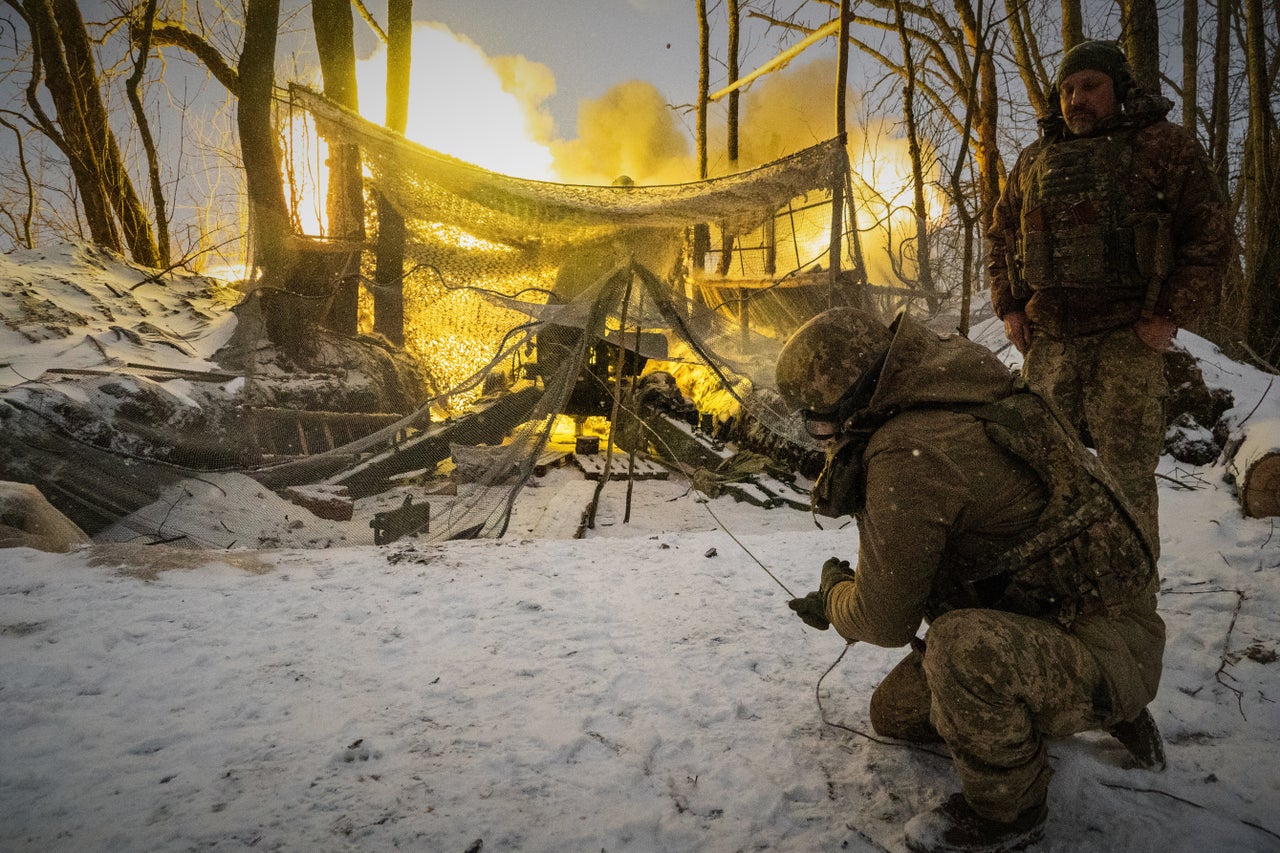
Ukrainian soldiers of the 48th separate artillery brigade fire at Russian positions on the frontline in Kharkiv region, Ukraine, Wednesday, Feb. 18, 2026.

He told HuffPost UK that Putin does not care about the cost of the war in terms of soldiers’ lives and material expenses, even though Russia is estimated to have suffered 1.2 million casualties since the conflict began.

While British officials have signalled that, beneath the surface, Russia’s economy is slowing down – with a fall in oil prices and a hike in VAT – that impact does not seem to have yet trickled through to the battlefield.

It’s suspected that Putin has not been informed about the reality of the public finances, or the eroding public support for the war.

But, at the same time, the Ukrainian army and state is nowhere near the state of collapse. In fact, its defence sector has been boosted over the last four years.

“A couple of more years of grinding warfare, in which the Russian army exchanges dozens of thousands of men for villages and townships in Eastern Ukraine, are totally possible,” Sonin, a Russian citizen and Kremlin critic, said.

“And then a new US president, a Republican or a Democrat, will be able to push Putin towards peace.”

Dr Simon Bennett, from the University of Leicester’s civil safety and security unit, also suggested it seemed pretty unlikely Trump’s efforts would result in a peace deal.

He said: “The upshot of this in 2026 is likely to be that Russia’s gains will come at an even greater cost, and, occasionally, will be partially reversed, albeit on a small scale in terms of square miles retaken by Ukraine.”

Bennett predicted Putin’s ongoing bid to control the whole of Ukraine’s eastern region, the Donbas, will likely mean the territory continues to be “the same bloody quagmire in 2026 as it was in 2025.”

“A couple of more years of grinding warfare… are totally possible”

– Professor Konstantin Sonin, the University of Chicago Harris School of Public Policy

Could Anything Force Trump To Crack Down On Putin?

Kurt Volker, who stepped down as Trump’s special envoy to Ukraine in 2019, claimed this week that the president has done a lot towards ending the war.

For instance, he has encouraged Ukraine to accept the idea of a ceasefire, and forced European allies to increase defence spending.

But speaking to the Centre for European Policy Analysis (CEPA) think tank, Volker said: “He still needs to get an end to the war. We need to be demanding a ceasefire and putting pressure on Russia to do that as soon as possible.”

The president’s annual State of the Union address is set to be on February 24 this year, the fourth anniversary of Russia’s full-scale invasion.

But experts do not expect him to use the opportunity to finally recognise the extent of Russia’s aggression against Ukraine.

As Bennett said, Trump is too “inconsistent” – and his approach to policy-making is a “crisis or war waiting to happen”.

The specialist also pointed out that “Putin has no intention of negotiating a peace deal” and claimed he is playing “demonstrably gullible” Trump.

Meanwhile, when asked if the US president could crack down on Russia in a bid to boost his ratings before the midterm elections in November, Sonin said: “There will be more pressure on Trump from the Congress Republicans, because both the US population and the elite have been consistently supportive of Ukraine through the years of war.

“So, I’d expect Trump to do small things against Putin.”

President Donald Trump, right, and Ukraine's President Volodymyr Zelenskyy shake hands at the start of a joint news conference following a meeting at Trump's Mar-a-Lago club, Dec. 28, 2025, in Palm Beach, Fla.
President Donald Trump, right, and Ukraine’s President Volodymyr Zelenskyy shake hands at the start of a joint news conference following a meeting at Trump’s Mar-a-Lago club, Dec. 28, 2025, in Palm Beach, Fla.

Could It Be Possible To Agree To A Ceasefire, but Not A Peace Deal?

Kurt Volkner told CEPA that it could be possible to strike up a deal comparable to the one which stopped the war between North and South Korea.

That non-aggression pact has – for the most part – held for more than 70 years, even though neither side technically agreed to a sustainable peace.

Volkner said: “Someday, I do believe there will be a ceasefire. I don’t believe there will ever be a peace agreement.

“I don’t believe Vladimir Putin will ever accept that there is an independent and sovereign Ukraine.

“Again, of the West, of governments, of investors, businesses, needs to be one that assumes that we will have a strong, growing, prosperous democratic European Ukraine that is safe and worthy of investment and business growth, very much like South Korea, without a final peace agreement with Russia, that’s just going to be where we are.”

But Sonin disagreed with this idea.

He said that while the North-South Korea deal was “one of the most durable, effective peace agreements despite never being finally ‘settled’”, it’s clear from previous attempts that written agreements between Russia and Ukraine do not work.

He also pointed out that such an agreement relies on the US commitment to help South Korea if North Korea invades, and China’s commitment to help North Korea if South Korea invades.

Sonin said: “A ‘peace agreement without a peace agreement’ between Russia and Ukraine is totally possible, but it will require Polish, German, Swedish, Baltic, etc, troops on the ground in Ukraine and a firm US commitment to get involved immediately if a new conflict starts.”

Bennett also dismissed Volker’s argument, as Putin still wants to restore Ukraine into a satellite state for Moscow.

“Few western leaders mention the fact that Putin’s war aims have not changed, first, because it does not fit with the Trump-the-Peacemaker-Extraordinaire narrative and secondly, because, when it comes to dealing with Trump, most western leaders are spineless,” Bennett said.

President Donald Trump, right, shakes the hand of Russia's President Vladimir Putin during a joint press conference at Joint Base Elmendorf-Richardson, Alaska, Friday, Aug. 15, 2025.
President Donald Trump, right, shakes the hand of Russia’s President Vladimir Putin during a joint press conference at Joint Base Elmendorf-Richardson, Alaska, Friday, Aug. 15, 2025.

Can Anything Be Done In The Pursuit Of Peace?

It’s widely believed that, in the absence of a stronger response from Trump, only a firmer intervention from Europe can actually stop the war.

But Ukraine allies across the continent have so far refused to commit to sending troops unless they operate in a peace-keeping capacity, as they want to avoid direct conflict with Russia.

Sonin told HuffPost UK: “I think that European countries will have to get involved into the military defense of Ukraine – sending ground troops, drone operators, etc. Of course it is a heavy lift politically.

“However, for the elites in Poland or Germany or Czech Republic or Romania or Baltic countries a scenario of Russia-controlled Ukraine (with Ukrainian army under maybe influence of the Russian masters) should be so scary that even a political heavy lift might become reality.”

He warned that without such an intervention, “the only hope is an internal collapse of Putin’s regime”.

Similarly, Bennett said Europe must resolve the issue by sending arms to Ukraine urgently, while the Russian army is weak.

“The cost in blood and treasure will be great,” Bennett said. “But nowhere near as great as allowing Russia to regenerate its armed forces for a final push on western Europe in five to 10 years’ time.”

Bennett said he saw this year’s Munich Conference as a “watershed moment”, as US secretary of state Marco Rubio reiterated that the White House primarily sees the Ukraine conflict as a problem for Europe not for the US.

Similarly, Volker said: “Europe can do a lot and can do a lot more than it is currently doing. And as I said, I picked up in Munich a realisation among a lot of European leaders that they’re not doing enough, that they need to step in and fill a gap that the US is leaving. So there are there’s a lot they can do.”

“The US sees itself as more of an arbiter than a prime mover in respect of European security,” Bennett said, adding: “I shall put it bluntly: the only way to end this war is through war. Europe must take Russia down.”

With nothing within Russia threatening to slow Putin’s ongoing aggression, and Trump’s efforts still – for now – amounting to mainly showmanship, ending the war in 2026 seems like a pipe dream, unless Europe gets directly involved.

As Bennett said: “Our fate is in our hands, and no-one else’s.”


Oil prices hit six-month highs after Trump warns Iran of ‘bad things’ if there’s no deal


US President Donald Trump speaks to reporters on Air Force One before taking off from Joint Base Andrews, Maryland on Feb. 19, 2026.

Saul Loeb | AFP | Getty Images

Oil prices hovered near six-month highs on Friday after U.S. President Donald Trump warned Iran that “really bad things” will happen if there was no deal over its nuclear program.

International benchmark Brent crude futures with April delivery traded 0.2% lower at $71.53 per barrel at around 9:24 a.m. London time (4:24 a.m. ET), erasing earlier gains, while U.S. West Texas Intermediate futures with March delivery stood 0.2% lower at $66.30.

Both contracts notched their highest settle in six months in the previous session as energy market participants continue to monitor supply risks in the oil-rich Middle East.

The U.S. and Iran have held talks in Switzerland this week to try to resolve a standoff over Tehran’s nuclear program. Initial reports of progress, however, gave way to accusations from Washington that Iran had failed to address core U.S. demands.

Speaking at the first meeting of his Board of Peace in Washington on Thursday, the U.S. president said “bad things will happen” if Tehran doesn’t agree to a deal over its nuclear program.

Trump added that the world will likely find out over the next 10 days whether the U.S. will reach a deal with Iran or take military action. He later told reporters aboard Air Force One that he wanted an agreement within “10 to 15 days.”

Stock Chart IconStock chart icon

Oil prices hit six-month highs after Trump warns Iran of ‘bad things’ if there’s no deal

Brent crude futures over the last six months.

His comments come after a significant buildup of U.S. military forces in the Middle East and amid reports the White House is considering fresh military action against Tehran as soon as this weekend.

Trump said Iran’s nuclear potential had been “totally decimated” by U.S. strikes on its facilities in June last year, before adding “we may have to take it a step further or we may not,” without providing further details.

Iran reportedly said in a letter to United Nations Secretary-General Antonio Guterres on Thursday that Tehran will respond “decisively” if subjected to military aggression.

The Islamic Republic has conducted military drills in the strategically vital Strait of Hormuz in recent days, as well as joint naval drills with Russia in the Gulf of Oman, also known as the Sea of Oman.

Naval units from Iran and Russia carry out to simulation of rescue a hijacked vessel during the joint naval drills held at the Port of Bandar Abbas near the Strait of Hormuz in Hormozgan, Iran on February 19, 2026.

Anadolu | Anadolu | Getty Images

“Everything is in place, or will be by Saturday night, for strikes to commence and so the window opens then,” Daniel Shapiro, former U.S. ambassador to Israel, told CNBC’s “Access Middle East” on Friday.

“Doesn’t mean that’s going to happen immediately. The president did indicate that he is waiting to hear from Iran whether they are prepared to make concessions on their nuclear program that he’s insisting on,” Shapiro said.

“I think it’s unlikely. We have never seen Iran open to those types of concessions, so I think it is unlikely they will agree to those, which means that in the days coming, the president will have to make that decision on military strikes,” he added.

A ‘very well supplied’ market

The Trump administration has said it still hopes to reach a diplomatic resolution over Tehran’s nuclear program, with White House press secretary Karoline Leavitt saying on Wednesday that it would be “very wise” for Iran to make a deal.

Martijn Rats, chief commodity strategist at Morgan Stanley, said that, while the oil market is “very well supplied” on a global basis, there are three factors propping up prices.

“Worries about Iran, clearly. Also, an unusually large amount of buying by China, simply for stockpiling purposes. It makes you wonder what they are going to do with all these inventories and then also we have very high freight rates,” Rats told CNBC’s “Europe Early Edition” on Friday.

“The factor of those three that is most prominent, of course, is the issue in Iran,” Rats said.

U.S. will keep key oil routes open, even if it strikes Iran - analyst

Strategists at Barclays said Friday that while equity markets have largely shrugged off the geopolitical noise so far, tensions have been rising since Vice President JD Vance accused Iran of failing to discuss so-called “red lines,” alongside reports of increased U.S. military capability in the region.

“We believe that any strike would likely have to be time limited and with defined targets (nuclear, ballistic missiles), as they were last summer,” the strategists said in a research note.

“With midterm elections later this year and the administration prioritizing affordability for US consumers, we suspect their willingness to tolerate a prolonged period of significantly higher oil prices, and potentially casualties too, will be limited,” they continued. “So if conflict is imminent it is likely to be short lived, in our view.”


Trump On Former Prince Andrew Arrest


!function(n){if(!window.cnx){window.cnx={},window.cnx.cmd=[];var t=n.createElement(‘iframe’);t.display=’none’,t.onload=function(){var n=t.contentWindow.document,c=n.createElement(‘script’);c.src=”//cd.connatix.com/connatix.player.js”,c.setAttribute(‘async’,’1′),c.setAttribute(‘type’,’text/javascript’),n.body.appendChild(c)},n.head.appendChild(t)}}(document);(new Image()).src=”


Kennedy defends Trump glyphosate order; MAHA erupts as midterms approach


U.S. Health and Human Services (HHS) Secretary Robert F. Kennedy Jr. speaks, announcing new nutrition policies during a press conference at the Department of Health and Human Services in Washington, D.C., U.S., Jan. 8, 2026.

Jonathan Ernst | Reuters

Secretary of Health and Human Services Robert F. Kennedy Jr. defended President Donald Trump’s executive order spurring the domestic production of the weedkiller glyphosate, as his Make America Healthy Again movement reels from the president’s embrace of the chemical they despise.

Trump on Wednesday night signed an executive order invoking the Defense Production Act to compel the domestic production of elemental phosphorus and glyphosate-based herbicides. Glyphosate is the chemical in Bayer-Monsanto’s Roundup and is the most commonly used weedkiller for a slew of U.S. crops. Trump, in the order, said shortages of both phosphorus and glyphosate would pose a risk to national security.

Kennedy backed the president in a statement to CNBC Thursday morning.

“Donald Trump’s Executive Order puts America first where it matters most — our defense readiness and our food supply,” he said. “We must safeguard America’s national security first, because all of our priorities depend on it. When hostile actors control critical inputs, they weaken our security. By expanding domestic production, we close that gap and protect American families.”

But Kennedy’s MAHA coalition that supported Trump in the 2024 presidential election hates glyphosate, which has been alleged to cause cancer in myriad lawsuits. Now, the executive order threatens to unravel that coalition ahead of the 2026 midterm elections that could loosen the president’s grip on Washington.

Read more CNBC politics coverage

“Just as the large MAHA base begins to consider what to do at midterms, the President issues an EO to expand domestic glyphosate production,” Kelly Ryerson, a prominent MAHA activist known as Glyphosate Girl, said in a post on X. “The very same carcinogenic pesticide that MAHA cares about most.”

Ken Cook, president of the Environmental Working Group, a watchdog that has pushed back against chemicals in food for years, said in a statement that he “can’t envision a bigger middle finger to every MAHA mom than this.”

“Elevating glyphosate to a national security priority is the exact opposite of what MAHA voters were promised,” Cook said. “If Secretary Kennedy remains at HHS after this, it will be impossible to argue that his past warnings about glyphosate were anything more than campaign rhetoric designed to win trust — and votes.”

Kennedy, a former environmental attorney, notably once won a nearly $290 million case against Monsanto for a man who claimed his cancer was caused by Roundup. The executive order came down one day after Bayer proposed paying $7.25 billion to settle a series of lawsuits claiming Roundup causes cancer.

Former Rep. Marjorie Taylor Greene, R-Ga., knocked Trump for signing “an EO protecting cancer causing Glyphosate in our foods.”

Glyphosate is a critical chemical to American agriculture. It’s applied to many key cash crops, such as corn and soybeans, and has been defended by agricultural trade organizations. Phosphorus is a key input to the creation of glyphosate, which the White House argues is necessary to maintain food security. Elemental phosphorus is also used in the manufacture of some military materials.

“Thank you, President Trump, for acknowledging the importance of glyphosate-based herbicides in American agriculture,” the House Agriculture Committee said Wednesday night in an X post. “This is a vital step forward in ensuring a domestic supply of this critical crop input remains available for our producers.”

House Agriculture Chair Rep. G.T. Thompson, R-Pa., is trying to push a farm bill through Congress this year — a legislative package that covers federal farm support and nutrition subsidies. He’s also come under fire from MAHA recently for a provision in that bill that would block state and local pesticide regulations from differing from federal guidance.


U.S. says Tehran would be ‘very wise’ to make a deal as Russia, Iran hold naval drills


U.S. President Donald Trump disembarks Air Force One at Palm Beach International Airport in West Palm Beach, Florida, U.S., Feb. 13, 2026.

Elizabeth Frantz | Reuters

The Trump administration has warned it would be “very wise” for Iran to make a deal, amid reports the White House is considering fresh military action against Tehran as soon as this weekend.

It comes shortly after Vice President JD Vance accused Iran of failing to address core U.S. demands during nuclear talks in Switzerland this week. Iran’s foreign minister previously reported progress in the talks, saying the two countries had reached an understanding over the “guiding principles” for the negotiations.

Speaking at a news briefing Wednesday, White House Press Secretary Karoline Leavitt said there were “many reasons and arguments that once could make for a strike against Iran,” noting that the two countries remain “very far apart” on some issues.

The U.S. president had a “very successful” operation last June, Leavitt said, when U.S. stealth bombers struck three Iranian nuclear facilities as part of “Operation Midnight Hammer.”

U.S. says Tehran would be ‘very wise’ to make a deal as Russia, Iran hold naval drills

“The president has always been very clear though with respect to Iran or any country around the world, diplomacy is always his first option. And Iran would be very wise to make a deal with President Trump and this administration,” Leavitt said.

The White House has said it still hopes to reach a diplomatic resolution over Tehran’s nuclear program, although U.S. media has reported that the military could be prepared to strike Iran as early as the weekend.

‘Extremely dangerous’ situation

Both the U.S. and Iran have increased military activity in the oil-producing Middle East region in recent weeks.

The U.S., for its part, has built up a significant presence of air and naval assets, while Iran has conducted military drills in the strategically vital Strait of Hormuz and announced joint naval drills with Russia in the Sea of Oman.

Laura James, Middle East senior analyst at Oxford Analytica, described the current situation as “extremely dangerous,” with the U.S. and Iran “certainly closer” to an outright conflict than last week.

Never underestimate President Trump's ability to change his mind: Analyst

“The thing that is now a particular concern over the past 24 hours is the very rapid pace at which the United States is reinforcing its air power in the region. That, of course, can still be signalling and pressure for a particular diplomatic outcome,” James told CNBC’s “Access Middle East” on Thursday.

“But as more and more planes comes in and more and more equipment comes in, that signalling gets more and more expensive. And therefore, the payoff you want for it in diplomatic terms has to be larger — and there is simply no sign Tehran can offer the absolute minimum that Washington is likely to demand,” she added.

Oil prices

Energy market participants have been closely watching the outcome of the U.S.-Iran talks in Geneva, particularly as it relates to the Strait of Hormuz, a major international waterway that Iran partially closed on Tuesday citing “security precautions.”

Located in the gulf between Oman and Iran, the Strait of Hormuz is recognized as one of the world’s most important oil choke points.

Iranian military personnel take part in an exercise titled ‘Smart Control of the Strait of Hormuz’, launched by the Naval Forces of the Islamic Revolutionary Guard Corps, is being carried out in the Persian Gulf and the Strait of Hormuz on February 16, 2026.

Anadolu | Anadolu | Getty Images

About 13 million barrels per day of crude oil transited the Strait of Hormuz in 2025, accounting for roughly 31% of global seaborne crude flows, data provided by market intelligence firm Kpler showed.

Oil prices were higher on Thursday, extending gains after settling up more than 4% in the previous session.

International benchmark Brent crude futures with April delivery rose 1.5% to $71.41 per barrel, while U.S. West Texas Intermediate futures with March delivery stood 1.7% higher at $66.27.

— CNBC’s Lee Ying Shan contributed to this report.


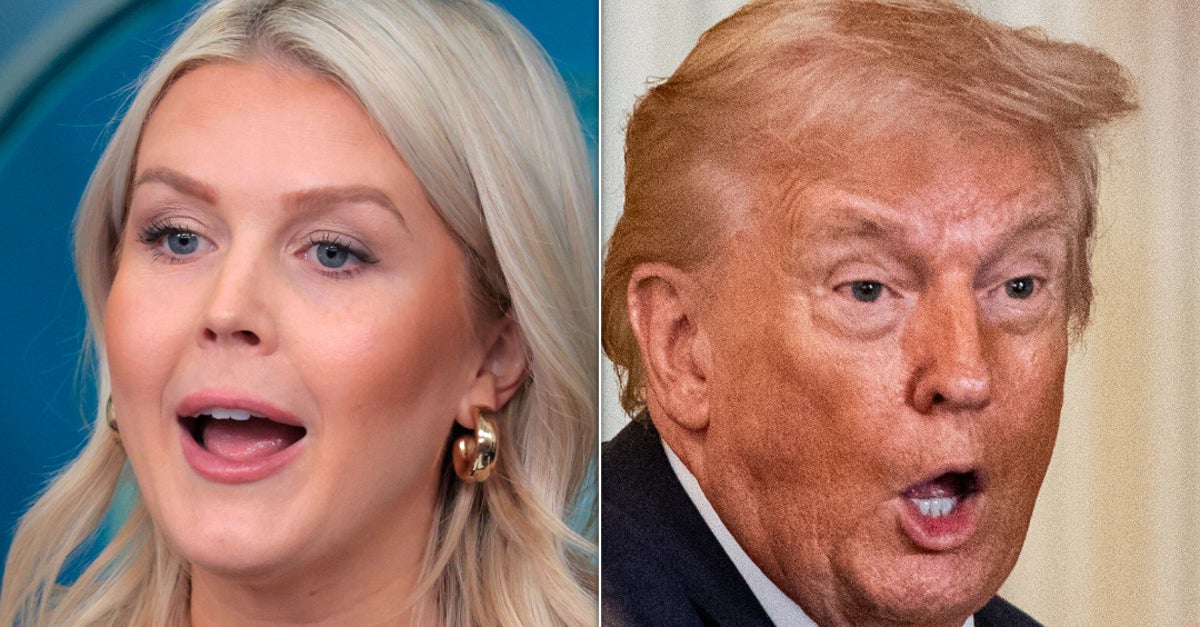
Karoline Leavitt Just Totally Undermined Trump’s ‘I Didn’t Do It’ Claim


White House press secretary Karoline Leavitt’s bold claim regarding President Donald Trump’s social media posts is raising new questions about a racist video featured on his account earlier this month.

On Wednesday, Leavitt was asked about a post on Trump’s Truth Social account that criticised Britain’s plan to turn over the Chagos Islands to Mauritius while also securing a 99-year lease to keep a joint UK–US military base on Diego Garcia.

“The post should be taken as the policy of the Trump administration,” she said. “It’s coming straight from the horse’s mouth. When you see it on Truth Social, you know it’s directly from President Trump.”

Leavitt called that the “beauty” of Trump’s presidency and a sign of his “transparency.”

Just one problem: Her statement conflicts with Trump’s claim about a racist video featured on his Truth Social account earlier this month that depicted former President Barack Obama and former first lady Michelle Obama as a chimpanzee and a gorilla.

The video was denounced by Democrats and Republicans alike, and Trump later deleted it. But he also never apologised, claiming it wasn’t his fault.

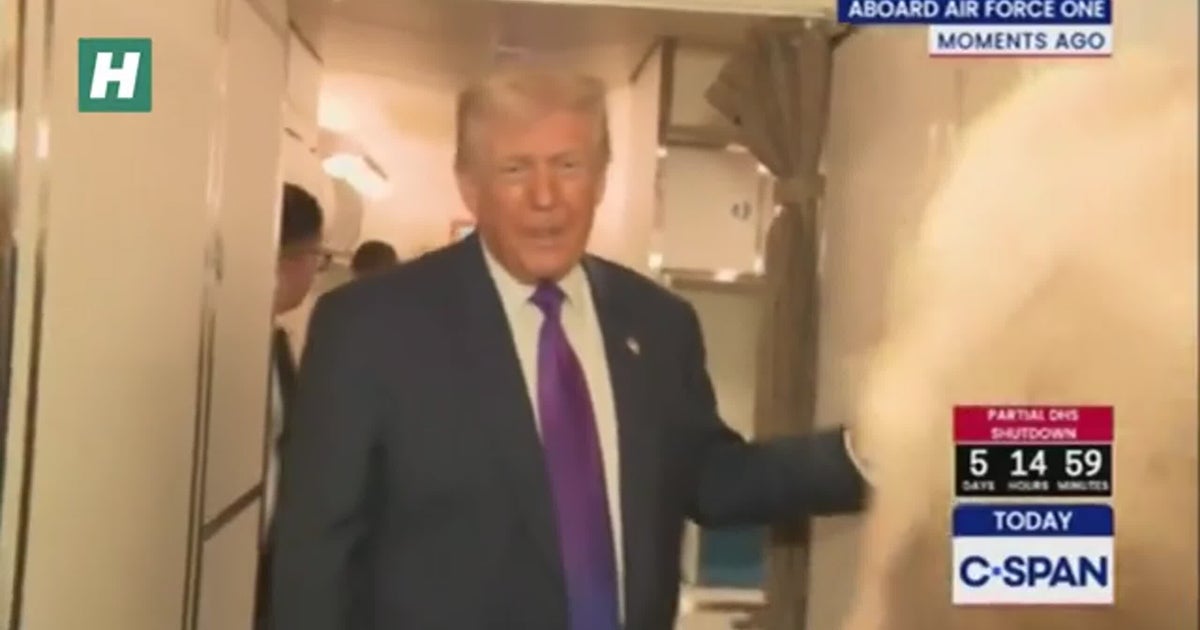
“I didn’t do it, by the way,” Trump told reporters while aboard Air Force One on February 6. “This was done by somebody else.”

Trump said he had seen part of the video, which he claimed was about “fraudulent elections,” and then passed it on without seeing the racist part.

“I guess probably nobody reviewed the end of it,” he said. “Somebody slipped and missed a very small part.”

Trump’s critics noted the glaring inconsistency and fired back on X:

Pathetic.

When it helps him, every post is “official presidential policy.”
When it backfires, suddenly it’s “some staffer.”

Accountability that disappears on demand isn’t leadership.
It’s a magic trick with nuclear codes.

If no one knows who’s actually speaking, who’s actually…

— AnatolijUkraine (@AnatoliUkraine) February 18, 2026

And you just can’t believe anything the Epstein Administration says is what I take away from this.

— Sheep Whisperer (@1sheepwhisperer) February 18, 2026

So much for blaming a staffer for the racist Obama video? Leavitt just admitted that was a lie as Trump handles all his own posts.

— Denison Barb (@DenisonBarbs) February 18, 2026

Epstein Administration at it again. i thought trump did not post the racist video 🤔

— HarlemWorld (@HarlemW68630436) February 18, 2026

LEAVITT: When you see it on Truth Social, you know it’s directly from President Trump.

Really? Including the recent video? https://t.co/ENtsaVZxT8

— Jamie Vernon 🇺🇸🔬🧬⚾️ (@JLVernonPhD) February 18, 2026

Then, by her own words, Trump himself posted the racist pic or Barack and Michelle Obama.

— Joe Munding (@crownroyal64) February 18, 2026


Trump Changes His Mind On Starmer’s Chagos Deal Again, Calling It A ‘Blight’ On The UK


Donald Trump has attacked Keir Starmer’s Chagos deal once again, describing it as a “big mistake” and a “blight” on the UK.

The UK government announced last year that it was going to pay Mauritius £9 billion over the next 99 years so the UK-US military base at Diego Garcia will continue to operate as it does at the moment.

The US president initially seemed in favour of the deal but, at the height of his row with Europe over the sovereignty of Greenland in January, he changed his mind.

He accused Britain of giving away the “vital US military base” for “NO REASON WHATSOEVER”.

He then backtracked just two weeks ago, after a phone call with the prime minister, describing it as the best deal Starmer “could make”, though he warned that the US retains “the right to militarily secure and reinforce the American presence in Diego Garcia”.

The US did give its official backing to the UK’s plan to cede sovereignty of the territory only on Tuesday.

However, Trump has just changed his mind again, writing on TruthSocial that he has told Starmer “leases are no good when it comes to countries”.

He claimed to have warned the PM that “he is making a big mistake by entering a 100 year lease”.

He added: “Prime minister Starmer is losing control of this important Island by claims of entities never known of before. In our opinion, they are fictitious in nature.”

Trump suggested the US might need the archipelago if Iran does not agree to a new nuclear deal.

The president concluded: “We will always be ready, willing, and able to fight for the UK, but they have to remain strong in the face of Wokeism.”

A Foreign Office spokesperson said: “The deal to secure the joint UK-US military base on Diego Garcia military is crucial to the security of the UK and our key allies, and to keeping the British people safe.

“The agreement we have reached is the only way to guarantee the long-term future of this vital military base.”

Talks between the US and Mauritius are scheduled for next week.

Read Trump’s full message below:

I have been telling Prime Minister Keir Starmer, of the United Kingdom, that Leases are no good when it comes to Countries, and that he is making a big mistake by entering a 100 Year Lease with whoever it is that is “claiming” Right, Title, and Interest to Diego Garcia, strategically located in the Indian Ocean. Our relationship with the United Kingdom is a strong and powerful one, and it has been for many years, but Prime Minister Starmer is losing control of this important Island by claims of entities never known of before. In our opinion, they are fictitious in nature. Should Iran decide not to make a Deal, it may be necessary for the United States to use Diego Garcia, and the Airfield located in Fairford, in order to eradicate a potential attack by a highly unstable and dangerous Regime — An attack that would potentially be made on the United Kingdom, as well as other friendly Countries. Prime Minister Starmer should not lose control, for any reason, of Diego Garcia, by entering a tenuous, at best, 100 Year Lease. This land should not be taken away from the U.K. and, if it is allowed to be, it will be a blight on our Great Ally. We will always be ready, willing, and able to fight for the U.K., but they have to remain strong in the face of Wokeism, and other problems put before them. DO NOT GIVE AWAY DIEGO GARCIA!

White House press secretary Karoline Leavitt said: “The post should be taken as the policy of the Trump administration, it’s coming straight from the horse’s mouth.

“When you see it on Truth Social you know it’s directly from President Trump, that’s the beauty of this president in his transparency and relaying this administration’s policies.”

Tory shadow foreign secretary Dame Priti Patel said these remarks will be an “utter humiliation” for Starmer.

She said: “It’s time Starmer finally saw sense, U-turned and scrapped this appalling deal altogether.”

Lib Dem leader Ed Davey wrote on X: “Trump’s endless flip-flopping on the Chagos Islands shows why Starmer’s approach is doomed to fail.

“Britain can’t rely on the US while Trump is in the White House. It’s time to strengthen our ties with allies we can depend on, starting with our neighbours in Europe.”

Reform’s Nigel Farage also said: “Thank goodness Trump has vetoed the surrender of the Chagos islands.”

Four people who live on the Chagos island also set up camp on the archipelago’s remote atoll this week to protest the deal.

They refused to leave, despite facing eviction threats from the UK maritime patrol.


Billionaire Les Wexner’s congressional deposition over Jeffrey Epstein ties is underway


This Sept. 19, 2014 file photo shows retail mogul Leslie Wexner, at the Wexner Center for the Arts in Columbus, Ohio. Wexner is severing his last ties with the retail empire that he founded in 1963.

Jay LaPrete | AP

A congressional deposition of Leslie Wexner, one of Jeffrey Epstein’s closest known associates and top benefactors, kicked off behind closed doors in Ohio on Wednesday.

The deposition of the 88-year-old retail billionaire is occurring weeks after the Department of Justice released millions of additional Epstein-related files, which have revealed new links between the notorious sex offender and major figures in business and politics.

Wexner, the retired founder of Victoria’s Secret former parent company L Brands, has faced intense scrutiny for years over his personal and financial relationships with Epstein. The latest document dump raises new questions about the extent of that relationship and how long it lasted, despite Wexner’s claim that it was “completely severed” nearly two decades ago.

“I was naïve, foolish, and gullible to put any trust in Jeffrey Epstein,” Wexner said in a statement submitted to the House Oversight Committee ahead of the deposition.

“He was a con man. And while I was conned, I have done nothing wrong and have nothing to hide,” Wexner said.

He went on to call Epstein a “master manipulator” who “lived a double life,” insisting that any criminal activities were “most carefully and fully hid from me.”

“Again, to be clear, I never saw or heard about Epstein being in the company of a minor girl,” Wexner said.

Decades earlier, Wexner had given Epstein, a high school math teacher turned well-connected money manager, power of attorney over his finances. Wexner had long been Epstein’s only publicly known client.

“The most important information for us is really about the money,” Rep. Robert Garcia of California, the Oversight Committee’s ranking Democrat, said on CNN earlier Wednesday.

“We know that Wexner was Jeffrey Epstein’s single largest benefactor,” Garcia said. “When you think about Epstein’s wealth, whether it was the plane, the island, the amount of money when had, his homes — much of that came directly from Wexner.”

“We’re not exactly sure why. It’s not clear,” he said. “When you talk to survivors, they’ll all share with you that Wexner was at the center of what Epstein was doing.”

Wexner has not been charged with any crime. After Epstein was arrested on federal sex trafficking charges in July 2019 — and died by suicide in jail a month later — Wexner said he was embarrassed to have been “taken advantage of by someone who is … so depraved.”

The Oversight Committee had subpoenaed Wexner and other Epstein associates in January with bipartisan support.

In his prepared statement before Wednesday’s deposition, Wexner maintained that he “completely and irrevocably cut ties with Epstein nearly twenty years ago when I learned that he was an abuser, a crook, and a liar.”

“And, let me be crystal clear: I never witnessed nor had any knowledge of Epstein’s criminal activity. I was never a participant nor coconspirator in any of Epstein’s illegal activities. To my enormous embarrassment and regret I, like many others, was duped by a world-class con man. I cannot undo that part of my personal history even as I regret ever having met him,” Wexner’s statement said.

Wexner said he hired Epstein as a financial manager years after being introduced to him in the 1980s by insurance giant Aon’s former vice chairman Bob Meister. Wexner also said he consulted about Epstein with Ace Greenberg and Jimmy Cayne, of Epstein’s former employer Bear Stearns, and Elie de Rothschild of the Rothschild family banking dynasty, whom Epstein offered as a reference.

Epstein initially refused to take on Wexner as a client, instead offering occasional financial advice for free. “Little did I realize that, from the very start, Epstein was conniving to gain my trust,” Wexner’s statement read.

Wexner eventually succeeded in formally hiring Epstein. “Because my public company and other duties required my full attention, I provided Epstein with a power of attorney so he could execute transactions quickly, without constantly requiring my signature,” according to Wexner.

“The need for a power of attorney was clear to me, and I provided the same scope of authority to Epstein as I did to his successor, Dennis Hersch,” the statement said. “What I did not anticipate was Epstein misusing the trust I placed in him despite his fiduciary obligation to act in my best interest.”

Read more CNBC politics coverage

As for the allegations that Epstein ran a widespread sex trafficking operation that exploited girls and young women, Wexner is adamant that he knew nothing about it.

“He knew that I never would have tolerated his horrible behavior. Not any of it. At no time did I ever witness the side of Epstein’s life for which he is now infamous,” Wexner’s statement said.

“To be clear, never once in 36 years have I been unfaithful to Abigail in any way, shape, or form. Never,” he said referring to his wife. “Any suggestion to the contrary is absolutely and entirely false.”

Wexner also said he never traveled on Epstein’s airplane and disputed the “rumor” that he gave Epstein a townhouse in New York. Epstein “purchased it from me for what I was told was the appraised value,” and Wexner never entered the house afterward, according to the statement.

Wexner admitted visiting Epstein’s private island in the U.S. Virgin Islands, but said he did so only once, when his wife and young children “stopped for a few hours one morning while we were on a cruise on our boat.”

Wexner said he revoked Epstein’s power of attorney in September 2007, months before Epstein pleaded guilty in Florida to a state charge of soliciting a minor for prostitution.

“In light of his eventual guilty plea and deception of our family, we completely severed our relationship with Epstein. Epstein was permanently and irrevocably out of my life,” Wexner wrote.

The Wexner Foundation told CNBC in a statement, “We hold in our hearts the survivors of Epstein’s horrific crimes and pray for their healing and strength.”


Stephen Colbert says CBS blocks James Talarico interview from air


Democratic Texas state Rep. James Talarico speaks during a U.S. Senate campaign launch rally in Round Rock, Texas, Sept. 9, 2025.

Brandon Bell | Getty Images

Stephen Colbert ripped CBS for barring him from airing on his late-night TV show an interview with Texas state Rep. James Talarico, a Democrat running for the U.S. Senate.

“You know who’s not one of my guests tonight? That’s Texas Representative James Talarico,” Colbert told his show’s studio audience for Monday night’s broadcast of “The Late Show with Stephen Colbert.”

“He was supposed to be here, but we were told in no uncertain terms by our network’s lawyers, who called us directly, that we could not have him on the broadcast,” said Colbert, drawing boos from the crowd.

“Then I was told in some uncertain terms that not only could I not have him on, I could not mention me not having him on,” Colbert said.

“And because my network clearly doesn’t want us to talk about this, let’s talk about this,” Colbert said to laughs and applause.

“The Late Show with Stephen Colbert” during the June 25, 2025, show.

Scott Kowalchyk | CBS | Getty Images

Colbert suggested that CBS’s move was the result of concern that the network would draw the ire of the Federal Communications Commission.

Colbert’s comments are the latest escalation in tension between talk show hosts and the FCC, following the brief suspension by ABC of fellow late-night comedian Jimmy Kimmel’s show last summer.

The FCC last month issued guidance to the three broadcast networks, reminding them of the 1934 law that requires networks to provide equal opportunity for coverage for political candidates if their opponents appear on air.

The guidance pointedly said there is no evidence that late-night and daytime talk show interviews would qualify for an exemption allowed under the law for “bona fide” news coverage.

Colbert, during Monday’s show, pointed to reports earlier this month that the FCC was investigating the ABC daytime talk show “The View” because of an appearance by Talarico on that program.

CBS, in a statement to CNBC, said, “The Late Show was not prohibited by CBS from broadcasting the interview with Rep. James Talarico.”

“The show was provided legal guidance that the broadcast could trigger the FCC equal-time rule for two other candidates, including Rep. Jasmine Crockett, and presented options for how the equal time for other candidates could be fulfilled,” CBS said.

“The Late Show decided to present the interview through its YouTube channel with on-air promotion on the broadcast rather than potentially providing the equal-time options.”

Read more CNBC politics coverage

Talarico on Tuesday posted a link to his interview with Colbert, which was available online.

In a statement provided to CNBC by his Senate campaign, Talarico said, “I think [President] Donald Trump is worried we’re about to flip Texas. This is the party that ran against cancel culture.”

“Now they’re trying to control what we watch, what we say, and what we read,” Talarico said.

“This is the most dangerous kind of cancel culture, the kind that comes from the top. A threat to one of our First Amendment rights is a threat to all of our First Amendment rights.”

Talarico is in a close Democratic primary for a U.S. Senate seat against Rep. Jasmine Crockett, D- Texas, in which early voting began Tuesday. The winner will face off against the winner of the Republican primary between Sen. John Cornyn and Texas Attorney General Ken Paxton. Democrats last won a statewide race in Texas in 1994.

The FCC didn’t immediately respond to a request for comment about whether CBS would have run afoul of agency guidance by airing Talarico’s interview.

FCC Commissioner Anna Gomez, in a statement, called CBS’s decision “yet another troubling example of corporate capitulation in the face of this Administration’s broader campaign to censor and control speech.”

“The FCC has no lawful authority to pressure broadcasters for political purposes or to create a climate that chills free expression,” Gomez said.

“CBS is fully protected under the First Amendment to determine what interviews it airs, which makes its decision to yield to political pressure all the more disappointing,” Gomez said.

“It is no secret that Paramount, CBS’s parent company, has regulatory matters before the government, but corporate interests cannot justify retreating from airing newsworthy content. The FCC is powerless to impose restrictions on protected speech, and any attempt to intimidate broadcasters into self-censorship undermines both press freedom and public trust.”

“I once again urge broadcasters and their parent companies to stand firm against these unlawful pressures and continue exercising their constitutional right to speak freely and without government interference,” Gomez said.

Paramount Skydance has launched a hostile tender bid for Warner Bros. Discovery, a deal that would require regulatory approval from the federal government if WBD shareholders accept the offer.

CBS in July said Colbert’s show would be cancelled in May.

That announcement came shortly after Colbert blasted the network for giving what he called a “big fat bribe” to Trump. Paramount Skydance, earlier agreed to pay $16 million for Trump’s future presidential library to settle a lawsuit over the editing of a “60 Minutes” interview with then-Vice President Kamala Harris.

A week after CBS said it was cancelling Colbert’s show, the FCC approved the $8 billion merger between Paramount and Skydance Media.

Colbert, in September, spoke up for Kimmel when ABC pulled Kimmel off the air following remarks by FCC Chair Brendan Carr that the network’s broadcast license was at risk because of comments Kimmel made about the alleged killer of conservative activist Charlie Kirk.

Kimmel’s show returned to the air about a week later.


Democrats send Trump DHS funding counteroffer as agency shutdown grinds on


U.S. Senate Minority Leader Chuck Schumer (D-N.Y.) (C), joined by House Minority Leader Hakeem Jeffries (D-N.Y.) (L) and House Homeland Security Chairman Bennie Thompson (D-Miss.) hold a press conference on Department of Homeland Security (DHS) funding at the U.S. Capitol on Feb. 04, 2026 in Washington, DC.

Kevin Dietsch | Getty Images

Congressional Democrats sent a counteroffer to the White House and Republicans in negotiations to reopen the Department of Homeland Security, a spokesperson for Senate Minority Leader Chuck Schumer said Monday night.

Schumer, D-N.Y., and other Democrats are locked in negotiations with President Donald Trump and congressional Republicans about imposing new restrictions on federal immigration agents in exchange for funding DHS. The agency shut down early Saturday morning after two weeks of stopgap funding ran out.

The negotiations over DHS funding are heightened after federal immigration agents shot and killed two U.S. citizens during an immigration surge in Minneapolis. Democrats demanded that DHS funding be stripped from a package appropriating money for a handful of other agencies in the wake of the shootings and forced negotiations on immigration enforcement.

The Trump administration has since said it would wind down the Minneapolis operation.

Democrat didn’t say what’s in their counteroffer. Schumer’s office didn’t respond to an email seeking comment on details of the proposal.

Read more CNBC politics coverage

Democrats have pushed for a ban on agents masking their faces, mandatory body cameras, a requirement for judicial warrants for immigration arrests and an end to “roving patrols,” among other priorities. The White House and Republicans have pushed back on the mask ban and judicial warrant requirements.

The White House sent an initial counteroffer to a Democratic proposal last week. Democrats threw cold water on that, arguing it did not adequately address their concerns.

Democrats have less incentive to capitulate during this latest spending standoff, especially given the limited scope of the shutdown and recent polling showing that most Americans feel Trump’s immigration policy has gone too far.

“Built into this is the substantially changing politics of immigration. I think Republicans are still acting like they hold a straight flush on immigration, but they clearly are only holding a pair of threes,” Jared Leopold, a Democratic strategist who has worked on the Hill and for the Democratic Senate Campaign Committee, said in an interview.

Many DHS employees are still working despite the shutdown, as much of the agency is deemed essential during a closure and parts of it are funded through last year’s massive tax and spending bill. But essential employees may be forced to work without pay if the shutdown drags on for a long time. That includes employees at DHS subagencies, including the Transportation Security Administration, Coast Guard and the Federal Emergency Management Agency.

Immigration enforcement operations at Immigration and Customs Enforcement and Customs and Border Patrol can largely proceed unaffected by the shutdown. Congressional Republicans injected hundreds of billions of dollars into the agency’s law enforcement apparatus as part of the party-line “One Big Beautiful Bill” law.

The rest of the government is funded through Sept. 30.