Denmark votes in an early election that follows a crisis over US designs on Greenland


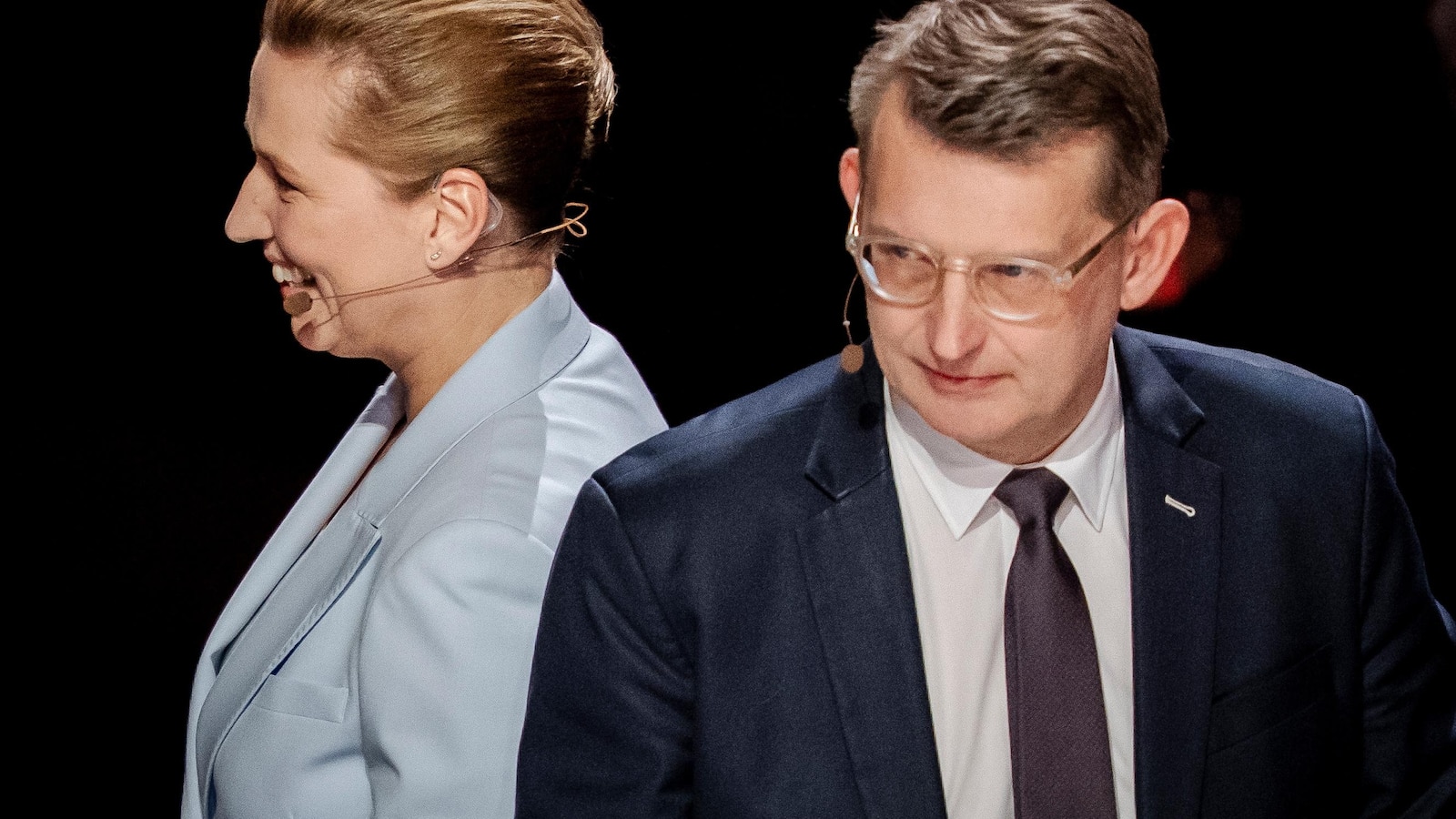
COPENHAGEN, Denmark — Danish voters went to the polls Tuesday in a general election, with Prime Minister Mette Frederiksen seeking a third term at the helm of the Scandinavian country after a standoff with U.S. President Donald Trump over the future of the kingdom’s semiautonomous territory of Greenland.

More than 4.3 million people are eligible to have their say in the vote for the new Folketing, or parliament, in Copenhagen, which is elected for a four-year term.

Frederiksen called the election last month, going to the country several months before she had to in apparent hopes that her resolute image in the crisis over Greenland would help her with voters in the European Union and NATO member country.

In her second term, her support had waned as the cost of living rose — something that, along with pensions and a potential wealth tax, has been a prominent campaign issue.

The 48-year-old center-left Social Democrat is known for strong support of Ukraine in its defense against Russia’s invasion and for a restrictive approach to migration — continuing a tradition in Danish politics that now goes back two decades.

Seeking to counter pressure from the right and pointing to a possible surge in migration because of the Iran war, Frederiksen announced proposals this month that include a potential “emergency brake” on asylum and tighter controls on criminals who lack legal residence. Her government had already unveiled a plan to allow the deportation of foreigners who have been sentenced to at least one year in prison for serious crimes.

Two center-right challengers hope to oust Frederiksen as prime minister. One is in her current government — Defense Minister Troels Lund Poulsen of the Liberal, or Venstre, party, which headed several recent administrations.

The other is Alex Vanopslagh, 34, of the opposition Liberal Alliance, which calls for lower taxes and less bureaucracy, and for Denmark to abandon its refusal to use nuclear power. But a recent admission from Vanopslagh to taking cocaine earlier in his time as party leader may have dented his chances.

Further to the right, the anti-immigration Danish People’s Party looks well-placed to bounce back from a very weak showing at the last election in 2022.

No single party is expected to come anywhere near winning a majority. Denmark’s system of proportional representation typically produces coalition governments, traditionally made up of several parties from either the “red bloc” on the left or the “blue bloc” on the right, after weeks of negotiations.

Frederiksen’s outgoing three-party administration was the first in decades to straddle the political divide. It remains to be seen whether this election will result in a repeat, with the centrist Moderate party of Foreign Minister Lars Løkke Rasmussen possibly acting as the kingmaker.

Greenland, which took up much of the government’s energy in recent months, hasn’t been a significant issue in the campaign because there is broad agreement on its place in the kingdom.

Frederiksen warned in January that an American takeover of Greenland would amount to the end of NATO. But the crisis has simmered down, at least for now.

After Trump backed down on threats to impose tariffs on Denmark and other European countries that opposed the U.S. taking control of the vast Arctic island, the U.S., Denmark and Greenland started technical talks on an Arctic security deal.

Denmark’s single-chamber parliament has 179 seats. Of those, 175 go to lawmakers from Denmark itself and two each for representatives from thinly populated Greenland and the kingdom’s other semiautonomous territory, the Faroe Islands.

___

Moulson reported from Berlin.

U.S. allies at NATO focus on Europe as the Trump administration steps back


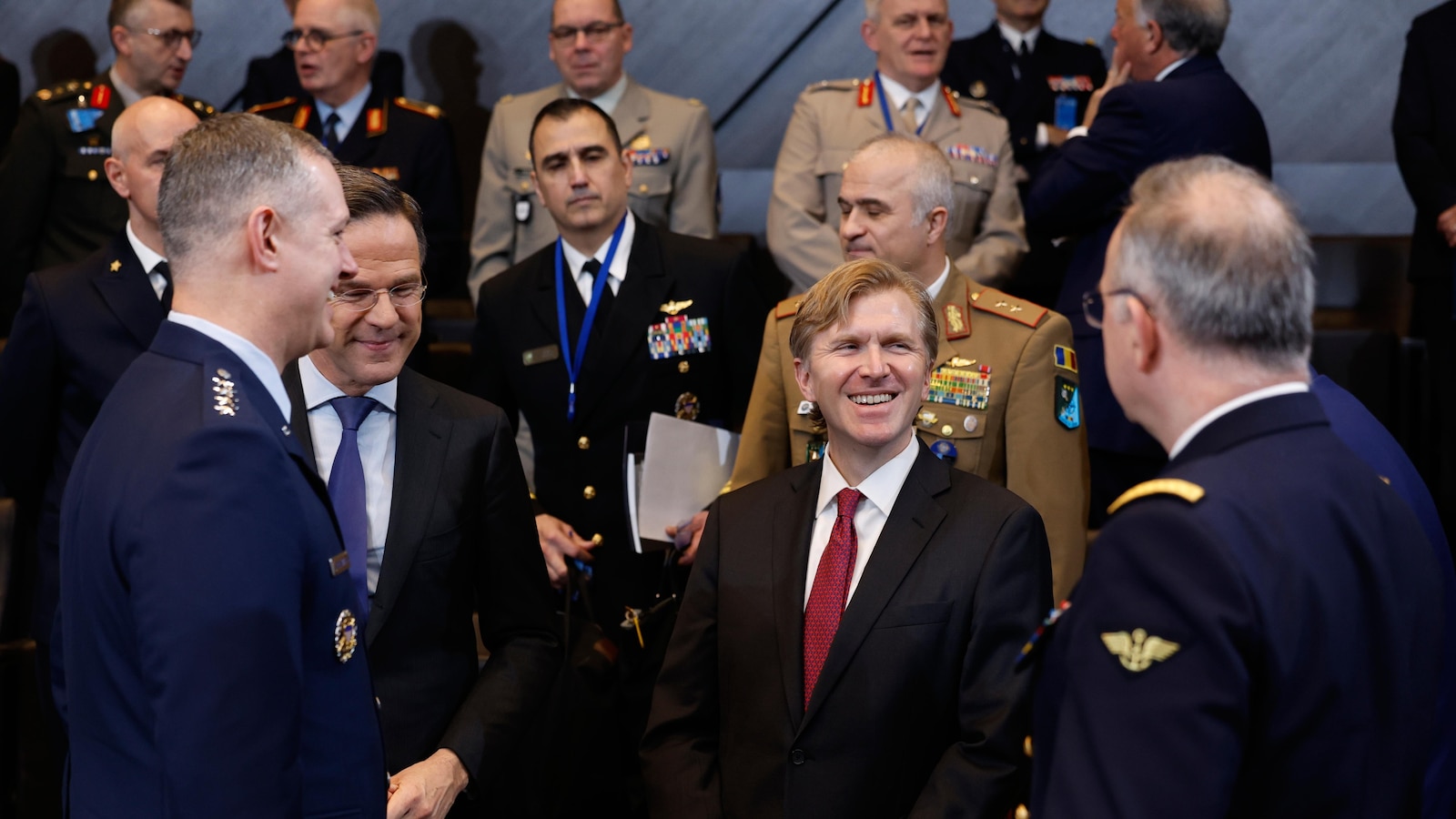
BRUSSELS — European allies at NATO on Thursday brushed aside concerns that the United States has stepped back from its leadership role of the world’s biggest security organization, leaving them and Canada to do the lion’s share of defending Europe.

U.S. Defense Secretary Pete Hegseth did not attend Thursday’s gathering of defense ministers at NATO headquarters in Brussels. His no-show came after Secretary of State Marco Rubio skipped the last meeting of NATO foreign ministers in December.

It’s rare for members of a U.S. administration to miss a meeting of the organization’s top decision-making body, the North Atlantic Council, at the level of ministers, let alone two meetings in a row. Under Secretary of Defense Elbridge Colby was sent in Hegseth’s place.

“Sadly for him, he is missing a good party,” Icelandic Foreign Minister Þorgerður Katrín Gunnarsdóttir told reporters. “Of course, it’s always better that the ministers attend here, but I would not describe it as a bad signal.”

“I’m not disappointed,” German Defense Minister Boris Pistorius said. “Each of us has a full agenda. And one time the American defense minister is here, and one time not, so it’s his decision and his duties he has to fulfill.”

When asked what NATO’s purpose was in its infancy in 1949, NATO’s first secretary-general, the British general and diplomat Lord Hastings Ismay, was reputed to have replied: “To keep the Americans in, the Russians out and the Germans down.”

Nowadays, Germany is stepping up. After Russia invaded Ukraine four years ago, it vowed to spend 100 billion euros ($118 billion) to modernize its armed forces in coming years.

A big part of NATO Secretary-General Mark Rutte’s job is to keep the Americans in.

“They have to take care of the whole world. This is the United States,” Rutte told reporters before chairing the meeting. “I totally accept it, agree with it.”

“They have always consistently pleaded for Europe doing more, Canada doing more, taking more care of the defense of NATO territory, of course in conjunction with the United States,” he said.

That means more European spending on conventional weapons and defense, while the U.S. guarantees NATO’s nuclear deterrent.

But doubts linger, and surprises from the Trump administration cannot be ruled out. Allies still wonder whether more U.S. troops will be withdrawn from Europe.

“What for me is the most important is the no-surprise policy that has been agreed between the NATO secretary-general and the U.S.,” Dutch Defense Minister Ruben Brekelmans said.

Publicly at least, the Trump administration is doing much less at NATO. A year ago, Hegseth warned that America’s security priorities lie elsewhere and that Europe would have to look after itself, and Ukraine in its battle against Russia’s full-scale invasion.

Supplies of U.S. guns and money that were sent to Ukraine by the previous administration of President Joe Biden have dried up under Trump. European allies and Canada are obliged to buy weapons from the United States to donate now.

Western backers of Ukraine were also meeting at NATO on Thursday to drum up more military support. A scheme proudly championed by the Pentagon under Biden, the Ukraine Defense Contact Group is now chaired by the U.K. and Germany.

U.K. Defense Secretary John Healey announced that Britain would provide “an extra half a billion pounds ($682 million) in urgent air defense to Ukraine. This is Britain being a force for good in the world, building a new deal for European security within NATO.”

Sweden also intends to fund the purchase of more American weapons. The Netherlands will send more flight simulators to help Ukrainian fighter pilots train to fly F-16 jets.

The one “deliverable” from Thursday’s meeting was the announcement that NATO would launch Arctic Sentry, its response to U.S. security concerns in the high north, and an attempt to dissuade Trump from trying to seize Greenland.

It’s ostensibly aimed at countering Russian and Chinese activities or influence in the Arctic region.

But Arctic Sentry is essentially a rebranding exercise. National drills already underway in the region, like those run by Denmark and Norway, will be brought under the NATO umbrella and overseen by the organization’s military chief.

It is not a long-term NATO operation or mission.

Denmark, France, Germany will take part in the “military activities” happening under Arctic Sentry, but they have not said in what way. Finland and Sweden are likely to get involved. Belgium is considering what role it might play.

It remains unclear what role, if any, the United States will take.

“It can’t just be more from the United States,” U.S. Ambassador to NATO Matthew Whitaker said ahead of Thursday’s meeting. “We need capable allies that are ready and strong, that can bring assets to all of these areas of our collective security.”

Trump’s renewed threats last month to annex Greenland — a semiautonomous territory of NATO ally Denmark — have deeply shaken the rest of the alliance. NATO’s primary role is to defend the territory of its 32 member states, not to undermine it.

European allies and Canada hope that Arctic Sentry and ongoing talks between the Trump administration, Denmark and Greenland will allow NATO to move on from the dispute and focus on Europe’s real security priority, Russia’s war on Ukraine.

Belgian Defense Minister Theo Francken said the Arctic security arrangement at least means that “we stop having some food fights over the Atlantic.”

“I think that the Greenland saga was not the best moment of NATO (over) the last 76 years,” he told reporters. “It was a crisis that was not needed.”