Paul McCartney is opening up about how his wife helped him deal with the breakup of The Beatles.
In the documentary, “Paul McCartney: Man on the Run,” director Morgan Neville spoke with the 83-year-old musician about his life after The Beatles, and how a mantra he learned from his late wife, Linda McCartney, helped him cope, teaching him “not to be too uptight.”
“In a situation like that you lost your job, you can get uptight very easily,” he said. “One of my favorite expressions of hers was, you’d be saying, ‘Oh, I don’t know. I’d love to do so and so, but I can’t. I can’t,’ and she’d say, ‘it’s allowed.’ It’s like all the weight just went off. It’s allowed. Yeah, of course it is. So those kind of things really impressed me and I think probably made me think a lot more was allowed than was.”
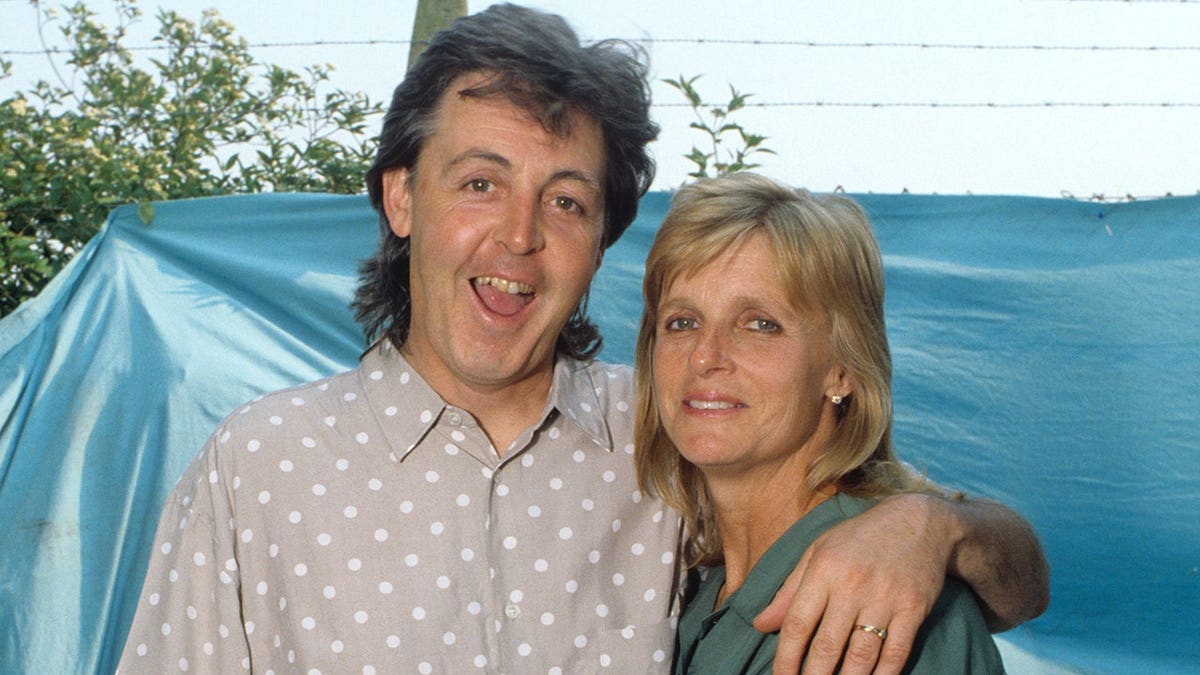
Linda and Paul met in 1967, while she was working as a photographer, and were married two years later in March 1969. Throughout their marriage, the two welcomed three children: Mary, Stella and James.
Paul says his wife’s motto helped lift a weight off his shoulder.(Fryderyk Gabowicz/picture alliance via Getty Images)
PAUL MCCARTNEY REVEALS EXPLOSIVE ‘F— YOU, JOHN’ MOMENT AFTER BEATLES LAWSUIT
In the documentary, Paul called Linda “a freeing influence,” saying that while she grew up in a “posh” area of New York and “was on track to become the sort of company wife,” that’s not what she wanted.
“She liked rock and roll, and she would do things like sneak out of the house late at night to and drive into New York with a boyfriend,” he said. “So there was a lot of freedom in her thinking, so I think that’s really was good for me.”
A few years after The Beatles broke up, Paul formed the band Wings, with Linda joining full-time as a keyboardist and also providing vocals.
PAUL MCCARTNEY SAYS YOKO ONO CLAIMED JOHN LENNON ‘MIGHT HAVE BEEN GAY’ AFTER HIS DEATH
Wings went on to become one of the biggest bands of the 1970s, with hits like “Band on the Run,” “Live and Let Die” and “My Love,” and two Grammy Award wins.
Paul and Linda later formed the band Wings, with Linda providing vocals and playing keyboard.(David Redfern/Redferns)
When thinking about that time, Paul says when he listens to the music and hears “these beautiful harmonies coming from Linda,” he still stands in awe of her talent.
“I think wait a minute there was no auto tune. We didn’t have any of…that’s real,” he said. “She hadn’t had any lessons and it was just a love of singing. I liked her voice. Her style was not operatic. It was not blues.”
CLICK HERE TO SIGN UP FOR THE ENTERTAINMENT NEWSLETTER
Paul and Linda were married for nearly 30 years before her death in 1998 at the age of 58, following a battle with breast cancer.
When looking back on his time in Wings, Paul is still in awe of Linda’s voice.(Rob Verhorst/Redferns)
“You expect to see them walk in, this person you love, because you are so used to them,” he said. “I cried a lot. It was almost embarrassing except it seemed the only thing to do.”
LIKE WHAT YOU’RE READING? CLICK HERE FOR MORE ENTERTAINMENT NEWS
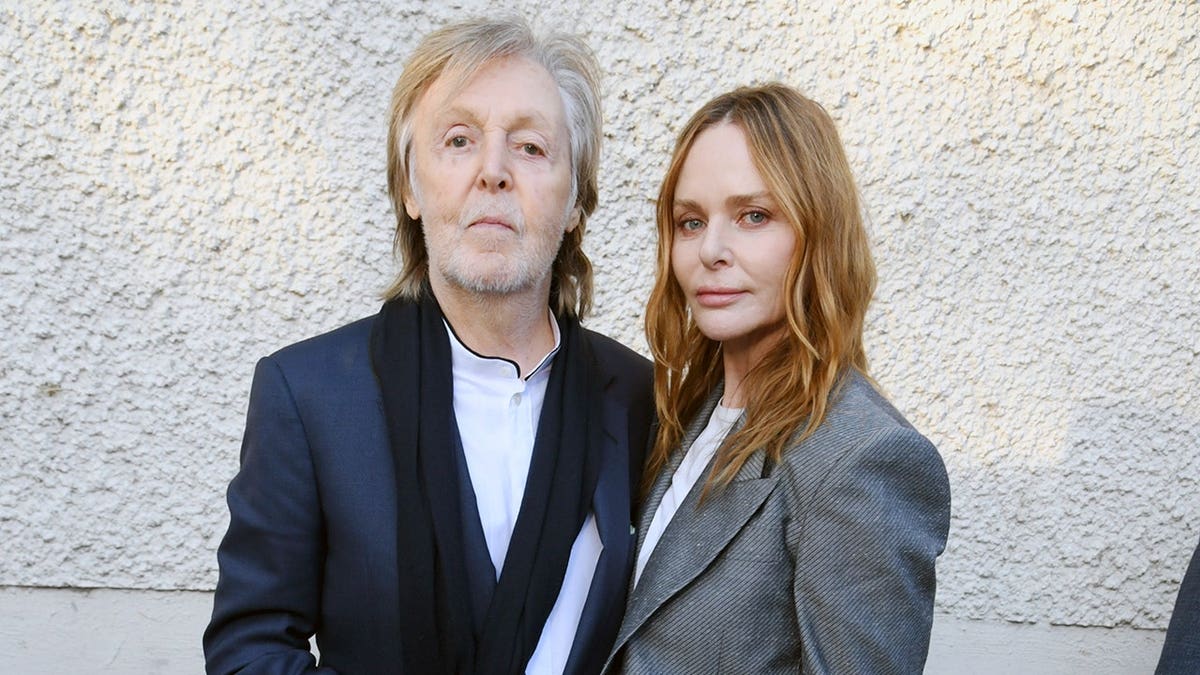
The couple’s eldest daughter, Mary, followed in her mother’s footsteps, growing up to be a photographer. Their middle child, Stella, famously went on to become a fashion designer, calling herself “one of the first nepo-babies” in an interview with Time in 2023.
Paul has three children, including fashion designer, Stella McCartney.(Dave Benett/Dave Benett/Getty Images for Stella McCartney)
Their son James is now a musician, having partnered with his father’s former bandmate, John Lennon’s son, Sean Lennon to write the 2024 song, “Primrose Hill.”
CLICK HERE TO DOWNLOAD THE FOX NEWS APP
Paul also shares daughter Beatrice, with his second wife, Heather Mills, and was also stepfather to Linda’s daughter Heather from her previous marriage.
Lori Bashian is an entertainment writer for Fox News Digital.
“Don’t go to bed angry.” “Love means never having to say you’re sorry.” “Men are from Mars, women are from Venus.”
There are many relationship adages and “rules” that have become part of our cultural vocabulary, but not all are meant to be followed. So when I first learned about the “777 rule” – a concept to help partners find time to connect – on social media, I brought a healthy level of skepticism to the guidance.
“The 777 rule is a viral framework that encourages couples to spend consistent, intentional time together,” said Julie Nguyen, a dating coach with the dating app Hily.
“The guideline suggests couples to go on a date every seven days, take a weekend trip every seven weeks, and go on a longer vacation every seven months.”
She noted that this method isn’t rooted in formal research or relationship science but is “more of a catchy formula” that makes it easy to remember how to have special shared experiences with your partner. Of course, there’s room for flexibility as well.
“Every seven days, have a date or spend some intentional time together – this can be a meal at home without any screens or kids, something simple,” said Tracy Ross, a licensed clinical social worker specialising in couples and family therapy.
“The important part is focusing on one another without distractions and trying to tune in to your relationship.”
Try something that requires a bit more effort every seven weeks.
“Go on a road trip, spend a day going on a hike, go away for the weekend – again it’s intentional time together with the goal of connecting and not being distracted by screens, work, friends or family,” Ross noted.
And then make an extra special, out of the ordinary plan every seven months.
“Go on a trip, conquer a challenge together,” Ross said. “Take time away from your life to do something that you both look forward to, want to experience together, and requires you to spend time and effort on being together – and of course again, without distractions.”
MoMo Productions via Getty Images
The 777 rule presents a simple formula for staying connected in relationships.
The 777 rule made the viral social media rounds last year, and it also wound up in headlines in 2023 thanks to reports about English actor Amy Nuttall following her husband’s alleged affair. The underlying idea goes back even further, however.
“While the name feels sparkly and new, this really is a traditional relational concept under a new name,” said clinical psychologist Sabrina Romanoff.
“The foundation of this concept is rooted in the idea that our relationships require novelty, quality time, intentionality and investment of emotional, financial and time resources to feel full and satisfying. I think this took off so easily because of the simplicity and clean packaging around it which gives couples a clear way to think about planning and how they prioritize the relationship.”
What are the potential benefits to following this ‘rule’?
“Over time, it can be easy for couples to take the relationship for granted and drift apart,” Nguyen said. “The 777 rule is a reminder to protect your time together so the connection won’t get deprioritised by work, routine, parenting or daily life. Making space for shared closeness gives couples opportunities to experience something new together.”
The 777 rule provides a simple, concrete structure to help strengthen connections without overcomplicating things.
“This creates intentionality around planning and activities without having to reinvent the wheel and guessing about what the ‘norm’ should be,” Romanoff said. “Shared expectations are one of the most important predictors of relational harmony, and this rule helps to get both people on the same page.”
A little can go a long way in relationships, and this easy structure is actionable and impactful.
“It’s a myth that a good relationship will just remain good – a relationship needs to be nurtured and tended to,” Ross said. “If you neglect your relationship, it will deteriorate and get worse – it won’t stay the same.”
She emphasised that the 777 rule builds in new things and experiences to bond over. For couples with a strong foundation but recent issues with life stress and lack of time, this framework could kick-start their journey to reconnect after a period of neglect.
“When I work with couples, I talk a lot about how our brains respond to novelty and attention,” said Sarah Barukh, a therapist with Kindman & Co.
“Early in relationships, everything feels new, and we’re naturally very attuned to each other. Over time, the brain gets efficient and goes on autopilot, and we start assuming we know what our partner needs instead of staying curious about them. Intentional time together can help interrupt that autopilot and bring people back into connection.”
What are the possible downsides?
“I appreciate the spirit behind the 777 rule because it’s trying to solve a real problem – couples often let quality time fall to the bottom of the to-do list,” Logan Ury, a dating coach and the lead relationship scientist at Hinge. “But I don’t love rigid formulas for relationships because they can create unnecessary pressure or guilt when life doesn’t cooperate.”
Couples who feel like they’re failing to meet a prescribed formula can feel added stress and engage in unhealthy comparison.
“The downside is when connection becomes treated like a checklist,” Nguyen said. “Presence and engagement matter far more than going through the motions with a half-hearted vacation.”
The 777 approach may also remove the natural joy and spark of trying new things together.
“It could take away the spontaneity and ‘specialness’ of these events, especially when they can become rigid, routine and taken-for-granted,” Romanoff said.
Plus, this kind of rule isn’t necessarily accessible to every couple, at least not in all life phases.
“It assumes a certain amount of time, money and flexibility that many couples don’t have,” Barukh said. “I’m also mindful that sometimes big or novel experiences can become distractions. Couples may be spending plenty of time together, but not necessarily in ways that deepen their understanding of each other or help them feel more supported and known.”
Yana Iskayeva via Getty Images
Relationship experts recommend embracing the spirit of the 777 rule, rather than placing too much emphasis on its rigid formula.
What strengthens relationships the most is not the scale of the plan, she added, but whether both people feel emotionally present, open and curious about each other.
“The 777 rule doesn’t address deeper problems,” Ross said. “It’s not a substitute for difficult conversations or resolving differences. You have to follow the spirit of the exercise. If you don’t really engage with the activity, the planning, the time together, it can be empty and not connecting. Don’t dial it in!”
Although this approach might be “good maintenance” for some relationships, she warned that it can’t tackle unresolved issues, distance betrayal or mistrust. So don’t use the 777 rule as a substitute for emotional work or excuse to ignore those challenges.
“I don’t recommend it for couples who are struggling with serious issues or are in a crisis,” Ross said. “And it’s not appropriate for couples who have been brushing things under the rug and need to address layers of unresolved issues.”
What do relationship experts recommend?
“I recommend this rule in theory, not in practice,” Romanoff said. “In other words, it’s a good guideline to open up conversations for couples to talk about what they want and expect from the relationship to reduce disappointment, resentment and guesswork. It shouldn’t be defaulted to as a black-and-white rigid rule.”
Rather than treating the 777 approach as a hard-and-fast rule, use it as a jumping off point to reach shared understanding and agreement with your partner.
“Many couples forget to prioritise their relationship once life gets busy,” Barukh said. “New experiences together can be great, but closeness doesn’t only come from trips or big plans. It usually comes from moments of vulnerability, attention and curiosity about each other.”
The goal is to feel connected and prioritised. And there are many ways for couples to reach that mutual appreciation and fulfillment.
“For some people, it’s regular date nights,” Ury said. “For others, it’s small daily rituals – like always eating breakfast together or a 10-minute check-in before bed. The research on relationship maintenance shows that consistency matters more than grand gestures.”
She suggested asking each other, “What’s one small thing we could do daily, one medium thing weekly and one bigger thing monthly that would make you feel loved?” Personalising a framework makes it more realistic and sustainable.
“Another variation is one meal together a week, one night out a month and one overnight a year,” Ross said. “This is less than 777, but for some couples it’s easier to commit to and follow up on – and still has an impact.”
Remember there’s no one-size-fits-all solution, so figure out whatever works for your schedule.
“Think about how you can fold in more consistent attention and shared presence, which can be supported through some type of ritual that works for you and your partner,” Nguyen said. “For example, my boyfriend and I usually have a relationship check-in every three months where we take time to deeply listen to each other.”
Instead of fixating on completing a scheduled task, the focus is making the space to be curious about each other.
“The important part isn’t the number of hours spent together,” Barukh said. “It’s whether both people feel seen, connected and willing to keep choosing each other over time.”