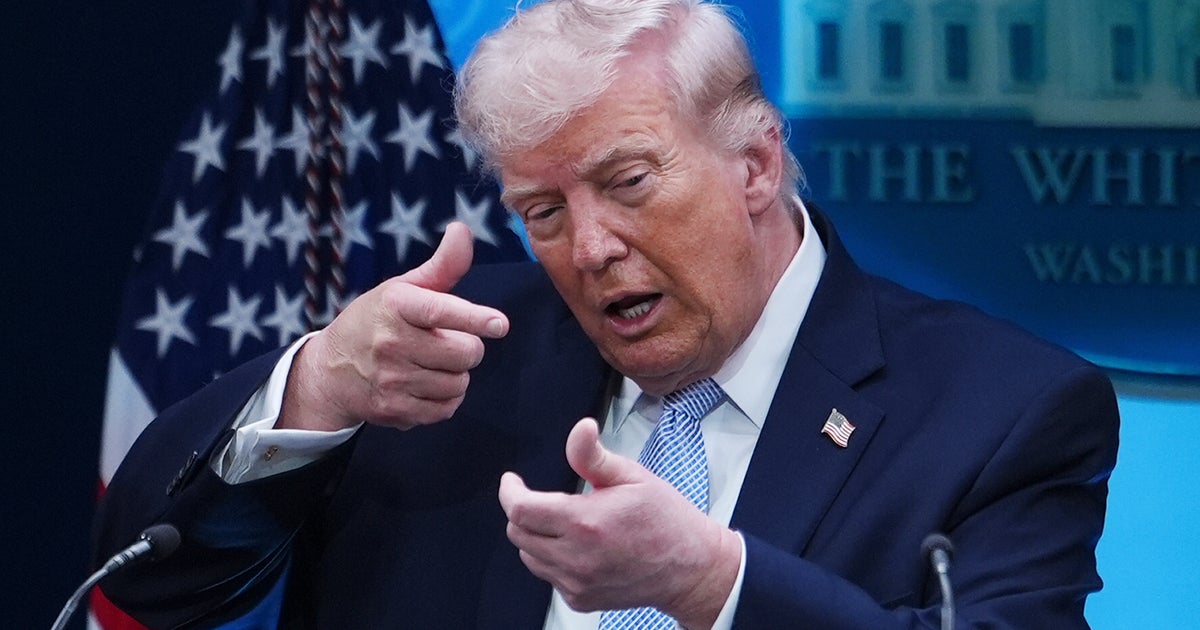
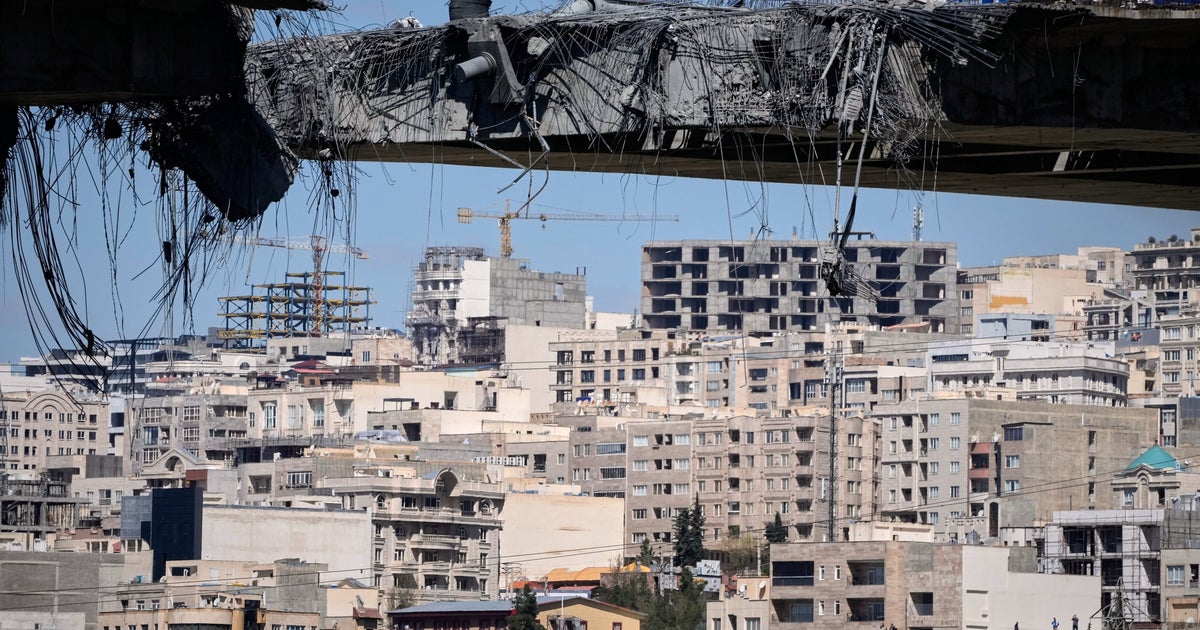
A senior BBC correspondent has demolished Donald Trump’s claims that America is winning the Iran war.
Jeremy Bowen, the corporation’s international editor, tore apart the US president’s declarations of victory as a two-week ceasefire in the conflict teeters on the brink.
Trump has accused Tehran of not sticking to an agreement to re-open the vital Strait of Hormuz waterway.
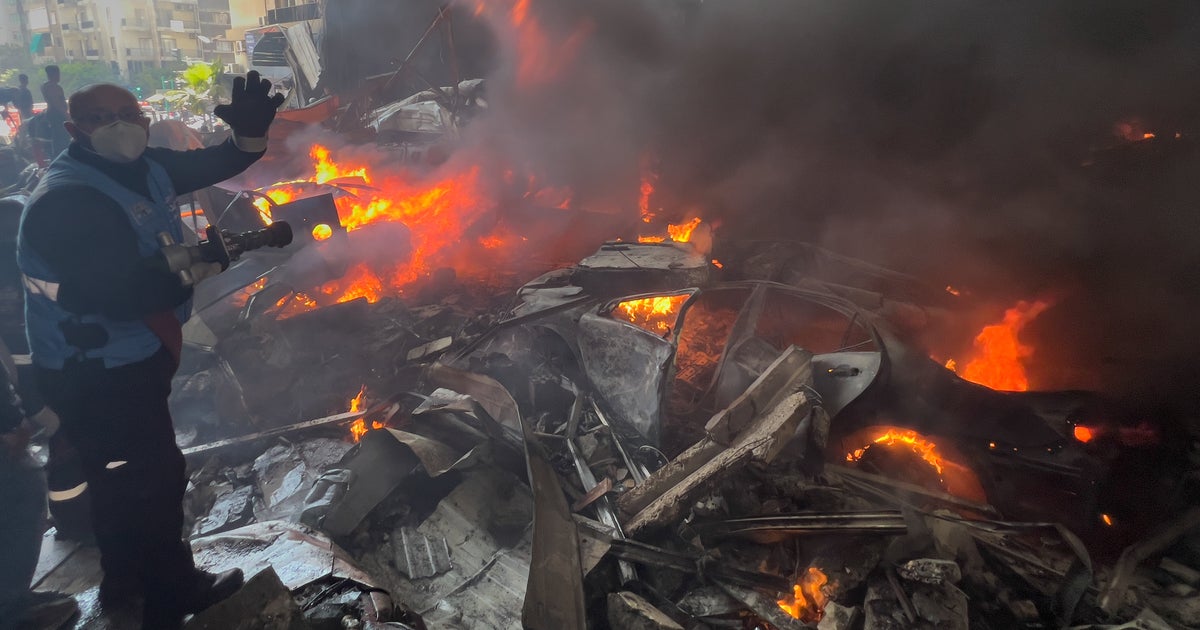
Meanwhile, Israel is continuing to launch missiles against Lebanon in another apparent violation of the ceasefire.
In an article for the BBC website, Bowen said leaked versions of an American 15-point plan to end the war “sound more like a surrender document than a basis for negotiation”.
He also said that despite the killing of Iran’s supreme leader at the start of the war, there has been no regime change in the country, despite what the president has claimed.
“With or without the active participation of the new supreme leader, Iran’s regime has demonstrated depths of resilience that took Trump by surprise,” Bowen said.
“Now Donald Trump’s representatives, led by his vice-president JD Vance, must negotiate with adversaries that they claim, incorrectly, to have defeated.”
He added: “The US and Israel have done immense damage to Iran’s armed forces as well as its military and civilian infrastructure. However, while the Iranian regime may be battered, it’s also intact.
“Regime change is not happening. Iran can still launch missiles and drones. That means that despite loud claims, the US and Israel have not translated tactical victories into strategic advances.
“Iran, on the other hand, has shown that the closing of the Strait of Hormuz gives it a strategic edge that Donald Trump either dismissed or did not understand when he listened to Israeli prime minister Benjamin Netanyahu’s arguments for going to war with Iran.”
Subscribe to Commons People, the podcast that makes politics easy. Every week, Kevin Schofield and Kate Nicholson unpack the week’s biggest stories to keep you informed. Join us for straightforward analysis of what’s going on at Westminster.
The popular BBC show first aired back in 2024 and became a huge hit with fans
Tianna Corbin TV Reporter
20:52, 09 Apr 2026Updated 20:53, 09 Apr 2026
Ludwig is returning for a second series this year(Image: BBC)
There’s good news for fans of the popular detective series Ludwig, as it’s set for a third series.
The BBC crime drama first aired back in 2024 and saw David Mitchell take on the role of twin brothers John Taylor and DCI James Taylor.
When John went to visit his sister-in-law, Lucy Betts-Taylor (Anna Maxwell Martin), things took a drastic turn as he learned his brother had gone missing from their Cambridge home.
As she explained that James had been acting strangely while working on a case, Lucy told John that her husband had given instructions to flee with their son after he didn’t come home one night.
However, she went against his wishes and recruited his twin brother to take on John’s persona and pretend to be part of the police force in order to get to the truth.
Despite his initial hesitations, he eventually agreed as his puzzle-solving skills allowed him to see that the letter that his brother left was filled with secret messages.
After a series full of twists and turns, John finally came clean that he wasn’t his twin brother. However, they received a surprise voicemail from the real James.
Admitting he vanished, James tells his twin to continue investigating the corruption in Cambridge.
While the second series is set to air later this year, it looks as though there could be more episodes on the way as TVZone reports that a third instalment has been commissioned.
However, the BBC declined to comment when approached by Cambridgeshire Live.
Speaking about the second series, David Mitchell said: “I’m delighted that John ‘Ludwig’ Taylor has failed to escape the clutches of the Cambridge police and will have to continue to face up to the city’s alarming conundrum-based crime wave.”
Along with David and Anna returning for Ludwig, people can also see Dipo Ola (DCI Russell Carter), Dylan Hughes (Henry Betts-Taylor), Dorothy Atkinson (DCS Carol Shaw), Ralph Ineson (Chief Constable Ziegler) and Karl Pilkington (DI Matt Neville) return.
The series has been highly praised by fans since it aired, as one person said: “#Ludwig on BBC is amazing!” Another wrote: “Oh my goodness @BBCiPlayer – #Ludwig was absolutely incredible! When is series 2 out??!!”
Someone else commented: “Clever, witty and perfectly casted! Back to classic entertainment! Just what we need these days, and we need more of it.”
While someone else shared: “A WONDERFUL ENTERTAINING MURDER MYSTERY, EVOCATIVE OF MISS MARPLE HERSELF. Ludwig from the BBC, is a beautiful written mini series.”
The first series of Ludwig is available to watch in full on BBC iPlayer.
The BBC’s international editor warned that Donald Trump’s ceasefire deal with Iran is “fragile and tattered” after Israel launched strikes against Lebanon.
Tehran insists that its agreement with the US – and Israel – included an end to all attacks against allies in the region.
However, the White House is denying such a claim, with US vice-president JD Vance calling it a “misunderstanding” over the terms of their agreement.
Speaking on BBC Radio 4′s Today programme, the corporation’s international editor Jeremy Bowen said the ceasefire is “fragile and tattered” right now as a result.
He said: “I personally find it, having looked at the Middle East for many many years, Lebanon and Israel, I find it very hard to believe that that strike yesterday – hitting 100 targets in 10 minutes, causing massive damage and loss of life inside Lebanon – I find it hard to believe it is not connected to the fact that the Israelis want to continue the war against Iran.”
He also pointed out that the Pakistani prime minister Shehbaz Sharif, who mediated the ceasefire, posted on social media that Lebanon was part of the ceasefire when describing the original deal.
Bowen also noted that Israeli prime minister Benjamin Netanyahu has been insisting he will continue trying to “reshape the Middle East in Israel’s interest”.
The specialist took issue with Trump’s claim of “complete victory” over Iran, too.
He continued: “You can argue very strongly with the American characterisation that they’ve had scored a massive victory here because while they’ve had many tactical successes, they clearly strategically have not got that.
“But they have given [Iran] a hammering.”
Bowen said that, as a result, Tehran would not be willing to give up control of the major shipping lane, the Strait of Hormuz.
Iran effectively closed the waterway over the last five weeks in response to the US-Israel strikes, causing oil prices to shoot up around the world.
Bowen said: “So what Iran has now is the control of the Strait of Hormuz. They are aware of the power of that.
“And sure, they’re not going to give it up easily because without that, they give up their influence.”
Subscribe to Commons People, the podcast that makes politics easy. Every week, Kevin Schofield and Kate Nicholson unpack the week’s biggest stories to keep you informed. Join us for straightforward analysis of what’s going on at Westminster.
Although it might not have the Bushtucker Trials of I’m A Celebrity… Get Me Out Of Here! or the physical demands of SAS: Who Dares Wins, but there is no doubt that Race Across The World is one of the toughest shows on TV – and that goes for both its contestants and production team.
Now into its sixth season, with a new crop of travellers being put through their paces on a globe-trotting adventure, most viewers are now familiar with the rules of the BBC show.
But what about all the parts that we don’t know about, and the planning that goes into making the show? Well, allow us to lift the lid…
1. The routes are tested out before the show
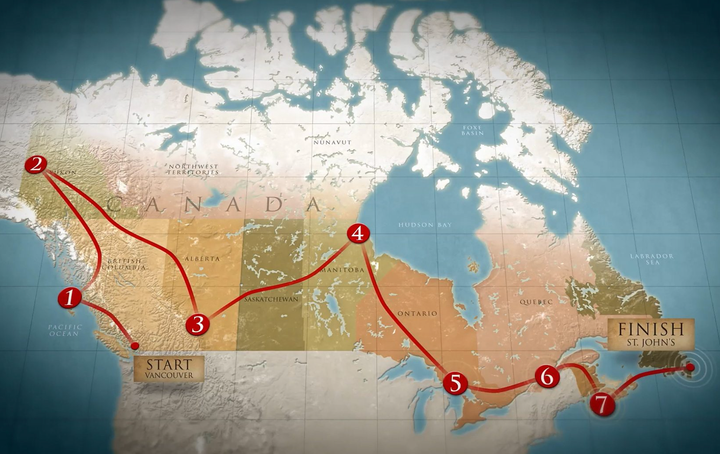
The route for Race Across The World’s third season saw the teams traversing Canada
If you thought bosses just came up with a route for the contestants and hoped for the best, you’d be wrong. In fact, a whole team of people test it out beforehand.
Line producer Maria Kennedy told Radio Times: “You get some really brave people out on the road for a couple of months [from the production team]. [They tell us], ‘Here are going to be the sticking points. This is quite tricky. This bit is amazing’.”
She added: “They do it all on a budget as well so they’re not like going out and spending loads of money and having a great jolly. They’re literally looking at the budget and seeing if it’s possible to get by on less than 50 quid a day.”
2. For the producers, the trip is perhaps even harder than for the contestants
According to the Guardian, only two producers go on the dry run, only one of whom actually knows the route and which way they are going.
“The other person has no idea and that person is in charge of making the decisions,” series producer Lucy Curtis said.
3. A number of other unseen people travel with each team
The teams who took part in the third series at the starting point
Mackenzie Walker/BBC/Studio Lambert
Each time travels with two members of the production crew, a local fixer and a security adviser, but they apparently keep enough distance to “make the trip feel authentic”, the Guardian reported.
Executive producer Mark Saben also told BBC News that a medical support vehicle also travels an hour or so behind the teams in some countries.
4. There’s another team of people involved in capturing all the B-roll footage, too
Mark Saben told Broadcast that a director of photography and a series director follow all the teams, capturing the atmospheric camera shots that showcase the destinations.
He explained: “Not only did they shoot those big sweeping drone shots that capture the beauty and scale of their surroundings, but also the on-the-ground shots that convey the hustle and bustle of travelling, so viewers would feel immersed in the competitors’ journeys.”
5. No one is allowed to interfere with the teams’ decisions
While the teams are followed, production is not allowed to influence their decisions
The production team have to stay quiet, even when it is clear that the teams are making mistakes.
Mark told Broadcast: “How they made their journey was up to them. This meant, as a production, we had to react to their decisions, however nonsensical.
“It was a nightmare for production management, as the competing contributors decided how and where to go. You cannot underestimate how challenging the journey could be at times.”
Executive producer Stephen Day also told The Telegraph: “We will intervene if they’re in danger, and we have a real duty of care.
“If contestants – and there have been some – who are so focussed on budget that they’re not eating then you have to get them to spend money on food.”
However, producers accompanying the participants on the road are not allowed to outright give them food, either.
6. None of the production team get special treatment
Praising the embedded crews, exec Mark told the BBC: “They had to do the same journey as them, sleeping alongside them on the bus, they weren’t given a five-star hotel. So they were almost like a family, with its ups and downs.
“And while we had done recces, the teams found bits of the world which were totally surprising.”
7. One of the production team was pretty unlucky during the making of the first series
Having done the initial recce before filming began, executive producer Mark Saben told BBC News that “one of the poor sods had to do the actual trip again”, this time with the real contestants.
“He was very stoical and didn’t tell them until the very end, though. As much as possible, we wanted it to feel like a dry run,” Mark added.
8. A lot of planning goes into each series
The contestants from Race Across The World series two
Prior to filming, exec producer Mark said the first series was “a year in the making”, but added to the BBC: “It’s all very well doing theoretically, looking at timetables and things. But until someone does it for real, you don’t know where the difficulties might lie.”
Things like visas and vaccines “for every conceivable country” were sorted in advance.
He added to Broadcast that they also “research every likely bus and train option, cost and connection”.
“We drew up protocols that set rules for how the teams could hitchhike, travel at night and cross borders safely,” he added.
9. Contestants are typically not allowed to use phones – but there are exceptions
“If there was a significant issue at home, we might allow them to speak to a nominated person but we really try to keep them in the bubble as much as possible,” Maria Kennedy explained (per Radio Times).
10. Bosses do not create any job opportunities
The contestants can work to earn more money while they are travelling
While the pamphlet of job ads is created by bosses, all the jobs are 100% real.
“We don’t go to any of those places and say, ‘For the purposes of the show, can you provide this kind of service?’” BBC commissioner Michael Jochnowitz said, according to Radio Times.
“Those are real jobs, real places, real money or accommodation and things like that so again, because they don’t have access to a phone or the internet, we basically just give them a guide of potential opportunities in the area.”
Executive producer Mark Saben added: “We use as a rule of thumb, it’s like what you’d find on a board in a hostel or something like that so we want [it] to feel absolutely as authentic as it possibly can be.”
11. The contestants are also not given any extra food off camera
Series two winnerds Emon and Jamiul Choudhury
With budgets extremely tight, eating can become a real issue for the teams, and while you might think they are being given extras off camera, this is not the case.
Series two winner Emon Choudhury – who triumphed with his nephew Jamiul – said they would often ask strangers for food and water.
He told the Daily Express: “I lost over a stone, a stone and a half and the same with my nephew, he lost quite a bit as well. The food was an issue.
“You always think on these TV shows, you get a sandwich off-camera or water or a little snack here or there but no, it wasn’t like that!”
Series one winners Tony and Elaine Teasdale also told the Telegraph that during one leg, they “wouldn’t eat unless somebody fed us or we found super-cheap street food”.
“We’d buy little packs of rice for 20p each, then eat those for three meals a day. I went down a dress size from 14 to 12!” Elaine said.
“Water is more important. We took chlorine tablets, so we didn’t have to buy bottled water. That saved both money and time because we never had to find shops. Kebabs in Europe, rice in Asia, and we never bought any drink.”
12. There was a reason why season three was contained to one country
While season one of Race Across The World saw contestants travel from London to Singapore, and season two saw them begin in Mexico and end in Argentina, the third series was contained to just one country – Canada.
This was because when the show was filmed, there were still many Covid travel restrictions still in place, which would have been an added complication for the teams and the production.
The third season and the celebrity edition were originally planned to air much earlier, but production was pulled early into the pandemic.
Season three winners, Tricia Sail and Cathie Rowe revealed that they first applied for the show in 2019, but didn’t hear anything back until 2021 because of Covid.
Race Across The World continues on Thursday nights at 8pm on BBC One.
This review is based on the first three episodes of Twenty Twenty Six.
Twenty Twelve and W1A aren’t just good comedies, they’re great comedies, and that’s not an overstatement… that’s an uberstatement.
Through the eyes of Ian Fletcher (Hugh Bonneville), our viewpoint character, these shows gave us a glance at the bafflingly weird world of corporate bureaucracy – first at the Olympic Deliverance Commission and then the BBC.
Both series were deliberately infuriating, sharply written and surprisingly heartfelt even while satirising the institutional dysfunction that cripples so many UK organisations.
So when John Morton, the genius behind this brilliant series, announced that he was working on a new show set in the same world, we were like ‘Great, yeah, cool’.
Sadly, though, his latest mockumentary, Twenty Twenty Six – which sees Ian helping organise the 2026 FIFA World Cup – struggles to escape the shadow of his previous work.
Now I should say that I don’t think Twenty Twenty Six is a bad show; in fact, I think it’s quite a clever and funny show.
The first two mockumentaries wrung a lot of comedic juice out of British politeness and prevarication.
Indeed, a character’s inability to say anything without contradicting themselves three or four times in a single sentence was one of the joys of W1A.
Twenty Twenty Six, however, is more of a fish-out-of-water comedy, with Ian now living in Miami and contending with American (and European, Canadian and Mexican) colleagues who may speak the same language but have a completely different style of communicating.
Meet the new team (Picture: BBC/Expectation Entertainment/Jack Barnes)
It’s a funny evolution of Ian’s normal predicament and makes the series every bit as toe-curlingly awkward as its two cringey predecessors.
There’s also plenty of servings of the usual delicious word salad, especially from David Tennant, who returns as narrator and the VP On Pitch Protocol Phil Plank, a former footballer who may be more out of his depth than even Ian.
I also really enjoyed the way the series played with different American stereotypes, be it the slick East Coast lawyer or his more eco-friendly West Coast equivalent.
It was a fun reminder that the US isn’t a monoculture.
Will’s back because of course he is (Picture: BBC/Expectation Entertainment/Jack Barnes)
However, of the new characters introduced, my favourites are easily the World Cup social media team. I’m not sure what Morton thinks of social media, but if I were a betting man, I’d hazard a guess he hates it.
Seriously, I’ve never seen such a withering take on the vapidness of social media journalism. It’s borderline cruel and all the more fun for it.
Ultimately, though, what teased the biggest smile out of me, while watching Twenty Twenty Twenty Six, was when the series went to the well and reminded us that humanity only has one common language: incompetence.
Yes, despite being set over the pond, Twenty Twenty Six embraces its predecessors’ prevailing spirit that if things can go wrong, they will go absurdly wrong, and it will somehow fall on Ian to fix things.
Speaking of Ian, Bonneville may have spent the last decade cavorting with Paddington Bear and shouting at Butlers in Downton Abbey, but the former Head of Values hasn’t lost his baffled charm.
There’s fun to be had in the culture clash (Picture: BBC/Expectation Entertainment/Jack Barnes)
He just plays bemused straight man so well, and his painfully patient form of exasperation never fails to make me smile.
Yet therein lies one of my two main rubs with Twenty Twenty Six, aside from the change in scenery (although it was filmed in Wembley), there’s a slight sense that we’re just playing the hits.
The jokes are still awkward, but it’s the same stuff Ian was dealing with in W1A, with a FIFA logo (or not as the case may be) glued over the BBC’s.
It’s not bad persay it’s just a little safe.
I get the feeling I’ve seen this before (Picture: BBC/Colin Hutton)
That’s perhaps most reflected in the decision to bring back Will – Ian’s personal assistant from the BBC.
Now I love Will, but his reason for being in the series is inexcusably thin, and he’s basically there to be the butt of jokes about nepotism and ineptitude just like in W1A.
Funny? Yes. New? Not at all.
What I think I find so disappointing about this, though, isn’t necessarily that they brought Will back; it’s that they didn’t bring Siobhan (Jessica Hynes) back.
Siobhan was always the Yin to Ian’s Yang, the thorn in his side, the funny one to his straight man.
They worked best when they had each other to bounce off, so the decision to have Twenty Twenty Six sing from the same hymn sheet as Twenty Twelve and W1A without her means you notice her absence all the more.
I miss our queen (Picture: Jack Barnes/BBC)
There are also a few jokes made about social politics – specifically the use of they/them – which I must admit landed with an absolute thud for me.
It’s not that I don’t think you can joke about pronouns, but it felt like such a 2019 gag.
All that aside, I did enjoy Twenty Twenty Six, and I’m looking forward to watching the last few episodes, especially as there are hints of a slightly deeper running thread teased in the first three episodes.
It’s just that for me, right, in my opinion, and I’m not being funny or nothing I needed this to be a lot funnier than it is.
Twenty Twenty Six episode one is available to stream now on BBC iPlayer and will air on BBC Two at 10pm.
Got a story?
If you’ve got a celebrity story, video or pictures get in touch with the Metro.co.uk entertainment team by emailing us celebtips@metro.co.uk, calling 020 3615 2145 or by visiting our Submit Stuff page – we’d love to hear from you.
MORE: Bradley Walsh’s son Barney banned from driving after speeding in Mercedes
MORE: I hate to say that Euphoria loses its way in season 3
MORE: The Testaments is The Handmaid’s Tale spin-off the world needs to see
The former Radio 2 DJ was sacked by the BBC over historic allegations of serious sexual offences against a teenage boy
Husna Anjum, Mark Jefferies and Husna Anjum Senior Live News Reporter
16:38, 08 Apr 2026
(Image: PA)
A special episode of Great British Bake Off will not air having featured a recently terminated BBC star. Channel 4 announced today (April 8) that an episode of Great Celebrity Bake Off for Stand Up To Cancer has been pulled from schedule, as it featured Radio 2 DJ Scott Mills.
The 53-year-old broadcaster had been expected to appear in an upcoming celebrity special but the spin-off will no longer air following his sacking from the BBC. Prior to the scandal, Mills had filmed scenes alongside Rag n Bone Man, Edith Bowman and Aston Merrygold.
The episode that would have broadcast Sunday April 18, will no longer be shown. A spokesperson for Channel 4 said it was not appropriate to screen Mills’ episode due to the ‘seriousness of the accusations’ against him.
An alternative episode of Celebrity GBBO will go out in its place The Mirror reports.
The statement read: “Having carefully considered the circumstances, we’ve taken the decision not to air the final episode of the 2026 series of The Great Celebrity Bake Off for Stand Up to Cancer, featuring Scott Mills. Acknowledging the seriousness of the accusations that have been made against Scott, we don’t believe it would be appropriate to air the episode at this time.
“An alternative episode of Celebrity GBBO will go out in its place.”
The former Radio 2 DJ was sacked by the BBC shortly before it emerged the Metropolitan Police launched an investigation into the 53-year-old in 2016 over allegations of serious sexual offences involving a teenage boy under 16 between 1997 and 2000. The corporation has since admitted it knew about a police investigation into allegations against Mills of a historical sexual offence in 2017, but said it “acted decisively” after receiving “new information” in the weeks before his sacking.
The “new information” was that the teenage boy at the centre of the investigation was under the age of 16. After losing his role on the Radio 2 breakfast show, Scott’s Eurovision podcast with friend Rylan Clark was also pulled.
Charities he worked with including Neuroblastoma UK and the MS Society UK also parted ways with the DJ. Mills has been an advocate for multiple sclerosis (MS) for more than a decade, having become an ambassador for MS Society UK as his mother, Sandra, was diagnosed with the progressive neurological condition.
On Wednesday last week, Mills released a statement through his lawyers saying he had been the subject of “rumour and speculation” since he was fired, and that he “co-operated fully” with the police investigation into allegations of a historical sexual offence.
A statement released through his lawyers said: “The recent announcement that I am no longer contracted to the BBC has led to the publication of rumour and speculation. In response to this the Metropolitan Police has made a statement, which I confirm relates to me.
“An allegation was made against me in 2016 of a historic sexual offence which was the subject of a police investigation in which I fully co-operated and responded to in 2018. As the police have stated, a file of evidence was submitted to the Crown Prosecution Service, which determined that the evidential threshold had not been met to bring charges.
“Since the investigation related to an allegation that dates back nearly 30 years and the police investigation was closed seven years ago, I hope that the public and the media will understand and respect my wish not to make any further public comment on this matter. I wish to thank from the bottom of my heart all those who have reached out to me with kindness, my former colleagues, and my beloved listeners, who I greatly miss.”
Claude may have made a mistake (Picture: BBC/Fremantle Media/Ray Burmiston)
Fans of The Apprentice have been questioning Claude Littner’s tribute to a candidate who died 11 years ago.
Earlier today, Claude, 76, paid homage to Stuart Baggs, a candidate who appeared on Series 6 of The Apprentice (UK) in 2010.
‘Sad news indeed about the passing of Stuart Baggs,’ it read.
‘A memorable interviewee on “The Apprentice”. He stunned me with his unforgettable response, claiming he was “a brand”…. brilliant👏. RIP🙏’
As touching a memorial as this is, there was just one problem: Stuart died 11 years ago in 2015.
Get personalised updates on The Apprentice
Wake up to find news on your TV shows in your inbox every morning with Metro’s TV Newsletter.
Sign up to our newsletter and then select your show in the link we’ll send you so we can get TV news tailored to you.
Perhaps unsurprisingly, Claude’s fans were quick to point this out online and tease The Apprentice legend about his mistake.
‘Why has it taken you 11 years?’ asked @Keith_Bredrin. ‘Yes, it was very sad, but he died in 2015, Claude,’ added @CiesseJay.
The tweet in question (Picture: @ClaudeLitner/Twitter)
@michaelmcguk meanwhile was perhaps the most excoriating, saying: ‘Didn’t he die 11 years ago?? This is pretty poor, Claude. Delete it and save some face.’
It was @ChrisDodd12, however, who perhaps summed the situation up best when he chimed in with, ‘You’ve had a shocker here, Claude.’
Still others pointed out that this probably wasn’t a mistake.
@woolyw0 wrote: ‘Some of the comments! Of course, Claude knows he hasn’t just passed away!
‘You are allowed to make a comment like that years after someone has passed! Some will just jump on any comment.’
Stuart (middle) was a fan favourite (Picture: PA)
Other fans pointed out that Claude was likely a reaction to a recent tweet by Lord Sugar that also paid tribute to Stuart.
Yesterday, the business mogul tweeted: ‘Whenever it comes to Interviews week, my mind goes back to the dear departed Stuart Baggs – RIP. Such a great character on #TheApprentice.’
Stuart, who founded his broadband business when he was just 13, is something of a legend in The Apprentice fandom.
Known as Stuart Baggs ‘The Brand’ after he defiantly told Claude he was a brand in his own right, he was known for his enthusiasm and exuberance.
The would-be tycoon made it all the way to the semi-finals, where his hopes came crashing down during the interview process.
He was eventually fired by Lord Sugar, who told him he was ‘full of sh*t’ and left the process.
Undeterred, he continued to run his business until he died in 2015 after suffering an asthma attack when he was just 27-years-old.
In a Facebook post from the time, his sister Charlotte wrote: ‘Today, my dearest brother Stuart Baggs gained his wings. To say we are all shocked and devastated is an understatement.
‘Love him or hate him, he touched many people’s lives from his TV antics to his amazing work with Bluewave Communications.”
‘He was the biggest character and will leave the biggest hole behind. Not knowing what or why makes it all the harder.
‘Can’t explain how proud I am of him. He was the king of following his dreams and making them happen.’
Metro has reached out to Claude’s reps for comment.
Got a story?
If you’ve got a celebrity story, video or pictures get in touch with the Metro.co.uk entertainment team by emailing us celebtips@metro.co.uk, calling 020 3615 2145 or by visiting our Submit Stuff page – we’d love to hear from you.
MORE: Strictly star arrested on rape allegations will not face criminal charges
MORE: Balamory reboot already has fans obsessed: ‘Will I be watching at 27? Yes I will!’
MORE: This BBC sitcom returning after nine years is a must-watch hidden gem
The BBC has determined that the broadcast of a racial slur during its coverage of this year’s Baftas went against its editorial standards.
During this year’s Baftas ceremony, Tourette’s campaigner John Davidson – attending the ceremony with the cast and crew of the movie I Swear – experienced a series of involuntary tics, resulting in him shouting a variety of slurs from the audience.
One of these, which saw him shouting the N-word while Sinners actors Michael B Jordan and Delroy Lindo were presenting on stage – was included in the BBC’s broadcast of the Baftas, which aired on a two-hour time delay.
Following the event, the BBC faced a wave of scrutiny – and a “large number of complaints” – due to the slur’s inclusion, with outgoing director-general Tim Davie “fast-tracking” an investigation into how it came to be broadcast.
On Wednesday, chief content officer Kate Phillips confirmed that the BBC’s executive complaints unit (ECU) had “found this should not have made it to air and it was a clear breach of our editorial standards”.
A post on the ECU’s website explained: “The inclusion of the n-word in the broadcast (which was also streamed live on iPlayer) was highly offensive, had no editorial justification and represented a breach of the BBC’s editorial standards, but that the breach was unintentional.
“The members of the production team who were monitoring the event in the outside broadcast vehicle all say they did not hear or recognise the n-word when it occurred at about 14 minutes and 45 seconds into the broadcast (while Delroy Lindo and Michael B Jordan were introducing the first award). The ECU accepted their account, for two reasons.
“Firstly, the use of the n-word in that instance was extremely indistinct, to the point where it might well not have been recognised by the production team. Secondly, there was another occurrence of the n-word about 10 minutes later, which was recognised by the production team and immediately edited out in accordance with the protocols on offensive language which were in place.”
John Davidson – whose life story inspired the Bafta-winning film I Swear – pictured ahead of the 2026 ceremony
Anthony Harvey/Shutterstock
The post continued: “There is no reason to conclude they would have applied the protocols in one case while deliberately ignoring them in the other. The ECU noted, however, that the BBC received one complaint from a viewer about the use of the n-word in the segment of the programme concerned while the programme was still on air and another very shortly after it ended.
“While this tends to support the view that the word was almost unintelligible (because we would expect a use of the word which had been clear to viewers in general to have caused a large number of complaints during the broadcast and immediately afterwards), it also means that we cannot say it was entirely so.”
As for the inclusion of the slur on the Baftas broadcast later uploaded to the BBC iPlayer catch-up service, the ECU said this was also “a breach of the BBC’s editorial standards”.
“The production team became aware shortly after the transmission of the first award that the interjection while Delroy Lindo and Michael B Jordan were on stage consisted of the n-word,” they said, saying that the delay in taking it down was a “serious mistake”, pointing out that by this point it had become “widely discussed” on both online and in news media.
In their findings, the ECU said: “The fact that the unedited recording remained available for so long aggravated the offence caused by the inadvertent inclusion of the n-word in the broadcast.”
A day after the Baftas, Kate Phillips sent an internal memo to BBC employees which read: “The edit team removed another racial slur from the broadcast. This one was aired in error and we would never have knowingly allowed this to be broadcast. We take full responsibility for what happened.”
After Delroy Lindo expressed his disappointment at the way Bafta had handled the incident, a spokesperson for the organisation later issued a lengthy apology which also took “full responsibility” for what transpired.
A BBC correspondent has delivered a reality check to Donald Trump just hours after the US president announced a two-week ceasefire in the Iran war.
The US president confirmed a suspension of hostilities shortly before the deadline he had given Tehran to re-open the Strait of Hormuz, the key waterway through which one-fifth of the world’s oil supply is transported.
In a post on his Truth Social account, Trump said it was “a big day for world peace”.
“Iran wants it to happen, they’ve had enough,” the president declared.
The breakthrough came less than 24 hours after Trump had warned that “a civilisation will die tonight” unless the Iranian regime agreed to end the war.
However, it remains unclear whether Iran will now be able to control what traffic passes through the Strait of Hormuz, an advantage they did not enjoy before the war started.
On Radio 4′s Today programme, BBC US correspondent David Willis pointed out that Trump appeared to have achieved none of the objectives he had sought when the war began at the end of February.
They included the destruction of Iran’s nuclear capability and the overthrow of the country’s Islamic regime.
He said: “Despite this ceasefire, the fundamental differences with Iran remain and they are perhaps sharper than when the conflict began five weeks ago.
“Iran’s nuclear stockpile remains in place, the theocratic government which President Trump urged people to overthrow is there too, albeit under a different management, and four weeks after he demanded their unconditional surrender, the president is about to negotiate with that same government.
“Against that backdrop, he now faces the challenge of reaching a more permanent settlement within the space of the next two weeks. In comparison, it took the Obama administration two-and-a-half years to negotiate the 2015 nuclear accord – that’s the one that Donald Trump withdrew from.”
Iran’s Supreme National Security Council said it would negotiate with the US in Pakistan’s capital, Islamabad, starting on Friday.
But while accepting a ceasefire, it said in a statement: “It is emphasised that this does not signify the termination of the war.
“Our hands remain upon the trigger, and should the slightest error be committed by the enemy, it shall be met with full force.”
Subscribe to Commons People, the podcast that makes politics easy. Every week, Kevin Schofield and Kate Nicholson unpack the week’s biggest stories to keep you informed. Join us for straightforward analysis of what’s going on at Westminster.
A Strictly star who was arrested on suspicion of raping a woman following a BBC event will not face criminal charges.
The man, who cannot be named for legal reasons, was arrested on October 13 and an investigation was launched by Hertfordshire Police.
The investigation has now been closed due to ‘insufficient evidence’, Hertfordshire Police have said.
‘This has been a really awful, hellish period for all parties. The man has been through hell and back, and just wants his name cleared now once and for all,’ a source told The Sun.
In a statement, Hertfordshire Police said: ‘There will be no criminal charges brought against an individual arrested by Hertfordshire Constabulary in London on Monday 13 October 2025 on suspicion of rape.
‘The man, who had his bail extended on Tuesday 6 January until today, Tuesday 7 April 2026, to allow further enquiries to take place, will face no further action.
A Strictly star who was arrested on suspicion of raping a woman following a BBC event will not face criminal charges
‘Early advice was sought from the Crown Prosecution Service, but detectives determined that there was insufficient evidence to bring forward criminal charges.’
The Daily Mail has contacted Hertfordshire Police for comment.
The arrest was the latest scandal to hit the BAFTA-winning programme. It came just three months after another unnamed male star was arrested on suspicion of rape.
In August, police said a man was arrested on suspicion of rape and for possessing ‘non-consensual intimate image abuse’.
That Metropolitan Police investigation remains ongoing.
Strictly has been plagued by scandal in recent years.
In 2024, bosses had to firefight a series of damaging allegations that called into question the integrity of the show, when Amanda Abbington accused former professional dancer Giovanni Pernice of ‘abusive and cruel’ behaviour in the 2023 series.
It prompted a forensic internal investigation costing some £250,000, which upheld some of Amanda’s complaints, but not the most serious.
Professional dancer Graziano Di Prima was then sacked after admitting he had kicked his celebrity partner Zara McDermott during rehearsals for the same series.
The dance show was forced to bring in chaperones to watch over training sessions under the corporation’s duty-of-care plans ahead of the 2024 series.
The measures also included a member of the production team being present during rehearsals at all times, and increased support for both celebrity contestants and the professional dancers. A celebrity welfare producer and a professional dancer welfare producer were also brought in.
Last year, contestant Wynne Evans was recorded making a sexualised remark at the Birmingham Arena as the contestants posed for a group photo for the Strictly tour. He was consequently dropped as a radio presenter by the BBC.
In February, BBC bosses cleared two Strictly stars of alleged cocaine use after a complaint was made by former contestant Wynne.
The corporation launched an investigation into the show and hired an external legal firm to carry out the probe last summer, following the accusation.
Now the programme has been given the all-clear after no evidence was found to support Wynne’s claim.
A Strictly source said last month: ‘The BBC took the claim made by Wynne very seriously, so much so that they funded an external inquiry so that no stone was left unturned.
‘But the investigation is now over and it’s back to business as usual. Strictly has a clean bill of health, despite Wynne appearing to throw allegations at it. Now everyone involved in Strictly is looking forward to a fantastic, clean and new start later this year.’
Bosses will be relieved at the news as it comes while they are looking for two presenters to replace hosts Tess Daly and Claudia Winkleman, who stood down at the end of last year.
There were concerns that the toxicity surrounding the programme may have put off potential stars to anchor the long-running show.
Wynne’s accusation of alleged drug use was made in a legal submission to the BBC in March last year by the law firm Russells.
The singer, who was partnered with dancer Katya Jones in the 2024 series, made the allegation after he was kicked off the Strictly tour in January 2025