The Obama Presidential Center is facing a wave of backlash ahead of its opening, with critics blasting its admission policies and raising broader concerns about the project’s cost and management.
Conservative commentators on social media are taking aim at the center’s requirement that Illinois residents show valid identification to receive free admission on certain days, arguing it contrasts with Democratic opposition to voter ID laws.
“They’re making you show ID… to visit the Obama Library… in Chicago. You can’t make this stuff up!” one social media user wrote.
“The Obama Presidential Library is making people show an ID for proof of Illinois residency to get in for free,” another posted. “So residents have to prove who they are for this, but not to vote?”
VALERIE JARRETT REVEALS THAT PRESIDENT TRUMP ISN’T INVITED TO OBAMA PRESIDENTIAL CENTER OPENING CEREMONY
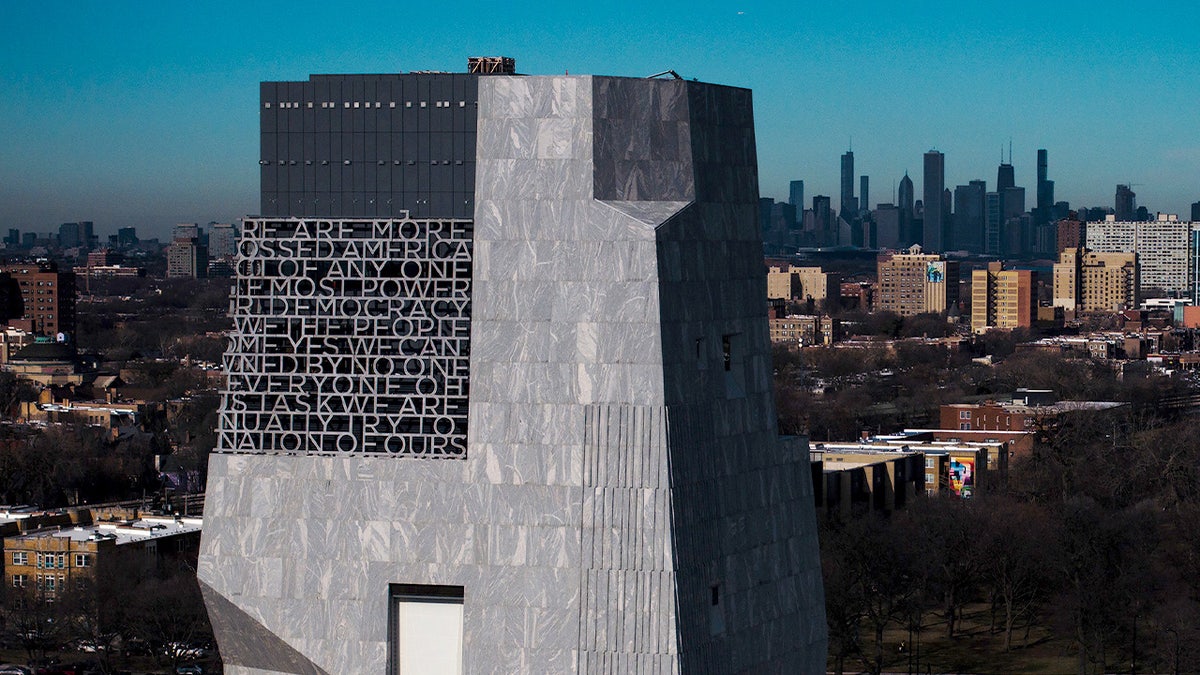
The text of former President Obama’s speech marking the 50th anniversary of “Bloody Sunday” in Selma, Alabama, is wrapped around the side of the upcoming presidential center in Chicago.(E. Jason Wambsgans/Chicago Tribune/Tribune News Service)
Others echoed the sentiment more bluntly, with one account writing: “It turns out Democrats support requiring ID… but only for free admission into Obama’s library.”
Obama’s website clearly states that Illinois residents “must be able to provide proof of residency. Be prepared to show proof of residency at the Museum with a valid photo ID, Illinois driver’s license, state ID, or city-issued ID.”
Critics have also pointed to reported restrictions tied to early ticket giveaways, including claims that some promotions are limited to U.S. citizens or lawful permanent residents.
The latest controversy builds on a string of prior criticisms surrounding the $850 million project.
OBAMA PRESIDENTIAL CENTER SLAMMED FOR PROMOTING ‘FAR-LEFT’ AGENDA ON PUBLIC LAND
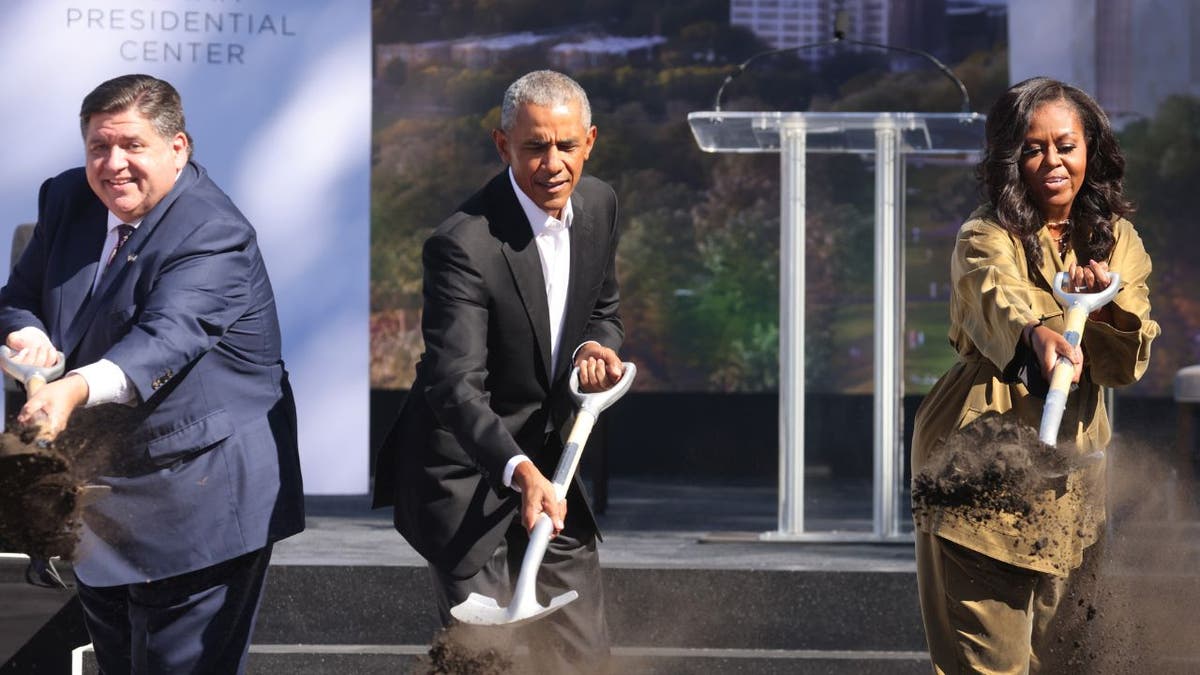
Illinois Governor J.B. Pritzker (L) joins former President Barack Obama and former first lady Michelle Obama in a ceremonial groundbreaking at the Obama Presidential Center in Jackson Park on September 28, 2021, in Chicago.(Scott Olson/Getty Images)
Earlier this year, the Obama Foundation drew backlash after seeking 75 to 100 unpaid volunteers, dubbed “ambassadors,” to help operate the center, even as top executives collect substantial salaries. Federal filings show CEO Valerie Jarrett has earned roughly $740,000 annually in recent years, while overall compensation at the foundation has climbed significantly.
The project has also faced mounting scrutiny over its financial impact on taxpayers.
Former President Barack Obama once described the center as a “gift” to Chicago, emphasizing it would be privately funded. While construction of the 19.3-acre campus is being financed through private donations, the surrounding infrastructure needed to support the site, including road redesigns, utility relocations and drainage systems, is being paid for with public funds.
Early estimates put those infrastructure costs at roughly $350 million, split between the city and state. But more recent figures show Illinois alone has committed approximately $229 million, while Chicago has allocated more than $200 million in related improvements — though officials have not provided a clear, consolidated total of taxpayer spending tied to the project.
GOT A TIP?
Exterior view of the Obama Presidential Center tower under construction in Chicago.(Fox 32 Chicago)
“No single agency appears to oversee the full scope” of the infrastructure work, and critics say the lack of transparency has made it difficult to determine the true public cost.
Illinois Republican Party Chair Kathy Salvi criticized the project, saying taxpayers are being left “on the hook for hundreds of millions of dollars” while accusing state leaders of mismanagement.
The controversy is further fueled by the nature of the site itself. The center sits on nearly 20 acres of historic Jackson Park land transferred under a long-term agreement, with significant roadway changes, including the removal of a major thoroughfare, and utility overhauls required to accommodate the campus.
Foundation officials have defended the project, saying the center is funded by $850 million in private investment and will serve as an economic catalyst for Chicago’s South Side, generating jobs, community programs and public amenities.
GET BREAKING NEWS BY EMAIL
Despite the backlash, the center is pressing ahead with its long-awaited debut.
Tickets for the museum will go on sale April 21 for “Founding Members,” with general public sales beginning May 6. Visitors can reserve timed-entry tickets for dates between June 19 and November 30.
CLICK HERE FOR MORE US NEWS
Admission is set at $30 for adults and $23 for children ages 3 to 11, with discounted rates available for Illinois residents who provide proof of residency. Children 2 and under can enter for free, and Illinois residents will be eligible for free admission on Tuesdays.
All entries will be timed, with officials urging guests to arrive within 10 minutes of their scheduled slot. The museum will feature four levels of exhibits, including a replica Oval Office and the Sky Room.
CLICK HERE TO DOWNLOAD THE FOX NEWS APP
Much of the surrounding campus, including gardens, walking trails, a playground, a Chicago Public Library branch and dozens of newly commissioned artworks, will be free and open to the public.
Fox News Digital reached out to the Obama Foundation and the Barack Obama Presidential Library for comment.
Fox News Digital’s Michael Dorgan contributed to this report.
Stepheny Price is a Writer at Fox News with a focus on West Coast and Midwest news, missing persons, national and international crime stories, homicide cases, and border security.
The rich could be even richer — if they stop leaving money on the table.
The people owed a portion of the $20 billion in “unclaimed funds” from the New York comptroller’s office include a Who’s Who of political, business and entertainment figures — from President Trump and first lady Melania to lefty city Rep. Alexandria Ocasio-Cortez, billionaires Jeff Bezos and Mike Bloomberg and music stars Jay-Z and Lady Gaga.
A claimant named Barack Obama is also owed money.
Even Gov. Kathy Hochul is listed as being owed funds from a government agency.
President Trump is owed income from NBC Universal Media, while first lady Melania has an unredeemed gift certificate from Bergdorf Goodman and balances at Christian Dior and Richemont North America. APBillionaire Jeff Bezos has an old refund waiting for him from the state Department of Taxation, first reported in 2018. WireImage
Under state law, after three years, a business must report and forward unclaimed funds to state Comptroller Tom DiNapoli’s office for safekeeping.
“People move, change jobs or forget about old bank accounts. When money gets left behind, my office protects that money and helps the rightful owners claim it,” DiNapoli told The Post.
“We return over $2 million a day – more than any other state.”
The fund involves more than 55 million people and entities owed money, including:
Donald Trump, formerly of the TV show “The Apprentice,” is owed income from NBC Universal Media and “miscellaneous tangible property” from TSG Interactive US Services LTD, which provides online poker.
Melania Trump has an unredeemed gift certificate from Bergdorf Goodman and credit-account balances at Christian Dior and Richemont North America.
Ivanka Trump has credit balances at Tiffany & Company and Neiman Marcus Group and is owed money from Getty Images, Google Inc. and from an overpayment from Baccarat Inc.
Trump negotiator Steve Witkoff has government checks awaiting him as well as dividends from Walt Disney Co. and income from NBC Universal. In 2018, he played a guest role on “Law & Order,” one of his favorite TV shows.
Billionaire Jeff Bezos has an old refund waiting for him from the state Department of Taxation, first reported in 2018.
Billionaire former Mayor Mike Bloomberg has unredeemed gift certificates and vendor checks or balances with Federal Express and Verizon.
Jay-Z, whose legal name Shawn Carter, and his Marcy Productions are owed income from Entertainment Partners.
Material Girl Madonna is owed money from the state taxman and payments from Screenlife LLC
Stefani Germanotta, a.k.a. Lady Gaga,has a claim with Elevance Health Inc.
Alicia “Fallin” Keys is owed a check from MTV, pre-2010.
Mariah Carey is owed wages from Mirage Entertainment and money from the state of Michigan.
Rapper Nasir “Nas” Jones is owed income from Cast & Crew Talent Services and Walt Disney Co.
Actor Robert DeNiro has claims on wages and profits from Walt Disney Co. and Amazon and some funds from old checking and savings accounts.
Hochul is owed funds from an unspecified state agency.
Former “Love Gov.” Eliot Spitzer reportedly overpaid American Express and is due money back.
Ocasio-Cortez is owed a refund or rebate from Con Edison.
Ex-Gov. Andrew Cuomo is owed a check from the state and money from insurance companies.
Chris Cuomo is owed wages from NBCUniversal.
Former Mayor Rudy Giuliani, emerging from bankruptcy, has a credit balance with Sunrise Bank and Bank of America.
Health and Human Services Secretary Robert F. Kennedy Jr. has a surplus with Mass General Brigham hospital, and balances with Chubb & Son and Amex.
There’s a Barack Obama who is owed money from Paypal and Yahoo. It’s unclear if it’s the former president.
The Bill & Melinda Gates Foundation is owed money from Sales Force Inc. and Regence Blue Shield.
Billionaire John Catsimatidis’ son John Jr. and daughter Andrea have checks awaiting from a government agency as well as refunds and dividends from financial institutions.
Individuals can check to see if they’re owed money on the search engine of the comptroller’s unclaimed-funds website.
Because of privacy protections, it’s unclear how much money each person is owed. The claimant can call the comptroller’s office to find out.
“Famous or not, a lot of money or a little money, it is common for people to lose track of old accounts, checks, gift cards and refunds,” said Jennifer Freeman, a DiNapoli rep.
“Squad” Rep. Alexandria Ocasio-Cortez is owed a refund or rebate from Con Edison. ZUMAPRESS.com
“That is why we’re making sure that hardworking New Yorkers can easily claim their lost money. These are tough times with gas and grocery prices jumping, so every little bit helps.
“We routinely reach out to individuals, businesses and non-profit organizations and host events all over the state,” she said.
The first page of search results for “Donald Trump” in the database. ouf.osc.ny.gov“When money gets left behind, my office protects that money and helps the rightful owners claim it,” DiNapoli told The Post. REUTERS
“We use demographic and data-matching tools to reach out to people who may have lost money. We’re legally required to verify ownership of unclaimed funds, but the tools to assist with the verification process have greatly improved in recent years.”
The value of unclaimed funds has increased because states including New York have gotten more aggressive about requiring banks, insurance companies, utilities and businesses to report unclaimed funds, the comptroller’s office said.
Jay-Z, whose legal name Shawn Carter, and his Marcy Productions are owed income from Entertainment Partners. Getty Images
“New York has always had strong laws to protect people’s money and help them claim what is rightfully theirs,” Freeman said.
The total value of unclaimed funds in 2023 was $18.4 billion, $19 billion in 2024 and $20 billion in 2025.
“We’re auditing banks, insurers and businesses to ensure compliance with the law and that they turn over funds that do not belong to them,” the comptroller’s rep said.
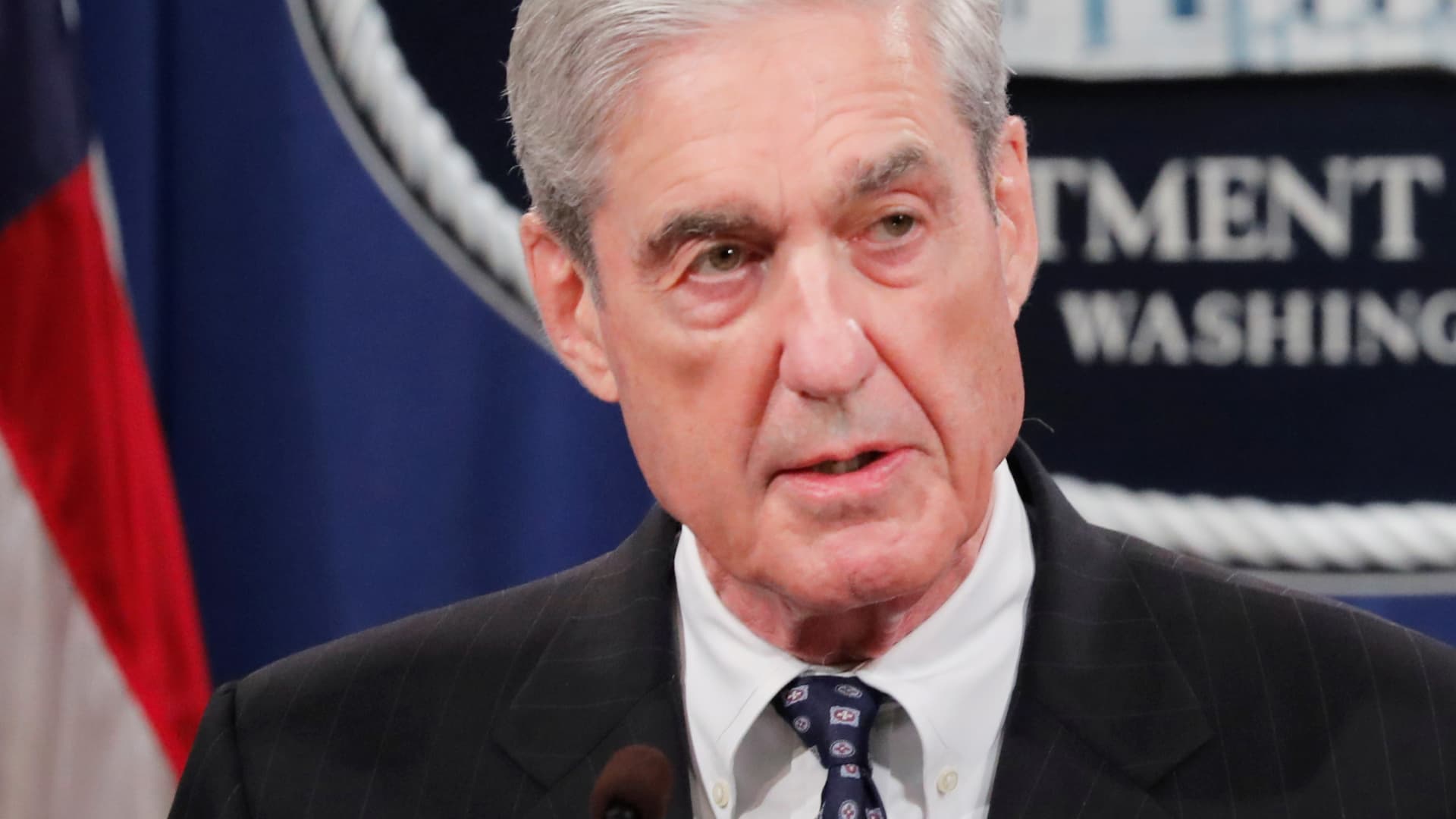
U.S. Special Counsel Robert Mueller makes a statement on his investigation into Russian interference in the 2016 U.S. presidential election at the Justice Department in Washington, May 29, 2019.
Jim Bourg | Reuters
Robert Mueller, former special counsel who investigated Russian interference in the 2016 presidential election, died Friday.
Mueller, also former director of the Federal Bureau of Investigation, was 81.
“With deep sadness, we are sharing the news that Bob passed away” on Friday night, his family said in a statement Saturday. “His family asks that their privacy be respected.”
Mueller concluded in 2019 that Russia interfered in the election in an effort to influence voters towards President Donald Trump’s 2016 campaign.
The Russia investigation and Mueller himself swiftly became lightning rods for Trump, who over the years has repeatedly called the probe a “witch hunt” and a “hoax.”
Shortly after Mueller’s death was reported, Trump said in a Truth Social post, “Good, I’m glad he’s dead.”
He added, “He can no longer hurt innocent people!”
From FBI director to special counsel
Mueller was the second-longest-serving director in FBI history, behind only J. Edgar Hoover. He began his tenure just one week before the Sept. 11 attacks in 2001, which became the catalyst for turning the agency’s priority from solving domestic crimes to fighting terrorism.
In 2017, he returned to public service after being appointed by Deputy Attorney General Rod Rosenstein to serve as special counsel in the Trump-Russia inquiry.
Mueller’s stern visage and taciturn demeanor matched the seriousness of the mission as his team spent nearly two years quietly conducting one of the most consequential yet divisive investigations in Justice Department history. He held no news conferences and made no public appearances during the investigation, remaining quiet despite attacks from Trump and his supporters and creating an aura of mystery around his work.
All told, Mueller brought criminal charges against six of the president’s associates, including his campaign chairman and first national security adviser.
Special Counsel Robert S. Mueller III departs the Capitol after a closed-door meeting with members of the Senate Judiciary Committee about Russian meddling in the 2016 presidential campaign, in Washington, June 21, 2017. Mueller died on Friday, March 20, 2026. He was 81.
J. Scott Applewhite, File | AP Photo
His 448-page report, released in April 2019, identified substantial contacts between the Trump campaign and Russia but did not allege a criminal conspiracy. He laid out damaging details about Trump’s efforts to seize control of the investigation, and even shut it down, though Mueller declined to decide whether Trump had broken the law, in part because of department policy barring the indictment of a sitting president.
But, in perhaps the most memorable language of the report, Mueller pointedly noted: “If we had confidence after a thorough investigation of the facts that the president clearly did not commit obstruction of justice, we would so state. Based on the facts and the applicable legal standards, we are unable to reach that judgment.”
The nebulous conclusion did not deliver the knockout punch to the administration that some Trump opponents had hoped for, nor did it trigger a sustained push by House Democrats to impeach the president — though he was later tried and acquitted on separate allegations related to Ukraine.
The outcome also left room for Attorney General William Barr to insert his own views. He and his team made their own determination that Trump did not obstruct justice, and he and Mueller privately tangled over a four-page summary letter from Barr that Mueller felt did not adequately capture his report’s damaging conclusion.
Mueller deflated Democrats during a highly anticipated congressional hearing on his report when he offered terse, one-word answers and appeared uncertain in his testimony. Frequently, he seemed to waver on details of his investigation. It was hardly the commanding performance many had expected from Mueller, who had a towering reputation in Washington.
Over the next months, Barr made clear his own disagreements with the foundations of the Russia investigation, moving to dismiss a false-statements prosecution that Mueller had brought against former national security adviser Michael Flynn, even though that investigation ended in a guilty plea.
Mueller’s tenure as special counsel was the capstone of a career spent in government.
Vietnam veteran and career criminal prosecutor
Mueller was born in New York City and grew up in a well-to-do suburb of Philadelphia.
He received a bachelor’s degree from Princeton and a master’s degree in international relations from New York University. He then joined the Marines, serving for three years as an officer during the Vietnam War. He led a rifle platoon and was awarded a Bronze Star, Purple Heart and two Navy Commendation Medals. Following his military service, Mueller earned a law degree from the University of Virginia.
Mueller became a federal prosecutor and relished handling criminal cases. He rose quickly through the ranks in U.S. attorneys’ offices in San Francisco and Boston from 1976 to 1988. Later, as head of the Justice Department’s criminal division in Washington, he oversaw a range of high-profile prosecutions that chalked up victories against targets as varied as Panamanian dictator Manuel Noriega and New York crime boss John Gotti.
In a mid-career switch that shocked colleagues, Mueller threw over a job at a prestigious Boston law firm to join the homicide division of the U.S. attorney’s office in the nation’s capital. There, he immersed himself as a senior litigator in a bulging caseload of unsolved drug-related murders in a city rife with violence.
Mueller was driven by a career-long passion for the painstaking work of building successful criminal cases. Even as head of the FBI, he would dig into the details of investigations, some of them major cases but others less so, sometimes surprising agents who suddenly found themselves on the phone with the director.
“The management books will tell you that as the head of an organization, you should focus on the vision,” Mueller once said. But “for me there were and are today those areas where one needs to be substantially personally involved,” especially in regard to “the terrorist threat and the need to know and understand that threat to its roots.”
Two terrorist attacks occurred toward the end of Mueller’s watch: the Boston Marathon bombing and the Fort Hood shootings in Texas. Both weighed heavily on him, he acknowledged in an interview two weeks before his departure.
“You sit down with victims’ families, you see the pain they go through and you always wonder whether there isn’t something more” that could have been done, he said.
Cuba suffered a widespread power cut on March 16, 2026, according to the national electricity company, against the backdrop of a severe crisis on the island caused by the US energy blockade.
Yamil Lage | Afp | Getty Images
The White House has choked off Cuba’s oil supply and threatened a “friendly takeover” of the communist-run island, against a backdrop of military operations in Venezuela and Iran.
U.S. President Donald Trump is implying the country is his next target, saying: “Whether I free it, take it, I think I can do anything I want with it. They’re a very weakened nation right now.” The oil shortage is bringing Cuba’s economy to the brink. But I’ve found myself thinking back when, not that long ago, it briefly looked like the two nations would normalize relations after decades of hostility.
I first landed in Havana in March 2012 to cover Pope Benedict XVI’s visit. The airport was small. I had to repeatedly explain to immigration officials that we were there as journalists, that we had permission, and that everything had been cleared in advance. I was grateful that my team spoke Spanish to help with the process.
Parts of the city felt strangely familiar from images I’d seen of faded pastel buildings and old American cars somehow still running on patched-together parts.
Cuba and the U.S. had been geopolitical foes for more than 50 years. Cuba became communist when the 1959 revolution brought Fidel Castro to power and the island nation, just 90 miles from Florida, strengthened its ties with the Soviet Union. The Cuban government seized U.S. property and American-owned businesses in response to a growing U.S embargo. In response, President John F. Kennedy formalized a full embargo in 1962. Supplies of food, fuel, and consumer goods quickly became scarce.
But being there, I sensed that something was beginning to shift.
CNBC’s Justin Solomon, fielding producing in Cuba, with correspondent Michelle Caruso-Cabrera
CNBC
Between 2012 and 2016, I made 10 trips, field producing for CNBC with international correspondent Michelle Caruso-Cabrera. Almost every visit seemed to line up with something significant — moments that felt like they might mark a turning point. But by the end, that momentum felt suddenly uncertain.
On my first visit, Havana was trying to look ready for a pope. Fresh paint lined parts of the Malecón, still drying in places along the route the pope was expected to travel. In a country shaped for decades by communism, his presence felt like more than a religious event. It felt like a signal, subtle but unmistakable, that Cuba might be opening up.
After that, things started to move quickly.
Less than a year later, the government invited a small group of journalists, including us, to see what it called “reforms” up close. We spoke with the central bank governor, and with small business owners trying to navigate a system that was changing, but not all at once.
We slipped away from the official itinerary and made our way to Hershey, Cuba, a town Milton Hershey built to secure sugar for his chocolate business in the early 20th century. It was one of several reminders of Cuba’s American past before its revolution. A former Coca-Cola factory had been repurposed by the state. A Western Union building housed the country’s telecom company. A Woolworth’s store had become a local discount store.
In July 2015, President Barack Obama announced the restoration of diplomatic ties. We moved quickly, out of New York, down to Miami, then onto a charter flight to Havana. On the ground, there was a real sense of excitement. But it wasn’t unguarded. People were hopeful, but careful.
A month later, the U.S. embassy reopened for the first time in more than 50 years. I watched the flag go up from the balcony of a crumbling apartment building across the street. For younger Cubans especially, it felt like a turning point: More opportunities, more access, more choice seemed within reach.
Obama’s visit the following March only added to that feeling. Travel restrictions for Americans were relaxed and limited trade began to restart. The embargo was still in place, as it is written into U.S. law, but it did slightly soften.
US President Barack Obama (L) and Cuban President Raul Castro meet at the Revolution Palace in Havana on March 21, 2016. US President Barack Obama and his Cuban counterpart Raul Castro met Monday in Havana’s Palace of the Revolution for groundbreaking talks on ending the standoff between the two neighbors. AFP PHOTO/ NICHOLAS KAMM / AFP / NICHOLAS KAMM (Photo credit should read NICHOLAS KAMM/AFP via Getty Images)
Nicholas Kamm | Afp | Getty Images
That week brought a Rolling Stones concert and a Major League Baseball game, the first on the island in years.
Even then, there was restraint. Cubans had learned not to get ahead of themselves. For many, optimism came with the memory of how quickly it could fade. After all, not everyone believed the United States should reopen relations with the country. Many argued that normalizing ties would reward the communist government without forcing meaningful reforms.
Still, things were changing. In 2016, Carnival Cruise Line, under its Fathom brand, docked in Havana, the first U.S. cruise ship to visit the island since 1978. By November, JetBlue had direct flights running from New York. For a time, it felt like the barriers were coming down in real time.
Reporting there was never simple. Permits could fall through without warning. Phones rarely worked. Wi-Fi was hard to find. Restaurants handed out long menus, but when you asked, you were often told the only thing available was rice and beans. I’d walk past buildings with elegant facades, only to step inside and find them hollowed out, crumbling, little more than dust and debris.
And yet, on each trip, you could see small signs that the transformation was continuing. Family-run restaurants began opening in people’s homes. Airbnb listings started to spread. It wasn’t dramatic, but it was there.
My final trip came in November 2016, just after Fidel Castro’s death, to cover his funeral. He’d ceded power to his brother Raoul years earlier, but the death of the man who symbolized the revolution was a huge moment.
This time, Havana was quiet.
Thousands of Cubans lined the streets of Havana to bid goodbye to Fidel Castro, as a caravan carrying his ashes began a four-day journey across the country to the eastern city of Santiago. Fidel Castro, the former Prime Minister and President of Cuba, who died on the late night of November 25, 2016, at 90. (Photo by Artur Widak/NurPhoto via Getty Images)
Nurphoto | Nurphoto | Getty Images
Music stopped. Alcohol disappeared. The city entered a formal mourning period. People stood in long lines to sign condolence books.
From the outside, it looked like a clear ending. Inside Cuba, it didn’t feel that simple.
Standing there, it was hard not to feel that the energy of the previous years was slipping away. The same questions kept coming back. What happens now? What becomes of the reforms? Of the relationship with the United States?
When I left for the last time, I had the sense I’d witnessed something rare, a brief stretch of time when history seemed to accelerate, when long-standing patterns loosened, even if only slightly, and the future felt, for a moment, open.
In the years since, much of that momentum has slowed, and in some cases reversed. The U.S. withdrew embassy personnel, new travel limits were imposed in November 2017, and the flow of American visitors thinned. The opening that once felt within reach has given way to more familiar tensions, which are flaring like the changes I saw never happened.
History doesn’t always arrive with a clear beginning or a clean ending. In Cuba, it has a tendency to circle back on itself.
What comes next between these two neighbors is still unwritten.
Choose CNBC as your preferred source on Google and never miss a moment from the most trusted name in business news.
A drone view shows the Netflix logo on one of the company’s buildings in the Hollywood neighborhood in Los Angeles, California, U.S., Jan. 20, 2026.
Daniel Cole | Reuters
President Donald Trump late Saturday called on Netflix to fire board member Susan Rice or “pay the consequences,” after she said Democrats would push for corporate accountability if they regain power in the November midterm elections.
In a Truth Social post on Saturday, Trump described Rice, who served as President Joe Biden’s domestic policy chief and held top foreign policy posts under President Barack Obama, as “purely a political hack” with “no talent or skills.”
“HER POWER IS GONE, AND WILL NEVER BE BACK,” Trump wrote.
Rice argued during a podcast last week that “it is not going to end well” for corporations, news organizations, and law firms that “bent the knee” to Trump, and that their deference is unpopular.
“There is likely to be a swing in the other direction, and they are going to be caught with more than their pants down,” Rice told Preet Bharara, a former U.S. attorney for the Southern District of New York. “They’re going to be held accountable by those who come in opposition to Trump and win at the ballot box.”
She added, “If these corporations think that Democrats, when they come back in power, are going to play by the old rules, and say, ‘Never mind, we will forgive you for all the people you fired and all the policies and principles you violated, all the laws you skirted,’ I think they got another thing coming.”
Rice served on Netflix’s board from 2018 to 2021, and rejoined in 2023 after leaving the Biden administration.
Netflix representatives didn’t immediately respond to a request for comment. The White House did not immediately respond to a request for comment.
Trump included a screenshot of an earlier post from far-right activist and Trump ally Laura Loomer, who said Rice’s remarks were “anti-American” and urged the president to “kill the Netflix-Warner Bros. merger now.” Loomer also tagged Federal Communications Commission Chairman Brendan Carr in her post.
The comments come after Trump told NBC News earlier this month that the Department of Justice will “handle” the deal and that he’ll stay out of their review, after previously saying he’d be involved in the process. The DOJ is currently reviewing Netflix’s proposed acquisition of Warner Bros. Discovery.
Netflix has proposed acquiring WBD in a $72 billion deal that would not include the company’s cable networks, including CNN.
Paramount Skydance, in response, launched a hostile takeover bid for all of WBD, promising its shareholders $30 per share in an all-cash deal.
The DOJ is investigating whether Netflix’s proposed deal could hurt competition, and it’s also asked how the company’s previous acquisitions have affected competition for creative talent, The Wall Street Journal reported earlier this month.
As part of its review, the agency is also examining whether the streaming giant uses anticompetitive tactics in negotiations with independent content creators for acquiring programming, Bloomberg reported, citing documents.
Netflix co-CEO Ted Sarandos said last month that he’s confident the company will be able to secure regulatory approval “because this deal is pro-consumer … pro-innovation, pro-worker.”
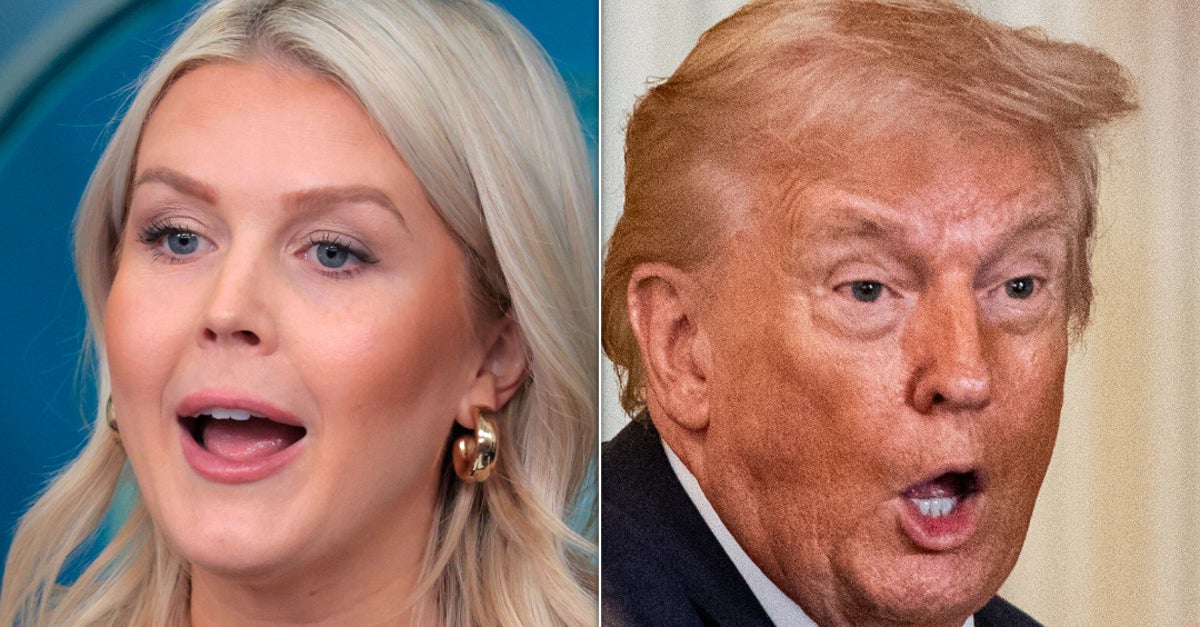
White House press secretary Karoline Leavitt’s bold claim regarding President Donald Trump’s social media posts is raising new questions about a racist video featured on his account earlier this month.
On Wednesday, Leavitt was asked about a post on Trump’s Truth Social account that criticised Britain’s plan to turn over the Chagos Islands to Mauritius while also securing a 99-year lease to keep a joint UK–US military base on Diego Garcia.
“The post should be taken as the policy of the Trump administration,” she said. “It’s coming straight from the horse’s mouth. When you see it on Truth Social, you know it’s directly from President Trump.”
Leavitt called that the “beauty” of Trump’s presidency and a sign of his “transparency.”
Just one problem: Her statement conflicts with Trump’s claim about a racist video featured on his Truth Social account earlier this month that depicted former President Barack Obama and former first lady Michelle Obama as a chimpanzee and a gorilla.
The video was denounced by Democrats and Republicans alike, and Trump later deleted it. But he also never apologised, claiming it wasn’t his fault.
“I didn’t do it, by the way,” Trump told reporters while aboard Air Force One on February 6. “This was done by somebody else.”
Trump said he had seen part of the video, which he claimed was about “fraudulent elections,” and then passed it on without seeing the racist part.
“I guess probably nobody reviewed the end of it,” he said. “Somebody slipped and missed a very small part.”
Trump’s critics noted the glaring inconsistency and fired back on X:
Pathetic.
When it helps him, every post is “official presidential policy.” When it backfires, suddenly it’s “some staffer.”
Accountability that disappears on demand isn’t leadership. It’s a magic trick with nuclear codes.
If no one knows who’s actually speaking, who’s actually…
Close up image of a tablet screen displaying a portrait of Jeffrey Epstein beside the official U.S. Department of Justice website page titled Epstein Library in Washington District of Columbia United States on February 11, 2026.
Veronique Tournier | Afp | Getty Images
The recent release by the Department of Justice of millions of pages of emails and other documents related to the notorious sex predator Jeffrey Epstein has led to a wave of resignations and other uncomfortable fallout for high-profile people around the world whose dealings with him have been exposed.
Those individuals include the top lawyer at the major investment bank Goldman Sachs, the CEO of Dubai’s largest port, a former president of Harvard University, a former U.S. president and ex-secretary of State, and the chairman of a leading American corporate law firm.
The fallout from the Epstein files and people mentioned in them has even imperiled the government of United Kingdom Prime Minister Keir Starmer, even though the Labour Party leader never knew the convicted sex offender.
Epstein, who cultivated relationships with many rich and powerful men and women, pleaded guilty in 2008 in Florida to state criminal charges related to soliciting prostitution, with one charge related to a girl under the age of 18.
He ended up serving 13 months in prison in that case, but was allowed to go to his office many days for work.
In August 2019, Epstein killed himself in a jail in New York City, weeks after being arrested on federal child sex trafficking charges.
A number of the people who have resigned their jobs in recent weeks had friendly dealings with Epstein after his 2008 conviction, which was widely publicized at the time.
Being mentioned in the Epstein files does not mean that someone was implicated in any of the crimes that he previously pleaded guilty to, or was later charged with. No one on the list of names compiled by CNBC of those affected by their association with Epstein has been charged for such conduct.
Here are some high-profile figures who have been burned by their appearances in the Epstein files:
Sultan Ahmed bin Sulayem (L), Kathryn Ruemmler (C), Brad Karp (R)
Reuters | Getty Images | Getty Images
Sultan Ahmed bin Sulayem: CEO of DP World
Sulayem resigned as CEO of Dubai’s largest port operator on Feb. 13, after leading the company for 10 years. Documents showed Epstein once referring to Sulayem as one of his “most trusted friends.” CNBC has reached out to the government of Dubai Media Office and DP World, seeking comment from Sulayem, who to date has not issued a statement on the situation.
Kathryn Ruemmler: Chief Legal Officer and General Counsel at Goldman Sachs
Ruemmler, a former White House counsel under then-President Barack Obama, announced her resignation from Goldman Sachs on Feb. 12, effective at the end of June. Last week, The Wall Street Journal reported that Ruemmler was one of three people Epstein called when he was arrested in July 2019. She once thanked Epstein after receiving luxury gifts from him, calling him “Uncle Jeffrey.” Ruemmler told the Journal in January: “As I have said, I regret ever knowing him, and I have enormous sympathy for the victims of Epstein’s crimes.”
Brad Karp: Chairman of Paul Weiss
Karp resigned as chairman of Paul Weiss on Feb. 4, after leading the major corporate law firm since 2008. Files show Karp thanking Epstein for a “once in a lifetime” evening in 2015, and asking if he could help his son land a job on a Woody Allen film in 2016. Days before he resigned, Paul Weiss issued a statement to The New York Times saying, “Mr. Karp attended two group dinners in New York City and had a small number of social interactions by email, all of which he regrets.”
David Gelernter (L), Bill and Hillary Clinton (C-R)
AP (L) | Getty Images (R)
David Gelernter: Yale University computer science professor
Gelernter was barred from teaching classes at Yale on Feb. 11 as the university conducts a review of his relationship with Epstein. Gelernter had extensive email communications with Epstein, which included one 2011 missive in which the professor recommended a Yale student for a project, referring to her as a “small goodlooking blonde.” Gelernter has not responded to CNBC’s requests for comment after Yale took action.
Bill Clinton: Former U.S. president
Clinton flew on Epstein’s private plane multiple times in 2002 and 2003, and was photographed in casual social settings with Epstein and the sex offender’s now-convicted procurer, Ghislaine Maxwell. Clinton initially resisted a subpoena by the House Oversight Committee to testify about Epstein, but agreed to appear after it threatened to hold him in contempt of Congress. Clinton is due to testify on Feb. 27. Clinton’s spokesman in 2019 issued a statement saying, “President Clinton knows nothing about the terrible crimes Jeffrey Epstein pleaded guilty to in Florida some years ago, or those with which he has been recently charged in New York.” Clinton on Feb. 7 retweeted a post on X from his spokesman that said, “What DOJ has released thus far, and the manner in which it has done so, makes one thing clear: someone or something is being protected. We don’t know who, what, or why. We do know this: we need no such protection. It’s why only the Clintons have called for a public hearing.”
Hillary Clinton: Former secretary of State
Hillary Clinton, who is married to the former president, has said she does not recall ever speaking to Epstein. Despite that, the House Oversight Committee subpoenaed her to testify for its inquiry into the predator. Like former President Clinton, the former secretary of State initially refused to appear, but then agreed to testify on Feb. 26 after being threatened with a contempt finding. Speaking at the Munich Security Conference on Feb. 14, Clinton again called for the release of all of the Epstein files, saying, “It is something that needs to be totally transparent,” The Independent reported. “I’ve called for many, many years for everything to be put out there so people can not only see what’s in them but also, if appropriate, hold people accountable. We’ll see what happens,” she said.
Lord Peter Mandelson (L), Morgan McSweeney (C), Larry Summers (R)
Mandelson was fired by UK Prime Minister Keir Starmer on Sep. 12 and resigned from the Labour Party on Feb. 2 over his ties to Epstein. Mandelson wrote a note in Epstein’s 50th Birthday Book, addressing him as “my best pal,” and has been accused of sending Epstein market-sensitive government information following the 2008 financial crisis. Mandelson, in comments to the Financial Times in February 2025, said, “I regret ever meeting him or being introduced to him by his partner Ghislaine Maxwell.” He also said, “I regret even more the hurt he caused to many young women. I’m not going to go into this. It’s an FT obsession and frankly you can all f— off. OK?”
McSweeney resigned Feb. 11, taking responsibility for Starmer’s appointment of Mandelson as ambassador. McSweeney told reporters, “The decision to appoint Peter Mandelson was wrong,” adding that the former ambassador “damaged our party, our country and trust in politics itself.”
Larry Summers: OpenAI board member and former Harvard University president
Summers announced in November that he would step back from public commitments, including serving as a board member at the artificial intelligence company OpenAI and teaching classes as a professor at Harvard. The former Treasury secretary was named as a backup executor in a 2014 version of Epstein’s will. Summers, in a statement in November, said, “I am deeply ashamed of my actions and recognize the pain they have caused. I take full responsibility for my misguided decision to continue communicating with Mr. Epstein.”
Andrew Mountbatten Windsor (L), Sarah Ferguson (C), Jack Lang (R)
Getty Images
Andrew Mountbatten-Windsor: Former prince, Duke of York
Andrew Mountbatten-Windsor, formerly known as Prince Andrew, Duke of York, was stripped of his titles and mansion in a statement from Buckingham Palace on Oct. 30. Mountbatten-Windsor settled a lawsuit filed by Epstein victim Virginia Giuffre in 2022 without admitting wrongdoing, and is being investigated by authorities in London for claims that he sent Epstein confidential trade documents. In a 2019 statement, Mountbatten-Windsor said, “I continue to unequivocally regret my ill-judged association with Jeffrey Epstein. His suicide has left many unanswered questions, particularly for his victims, and I deeply sympathise with everyone who has been affected and wants some form of closure. I can only hope that, in time, they will be able to rebuild their lives. Of course, I am willing to help any appropriate law enforcement agency with their investigations, if required.”
Ferguson’s charity, Sarah’s Trust, which focused on improving the lives of women and children, announced on Feb. 2 that it would be shutting down. The ex-wife of Andrew Mountbatten Windsor described Epstein as “a legend” and “the brother I have always wished for” in emails long after his first conviction in 2008. In a statement to the Guardian last September, a spokesperson for Ferguson said, “The duchess spoke of her regret about her association with Epstein many years ago, and as they have always been, her first thoughts are with his victims.”
Jack Lang: President of the Arab World Institute and former Culture minister of France
Lang, the highest-profile figure in France affected by the files, resigned as president of the Arab World Institute on Feb. 7 after leading the cultural center since 2013. Lang was mentioned more than 600 times in newly released files dating back to 2012 when he was introduced to Epstein by their mutual friend Woody Allen, according to The New York Times. French authorities have said they are investigating reports of financial connections between Lang and Epstein, with the financial prosecutor’s office probing Lang and his daughter, Caroline, on suspicion of “aggravated tax fraud laundering.” Lang has called the allegations against him “baseless,” and said the investigation “will bring much light on to the accusations that are questioning my probity and my honour.” His daughter denies any wrongdoing.
Juul resigned on Feb. 8 after Norway’s foreign ministry suspended her earlier in the week. She resigned after reports that her children and husband, Terje Rød-Larsen, were left $10 million in a will written by Epstein two days before his suicide. Juul said in early February that she had contact with Epstein through Rød-Larsen, but also said that she “should have been much more careful.”
Miroslav Lajčák: National security advisor to the prime minister of Slovakia and former president of the UN General Assembly
Lajčák resigned Jan. 31 after serving four Slavic governments. Messages from 2018 show Lajčák discussing women with Epstein, writing, “Why don’t you invite me for these games? I would take the ‘MI’ girl.” Lajčák reportedly told Radio Slovakia, “When I read those messages today, I feel like a fool.” He said in the same interview that he had shown “poor judgment and inappropriate communication … Those messages were nothing more than foolish male egos in action, self-satisfied male banter.” He added, “There were no girls … the fact that someone is communicating with a sexual predator does not make him a sexual predator.”
David Ross: Chair of New York’s School of Visual Arts
Ross, formerly the director of the Whitney Museum, resigned as the chair of the Master of Fine Arts in art practice at SVA on Feb. 3. Ross called Epstein “incredible” after he suggested an exhibit featuring girls and boys aged 14-25 titled “Statutory.” Ross told The New York Times that he regretted being “taken in” by Epstein’s claim that he had been the victim of a political frame-up because of his connection to Bill Clinton. “I continue to be appalled by his crimes and remain deeply concerned for its many victims,” he told the Times.
Rubinstein announced her resignation on Feb. 2 from the United Nations High Commissioner for Refugees after documents unveiled a 2012 family visit to Epstein’s private island. In an email, Rubinstein thanked Epstein for “an afternoon in paradise” on behalf of her children and herself. “I was aware of the verdict at the time of the visit. What has subsequently emerged about the extent of the abuse is appalling and something I strongly distance myself from,” Rubinstein told the Swedish newspaper Expressen.
Casey Wasserman:Founder, Chairman and CEO of Wasserman talent agency; Chairman of the LA28 Olympic and Paralympic Games
Wasserman, owner of a high-profile talent and marketing agency and the chairman of the 2028 Los Angeles Olympic and Paralympic Games, began the process of selling his company after emails between him and Maxwell from over 20 years ago were made public. Following the revelations, several clients, including Grammy winner Chappell Roan, announced they were leaving the agency. Wasserman said he “never had a personal or business relationship with Jeffrey Epstein” and that he’d “become a distraction” in a memo to his staff, which was reported by The Wall Street Journal. The Journal also reported, citing people familiar with the situation, that the committee organizing the LA Olympic Games had voted unanimously to keep Wasserman as chairman.
Steve Tisch: Chairman and co-owner of the New York Giants
The National Football League announced Feb. 2 that it will look into Tisch, a former film producer who has been the Giants’ executive vice president since 2005. Tisch was named over 400 times in the files, with one document showing that he asked Epstein whether women were “pro or civilian.” In a January statement to ESPN, Tisch said, “We had a brief association where we exchanged emails about adult women, and in addition, we discussed movies, philanthropy, and investments.” Tisch added, “I did not take him up on any of his invitations and never went to his island. As we all know now, he was a terrible person and someone I deeply regret associating with.”
Thorbjorn Jagland, Jes Staley, and Alex Acosta.
Stian Lysberg Solum | AFP | Tayfun Salci | Anadolu | Getty Images | Alex Brandon | AP
Jagland was charged with “aggravated corruption” on Feb. 12 after a police probe into his ties with Epstein. Jagland, who served as Norway’s prime minister from 1996 to 1997, is being investigated to see whether “gifts, travel and loans were received in connection with his position,” according to investigators. A 2014 email shows a planned visit for Jagland and his family to Epstein’s private island in the U.S. Virgin Islands. Jagland’s lawyers have said he “denies all the charges.”
Jes Staley: CEO of Barclays
Staley served as CEO of Barclays from October 2015 until his resignation in late 2021. Staley’s departure followed a probe by the UK’s Financial Conduct Authority into his relationship with Epstein. The regulator fined him more than $2 million and permanently banned him from holding a management role in the sector in 2023. In 2020, Staley said, “Obviously I thought I knew him well and I didn’t. For sure, with hindsight with what we know now, I deeply regret having any relationship with Jeffrey.”
Alex Acosta: U.S. Labor secretary
Acosta announced his resignation in a letter to President Donald Trump on July 12, 2019, following controversy over his striking a federal non-prosecution deal with Epstein in 2008 when he was the U.S. attorney for the Southern District of Florida. Acosta defended that deal — which had required Epstein to plead guilty to Florida state charges of soliciting a minor for prostitution — in six hours of testimony in September to the House Oversight Committee. “I testified for six hours. I’ll let the record speak for itself,” Acosta said after the hearing.
— CNBC’s Garrett Downs contributed to this report.
WATCH: Commerce Sec. Howard Lutnick admits visiting Epstein island during family vacation
Barack Obama took a thinly-veiled jab at California Gov. Gavin Newsom over the homeless “atrocity” in Los Angeles Saturday.
During a conversation with YouTuber Brian Tyler Cohen, Obama explained: “We should recognize that the average person doesn’t want to have to navigate around a tent city in the middle of downtown.
”That’s a losing political strategy.”
Barack Obama took a thinly veiled jab at California Gov. Gavin Newsom over the homeless “atrocity” in Los Angeles Youtube/Brian Tyler Cohen
“I think it is morally — ethically speaking — it is an atrocity that in a country this wealthy, we have people just on the streets, and we should insist on policies that recognize their full humanity — people who are houseless — and be able to provide them with the help and resources that they need.”
Download The California Post App, follow us on social, and subscribe to our newsletters
Meanwhile, at his State of the State address at the Capitol last month, Newsom celebrated a statewide drop in homelessness; however, Los Angelenos were not here for false hopes.
At his State of the State address at the Capitol last month, Newsom celebrated a statewide drop in homelessness. Andy Johnstone for California Post
Business owners, residents, and local leaders said the governor’s claims of a 9% decline did not match the reality of widespread encampments and frequent public drug use.
Even inside the Capitol, lawmakers responded cautiously after Newsom’s victory lap.
The California Post is here. Sign up for Morning Report.
Get the perfect blend of news, sports and entertainment delivered to your inbox every day.
Thanks for signing up!
California has spent more than $24 billion on homelessness programs during Newsom’s time as governor, with spending increasing each year.
Business owners, residents, and local leaders said the governor’s claims of a 9% decline did not match the reality of widespread encampments ZUMAPRESS.com
In 2024, homelessness reached a record high across the state, with nearly 124,000 people unsheltered, according to federal data. Newsom did not share a statewide total for 2025, and updated federal census data is not yet available.
FILE PHOTO: White House counsel Kathryn Ruemmler listens as President Barack Obama speaks at an installation ceremony for FBI Director James Comey at FBI Headquarters in Washington, Monday, Oct. 28, 2013.
Charles Dharapak | AP
Top Goldman Sachs lawyer Kathryn Ruemmler said Thursday night that she will leave the investment bank at the end of June, a decision that came after a flurry of news articles highlighting documents detailing the former White House counsel’s often chummy email conversations with the notorious sex predator Jeffrey Epstein.
Goldman, for months, has defended Ruemmler after Congress and then the Department of Justice released emails between her and Epstein, as well as other documents related to investigations of him.
Ruemmler, who has been a key advisor to Goldman CEO David Solomon since joining the bank in 2020, told The Financial Times on Thursday, “I made the determination that the media attention on me, relating to my prior work as a defence attorney, was becoming a distraction.”
The FT first reported the 54-year-old’s decision to leave Goldman.
“Since I joined Goldman Sachs six years ago, it has been my privilege to help oversee the firm’s legal, reputational, and regulatory matters; to enhance our strong risk management processes; and to ensure that we live by our core value of integrity in everything we do,” Ruemmler said in a statement to CNBC.
“My responsibility is to put Goldman Sachs’ interests first,” Ruemmler said.
“Earlier today, I regretfully informed David Solomon of my intention to step down as Chief Legal Officer and General Counsel of Goldman Sachs as of June 30, 2026.”
Solomon, in a statement, said, “Throughout her tenure, Kathy has been an extraordinary general counsel, and we are grateful for her contributions and sound advice on a wide range of consequential legal matters for the firm.”
“As one of the most accomplished professionals in her field, Kathy has also been a mentor and friend to many of our people, and she will be missed. I accepted her resignation, and I respect her decision,” Solomon said.
Her announcement that she will leave Goldman comes nearly a week after The Wall Street Journal reported that Ruemmler was one of three people whom Epstein called on July 6, 2019, after being arrested by federal authorities on child sex trafficking charges at an airport in New Jersey.
The Journal’s report cites a handwritten set of notes by law enforcement about comments Epstein made inside an FBI vehicle after his arrest.
Those notes are among documents released in late January by the Department of Justice, CNBC has confirmed.
Other news articles detailed emails and documents showing how Epstein had made gifts to Ruemmler that included a Hermes bag, and other luxury items, such as a Fendi purse, spa visits, Bergdorf Goodman gift cards and flowers. On one occasion, she effusively thanked him, calling him “Uncle Jeffrey,” one email showed.
Ruemmler was a white-collar criminal defense lawyer at the firm Latham & Watkins during the years she was speaking with Epstein, whom she met in 2014.
An Aug. 14, 2014, email contained in the DOJ’s Epstein files shows how he asked her to represent his client, Bank Edmond de Rothschild.
“They have a justice department problem … like every other swiss bank,” Epstein wrote her.
Ruemmler took the bank as a client for Latham.
Ruemmler has said that she never represented Epstein, who killed himself in a New York federal jail weeks after his 2019 arrest.
Read more CNBC politics coverage
Ruemmler’s spokeswoman, Jennifer Connelly, told the Journal for its story last Friday, “These documents are consistent with what Ms. Ruemmler has repeatedly said: She knew Epstein when she was a criminal defense attorney and shared a client with him.”
“She was friendly with him in that context. She had no knowledge of any ongoing criminal conduct on his part,” Connelly said.
Ruemmler previously served as White House counsel under former President Barack Obama.
She is the latest person to lose a high-profile position because of her prior association with Epstein.
On Sunday, Morgan Sweeney resigned as chief of staff to British Prime Minister Keir Starmer, saying he took responsibility for advising Starmer to appoint Peter Mandelson as the United Kingdom’s ambassador to the United States. Starmer fired Mandelson from that post in September over disclosures about his connection to Epstein.
Last week, Brad Karp, chairman of the major corporate law firm Paul Weiss, resigned from that post after fallout over emails between him and Epstein. Karp is staying at the firm.
“In response to the Epstein emails, a Paul Weiss spokesman previously said, “Mr. Karp never witnessed or participated in any misconduct. Mr. Karp attended two group dinners in New York City and had a small number of social interactions by email, all of which he regrets.”
Karp said he was leaving the chairman’s post because of the distraction of the news stories.
In November, after a congressional committee released emails between Ruemmler and Epstein, Goldman Sachs spokesman Tony Fratto told CNBC, “These emails were private correspondence well before Kathy Ruemmler joined Goldman Sachs.”
“Kathy is an exceptional general counsel and we benefit from her judgment every day,” Fratto said at the time.
Ruemmler has previously told the Journal that she regrets ever knowing Epstein.
Among the new tranche of emails that the DOJ released in late January is one that Ruemmler sent Epstein in March 2019, four months before his arrest.
In that email, she offered advice on how to respond to criticism that he had previously received special treatment and a light punishment in 2008 because of his wealth and political connections when he avoided federal prosecution in exchange for pleading guilty in Florida state court to a charge of soliciting prostitution from an underage girl.
At the time Epstein sought Ruemmler’s advice, he had been the subject of a series of articles in the Miami Herald that were critical of the decision by federal prosecutors not to file charges against him in 2008. Epstein ended up serving just 13 months in state prison in Florida, but was allowed out to go to his office during the day for much of that time.
The subject line of the email thread, “From wapo,” suggests that Epstein was reaching out to Ruemmler because of an inquiry by The Washington Post about him.
Ruemmler wrote in the email: “Something like: … ‘The criticism is wrong and reflects a fundamental [misunderstanding] of both the facts underlying Mr. Epstein’s case and how it was [prosecuted] by both local and federal authorities.”
“Far from [receiving] a sweetheart deal, Mr. Epstein was subjected to a lengthy, aggressive, [and] highly unusual federal investigation for what were, in essence, local [offenses] of sexual solicitation,” Ruemmler wrote. “He accepted responsibility, served [time and] prison, and paid significant monetary settlements to the victims [involved].”
Ruemmler, in a bracketed section, also suggested saying something like, “But for his wealth, it is hard to imagine that Mr. Epstein … would have received the aggressive treatment that he did from [federal] prosecutors, and he certainly would never have been subjected to the [salacious] and malicious treatment by the media that he continues to receive more than 10 years after the case was resolved.”