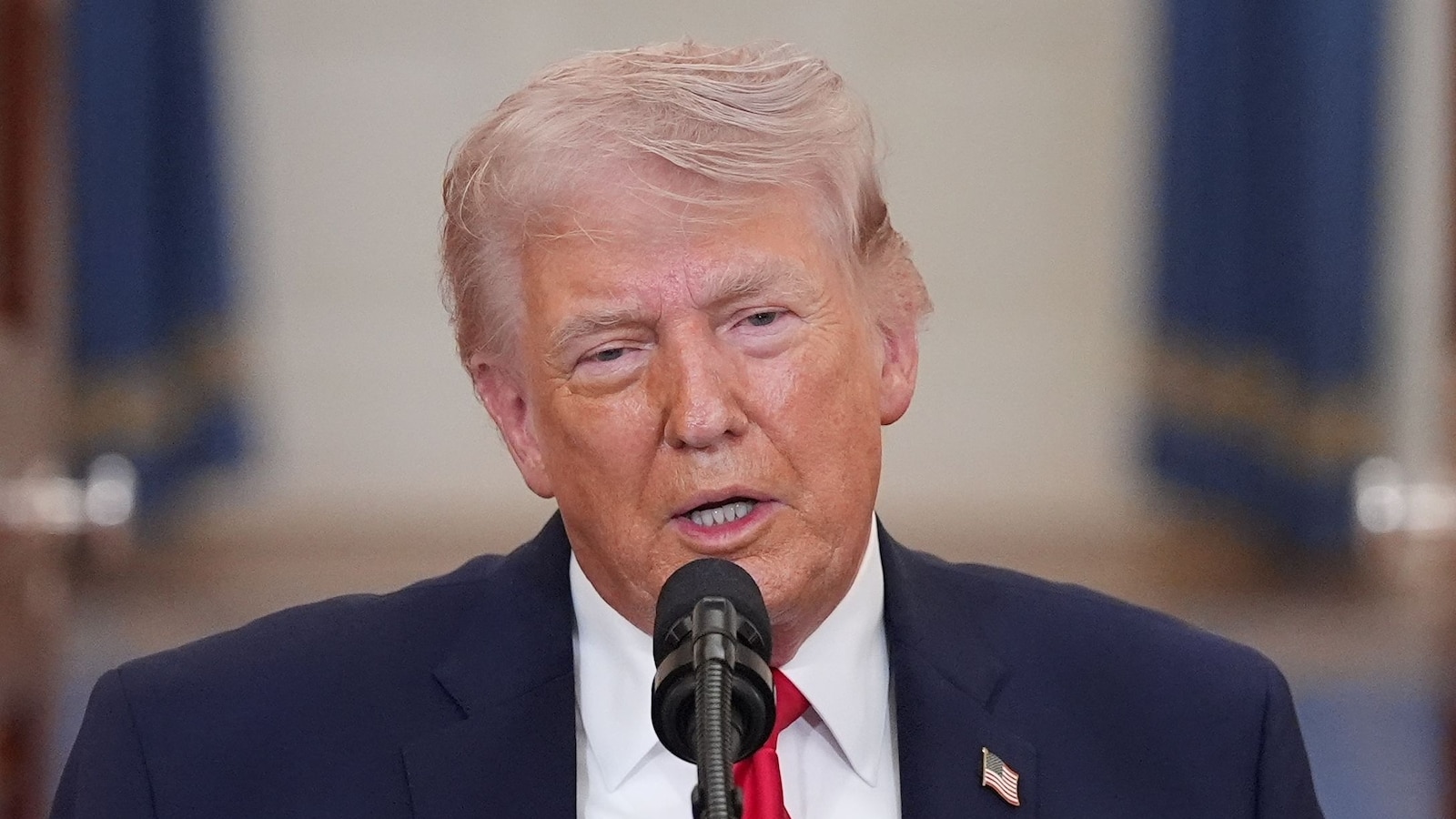
President Donald Trump said Sunday that if no peace deal is reached with Iran in the next 48 hours, “we’re blowing up the entire country.”
The president made the threat Sunday to ABC News’ senior political correspondent Rachel Scott in response to a question regarding whether his previously stated timeline of two to three weeks for a deal was still accurate.
Concerns have been raised about targeting civilian infrastructure in Iran and the consequences that could bring.
“It should be days, not weeks,” Trump said, adding that Iran “has been decimated, decimated. And every day is going to get worse.”
“Every day they’re gonna have to build more bridges, and they’re gonna have to build more power plants and more everything else,” the president said. “There’s been no country that’s ever taken a pounding like that.”
Watch special coverage on Nightline, “War with Iran,” each night on ABC and streaming on Disney+ and Hulu.
Trump said Iran had 48 hours to agree to a deal to open the Strait of Hormuz or make peace.
“If it happens, it happens. And if it doesn’t, we’re blowing up the whole country. We’re blowing up, as I said, it’s going to be bridge day and it’s going to be power plant day in the country of Iran.”
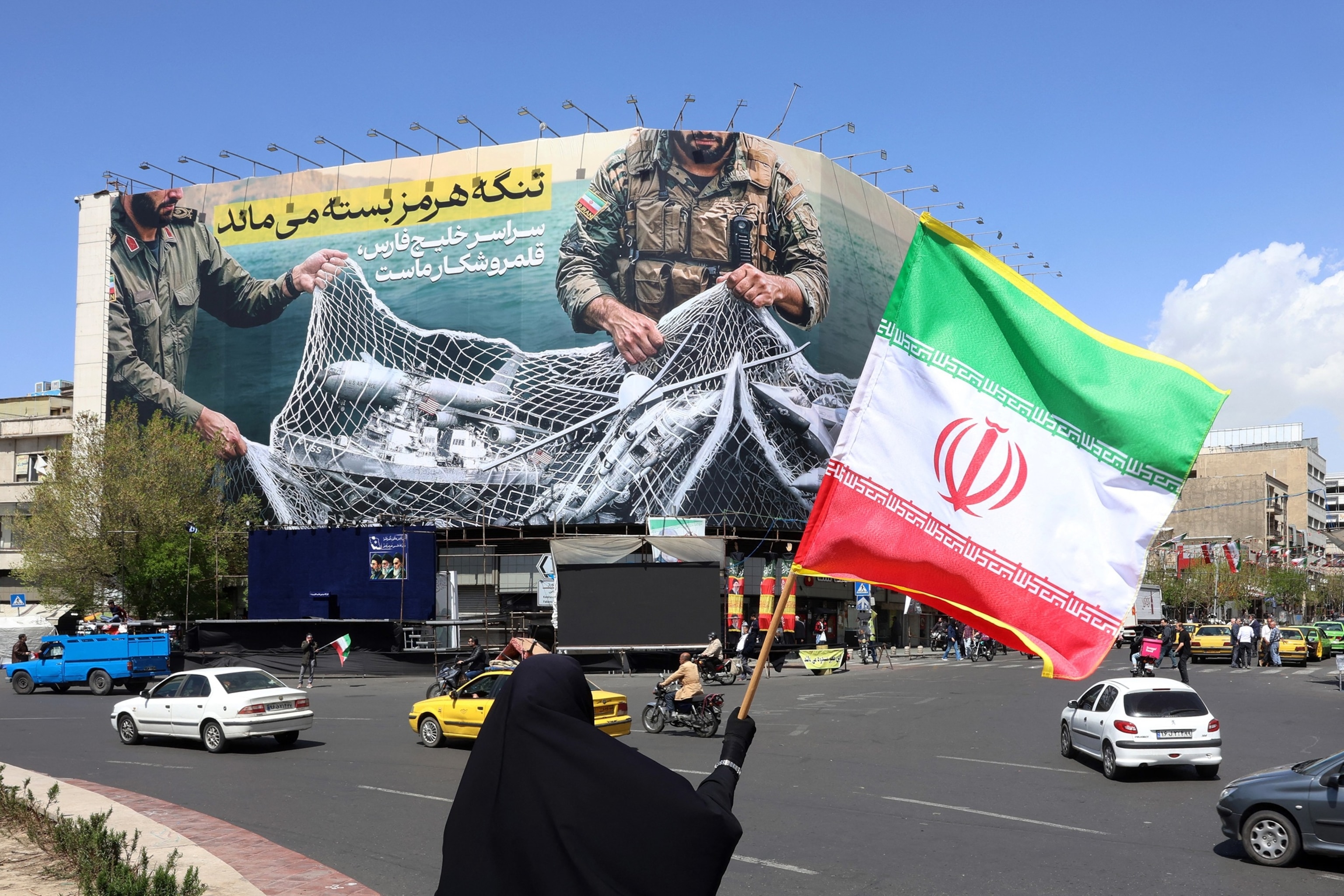
A woman holds Iran’s national flag while standing near a billboard that reads “The Strait of Hormuz remains closed” at the Enqelab Square in Tehran, on April 5, 2026.
AFP via Getty Images
The president was apparently referring to an ultimatum he posted Sunday on his social media platform for Iran to open the Strait of Hormuz.
Having already extended his deadline to open the strait twice, Trump warned the Iranian government that if it doesn’t fully open the critical maritime passageway for oil and trade by Tuesday, “you’ll be living in Hell.”
“Tuesday will be Power Plant Day, and Bridge Day, all wrapped up in one, in Iran. There will be nothing like it!!!” Trump wrote in the profanity-laced post. He warned Tehran that if it fails to open the strait, “you’ll be living in Hell – JUST WATCH!”
On March 26, Trump extended an ultimatum a second time in the same week for Iran to completely open the Strait of Hormuz to international shipping traffic, saying peace talks “are going very well.” In the post, Trump said that upon a request from the Iranian government, he was “pausing the period of Energy Plant destruction by 10 days.”
Two of the most important alternatives to the Strait of Hormuz
Map Tiles by Google Earth, Kpler
Trump extended the deadline for Iran to comply to Tuesday at 8 p.m. ET.
Fox News reported Sunday that Trump said in a telephone interview that he thinks a deal with Iran will come by Monday, and that if Iran fails to make a deal, he is “considering blowing everything up and taking over the oil.”
But in his phone interview later Sunday with ABC News’ Rachel Scott, Trump pushed back on that characterization, saying “there could be a deal, and there could also not be a deal. I don’t know. I have no idea what these people, they’re getting the s— beat out of them, and that’s, that’s all I can tell you. There’s been no country that’s ever taken a pounding like that.”
The president also said “very little” will be off limits if no deal is made.
Mohammad-Bagher Ghalibaf, the speaker of the Iranian parliament, responded to Trump’s threats in a post on X.
“Your reckless moves are dragging the United States into a living HELL for every single family, and our whole region is going to burn because you insist on following Netanyahu’s commands,” Ghalibaf wrote.
“Make no mistake: You won’t gain anything through war crimes. The only real solution is respecting the rights of the Iranian people and ending this dangerous game,” the post further said.
The U.S. has sent Iran a 15-point proposal for ending the conflict. The negotiations are being mediated by the Pakistani government.
Cargo ships in the Gulf, near the Strait of Hormuz, as seen from northern Ras al-Khaimah, near the border with Oman’s Musandam governance, amid the U.S.-Israeli conflict with Iran, in United Arab Emirates, March 11, 2026.
Reuters
On March 25, Iran’s English-language state media, Press TV, quoted an Iranian official saying Iran has rejected the proposal after regime officials denied negotiations were happening. In a separate interview on the same day, Iranian Foreign Minister Abbas Araghchi said on state TV that “Iran’s power is the Hormuz Strait.”
“I also want to say here that, from our point of view, the Hormuz Strait is not completely closed; it is closed only to our natural enemies,” Araghchi said after Iran’s Ministry of Foreign Affairs claimed in a March 22 letter to the U.N.’s International Maritime Organization that the Strait of Hormuz is open to “non-hostile” vessels.
In the letter, the Iranians define “non-hostile” ships as those from countries that “neither participate nor support acts of aggression against Iran” posed by the United States and Israel.
“We are in a wartime situation; the region is a war zone,” Araghchi said. “There is no reason to allow the ships of our enemies and their allies to pass, but it is free for the rest.”
In a social media post on Saturday, Araghchi said, “We are deeply grateful to Pakistan for its efforts and have never refused to go to Islamabad. What we care about are the terms of a conclusive and lasting END to the illegal war that is imposed on us.”
During a March 26 cabinet meeting, Trump claimed that Iran is “begging to make a deal” to end the conflict.
Trump said at the cabinet meeting that Iran had made good on a promise to allow 10 oil tankers operating under the flag of Pakistan to pass through the strait as a “present.” He said the gesture communicated to him “that we’re dealing with the right people” in the peace negotiations.
While Iran has allowed other ships from countries it says are friendly to Iran to pass through the strait, it has attacked ships from countries it considers hostile.
The Islamic Revolutionary Guard Corps, Iran’s military wing, said on Saturday that it hit an Israeli-linked container ship, the MSC Ishyka, with a drone near the Strait of Hormuz. Neither Israel nor the U.S. has yet publicly confirmed the attack.
In an address to the nation on Wednesday night, Trump declared that Iran is no longer a threat to the U.S. and the war in Iran is “nearing completion.” In the speech, the president promised to hit Iran “extremely hard” over the next two to three weeks.
“We’re going to bring them back to the stone ages where they belong,” Trump said.
In response, Araghchi issued a social media post on Thursday, saying, “There’s one striking difference between the present and the Stone Age: there was no oil or gas being pumped in the Middle East back then.”
Araghchi added, “Are POTUS and Americans who put him in office sure that they want to turn back the clock?”
House Minority Leader Hakeem Jeffries on Sunday called the rescue of a U.S. airman in Iran “heroic,” but continued to criticize what he called a “war of choice” with Iran, now in its sixth week.
“I’m thankful that a second U.S. airman has been rescued heroically by our special forces. And we, of course, continue to pray for the safety, the health, the well-being of all of our men and women who are in uniform in a very dangerous theater of war,” Jeffries told ABC News’ “This Week” anchor George Stephanopoulos. “Donald Trump has gotten us involved in this reckless war of choice without any plan, any strategic objectives, and no clear exit strategy.”
U.S. forces overnight rescued an American airman who was reported missing after an F-15 was shot down by Iran over its territory Friday. President Donald Trump announced just after midnight Sunday that he had been found and was now “safe and sound.” Trump said the airman “sustained injuries, but he will be just fine.” The pilot was rescued on Friday.
Jeffries and most of his party have been staunchly opposed to the war with Iran and criticized the White House’s proposed budget, which would raise defense spending in fiscal year 2027 to $1.5 trillion, a 42% increase from 2026. The Pentagon is also seeking a $200 billion supplemental funding bill from Congress to fund the war.
Jeffries criticized the supplemental request Sunday, saying that the war is already costing taxpayers.
“They have more than enough resources, as far as we can tell. in order to do what is necessary at the same period of time, Congress has to be good stewards of taxpayer dollars,” Jeffries said. “This reckless and costly war of choice is increasing the cost of living on everyday Americans, particularly through gas prices.”
This is a developing story. Please check back for updates.
As the U.S. waged war over the last five weeks, President Donald Trump and Secretary of Defense Pete Hegseth have repeatedly said Iran’s capabilities were decimated — including its anti-aircraft defenses, which were taken out by American forces.
That assertion seems to have come into question Friday when, according to several U.S. officials, Iran appeared to down a U.S. fighter jet, an F-15E, over its territory.
One of the crew members was rescued, a U.S. official said. The status of the other crew member was not known and a search and rescue operation was under way according to officials.
Trump has been briefed on the incident, according to the White House. The Pentagon has not commented.
Another official said two Black Hawk helicopters involved in the search and rescue for the crew of the F-15E were also struck by incoming fire and an A-10 aircraft was hit in a separate incident and crashed in a neighboring allied country. The pilot was rescued in that case.
On Wednesday, in his first primetime address to the American people since the start of the war, Trump extolled the might of the U.S. military, threatening to attack Iranian power plants if they failed to reach a deal to end the conflict.
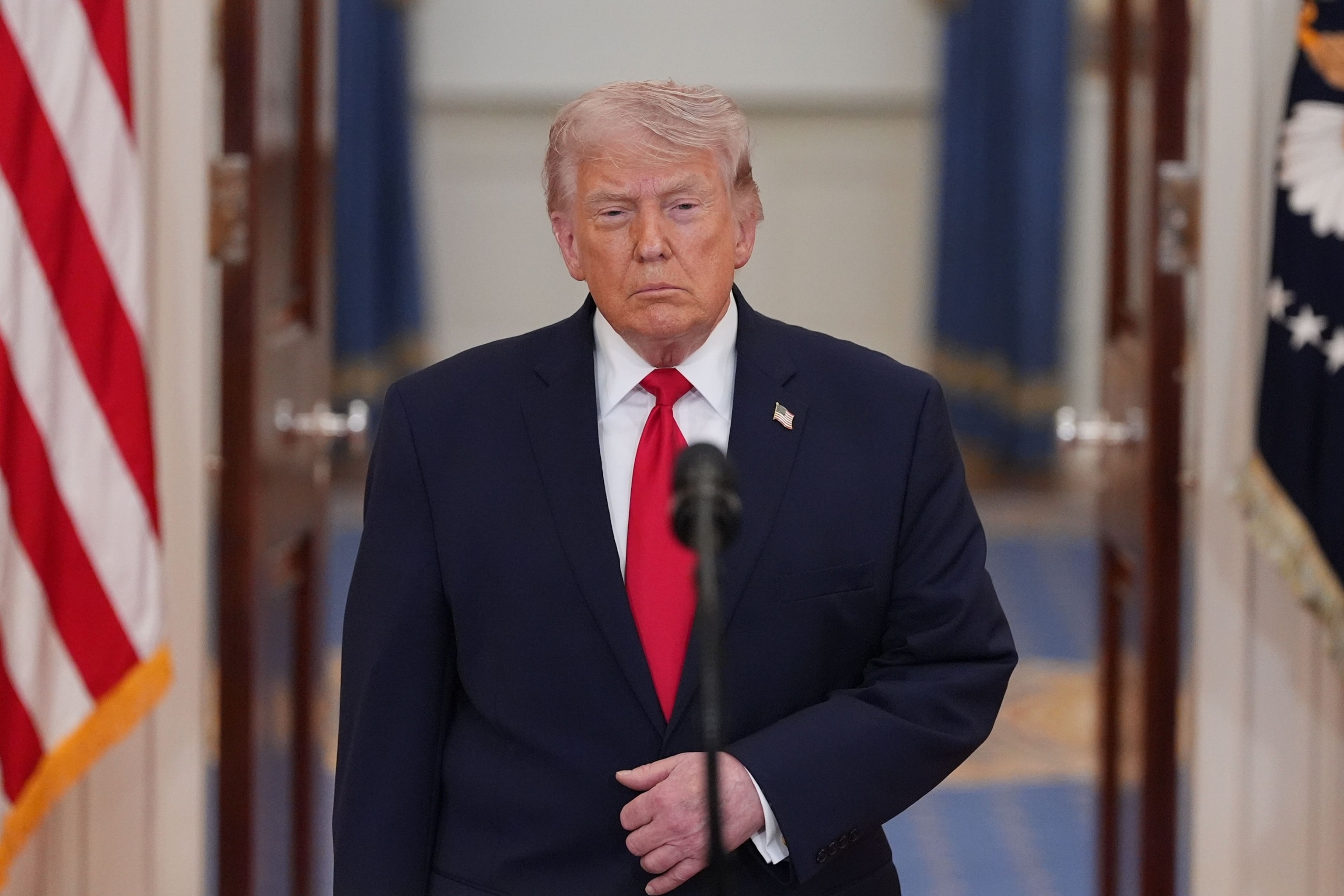
President Donald Trump walks to the podium to deliver an address to the nation about the Iran war at the White House in Washington, April 1, 2026.
Alex Brandon/Pool/EPA/Shutterstock
“We could hit it and it would be gone, and there’s not a thing they could do about it. They have no anti-aircraft equipment. Their radar is 100% annihilated,” Trump said from the Cross Hall of the White House. “We are unstoppable as a military force.”
In that speech, the president claimed Iran’s air force was “in ruins” and that “their ability to launch missiles and drones is dramatically curtailed.”
“Never in the history of warfare has an enemy suffered such clear and devastating, large-scale losses in a matter of weeks,” Trump said.
It’s not the first time during the conflict that the president described the operation as an ongoing success that has enabled the U.S. to dominate Iranian airspace.
The president addressed an investors conference in Miami on Monday, and again painted Iran as a diminished adversary on the battlefield unable to protect its skies.
President Donald Trump delivers an address to the nation about the Iran war at the White House in Washington, April 1, 2026.
Alex Brandon/Pool/EPA/Shutterstock
“[Iran is] not powerful anymore. Within two days, I think the damage was done. But now it’s really done. Now we’re just going after targets. And again, they have no anti-aircraft, so we’re just floating over the top looking for whatever we want, and we’re hitting it,” the president said “And we have another 3,554 targets left, and that’ll be done pretty quickly.”
And a week earlier, Trump rejected the notion of wanting to reach a ceasefire with Iran, saying it was unnecessary “when you’re literally obliterating the other side.
“They don’t have any spotters, they don’t have anti-aircraft, they don’t have radar, and their leaders have all been killed at every level,” he told reporters then while departing the White House.
American military superiority, specifically air dominance, is an assertion that has been frequently echoed by the president’s top military aide, Hegseth.
Briefing reporters on March 4, Hegseth said that “in under a week” the U.S. and Israel would have “complete control of Iranian skies.”
Secretary of Defense Pete Hegseth attends a briefing at the Pentagon in Washington, March 31, 2026.
Jonathan Ernst/Reuters
“I hope all the folks watching understand what uncontested airspace and complete control means,” Hegseth said then.
“It means we will fly all day, all night, day and night, finding, fixing and finishing the missiles and defense industrial base of the Iranian military, finding and fixing their leaders and their military leaders, flying over Tehran, flying over Iran, flying over their capital, flying over the IRGC.”
Like Trump, Hegseth added, “Iran will be able to do nothing about it.”
And on March 13, during a briefing with Chairman of the Joint Chiefs, Gen. Dan Caine, Hegseth said Iran “has no air defenses.”
“Iran has no air force. Iran has no Navy,” Hegseth said. “Their missiles, their missile launchers and drones being destroyed or shot out of the sky. Their missile volume is down 90%. Their one-way attack drones yesterday, down 95%.”
Caine has said that Iran is both a “determined enemy” and that it was “adapting” as its capabilities were degraded by U.S. forces.
In the context of an attack on a base in Kuwait that left six U.S. service members dead at the outset of the war, Hegseth conceded that while “we have incredible air defenders. Every once in a while you might have one. Unfortunately, we call it a squirter that, that makes its way through.”
RIVERSIDE, Calif. — A fast-growing wildfire Friday in windy Southern California has prompted multiple evacuation orders and warnings.
The Springs Fire broke out at around 11 a.m. Friday and by 2:30 p.m. had grown to 2.34 square miles (6.06 square kilometers). The cause of the fire east of Moreno Valley in Riverside County is under investigation. It was not immediately known how many households are under evacuation warnings or orders.
“It’s windy out there,” said Maggie Cline De La Rosa, a public information officer for Cal Fire Riverside.
A Cal Fire map showed the fire burning in a recreational area near the city of Moreno Valley, which has a population of roughly 200,000. The city is 64 miles (103 kilometers) east of Los Angeles.
The National Weather Service issued a wind advisory for San Bernardino and Riverside County valleys through Saturday afternoon, with gusts of up to 50 mph (80 kph) expected.
“Tree limbs could be blown down and a few power outages may result,” the advisory read.
A U.S. fighter jet appears to have been shot down by Iran over Iranian territory, American officials confirmed to ABC News, marking a new and potentially dangerous point in the conflict.
One crew member aboard the downed two-seater F-15E has been rescued, according to two U.S. officials. The status of the other crew member is unknown, according to the official, and the search and rescue effort continues.
Combat search and rescue missions have become relatively rare for U.S. forces after more than a generation of near-total air dominance, with American aircraft typically operating with limited threats to aircraft in the wars in Iraq and Afghanistan.
The early indications that the U.S. fighter was brought down by enemy fire would mark the first time Iran has successfully downed a manned American aircraft in the war, which started in February.
In late March, an American F-18 fighter jet narrowly dodged an Iranian surface-to-air missile, according to a U.S. official. Earlier that month, an American F-35, the Pentagon’s most advanced stealth fighter jet, had to make an emergency landing after being struck by Iranian fire. Three F-15s were also brought down over Kuwait in a friendly fire episode earlier in the war, though all six pilots ejected safely, according to U.S. officials.
There are photos of the fighter jet that were released by Iranian state media that have not been independently verified by ABC News.
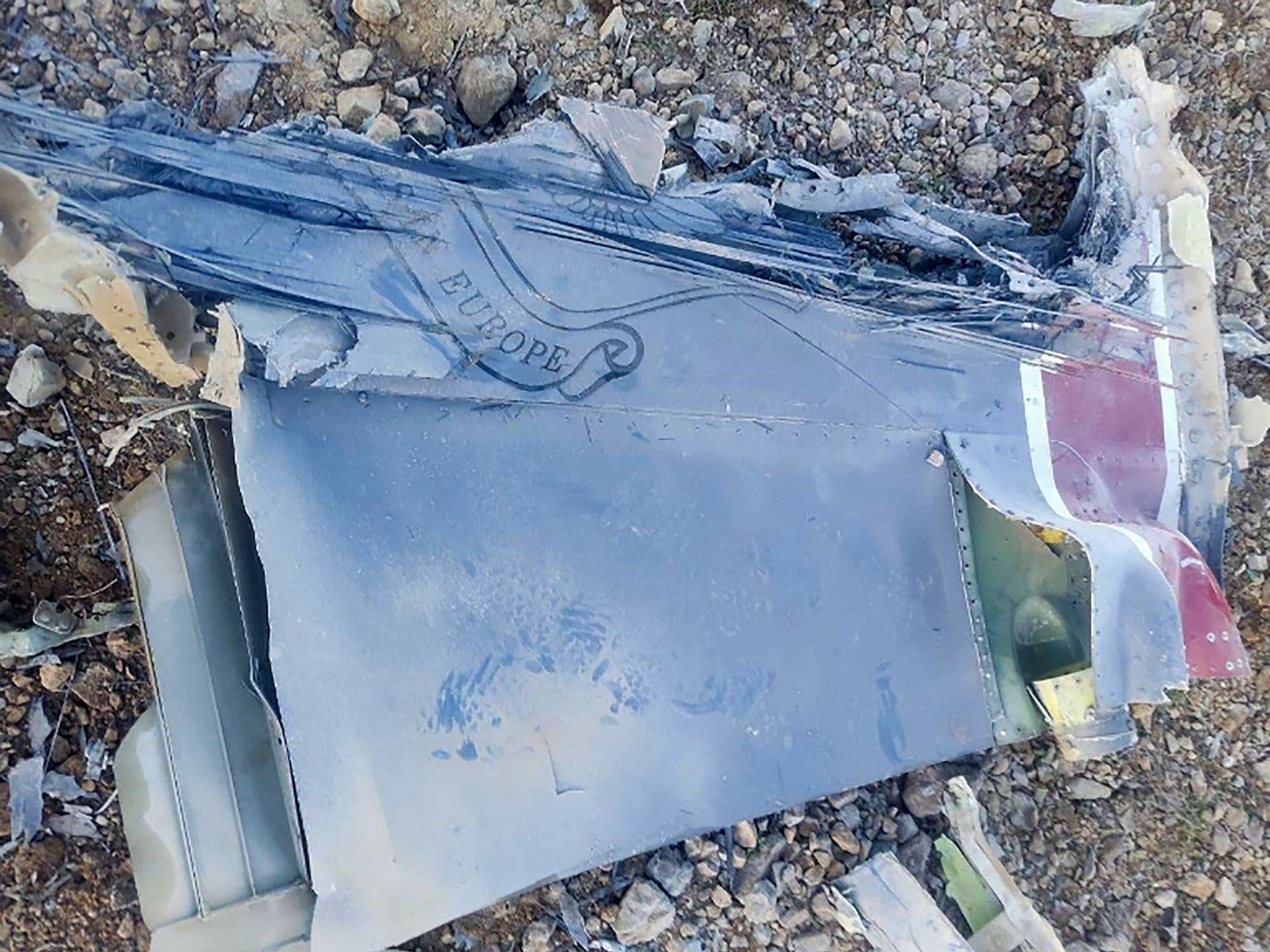
A photo released by Iranian state media that could not be independently verified by ABC News shows a piece of a U.S. fighter jet that has been shot down by Iran over Iranian territory.
Iran State Media
A photo released by Iranian state media that could not be independently verified by ABC News shows a piece of a U.S. fighter jet that has been shot down by Iran over Iranian territory.
Iran State Media
A photo released by Iranian state media that could not be independently verified by ABC News shows a piece of a U.S. fighter jet that has been shot down by Iran over Iranian territory.
Iran State Media
A photo released by Iranian state media that could not be independently verified by ABC News shows a piece of a U.S. fighter jet that has been shot down by Iran over Iranian territory.
Iran State Media
President Donald Trump has been briefed on the downed fighter jet, according to White House press secretary Karoline Leavitt. Another U.S. official said Trump has been briefed on the rescue and condition of the recovered crew member.
Hegseth, Trump touted American air dominance over Iran
The incident comes after Secretary of Defense Pete Hegseth and other U.S. officials have said that Iran’s military capabilities have been severely crippled and that the U.S. has “total air dominance” over Iran.
Trump, in a primetime address to the nation earlier this week, said the U.S. was “nearing completion” of its military objectives and that Tehran’s anti-aircraft abilities had been decimated.
“We’ve done all of it. Their navy is gone. Their air force is gone. Their missiles are just about used up or beaten,” Trump said in his speech on Wednesday night.
“They have no anti-aircraft equipment,” Trump added in his remarks. “Their radar is 100% annihilated. We are unstoppable as a military force.”
The Islamic Revolutionary Guard Corps has made a number of false claims about U.S. aircraft being downed but the U.S. has pushed back on those.
Iran has maintained at least some ability to continue with attacks targeting U.S. facilities in the Middle East and other countries in the region, wounding more than 300 U.S. service members, according to U.S. officials. The number of wounded has increased at a relatively steady rate each week, data reviewed by ABC News shows. Thirteen service members have been killed in action since the war began five weeks ago, according to Pentagon data.
Iran’s Parliament Speaker Mohammad Bagher Ghalibaf, with whom Trump has said he is negotiating, taunted the U.S. over the missing crew member in a social media post on Friday.
In the post, Ghalibaf suggested that the U.S. war effort had shifted from pursuing “regime change” to trying to locate and rescue downed pilots.
Ghalibaf was the first top authority of the Islamic Republic to comment on the missing crew members.
Trump told ABC News Chief Washington Correspondent Jonathan Karl in a phone call earlier this week that the new leadership is better than what Iran had before.
Former U.S. Ambassador to Saudi Arabia Michael Ratney called the Iranian attack “disturbing” in an interview on ABC News Live.
“As a war like this drags on, it becomes increasingly likely that some incident like this happens. It’s disturbing for a couple of reasons. One is it potentially represents a major escalation. If the missing crew member remains missing, huge political pressure in the United States to do anything to find that person. I dare say they’ll be uncompromising,” Ratney told ABC News Live’s Elizabeth Schulze on Friday. “The other problem is it becomes just a huge political preoccupation in the United States. It becomes the sole story anybody thinks about. At the same time, the war is still going on, and there’s a lot of crises globally at this point.”
What do pilots do to prepare for being shot down?
Pilots undergo training in SERE — which stands for Survival, Evasion, Resistance and Escape. It’s a program designed to prepare them for the possibility of isolation behind enemy lines.
Under survival training, airmen are taught to stabilize themselves in the immediate aftermath of an incident, administering self-aid if wounded and securing basic necessities such as shelter, water and food, according to publicly available Air Force training materials.
Survival training often dictates the pilot leave the crash area, as it’s likely to be a focal point for hostile forces.
“To stay in the vicinity of the crash or parachute landing site may lead to capture,” an Air Force training manual on pilot survival training says.
Evasion training follows — during which pilots learn how to move undetected through hostile terrain, according to the training materials. Pilots learn to navigate using maps and compasses, as well as natural cues such as stars and terrain features including rivers, bridges and other landmarks to orient themselves and move toward friendly forces.
The curriculum also includes resistance techniques aimed at helping troops endure interrogation and psychological pressure if captured. Finally, escape training focuses on recognizing vulnerabilities in captivity and exploiting opportunities to break free, according to the training materials.
This is a developing story. Please check back for updates.
A jobs report on Friday will provide a key gauge of U.S. economic health as the nation weathers a global oil shock set off by the war with Iran.
The government data — which details hiring in March — is set to arrive as the war drives up gasoline prices and borrowing costs, threatening a drag on the economy.
Economists expect employers to have added 59,000 jobs in March, which would mark tepid but improved performance after 92,000 jobs were lost in the previous month.
The U.S. added an average of about 15,000 jobs per month in 2025, U.S. Bureau of Labor Statistics (BLS) data showed. That performance amounted to a sharp slowdown from 186,000 jobs added each month in 2024.
The U.S.-Israeli war with Iran, which began on Feb. 28, triggered one of the worst global oil shocks in decades, prompting gloomy forecasts on Wall Street of a potential U.S. recession over the coming months.
In theory, a prolonged oil shortage could drive up prices for a vast array of goods, sapping energy from consumer spending, which powers most of the nation’s economic growth.
Iran has mounted an effective closure of the Strait of Hormuz, a critical maritime trading route that facilitates the transport of about one-fifth of the global oil supply.
Construction continues on a new enclosed stadium for the Tennessee Titans NFL football team, on March 24, 2026, in Nashville, Tenn.
George Walker IV/AP
The U.S. is a net exporter of petroleum, meaning the country produces more oil than it consumes. But since oil prices are set on a global market, U.S. prices move in response to swings in worldwide supply and demand.
The disruption in oil shipping has pushed U.S. crude prices above $110 a barrel, which marks a staggering rise of more than 50% since the war began on Feb. 28.
Gasoline prices in the U.S. ticked up to $4.08 on average per gallon as of Wednesday, marking a leap of $1.09 over the past month, AAA data showed.
A potential jump in costs for additional goods delivered through the Strait of Hormuz — such as fertilizer and diesel fuel — could also raise prices beyond gasoline, putting pressure on the Federal Reserve to hike interest rates in an effort to quell possible inflation.
The benchmark interest rate stands at a level between 3.5% and 3.75%. That figure marks a significant drop from a recent peak attained in 2023, but borrowing costs remain well above a 0% rate established at the outset of the COVID-19 pandemic.
If the Fed moved to raise interest rates, it would hike borrowing costs for many consumer and business loans, risking a slowdown in hiring.
Speaking at Harvard University on Monday, Fed Chair Jerome Powell said the central bank could take a patient approach as it monitors potential price effects from the Middle East conflict.
“We feel like our policy is in a good place for us to wait and see how that turns out,” Powell said.
The Artemis II mission launched on Wednesday, taking four astronauts on a historic, 10-day mission around the moon and giving them views of a lifetime along the way.
A day after lift-off, ABC News’ Gio Benitez spoke with astronauts Reid Wiseman, Victor Glover, Christina Koch and Jeremy Hansen from their Orion spacecraft about the journey so far, and what they are anticipating for the days ahead.
“I don’t know what we all expected to see … but you could see the entire globe, from pole to pole,” Commander Wiseman said of the crew’s view of Earth from space Thursday.
CSA astronaut Jeremy Hansen and NASA astronauts Reid Wiseman, Christina Koch, Victor Glover speak with ABC News from the Orion spacecraft as it heads to the moon, April 2, 2026.
NASA
“You could see Africa, Europe, and if you looked really close, you could see the northern lights. It was the most spectacular moment, and it paused all four of us in our tracks,” he added.
This mission marks the first time humans have flown beyond low-Earth orbit since the Apollo 17 mission that landed on the moon in 1972.
The crew is going on a 685,000-mile journey around the moon, also known as a lunar fly-by.
The Orion spacecraft begins its journey away from Earth and towards the Moon following the completed Translunar injection burn, April 2, 2026.
NASA
The launch on Wednesday was seen around the world, as the crew successfully lifted off at 6:35 p.m. ET from the Kennedy Space Center in Florida.
Hansen, mission specialist and part of the Canadian Space Agency, said that even though they were all expecting it, when the rocket boosters actually lit up and they left the launch pad, “there’s just a moment of disbelief.”
NASA’s Artemis II mission to fly by the moon, comprising of the Space Launch System rocket with the Orion crew capsule, lifts off from the Kennedy Space Center in Cape Canaveral, Florida, April 1, 2026.
Chip Somodevilla/Getty Images
“The fact that we launched — it just totally takes you by surprise, even though you’re expecting it, at least for me anyway, and just had a huge smile across my face,” he said.
Koch, a mission specialist who holds the record for the longest single spaceflight by a woman at 328 days, addressed the toilet issue onboard the spacecraft, which was reported after launch.
In this Sept. 20, 2023, file photo, Artemis II NASA astronauts (L to R) Reid Wiseman, Victor Glover, and Christina Koch, and CSA (Canadian Space Agency) astronaut Jeremy Hansen stand in the white room on the crew access arm of the mobile launcher at Launch Pad 39B as part of an integrated ground systems test at Kennedy Space Center in Florida.
Frank Michaux/NASA
“I’m proud to call myself the space plumber,” Koch said. “I like to say that it is probably the most important piece of equipment on board.”
Crew members said at the time that the Orion capsule’s toilet, dubbed the Universal Waste Management System, had a blinking fault light while they tested it, but it had been resolved since.
“So we were all breathing a sigh of relief when it turned out to be just fine,” Koch said.
CSA astronaut Jeremy Hansen and NASA astronauts Reid Wiseman, Christina Koch, Victor Glover speak with ABC News from the Orion spacecraft as it heads to the moon, April 2, 2026.
NASA
Glover, the mission pilot who will make history as the first person of color to go to the moon, said from high Earth orbit, the divisions of Earth are far out of view.
“Trust us, you look amazing, you look beautiful,” he said of Earth. “You also look like one thing. Homo sapiens is all of us, no matter where you’re from or what you look like. We’re all one people.”
“We call amazing things that humans do ‘moonshots’ for a reason, because this brought us together and showed us what we can do when we not just put our differences aside, when we bring our differences together and use all the strengths to accomplish something great,” Glover said.
The Orion spacecraft begins its journey away from Earth and towards the Moon following the completed Translunar injection burn, April 2, 2026.
NASA
Before speaking with ABC News on Thursday, the Artemis II crew successfully completed a critical milestone in the mission, the translunar injection burn that boosted the Orion spacecraft out of Earth’s orbit onto a trajectory toward the moon.
During a press conference after the maneuver, Lori Glaze, acting associate administrator at NASA, said that the critical translunar injection burn was “flawless.”
“From this point forward, the laws of orbital mechanics are going to carry our crew to the moon, around the far side and back to Earth,” Glaze said.
President Donald Trump announced Thursday that Pam Bondi was being ousted as his attorney general in a post on his social media platform, saying she’ll move to a role working in the private sector.
“We love Pam, and she will be transitioning to a much needed and important new job in the private sector, to be announced at a date in the near future,” Trump said in the post.
Trump’s deputy attorney general and former personal attorney Todd Blanche will serve as acting attorney aeneral, the president said.
“And our Deputy Attorney General, and a very talented and respected Legal Mind, Todd Blanche, will step in to serve as Acting Attorney General,” Trump wrote.
Trump had raised potentially removing Bondi as attorney general in recent discussions with senior administration officials, sources told ABC News on Wednesday, amid months of mounting frustration that the Justice Department isn’t doing enough to target his political opponents for prosecution.
Blanche previously served as Trump’s defense attorney in the cases brought against him by Manhattan District Attorney Alvin Bragg and former special counsel Jack Smith.
He has served as the nation’s No. 2 law enforcement official since being confirmed by the Senate in March of last year, and previously served in the Justice Department as an assistant U.S. attorney in the Southern District of New York.
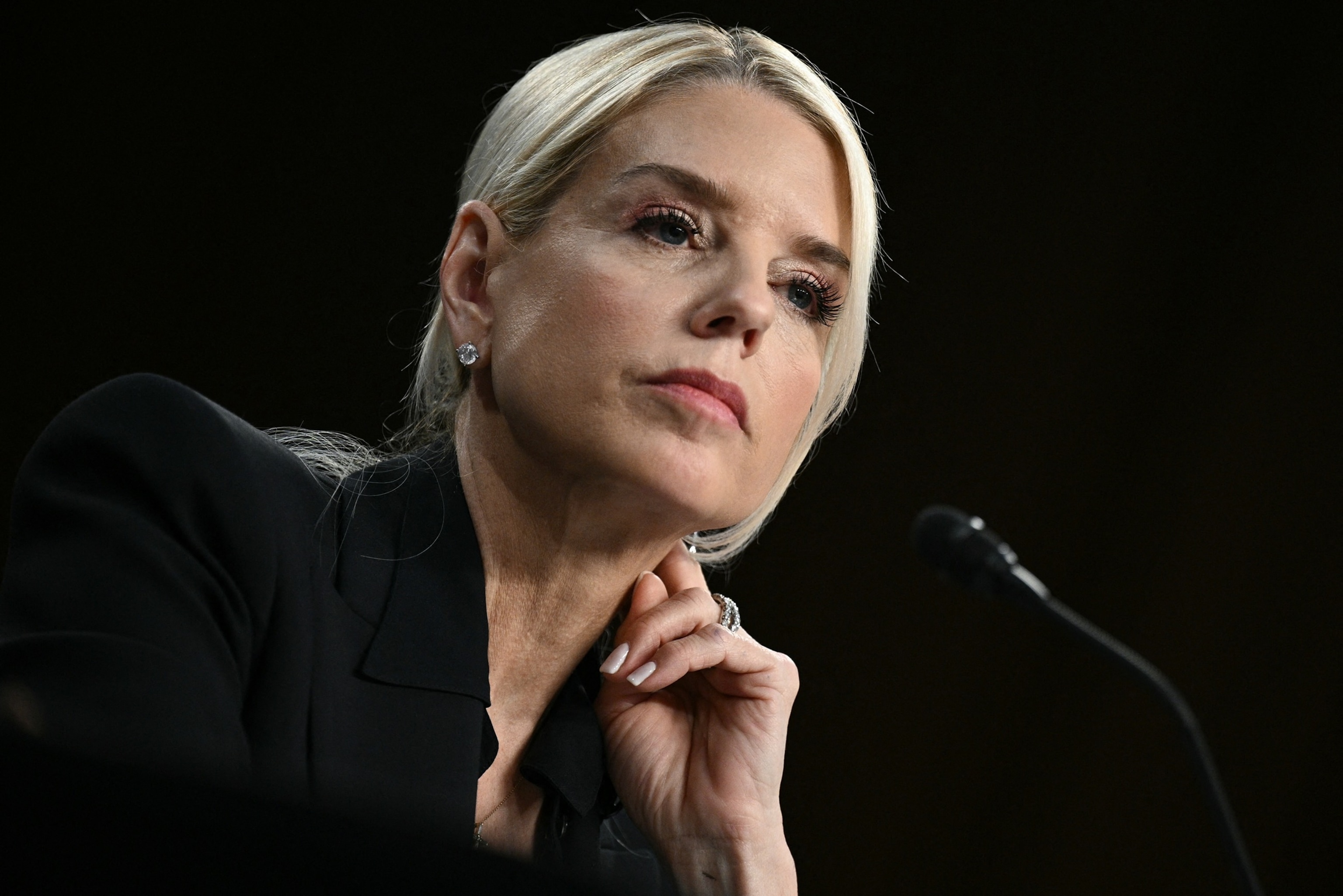
Attorney General Pam Bondi testifies during a Senate Judiciary Committee hearing on oversight of the Department of Justice, on Capitol Hill in Washington, October 7, 2025.
Brendan Smialowski/AFP via Getty Images
Like Bondi, he has been vocal about his personal loyalties to President Trump and just last week appeared at the Conservative Political Action Conference, where he cheered the purge of prosecutors who previously worked on investigations into Trump and defended the DOJ from criticism by the MAGA base.
“So when people say, ‘Why aren’t you doing more?’ I welcome that criticism,” Blanche said. “Keep on putting pressure on us. Do you think it makes me upset when you go on X and say, ‘Come on, Blanche, why aren’t we doing more?’ You don’t know me. That’s what motivates me.”
The shakeup comes as Democrats and voting rights groups have expressed alarm that the White House may seek to use the DOJ and FBI to intervene in the midterm elections in November.
The president’s announcement brings an end to a rocky tenure for Bondi as the nation’s top law enforcement official, during which she aggressively sought to reshape the Justice Department as an enforcer of Trump’s agenda — repeatedly breaking with institutional norms implemented after the Watergate era that had encouraged independence from the political demands of the White House.
From her first days in office, Bondi emphasized her personal loyalty to Trump and echoed his longstanding grievances with the DOJ and FBI that the president and his allies have long accused of being “weaponized” against him.
During Trump’s first term in office he faced resistance from top officials at the DOJ and FBI against using the vast powers of their agencies to punish the president’s perceived enemies, but Bondi publicly embraced Trump’s demands to launch prosecutions against specific targets — to mixed effect.
The department’s attempts to prosecute former FBI Director James Comey and New York Attorney General Letitia James fell apart after a federal judge ruled that the Trump-appointed prosecutor who indicted them was appointed unlawfully. Attempts to revive the case against James were twice rejected by a grand jury, sources previously told ABC News.
A separate effort by the U.S. attorney for Washington, D.C., Jeanine Pirro, to indict six Democratic lawmakers who posted a video urging military service members to refuse to follow unlawful orders was also rejected by a grand jury — despite Trump’s accusation the group was guilty of “treason.”
Pirro and the department are separately appealing an order from the chief judge in Washington, D.C., that has put on hold their attempt to launch a criminal investigation into Federal Reserve Chairman Jerome Powell, another frequent target of Trump’s ire.
In recent months, Trump has repeatedly vented frustration to aides regarding both the pace and the effectiveness of the Justice Department’s ability to target his foes — concerns he had also conveyed directly to Bondi — according to sources familiar with the matter.
Trump and other senior White House officials have also criticized Bondi’s handling of the DOJ’s files from its investigations into deceased sex offender Jeffrey Epstein, which has consumed months of media attention and led to widespread backlash from some of Trump’s most devoted supporters.
Bondi’s appearance in front of the House Judiciary Committee in February, in which she repeatedly yelled at lawmakers and sidestepped questions about the DOJ’s handling of the Epstein files and other sensitive matters, was also the subject of some criticism at the White House, sources say. Trump posted afterward on social media that Bondi was “fantastic” at the hearing.
Weeks later, a bipartisan group of lawmakers on the House Oversight Committee voted to subpoena Bondi with a demand that she sit for a deposition on the Epstein files in mid-April.
ABC News’ Isabella Murray contributed to this report.
President Donald Trump said he plans to sign an order to pay “all” employees at the Department of Homeland Security amid the record-long agency shutdown.