We Tamed Pigeons, Then Betrayed Them. Now It’s Time To Recognise Their Worth


David Attenborough’s new Secret Garden documentaries, which focus on the wildlife in our very own backyard, show just how important unremarkable-seeming species like damselflies and urban foxes are to the natural world.

Speaking to HuffPost UK, an ecologist at ecological consultancy firm Arbtech said that it’s time to rethink the role of much-maligned feral pigeons, too.

“Feral pigeons have filled an ecological hole caused by the decline and absence of many other species that cannot survive in an urban environment,” they said.

Given our history of domesticating, then abandoning, the birds, the ecologist added, we owe them more than our current disdain.

We relied on pigeons for thousands of years

Pigeons “have been among the oldest domesticated species by humans, dating back thousands of years,” the spokesperson told us.

Feral species are descendants of the rock dove. That shows in their nesting habits: their wilder relatives “are cliff nesters, nesting in crevices, with poor nest construction, and the feral pigeon likes cities as the ledges and hiding places mimic those cliff top habitats their ancestors used”.

Historically, the ecologist continued, we’ve used pigeons for loads of tasks, including (famously) sending messages.

“Even the ancient Egyptians and Romans used pigeons for this, and we did use them in WW1 and WW2. This ended with 32 pigeons receiving the Dickin medal (like a Victorian cross for animals) for their efforts.

“I even knew a friend’s grandfather who worked at the hospital and sent blood
samples to the lab via pigeon in the 60s and 70s, as it was still faster than getting there in a car.”

#OTD 1977: Plymouth hospitals trialed using carrier pigeons to transport blood samples to remote laboratories. Did this idea ever take off? pic.twitter.com/EO2djGuwR8

— BBC Archive (@BBCArchive) May 5, 2017

But with email, text, and better tech, that demand dramatically decreased.

So, the spokesperson said, “While some still keep pigeons as pets, or more so now for pigeon racing, the majority were just abandoned and left to fend for themselves.

“Being a species domesticated by us for thousands of years, naturally, they still choose to be around humans, showing little fear of us.”

Now, they’re a key part of our urban ecosystem

Though they’re “not a favourite,” pigeons are uniquely adapted to urban environments. Because of their years of contact with us, humans don’t really bother them.

They “can assist partially as a clean-up crew, cleaning up our crumbs and mess in the cities that we leave behind,” the ecologist said.

“They also fit into the ecosystem as food sources, with the return of peregrine falcons, a bird of prey almost made extinct in the UK. Cities are a favourite site for this bird.

“One reason is the abundance of feral pigeons. They can also be a food source for hawks and even foxes, who are able to sneak up on them.”

That’s not to say they pose no risk to humans: think of “dropping build-up and
nesting material build-up carrying disease,” said the expert.

But the city isn’t always kind to its winged residents, either.

Problems “such as entanglement in nets, thin pieces wrapping around their legs,
eventually causing them to lose toes or feet,” which “can even be caused by something as thin as human hair,” are common.

“They can also receive infections due to the harsh urban environment, getting tiny scratches, which can lead to swollen or necrotic feet.”

How can I help pigeons?

The ecologist said the following steps can help:

  1. Remove all hazards that could entangle or cut pigeons. “Don’t put out human hair thinking it is a good nesting material; it’s a risk to all birds with
    entanglement.”
  2. Capture distressed pigeons with gloved hands, put them in a dark box, and bring them to a vet or wildlife centre. “If the bird has been caught by a cat, even if there are no physical injuries, you must still get it to a rescue, as cat saliva is very dangerous, with the bacteria it contains and can often lead to the bird’s death from just being in contact with a cat’s mouth.”
  3. Don’t put out too much food. This “will just encourage more pigeons to gather in one location, leading to more dropping and build up, which can lead to complaints and methods to remove or disperse birds”.
  4. Provide a clean water source. “A shallow dish of water can be a lifeline in a concrete city and can help the birds keep clean.”
  5. Keep cats indoors, especially during nesting season. “Cats are a non-native introduced predator that has a large impact on bird species. Recently fledged pigeons often don’t fly to begin with, and on the ground, they are very vulnerable.”


Oldest living dove who doubled its life expectancy is Missouri man’s pet


This is a real feather in its cap.

A Missouri pet has been named the oldest living dove in captivity.

Sugar, who is a staggering 44 years and 72 days old, has more than doubled its life expectancy.

The record-breaking bird, who lives with 77-year-old Chesterfield resident Dewayne Orender, beat out the previous title holder, Methuselah of Germany, by more than 15 years, according to Guinness World Records.


Oldest living dove who doubled its life expectancy is Missouri man’s pet
Sugar, who is 44, was named the oldest living dove in captivity by Guinness World Records. Guinness World Records

“He seems very happy and content,” Orender, who has been Sugar’s caretaker since the creature was born in 1981, told the record book.

“He loves me dearly – he and I are best friends.”

Orender had been gifted a male bird, which he named Luther, then bought a female dove, whom he called Gidget, from the pet store.

He was shocked when just a few weeks later, he found two small eggs in the pair’s cage. 

“I really didn’t think they’d hatch, but they did!” he continued. “And one was Sugar.”

Orender gave away Sugar’s sibling, a white dove named Goldie, and raised Sugar.

Through the years, the bird lover has raised multiple doves, and given them away to loving homes.


Sugar, a 44-year-old dove who earned Guinness World Record for oldest living dove in captivity, resting on a cushion next to a window with a stained glass ornament.
Sugar was raised in Missouri by music industry vet Dewayne Orender. Guinness World Records

Orender, a music industry veteran, said Sugar shares his passion, and is known to tap his feet when he hears a beat.

“I’ve been in the music business for over 50 years, and he’s very much in love with music,” he said.

“He’s even pictured on two of my music videos.”

He even nicknamed his feathered friend “lap dog,” since Sugar will sit on his lap while watching his favorite TV shows like “Good Morning America” and “The Kelly Clarkson Show,” especially enjoying when the “American Idol” alum sings.

The bird also has a penchant for cooking shows, and when he hears a recipe calls for sugar, he thinks the chef is talking to him.

“I tell him he’s a movie star, and I play it again until he stomps his feet,” Orender joked.


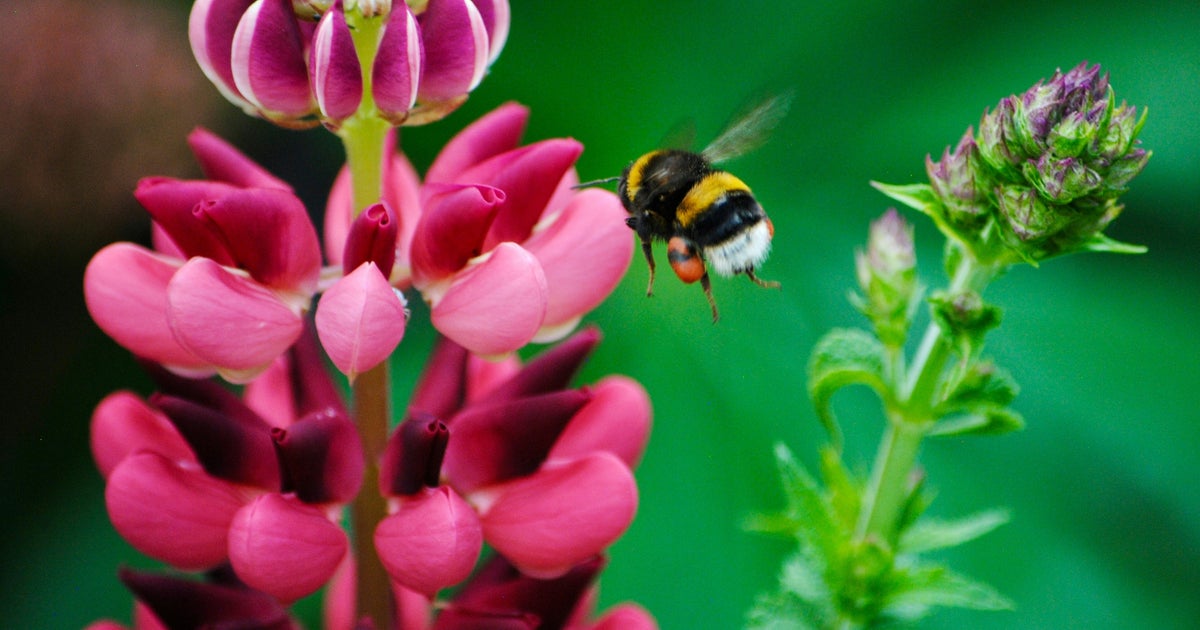
Bumblebees Can Live Underwater For Days, And Scientists Think A Gill Is Involved


If you want to attract bees to your garden, a special, shallow “bath”, which isn’t deep enough for our flying friends to fall into, is a great place to start.

But for queen bumblebees, apparently, a mini plunge pool would pose no threat.

That’s because new research published in the Royal Society’s Proceedings B has found that bumblebee queens can “avoid drowning” through “underwater respiration,” allowing them to live underwater for days.

How can bees live underwater?

A 2024 paper showed that bumblebee queens can live underwater for anywhere from eight hours to seven days. This newer research sought to figure out how.

Some bee species, including bumblebees, enter a period of deep rest called “diapause” in the winter. In that time, their metabolism and development slow way down.

But sometimes, the world around them doesn’t stay as rested. Flooding, for instance, can affect a hive (many of which stay underground in the colder months).

Scientists figured the response to submersion noted in the 2024 research was a survival tactic from the bumblebee queen. So, for this study, they put some bumblebee queens who were in diapause underwater and measured the gaseous exchange.

They found that carbon dioxide levels rose, while oxygen levels sank, suggesting the bees were respirating.

But the carbon dioxide emissions decreased compared to those emitted when the bees in diapause were out of water.

Researchers linked this to metabolic activity; the less that was happening in bees’ bodies, they reasoned, the lower the CO2 output would be.

Prior to being placed underwater, diapausal queen bees – whose metabolism had already dropped compared to non-diapausal levels – produced 15.42 microlitres of carbon dioxide per hour per gram of body mass.

But after eight days underwater, that shrunk to 2.35 microlitres. That’s almost a six-fold decrease in presumed energy use.

Scientists termed this a “profound metabolic depression”.

Wait – but what about that “respiration”?

That dip in metabolic activity explained some of the survival rates of queen bees living underwater. But, quick question – how are they getting enough oxygen to respirate in the first place?

Well, scientists couldn’t answer that definitively in this study. However, they hypothesised that queen bees can form a kind of “physical gill” with trapped air that allows gas exchange.

“Future studies manipulating water conditions and the likely physical gill, alongside detailed recovery analyses, will further clarify the adaptations enabling queens to withstand extended submersion,” the researchers wrote.


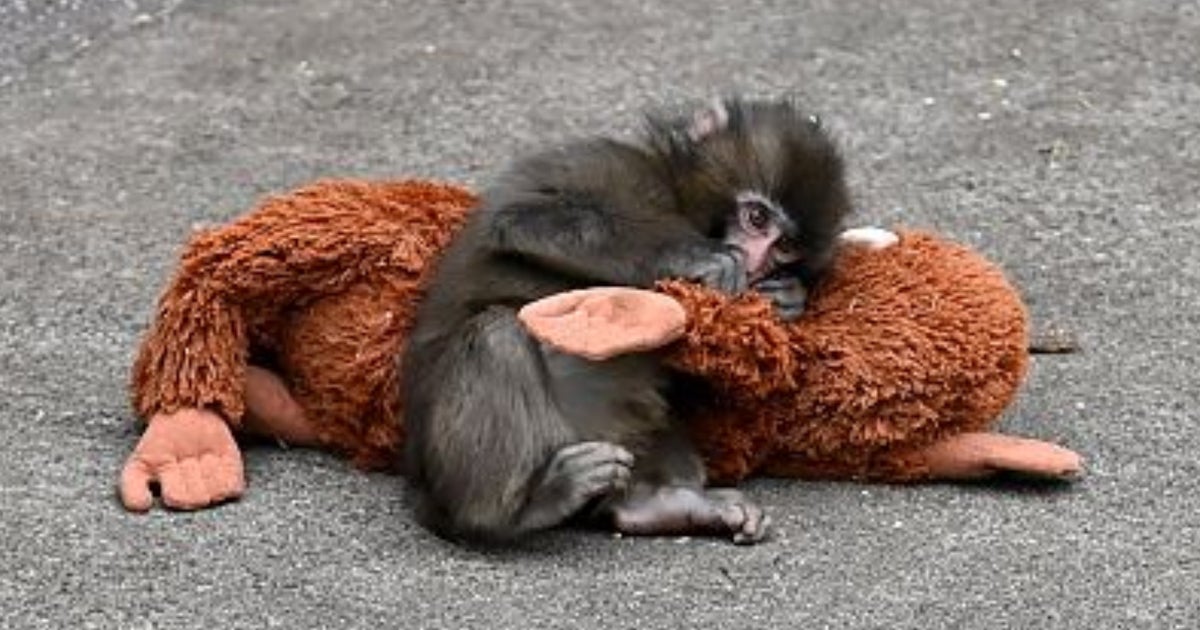
Punch The Monkey’s Plush: ‘Cuddle Therapy’ Helps Many Animals (Including Us)


Primate expertise provided by Dr Luke Duncan, a postdoctoral research fellow, primatologist, and part of the University of Warwick’s ApeTank. Therapy comment by relationship therapist and author at Passionerad, Sofie Roos.

If you’re 1) on social media and 2) have something resembling a heart, chances are it’s been broken by the Japanese macaque, Punch, from Ichikawa City Zoo in Japan.

The adorable monkey, whose mother abandoned him, has gone viral for clutching an IKEA orangutan plush to help manage his feelings of abandonment (the burnt orange stuffed toy has since sold out in multiple stores).

But why do animals, including humans, so often turn to stuffed toys in our times of need, or as a more everyday source of comfort?

One study suggests that dogs can become almost “addicted” to their toys, which another paper says may boost their welfare. Over a third of adults sleep with a plush every night.

Here, we spoke to primate expert Dr Luke Duncan and therapist Sofie Roos about the “cuddle therapy” a variety of species can get from stuffed toys.

Emotional support plushes are pretty common among adults, and could be helpful for distressed animals

Punch’s toy orangutan was given to him to help him handle the loss of his parent. According to Dr Duncan, that move makes sense.

“Young primates are biologically programmed to cling to their mother ― it’s a normal and essential part of emotional and psychological development,” he told us.

“Harry Harlow’s foundational research in the 1950s and 1960s showed that infant rhesus monkeys overwhelmingly preferred a soft cloth surrogate over a wire one that provided milk, demonstrating that tactile comfort is a powerful driver of attachment behaviour in infants.”

So, while the goal should always be to provide a “safe, living social partner of the same species,” in a pinch, “A soft surrogate, in the form of a plush toy, can… provide meaningful comfort for an orphaned infant primate.

“While a plush toy cannot replace a real mother, it may help alleviate distress in the short term.”

And Roos said that while humans – and almost certainly other animals – know our toys aren’t really alive, they can “work as a ‘transition object’, which… stands as a symbol for safety when an important person is no longer with us”.

Among adults, she added, stuffed toy use offers a kind of “cuddle therapy”, which provides a combination of physical touch and pressure that a lot of animals find soothing.

“Physical touch, [even] from an object, can make our body calm and feel safe.”

Then, there’s the fact that, generally, toys don’t leave us.

“For people who lose someone important, and have wounds connected to abandonment and an insecure attachment, the cuddly toy can give a feeling of not being completely alone, which for some becomes a saviour,” the therapist said.

“We’re born with a… need to… belong, and this need stays with us until the day we die. A stuffed animal doesn’t get any less good at giving us this just because we grow older.”

Perhaps that’s why 44% of adults hold on to their childhood toys.

The therapist doesn’t think it’s that different to using meditation apps

Lots of animals, including humans, “are born social, and seek closeness, warmth and touch. A cuddle toy can work as a complement to give that safety, care and attachment we so strongly seek, especially if we feel lonely,” said Roos.

This is not unlike what may be happening with Punch: Dr Duncan shared, “Physical contact with a soft object can help regulate [primate] stress responses and provide a sense of security during a vulnerable period”.

Roos continued, “Many also connect the cuddle toy with childhood, a time most look back at as easier and more protected, where the stuffed animal can stand as a symbol for that time when we felt cared for, comforted and soothed in another way.”

In fact, the therapist doesn’t think relying on a stuffed toy for “cuddle therapy” is all that different to other forms of self-soothing.

“When looking at what the cuddle toy does for you, it’s not far away from what using mindfulness apps, yoga, stress balls or weighted blankets do – the stuffed animal is just less socially accepted, even though in my [opinion], it works better than many other more accepted methods of dealing with stress, loneliness, overthinking and anxiety.”


Tourist hotspot beset by Biblical plague of locusts in dramatic video


It was a pestilence of biblical proportions.

Officials in Spain’s Canary Islands are sounding alarm bells after an epic swarm of locusts descended upon the popular vacation destination, as seen in dramatic footage circulating on social media.

Over the past few days, the scenic islands of Lanzarote, Tenerife, Gran Canaria and Fuerteventura have been beset by the biblical plague of short-horned grasshoppers, the Express reported. Originally hailing from the Sahara Desert in Africa, the notorious crop pests were reportedly driven to the sunny Spanish isles by humid yet mild temperatures.

The locust swarms darkened the skies over the Canary Islands. X/RTVECanarias

Lanzarote was particularly hard hit with the insects swarming the tourist hotspots of Arrecife, Costa Teguise, Famara, Uga and Tahíche.

Footage shows the bugs darkening the skies like something out of one of the “Mummy” movies.

While the locusts don’t pose a threat to people, they could potentially devastate the island’s agricultural industry, including vineyards, if the swarm snowballs into a full-blown infestation as it did years ago in the islands.

Borne aloft by Easterly winds and accompanied by airborne Sahara Desert dust, desert locusts are the “world’s most destructive migratory pest,” according to the Food and Agriculture Organization of the United Nations.

A 250-acre swarm of the critters — which can contain 80 million individuals — is capable of consuming what 35,000 humans eat in a day, meaning their feast could quickly become people’s famine.

In accordance, the government of Lanzarote has put its environmental sector on high alert for the next 48 hours.

However, they remain confident that the swam will not escalate into a full-on plague, the Daily Mail reported.

A locust on a leaf. Theo Hernando, secretary general of the Association of Farmers and Ranchers of the Canary Islands (Asaga), said wind-borne locust plagues from Africa are “common” and nothing to worry about in “isolated cases.” Stock.Adobe.com

“The next two days are going to be key,” declared Francisco Fabelo, who oversees the Environment of the Cabildo. “If they are adult specimens that have arrived exhausted, they will die and nothing will happen.”

He added, “If we see copulations, that would mean that they are reproducing. We would have to see it between this afternoon and tomorrow.”

Meanwhile, Theo Hernando, secretary general of the Association of Farmers and Ranchers of the Canary Islands (Asaga) said wind-borne locust plagues from Africa are “common” and nothing to worry about in “isolated cases.”

‘They arrive very weakened, they are not in a position to settle or reproduce,” he assured. “Nature itself takes its course and many times they end up being preyed upon by birds.”

That being said, the Canary Islands are no strangers to devastating locust plagues. In a serious incident in October 1958, desert locusts from Africa pillaged the Canary Islands, especially the South of Tenerife, wreaking havoc on tomato and potato plantations.

El Duque beach in Tenerife, one of the islands impacted by the grasshopper swarms. Alex Tihonov – Stock.Adobe.com

In response, the Ministry of Agriculture dispatched planes to fumigate from the air, while residents and farmers tried to combat the grasshoppers from the ground using bonfires, noise and poisoned baits.

This reportedly followed a similar scourge that ravaged 10,000 hectares of crops in the region just four years earlier.


An injured seabird pecks at an emergency room door, prompting its own rescue


BERLIN — An injured seabird sought help by pecking at the door of an emergency room at a hospital in Germany until medical staff noticed it and called firefighters to help with its rescue.

The cormorant, a shiny black waterbird, had a triple fishing hook stuck in its beak when it made its presence known at the glass door of the Klinikum Links der Weser hospital in the northern city of Bremen on Sunday.

In a joint effort, medical staff and firefighters removed the fishhook and treated the wound, the Bremen firefighter department said in a statement. The bird was later released back into nature on the grounds of the hospital park.

“When an injured cormorant does approach humans, it is usually an animal in extreme distress that has lost its natural shyness,” the statement said.

A cormorant is a large bird with a long neck, wedge-shaped head and a distinctive sharp beak with a hooked tip. A fishhook in the bird’s beak would be extremely dangerous for the animal. Infections, pain and even starvation are possible, the firefighter department said.