
Americans confirmed among the dead and injured after boat shootout in Cuba: US officials
At least one American citizen was killed and another injured in a deadly gun battle between Cuban border guards and a group of individuals aboard a U.S.-registered boat that occurred off the coast of the Caribbean island nation, two U.S. State Department officials and a White House official told ABC News on Thursday.
The U.S. officials also confirmed that one of the individuals on the boat was holding a K-1 visa, which allows foreigners to enter the U.S. to marry an American citizen.
Four people aboard the boat were killed and six others on the vessel were injured in the “confrontation” on Wednesday, about one nautical mile northeast of the El Pino channel, in Cayo Falcones in the Villa Clara province on Cuba’s north coast, the Cuban Ministry of Interior said.

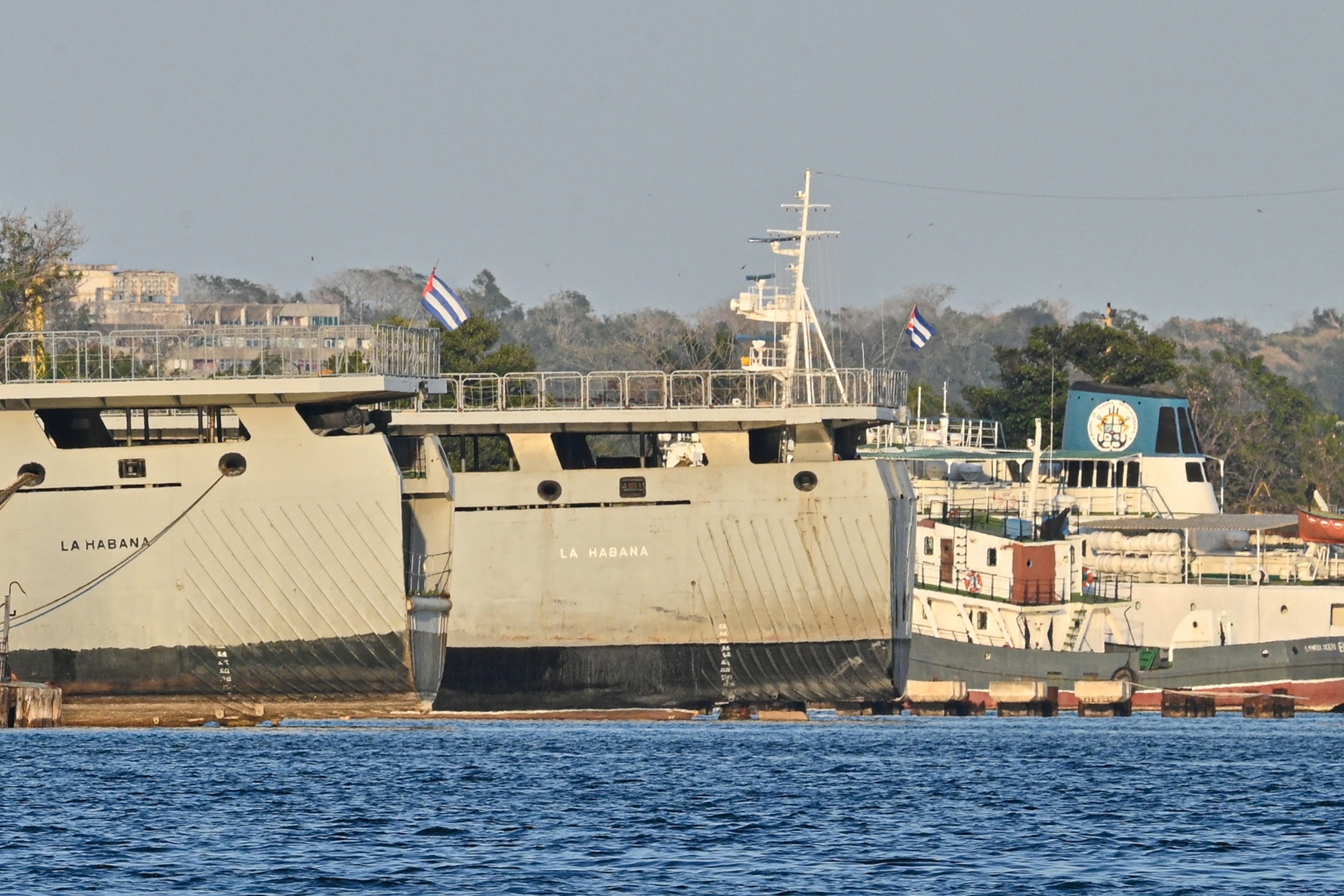
Cuban coast guard ships docked at the port of Havana, February 25, 2026.
Adalberto Roque/AFP via Getty Images
Those on board the U.S-registered speedboat, which had been reported stolen in Florida, allegedly opened fire on Cuban border guard troops as they approached the boat in an attempt to identify it, the Cuban ministry said Wednesday.
In the aftermath of the gunfight, the ministry said assault rifles, handguns, Molotov cocktails, bulletproof vests, telescopic sights and camouflage uniforms were seized from the speedboat.
The six people who survived the incident were detained, the ministry said, while another man who was “a citizen sent from the United States to facilitate the reception of the armed infiltration” was arrested.
The Cuban ministry further said most of those aboard the boat “have a known history of criminal and violent activity.”
“We have stated this on repeated occasions and we reaffirm it today: Cuba will defend itself with determination and firmness against any terrorist and mercenary aggression that seeks to affect its sovereignty and national stability,” Cuban President Miguel Diaz-Canel Bermudez said in a statement Thursday morning.

‘Confrontation’ off Cuba’s coast
Google Earth, Cuba
In a statement on Wednesday night, the Cuban Ministry of Interior said the 10 people aboard the speedboat were “Cuban residents of the United States,” who were allegedly armed with weapons and “intended to carry out an infiltration for terrorist purposes.”
Despite claims to the contrary from Washington, Cuban authorities are still unsure whether the U.S. government played any part in the operation and were reluctant to grant American officials access to the detainees, a Cuban government official said Thursday.
The official further said that the Cuban government is not concerned with the citizenship or immigration status of the alleged attackers because, in the eyes of the regime, they are considered Cuban Americans because they have been residing in the United States.

A vintage car is parked outside the Arnaldo Milian Castro Hospital where injured people were being treated after an armed incident involving a Florida-registered speedboat and a Cuban patrol in Santa Clara, Cuba, Feb. 26, 2026.
Norlys Perez/Reuters
The speedboat allegedly involved in the attack was registered to a 65-year-old man who was born in Cuba but is living in Miami, according to multiple law enforcement officials. FBI agents spoke with the boat’s owner and preliminary information indicated that he reported the boat stolen from a dock at a Florida Keys marina and is not considered a suspect, according to a report from the Monroe County, Florida, Sheriff’s Office.
Some of the other individuals involved in the incident are believed to be lawful permanent residents of the United States, U.S. officials said, although it’s not immediately clear how many.
U.S. Secretary of State Marco Rubio cautioned that information about the incident so far has come from Cuban authorities.
“The majority of the information we still possess is what Cuban authorities are providing both the public and the U.S. government,” Rubio told reporters while speaking from the Caribbean island of Saint Kitts on Wednesday during a visit unrelated to the attack. “As we gather more information, then we’ll be prepared to respond accordingly.”

A tricycle is decorated with US and Cuban flags in Havana, February 26, 2026.
Yamil Lage/AFP via Getty Images
The Kremlin appears to be backing the Cuban government a day after the gunfight.
“Cuban border guards did what they had to do in this situation,” Dmitry Peskov, a spokesperson for Russian President Vladimir Putin, told reporters on Thursday morning, according to the Russian state news outlet RIA Novosti.
“As for security around the island, it is important that everyone remain restrained and refrain from any provocative actions,” Peskov added.
Florida Attorney General James Uthmeier said Wednesday that he has directed the Office of Statewide Prosecution to launch an investigation and work with federal authorities to get to the bottom of what happened.
“The Cuban government cannot be trusted,” Uthmeier said.
The incident comes at a delicate time in U.S.-Cuba diplomatic relations. Since last month’s capture and arrest of Venezuelan President Nicolas Maduro on federal drug trafficking charges during a large-scale strike by the U.S. military on Maduro’s compound, the Trump administration has cut off Cuba’s primary source of oil, precipitating an energy and economic crisis there.
The U.S. Treasury Department’s Office of Foreign Assets Control announced Wednesday that it would authorize companies seeking licenses to resell Venezuelan oil to Cuba’s private sector.
Trump announced a plan in late January to impose additional tariffs on other countries that provide oil to Cuba, declaring a national security emergency regarding the island nation.
In an executive order, Trump said the “policies, practices, and actions of the Government of Cuba constitute an unusual and extraordinary threat” to U.S. national security and foreign policy.
“[T]he government of Cuba has taken extraordinary actions that harm and threaten the United States,” Trump’s order further stated, noting what it said were alliances with Russia, China, Iran, Hamas and Hezbollah.
ABC News’ Shannon Kingston contributed to this report.