
Military helicopter crossed in front of United flight approaching airport: FAA
A military helicopter crossed in front of a United Airlines flight as the plane was coming in to land at an airport in California on Tuesday, according to the Federal Aviation Administration.
The airline said the United pilots had been advised by air traffic controllers of the nearby Sikorsky Black Hawk helicopter during final approach at John Wayne Airport in Santa Ana.
“They saw the helicopter, and also received a traffic alert, which they responded to by leveling the aircraft,” United said in a statement. “The United flight then landed safely.”
Preliminary radar data from Flightradar24 shows that the two aircraft were separated by 525 feet vertically and just 1,422.43 feet — or 0.27 miles — when the helicopter crossed in front of the United plane.

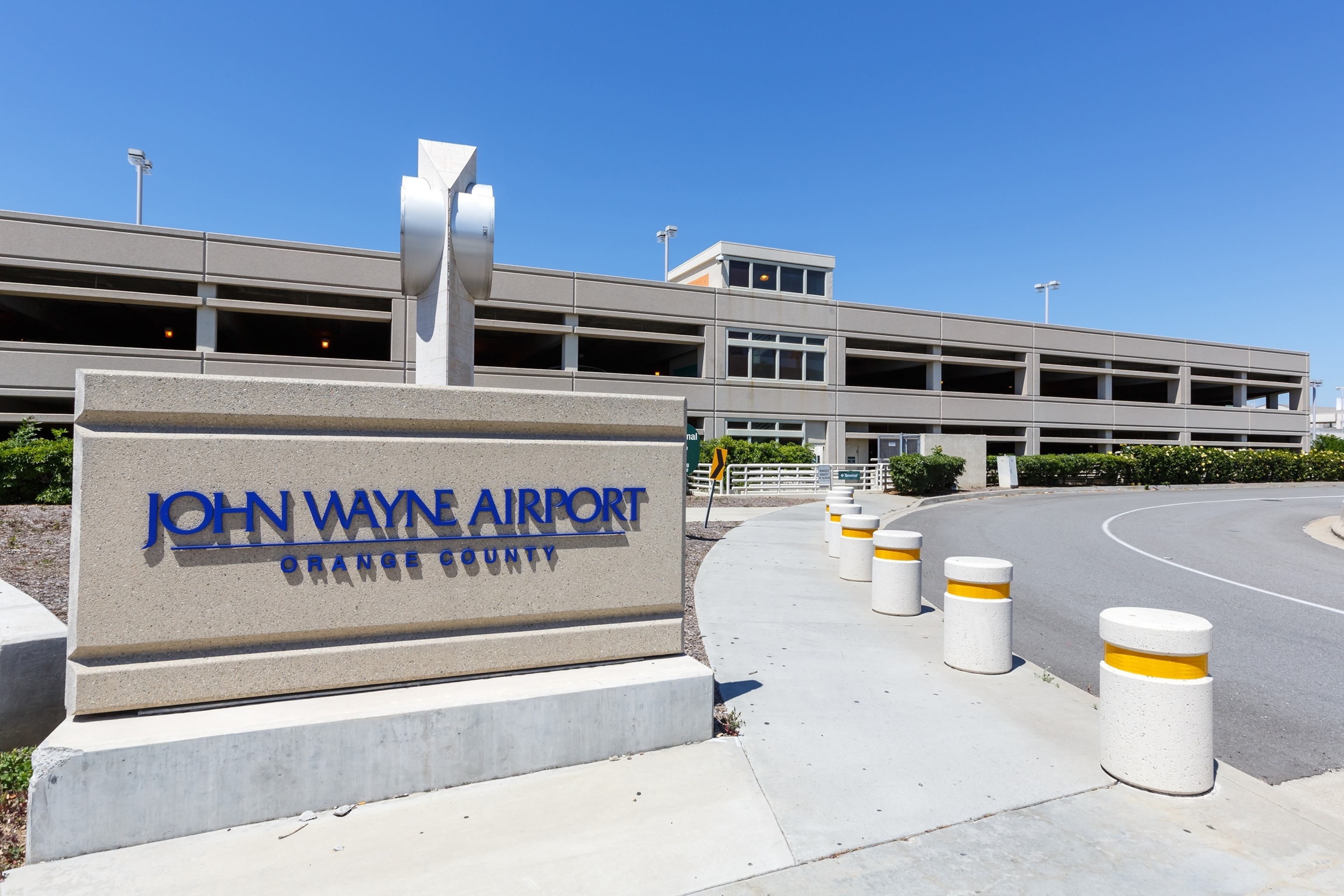
In this April 13, 2019, file photo, the John Wayne airport is shown in Santa Ana, Calif.
STOCK PHOTO/Getty Images
The incident occurred around 8:40 p.m. local time Tuesday, according to the FAA. The Boeing 737 with 168 people on board was traveling from San Francisco to Santa Ana at the time.
The FAA said it is investigating, “including whether a new measure to suspend the use of visual separation between airplanes and helicopters was applied.”
The National Transportation Safety Board said it is aware of the incident but did not have any additional details to share at this time.
The alert that the United pilots received is the most serious of the anti-collision alerts pilots can receive and requires immediate action. The alert tells the pilots exactly what to do to avoid the collision.
The close call occurred two days after a regional Air Canada jet collided into a Port Authority fire truck shortly upon landing at LaGuardia Airport in New York City, killing two pilots and injuring dozens of people.
Last year, an Army Black Hawk helicopter and an American Airlines jet collided midair near Washington, D.C., as the jet was landing at Ronald Reagan National Airport, killing 67 people. The NTSB determined the probable cause was a series of systemic failures within the FAA and was 100% preventable.
In the wake of the crash, the FAA implemented the new measure suspending the use of visual separation between airplanes and helicopters.
The measure — which went into effect last week in areas where helicopters often cross both arrival and departure paths near busy airports — requires air traffic controllers to use radar to actively manage aircraft to keep them separated at specific lateral or vertical distances.