
Inside the quiet but meteoric rise of competitive jigsaw puzzling
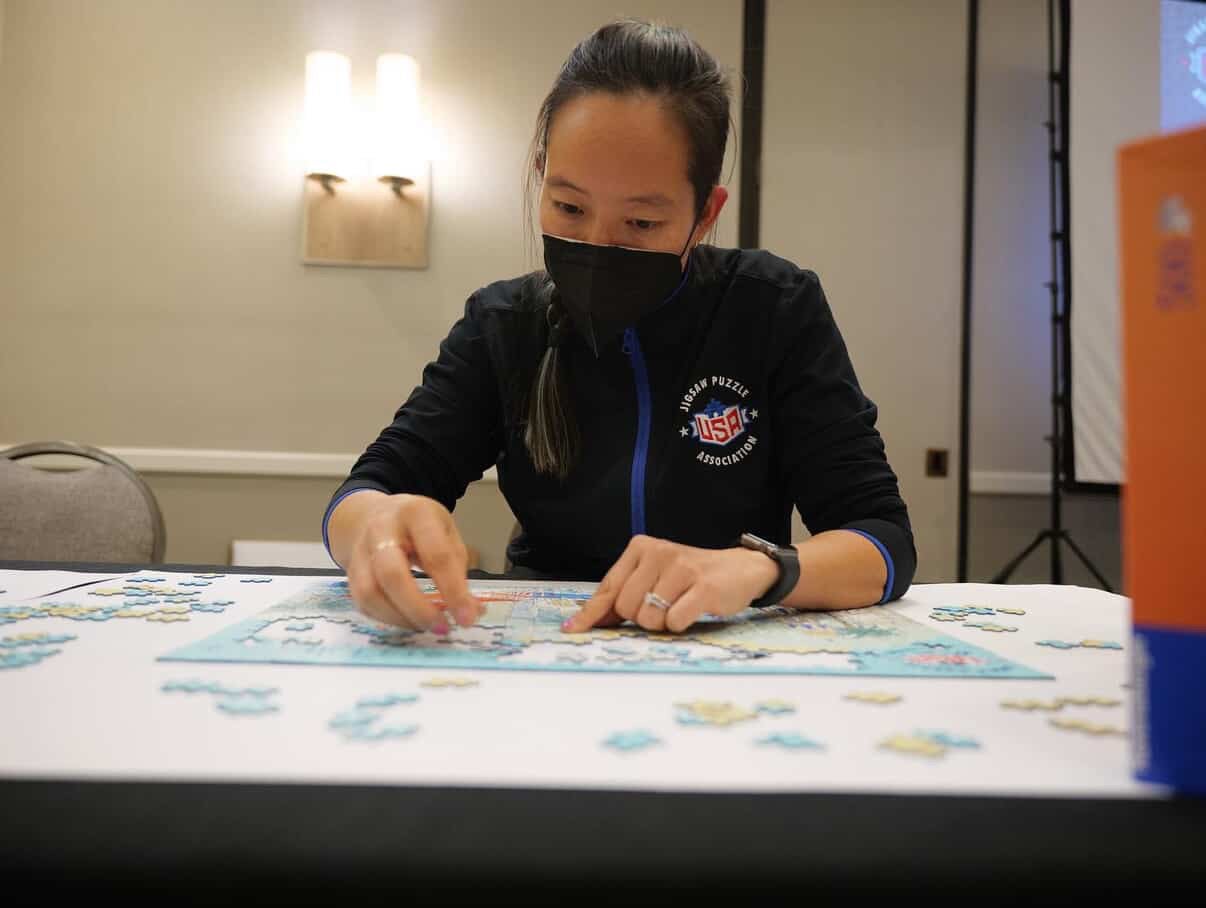
Hunched over a table in a hotel conference room, 42-year-old Yvonne Feucht snaps the final blue jigsaw piece into place, revealing a vibrant, beachy collage of San Diego landmarks. It took her just 54 minutes and 41 seconds to complete. Instead of the quiet satisfaction that usually ensues after finishing a jigsaw, the room erupts in cheers as Feucht raised her hands over her head, letting out a sigh of relief. The Los Angeles-based TV and film camera operator had just become the inaugural champion of the 2022 USA Jigsaw Puzzle Nationals — America’s first-ever major competitive puzzling tournament.
This weekend, Feucht returns to try to reclaim her championship title at the 2026 edition of the Nationals. Hosted by the USA Jigsaw Puzzle Association, the three-day event, taking place in Atlanta from March 27 to 29, will welcome hundreds of puzzlers from around the world and just as many zealous spectators. Consisting of three events: individuals, pairs and teams of four, the competition sees contestants race to complete unreleased 500-piece and 1,000-piece puzzles.
Jigsaw puzzles have been around for centuries, believed to have been invented in 1770 by British cartographer John Spilsbury as an educational tool to teach geography to children. During the Great Depression of the 1930s, they saw a massive surge in popularity as an affordable escape thanks to the introduction of cheaper, die-cut cardboard puzzles. Since the new millennium, their popularity dipped slightly with the rise of television and video games.
However, the once-solitary pastime is now undergoing a quiet but transformative reimagining — as a highly competitive sport, with national and global competitions and a rapidly expanding fan base.
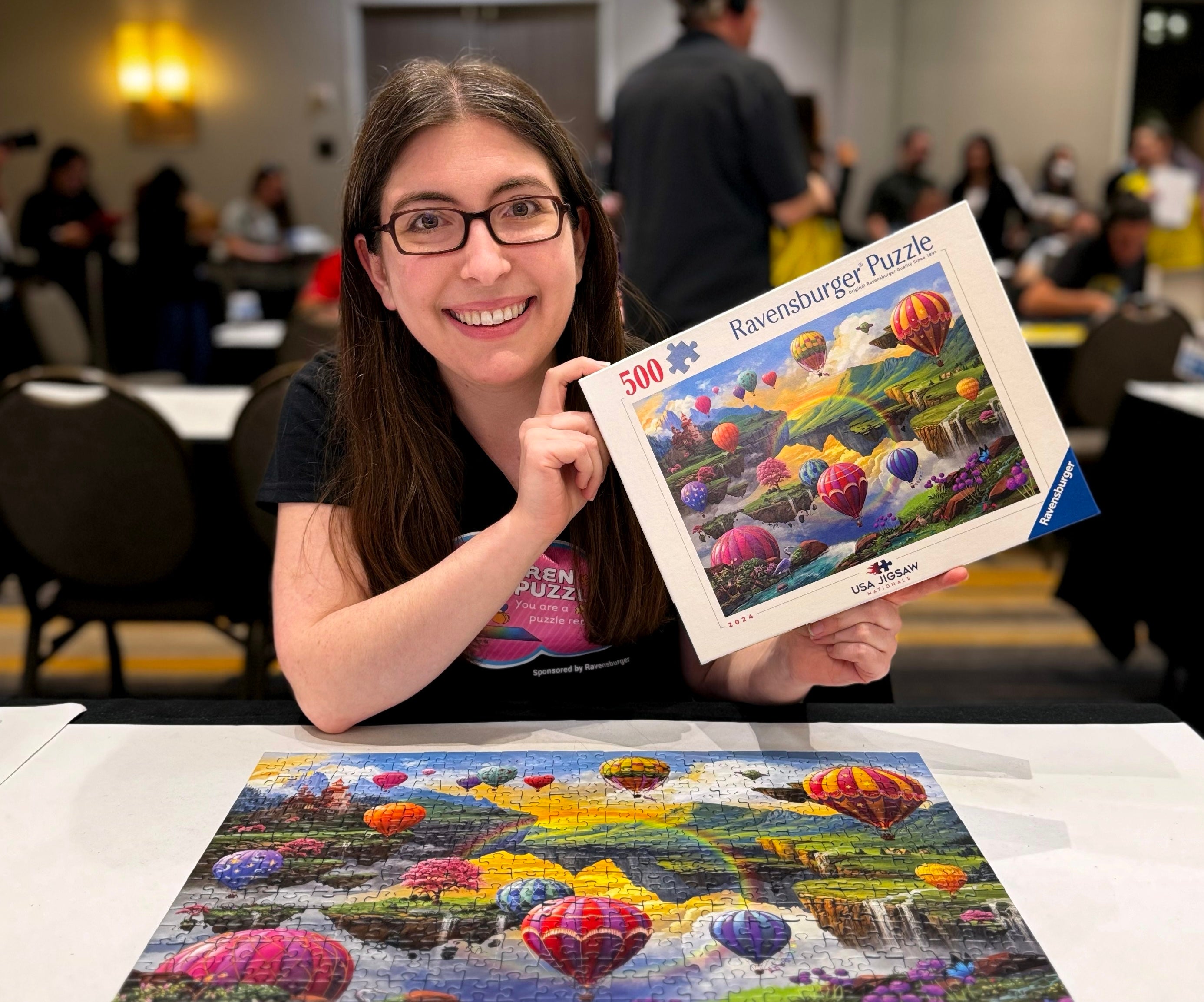
I first discovered speed puzzling on Instagram — time-lapse videos of people assembling puzzles at lightning speed, pure kryptonite for my ADHD. The biggest star on the platform is Karen Puzzles, a 35-year-old from New Jersey with more than 550,000 followers across YouTube and Instagram.
“I think a lot of people never considered [speed puzzling] as an option,” Karen Kavett, the creator behind Karen Puzzles, tells me over Zoom. “Even if they enjoy puzzling, they didn’t know events like this existed.”
Kavett began posting puzzle content in 2018, when speed puzzling and puzzling in general had little online presence. However, fueled by the 2020 pandemic — and thanks in part to Kavett’s videos — interest in the hobby-turned-sport has grown exponentially.
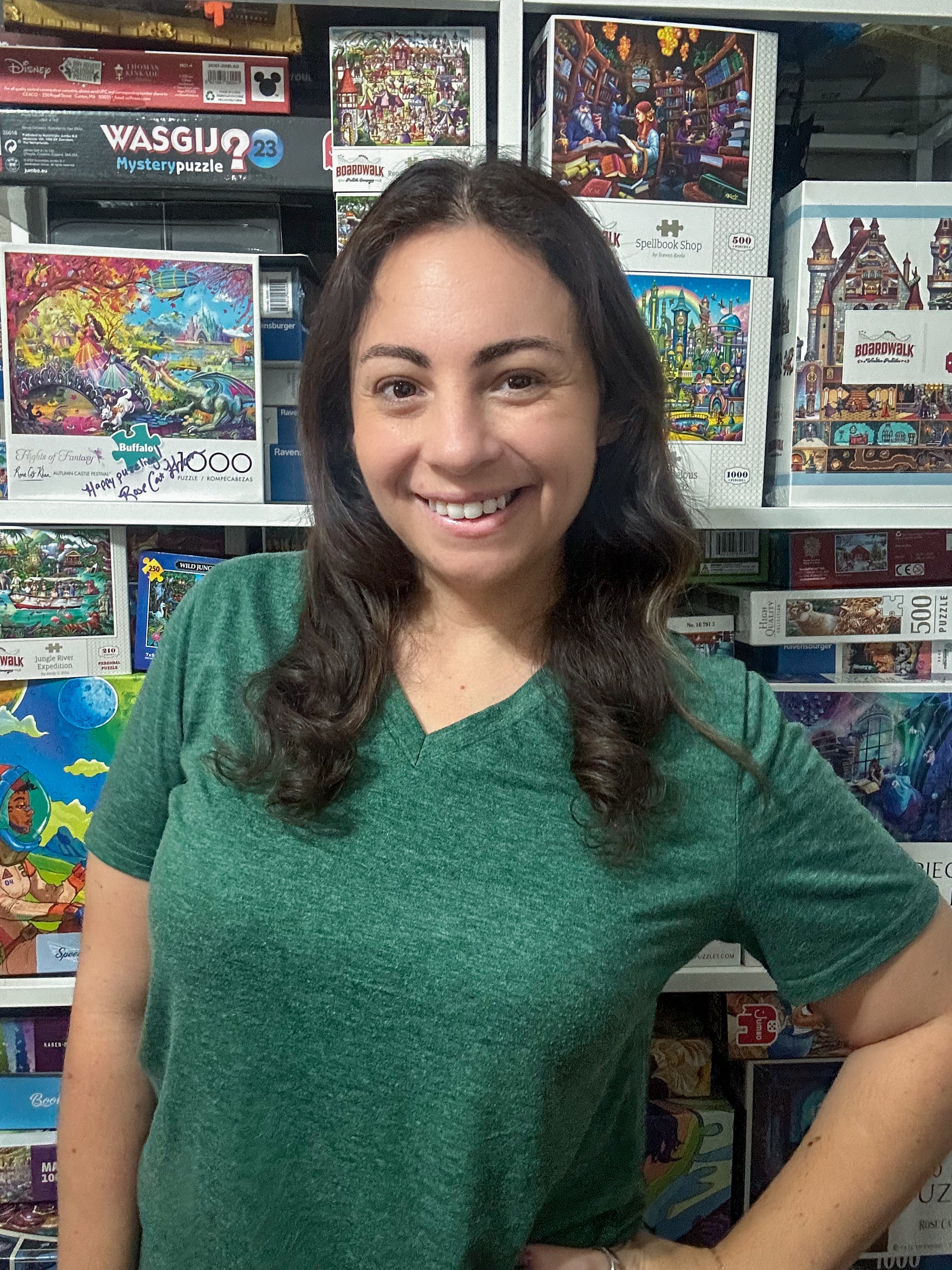
“I found out about speed puzzling because of Karen Puzzles,” says Jen Ferris, a third-grade teacher in South Florida. Ferris, 36, had always loved jigsaw puzzles as a child, but drifted away from the hobby in adulthood — particularly during a difficult and unhealthy marriage. She eventually stumbled across a TikTok of Kavett’s appearance at the 2024 World Jigsaw Puzzle Championship.
Ferris remembers thinking, “What is this? This is speed puzzling? This is a thing?” It wasn’t until she finally left her marriage that she picked up some jigsaws and tried her hand at speed puzzling. “I do feel like I was able to lean on this hobby and go back to [something] I used to love. That, honestly, I forgot that I loved,” she reflects. “It was kind of like finding myself [and] learning to love myself again. It helped me heal, but it also helped me find my purpose again in life and find my people.”
Speed puzzling has only recently been recognized as a sport. The World Jigsaw Puzzle Federation was founded in 2019 and hosted the world’s first jigsaw puzzle championship later that year in Valladolid, Spain. The following year, the USAJPA was created and held the country’s first premier national championship in San Diego.
Feucht and Kavett have competed in both competitions several times, with Kavett coming in second just behind Feucht at the 2022 Nationals. Looking back on her victory four years later, Feucht remains just as stunned as she was at the time. “I couldn’t believe it,” she recounts. “I had to double-check that I’d actually won.”
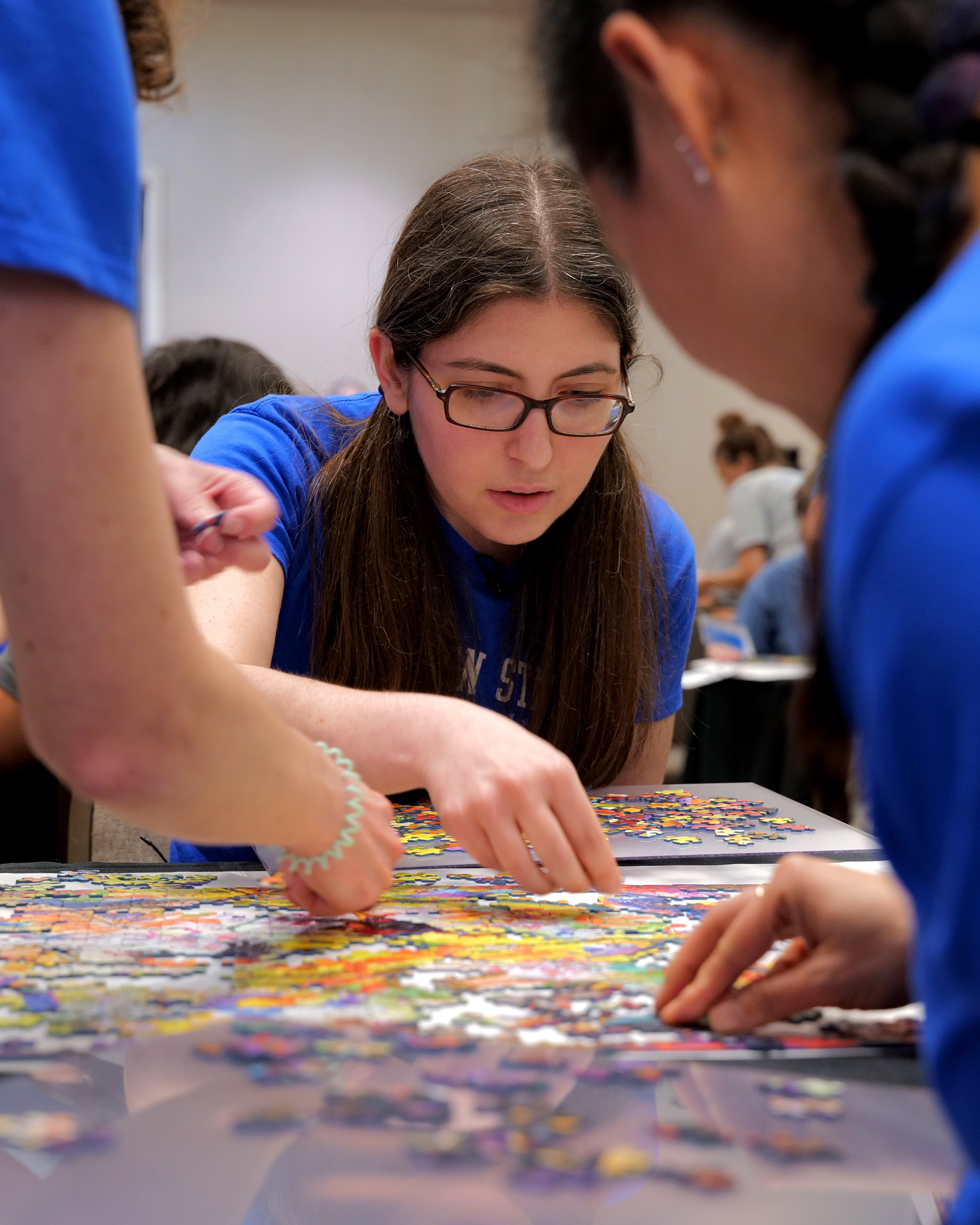
Nationals is a high-energy, knockout-style event, where individuals, pairs, and teams are steadily whittled down through multiple elimination rounds before a final showdown crowns the fastest puzzlers. At the starting signal, competitors rip open their bags and frantically flip pieces face-up, scanning for patterns amid the chaos. Some stick to the classic method — building the border first, then working inward — while others plunge straight into assembling whatever fragments they can find.
Strategy, however, only goes so far. As Feucht puts it, the real advantage lies in memory and an instinctive feel for color — skills that allow the best competitors to recognize, sort, and place pieces at remarkable speed.
It’s no fortune, but first-place winners receive a cash prize of $1,500 in the individual division, $1,000 each for pairs, and $750 each for teams, for a total of $6,500 in cash prizes. The winnings are intended to help fund participants’ travel to other speed-puzzling events in the U.S. and abroad.
As a result of her standout performance at Nationals, Feucht became a notable figure in the puzzling community. Like many, she has fond memories of completing puzzles with her mother as a child. She later returned to the activity as an adult after coming across the popular speed-puzzling website speedpuzzling.com.
For Feucht, speed puzzling has opened the door to new friendships. More broadly, the practice has helped ease her social anxiety and deepen her connections with family. “I like to dump out a puzzle during holidays, and I feel like a lot of people come and join me,” she says. “It’s lovely, because normally people don’t sit down and talk for that long — but when there’s a puzzle and a shared goal, people come, they sit, and they talk.”
Compared to the first Nationals, which featured 33 teams of four, 93 pairs, and 99 individual puzzlers, this year’s competition saw registration skyrocket, more than quadrupling to 200 teams of four, 400 pairs, and 800 individuals.
“It’s very exciting to see speed puzzling grow so that more people can discover it,” USAJPA founding member Valerie Coit tells me in an email. “We’ve heard many stories from USAJPA members that they’ve ‘found their people’ and that getting involved in the community has changed their lives for the better.”
That was certainly the case for 36-year-old Emma Landgraf, who discovered puzzling just over a year ago during a period of intense stress from a demanding job. “I was so stressed and burned out that I needed something to grab on to that was joyful,” the Chicago-based data strategist said.
Landgraf put herself to the test last April, competing in her first Nationals in Washington, D.C. This year, she’s eager not only to compete but also to volunteer.
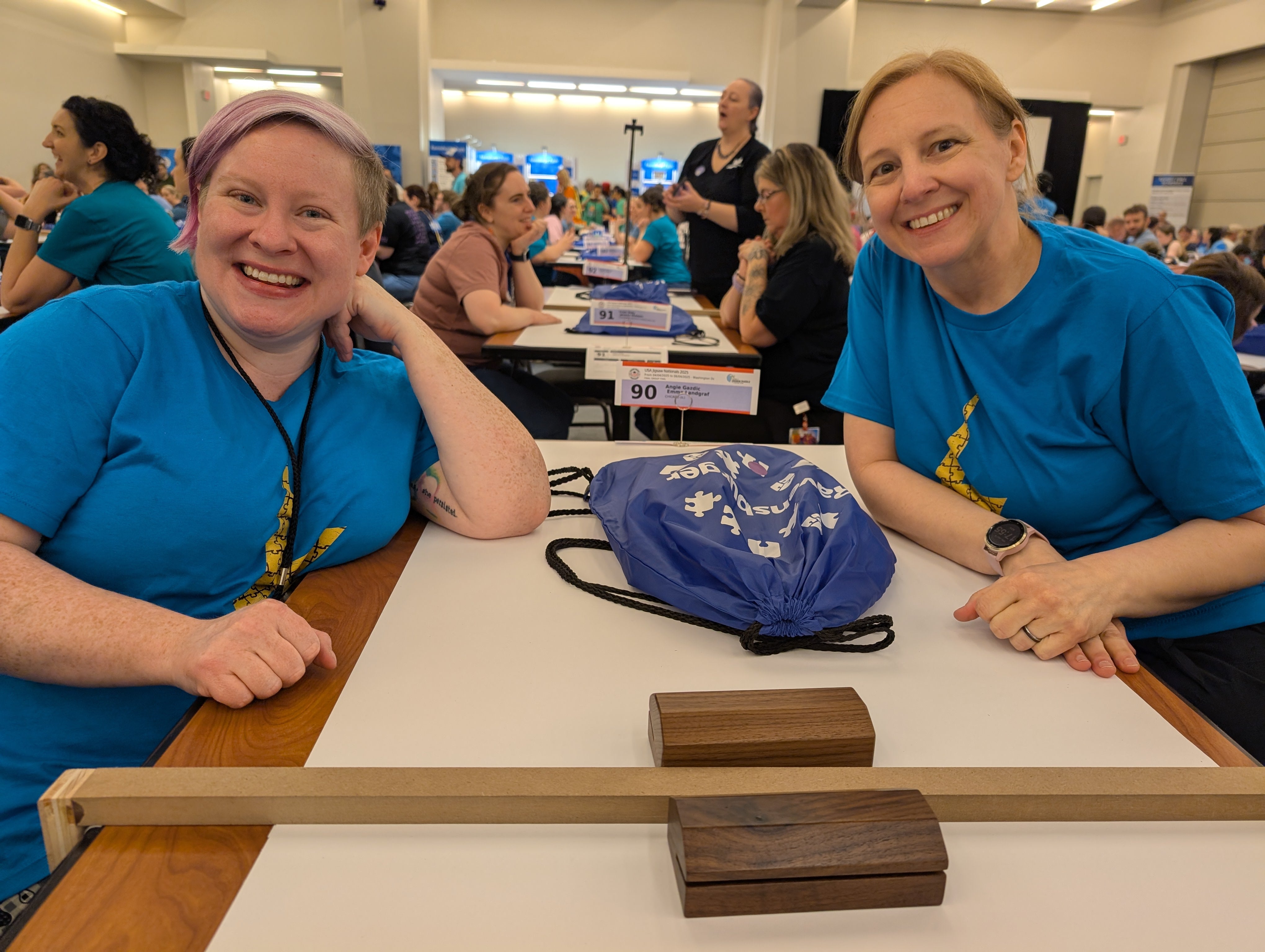
“This is a very passionate group that wants to make sure they take part in making it happen,” she says. “And you really want to be a part of that.”
Landgraf recalls the overwhelming passion on display at last year’s Nationals, where nearly every team arrived in matching team shirts, head-to-toe puzzle ensembles, and even handmade crochet puzzle tops — a true celebration of the community’s creativity. “There’s just a lot of excitement over something that, in theory, is kind of silly and niche and boring,” she says. “It’s puzzles, it is what it is, but it’s a really warm, loving group of people.”
What was once a solitary pastime has quietly transformed into a global phenomenon. Yet despite its surging popularity, puzzling remains rooted in something more enduring: a shared challenge, a source of joy, and a growing community coming together, one piece at a time.