
Resident doctors in England to strike for six days after Easter bank holiday
Resident doctors – formerly known as junior doctors – in England are to strike for six days in the ongoing row over pay and jobs, the British Medical Association announced.
The planned walk-out is due to start from 7 April at 7am, just after the Easter bank holiday in England, until 6.59am on 13 April.
The British Medical Association said in a post on X on Wednesday: “Resident doctors have been left with no choice but to strike.
“Weeks of negotiations with the Government have failed to deliver enough progress on pay, with the goalposts being moved at the last minute.
“We have called six days of industrial action to make the Government listen, stop the game playing, and come back with an offer that delivers fairly on both jobs and pay.”
British Medical Association Resident Doctors Committee chairman, Jack Fletcher, said the Government “will need to act fast” to prevent the six-day walkout.
He said: “We cannot ignore that, thanks to global events, economic indicators now point to years of greatly increased inflation.
“We are simply not going to put an offer to doctors that risks locking in further erosion of pay at a time when doctors continue to leave the UK for other countries.
Read more:
Police watchdog investigating handling of Andrew Tate allegations
BBC announces former Google boss as new director-general
“We are not closing the door on talks. We remain willing to negotiate and are eager to get a deal done if we can simply recapture the early positive spirit of negotiations.
“No strikes need to happen, but Government will need to act fast to prevent them.”
Mr Fletcher added: “We have been negotiating in good faith for weeks to try and end the simultaneous pay and jobs crises for resident doctors.
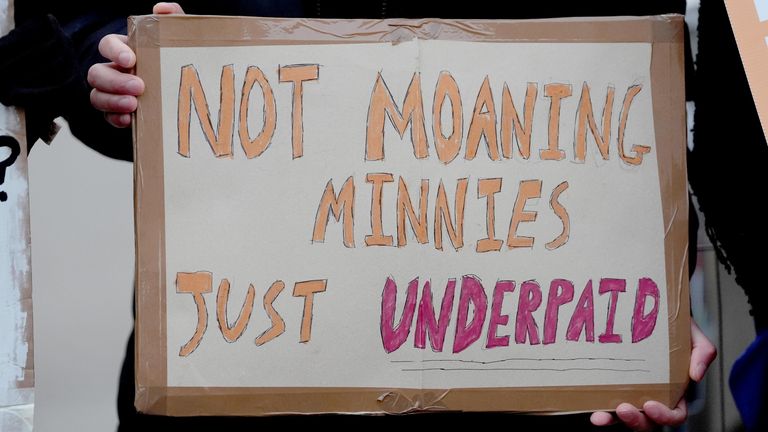
Resident doctors argue current pay is unfair. Pic: PA
“Frustratingly we had been making good progress right up until the point, in the last two weeks, when the Government began to shift the goalposts.
“As talks progressed it became clear that the money proposed for pay increases was now going to be spread over three years.
“This is combined with today’s pay review body (DDRB) recommendation of a 3.5% uplift pointing to yet more years in which our pay, at best, barely treads water.
“We have made abundantly clear throughout this dispute that our aim is pay restoration, and any deal that did not move us substantially in that direction was not going to fly.”
Last month, resident doctors voted to continue industrial action for another six months.
A huge 93.4% of them voted for the further action, the British Medical Association announced.
‘These awards are above forecast inflation’
At a speech earlier on Wednesday, Health Secretary West Streeting, who had previously described striking resident doctors as “irresponsible and dangerous”, said: “Under our predecessors, there was an acceptance that when doctors go on strike, planned operations just get cancelled, as if these were pain-free, consequence-free cancellations for patients.
“We didn’t accept that and we made the safety case for maintaining planned care, keeping 95% of activity going, even during strikes.”
He said he had formally accepted the pay recommendations.
Mr Streeting added: “This means over 165,000 doctors working in the hospital and community health sector will receive a 3.5% pay rise.
“These awards are above forecast inflation over the 2026/27 pay year, meaning that the Government is delivering a real-terms pay rise, on top of those in preceding years, underlining the extent to which we value our doctors and dentists.”