
Developers may soon be able to build higher under Charlottetown’s new official plan | CBC News

Listen to this article
Estimated 4 minutes
The audio version of this article is generated by AI-based technology. Mispronunciations can occur. We are working with our partners to continually review and improve the results.
Developers in Charlottetown may soon be able to build taller buildings where they haven’t before after the province signed off on the city’s official plan.
The plan received approval from P.E.I. Land and Environment Minister Darlene Compton on March 13. It was last updated in 1999.
The new official plan is aimed, in part, at increasing housing density. It allows buildings of up to 10 storeys along high-traffic streets and intersections.
The next step will be for city council to come up with a new zoning and development bylaw to serve as the framework for what can be built where. The public will have a chance to provide feedback on any new bylaw, city officials said.
“The nodes and the corridors have been identified as the areas where you’re close to transit, you’re close to amenities,” said Deputy Mayor Alanna Jankov, who’s chair of Charlottetown’s planning and heritage committee.
“Those are the areas where the consultants and the staff work with us on identifying the areas where we could potentially go with the higher density.”

The official plan also suggets city residents to build en suites in their homes, and allows for four-unit buildings in certain areas.
Jankov said those areas will be defined in more detail under the new zoning and development bylaw.
“What that really is, is identifying areas within the city where you could have additional units on a residential property,” she said. “Not every property will fit four units.”
The plan also includes protections for the 500-lot area, a section of the city’s downtown with many heritage homes. Any proposed housing there would have to go through a design review process, and include storm surge protections.
Finding the ‘sweet spot’
Charlottetown received about 1,500 submissions on the official plan, which council adopted and sent to the province for approval last summer.
In an emailed statement, a spokesperson for the Department of Land and Environment said each official plan for municipalities on the Island is “unique and reflects the specific context, priorities, and needs of the municipality and its residents.”
“Our planners review the official plan to ensure that municipalities have gone through the appropriate processes, including public consultation, and that the plan aligns with regulations and provincial interests before it reaches the minister’s desk for review and decision,” the statement reads, noting that Compton only took on the portfolio after a cabinet shuffle in February.
“[Compton] was interested in learning how the city planned to balance the need for high-density housing with the preservation of downtown’s historic value. She ultimately signed off on the plan late last week. She eagerly awaits the associated bylaws related to high-density housing.”

Public meetings on the zoning and development bylaw will happen sometime in the future, Jankov said.
“It’s also important for us to find that sweet spot where we can also work with developers and residents alike to ensure that we can get the density required in the downtown core,” she said.
Sam Sanderson, executive director of the Construction Association of P.E.I., said the new official plan is good for developers and he’s looking forward to seeing the final version.
“We’ve had great collaboration with the city over the last little bit and we’ll be connecting with the city departments in the very near future to have those discussions and work collaboratively with those departments,” he said.
“Having industry sitting at that table from day number one is really the key. And it’s great to see some of these discussions happening early.”
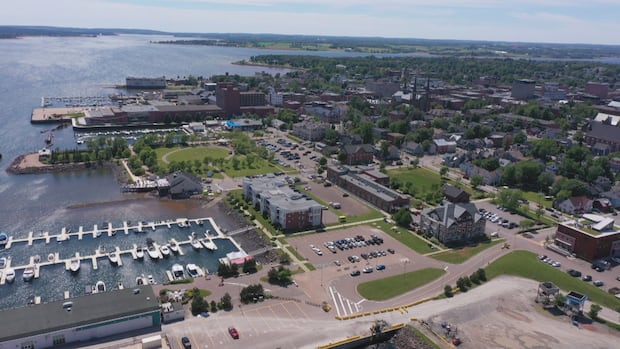
After two and a half years and 1,500 feedback submissions, the City of Charlottetown is close to the finish line on an update to its official plan. The new version aims to increase housing density, but council will have to vote on another document this fall in order to do that. CBC’s Tony Davis explains.
Sanderson called construction “the key to every sector in the country,” and said the industry should be consulted if the city wants to see success and positive growth.
“The construction industry needs to be leading the way, not only in vertical but horizontal — our roads, our bridges and our highways,” he said.
“We hear this ‘build, baby, build’ … and guess who’s doing the building? It’s us. So we need to be a key part of those conversations.”