
What was the cause behind the Black Hawk helicopter and American Airlines jet crash? Newly released footage shows the moment of collision

Newly released footage of the Black Hawk helicopter and the American Airlines jet crash shows the exact moment of the collision of the incident, a year after the fatal accident.
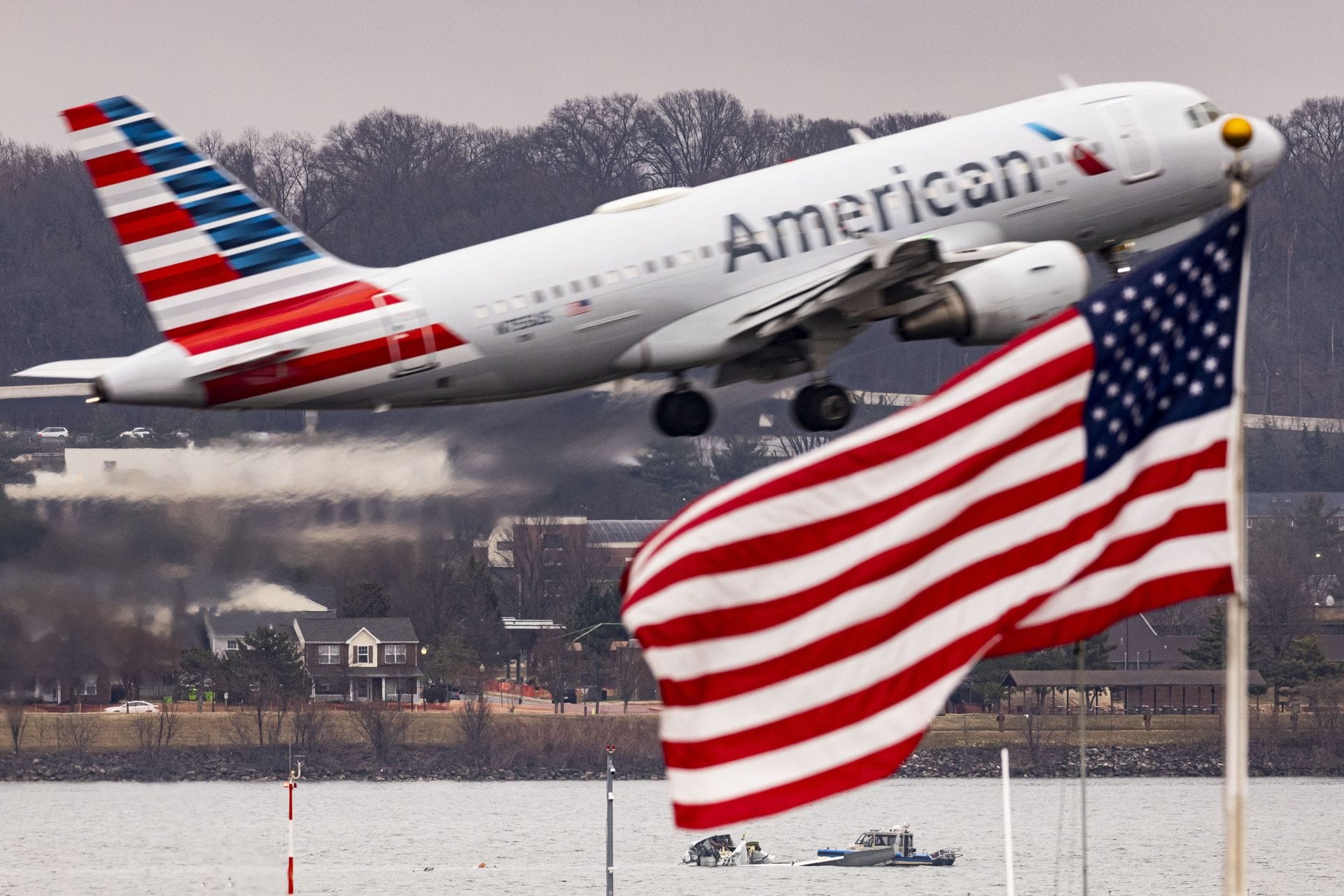
The new footage, released by 60 Minutes, features the two aircraft moving towards each other before colliding and bursting into flames and smoke. The accident in question took place on January 29, 2025, as a passenger-carrying American Airlines jet hit a Black Hawk helicopter mid-air near the Ronald Reagan Washington National Airport. 67 people were killed in the accident, including 64 passengers on the jet and three people in the helicopter.
The commercial flight, American Airlines Flight 5342, was heading to Kansas, flying at around 400 ft at a speed of 140 miles/hour. It was a Bombardier CRJ-701 twin-engine aircraft made in Canada, which was flying right above the Potomac River at the time of the collision. The incident marked the deadliest mid-air collision accident in the United States after November 12, 2001.
According to the National Transportation Safety Board, the cause behind the Black Hawk helicopter and the American Airlines flight included multiple errors. In a 400-page report released last month, the NTSB noted “FAA’s placement of a helicopter route in close proximity to a runway approach path; their failure to regularly review and evaluate helicopter routes and available data, and their failure to act on recommendations to mitigate the risk of a midair collision” as probable causes for the accident.
Exploring the NTSB report about possible causes of the Black Hawk and American Airlines collision
On February 24, the National Transportation Safety Board (NTSB) released a 400-page document noting probable causes about the Black Hawk helicopter clash with an American Airlines flight in January last year.
The helicopter, with a call sign of PAT25, was conducting some routine training missions in the restricted airspace near the airport. The collision took place due to multiple errors in guidelines, as noted in the NTSB report. Following the incident, the FAA ensured stricter regulations were implemented regarding helicopter traffic in the routes of commercial flights.
The NTSB report noted that the FAA’s placing the helicopter in “close proximity to a runway approach path” and their inability to carefully regulate helicopter routes as “probable” causes for the collision. It also claimed that the FAA did not review recommendations to avoid such accidents with enough seriousness.
Further, the NTSB also stated that the “overreliance” on pilots to check for other aircraft in their path was another probable cause. The Black Hawk had importantly confirmed having seen the American Airlines flight in their pathway and was previously notified to look out for it. However, it is unclear whether they saw another aircraft or the one they collided with.
Further, NTSB also noted the army’s shortcomings in this regard, as the Black Hawk helicopter was an army aircraft.
“Within the report we highlight systemic failures that led to the local air traffic controller failing to provide required traffic alerts, the (Army helicopter) crew not knowing or indicating their correct altitude, the FAA not evaluating their own data, and a dangerous route design that left no room for error. These are real, tangible problems that need to be addressed, and I hope the recipients of our recommendations get to work immediately,” the report said.
The “degraded performance” of the air traffic was also blamed, as the reported stated:
“There was no risk assessment process which resulted in misprioritization of duties, inadequate traffic advisories, and the lack of safety alerts to both flight crews.”
In light of the American Airlines and the Black Hawk helicopter’s collision, the NTSB also made 50 formal safety recommendations, with 300 of them directed towards the FAA. These include propositions such as amending helicopter route design criteria, limiting commercial traffic during busy hours or at busy airports, and implementing time constraints for air traffic control supervisors.
Edited by Pratyasha Sarkar