
Neal: I welcome the fall of a dictator, but I question the war in Iran
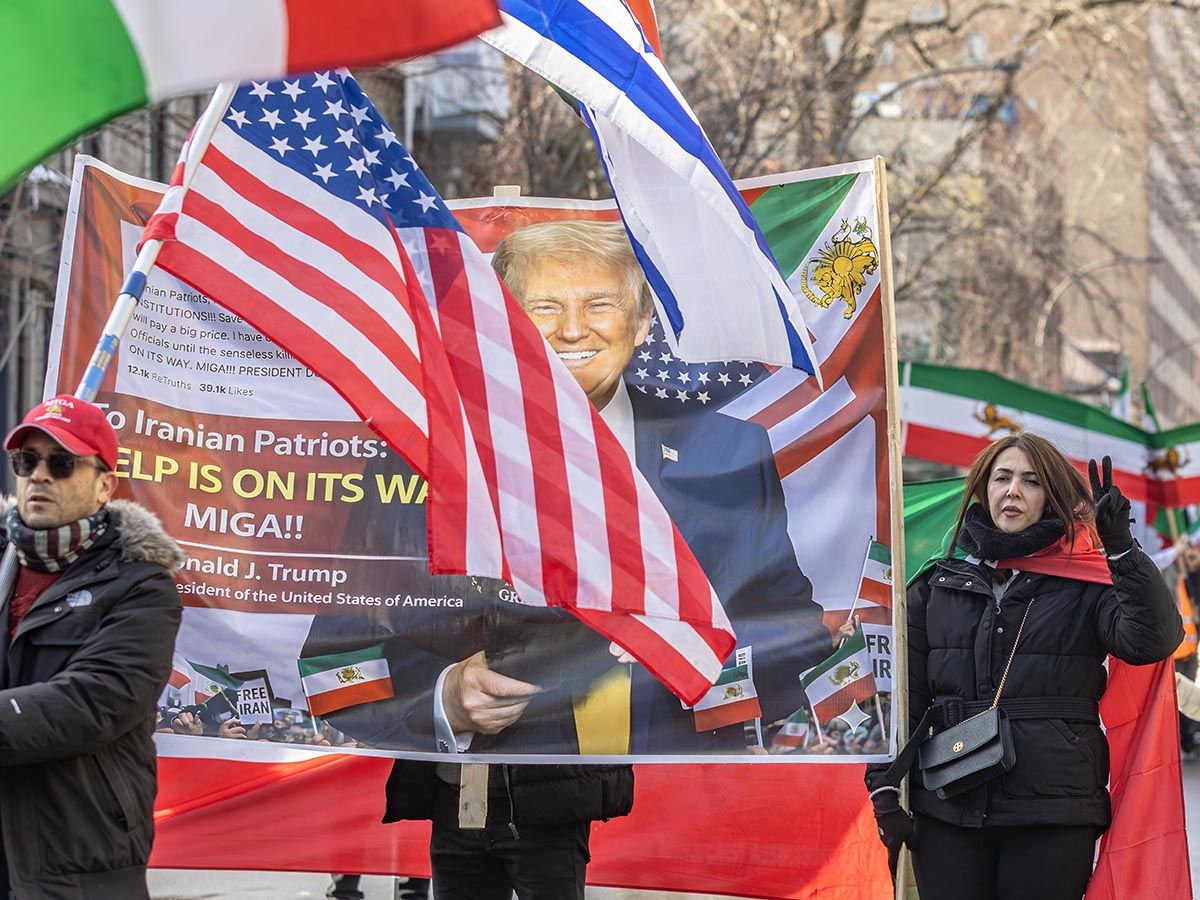
In the simplest version of the story, Iran’s supreme leader rules for decades with an iron grip. He crushes dissent, silences critics and represses his people. Eventually, history corrects itself. The tyrant falls, and freedom arrives. The United States and its allies stand at the forefront, pushing the arc of history in the right direction. Unfortunately, reality rarely follows such a simple storyline.
In real life, another war begins without an obvious objective, clear measures of success or a defined end.
It’s hard not to feel a sense of déjà vu. Haven’t we seen this story before in
,
,
? At the start of those wars, the world was told that foreign intervention would deliver freedom. Instead, it left behind instability and unfulfilled promises.
For Iranian communities around the world — including here in Montreal, where demonstrators
danced in the streets
following the U.S.- and Israel-led killing of the country’s supreme leader, Ayatollah Ali Khamenei — there has been hope that friends and family living under authoritarian rule might finally see change.
For others, particularly those who have experienced the exclusionary and sometimes violent policies of governments claiming to bring freedom, the moment brings disappointment and suspicion. The unease grows when some celebrations for the dictator’s fall include red MAGA hats, a symbol that for many of us has come to represent white supremacy, hostility toward immigrants and division. Watching an oppressor recast as a liberator raises the question of whether the method, motives and outcome of this war will match the script.
I’ve spent the last few weeks trying to reconcile two seemingly conflicting ideas: It is possible to welcome the defeat of an authoritarian ruler and recoil at the violence and conduct of those claiming credit for it, especially when their own record shows a willingness to marginalize and harm those they consider less valuable.
In our polarized news cycle, where it seems everyone is expected to have a hot take, I hesitated. I spend a lot of time thinking about power, policy and their impact on the lives of ordinary families, so I expected to find an easy answer to the conflicting feelings. There isn’t one. The political and cultural history of the region is complex, and
opinions within the Iranian diaspora are as fractured
as the political conversations happening around North American dinner tables.
Narges Bajoghli, a cultural anthropologist at Johns Hopkins University’s School of Advanced International Studies, captured that fracture in a recent
essay in New York Magazine’s Intelligencer
, describing how friends, colleagues and strangers across oceans and borders found themselves reacting in profoundly different ways. Some celebrated while others grieved.
“The fault line, crudely stated,” she wrote, “runs between those who see this war as a long-overdue liberation — the regime finally falling, whatever the cost — and those who find something perverse, even obscene, in celebrating bombs falling on the country that made you.”
While complexity might explain hesitation to express how we feel, it cannot excuse inaction.
This moment calls for a different discipline: Opine less and listen more. Listen to the people whose lives are directly affected by these events.
In the Greater Montreal area, where Statistics Canada estimated there were
more than 23,000 people with Persian ancestry
at the time of the last census, those voices are everywhere — in conversations with Iranian friends and neighbours worried about relatives back home and in
stories Montrealers share with The Gazette
and other organizations.
Holding two truths at once feels like an uncomfortable contradiction. It asks us to resist the easy stories of heroes and villains, and to sit with more difficult realities, including the fact that liberation, when promised through war, rarely unfolds as described, especially for the people who must live with its consequences. Discomfort, however, is often the beginning of a more honest understanding of the world — and of our place within it.
Arron Neal is a communications strategist, writer and mother of two exploring the intersection of culture, parenting and politics.