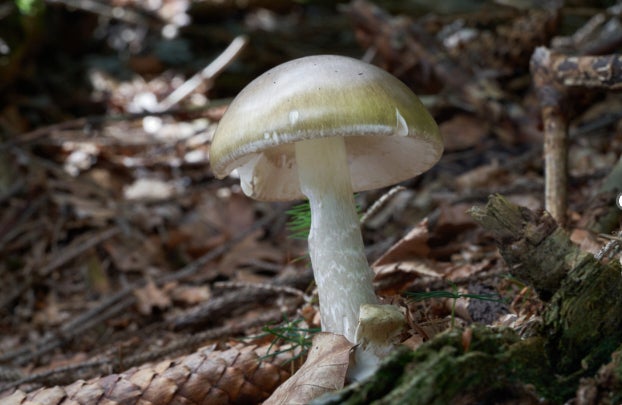
The California Department of Public Health has issued a stark warning following a fatal outbreak of mushroom poisoning, which has claimed one life and left several individuals, including children, with severe liver damage.
The state’s poison control system has recorded 21 cases of amatoxin poisoning, largely linked to the notorious death cap mushroom. These highly toxic fungi are frequently mistaken for edible varieties due to their deceptive appearance and taste.
Erica Pan, director of the California Department of Public Health, stated: “Death cap mushrooms contain potentially deadly toxins that can lead to liver failure. Because the death cap can easily be mistaken for edible safe mushrooms, we advise the public not to forage for wild mushrooms at all during this high-risk season.” Beyond the single fatality, several patients have required intensive care, with at least one potentially needing a liver transplant.
The recent wet weather has contributed to the increased growth of death cap mushrooms, prompting officials to caution against any wild mushroom foraging. Incidents have been reported in central California’s Monterey County, where residents fell ill after consuming mushrooms from a local park, and a cluster of cases emerged in the San Francisco Bay Area. State health officials, however, stress that the risk is widespread.
Nationally, America’s Poison Centers logged over 4,500 cases of exposure to unidentified mushrooms in 2023, with approximately half involving young children who may ingest them while playing outdoors. California’s poison control system alone handles hundreds of such cases annually.
Experts warn that distinguishing between deadly varieties like the death cap and “destroying angel” and their edible counterparts is challenging, as they often look and taste similar. The colour of a mushroom is not a reliable indicator of its toxicity, and cooking does not neutralise the poisons.
Initial symptoms, including stomach cramping, nausea, diarrhoea, or vomiting, can manifest within 24 hours of ingestion. Crucially, health officials caution that even if these gastrointestinal symptoms improve, patients remain at risk of developing serious, delayed complications such as liver damage.
People looking for guidance on diagnosing or treating mushroom poisoning can contact the poison control hotline at 1-800-222-1222.