
How the US-Israeli war on Iran could upend global oil and gas supplies
After the US and Israel renewed their war on Iran, assassinating supreme leader Ayatollah Ali Khamenei in the first wave of strikes over the weekend, Tehran effectively closed the Strait of Hormuz, severely disrupting shipping through one of the world’s most critical oil trade routes.
US president Donald Trump said Washington had “the capability to go far longer” than its projected four-to-five-week military campaign against Iran as explosions from continued American and Israeli strikes echoed across Tehran overnight into Tuesday.
Iran and its allies retaliated with missile and drone attacks on Israel as well as American military installations in neighbouring Gulf states.
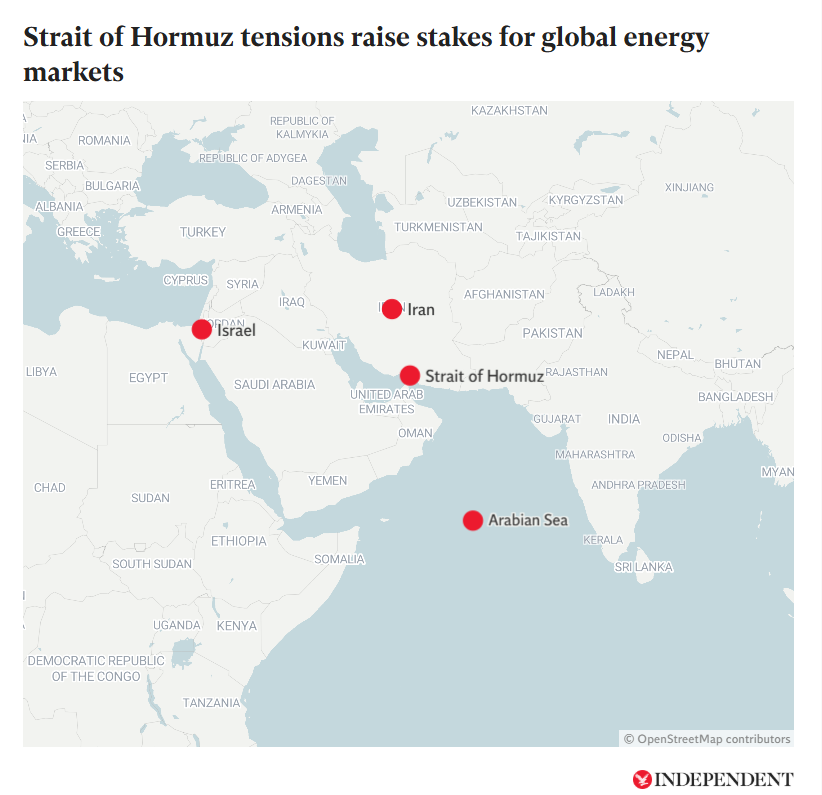
Iran also allegedly struck energy facilities in Qatar and Saudi Arabia and targeted ships trying to transit the blockaded Strait of Hormuz, the narrow gateway to the Persian Gulf carrying about a fifth of the world’s traded oil.

Brigadier General Ebrahim Jabbari, an adviser to the Islamic Revolutionary Guard Corps, announced the closure on state television on Monday.
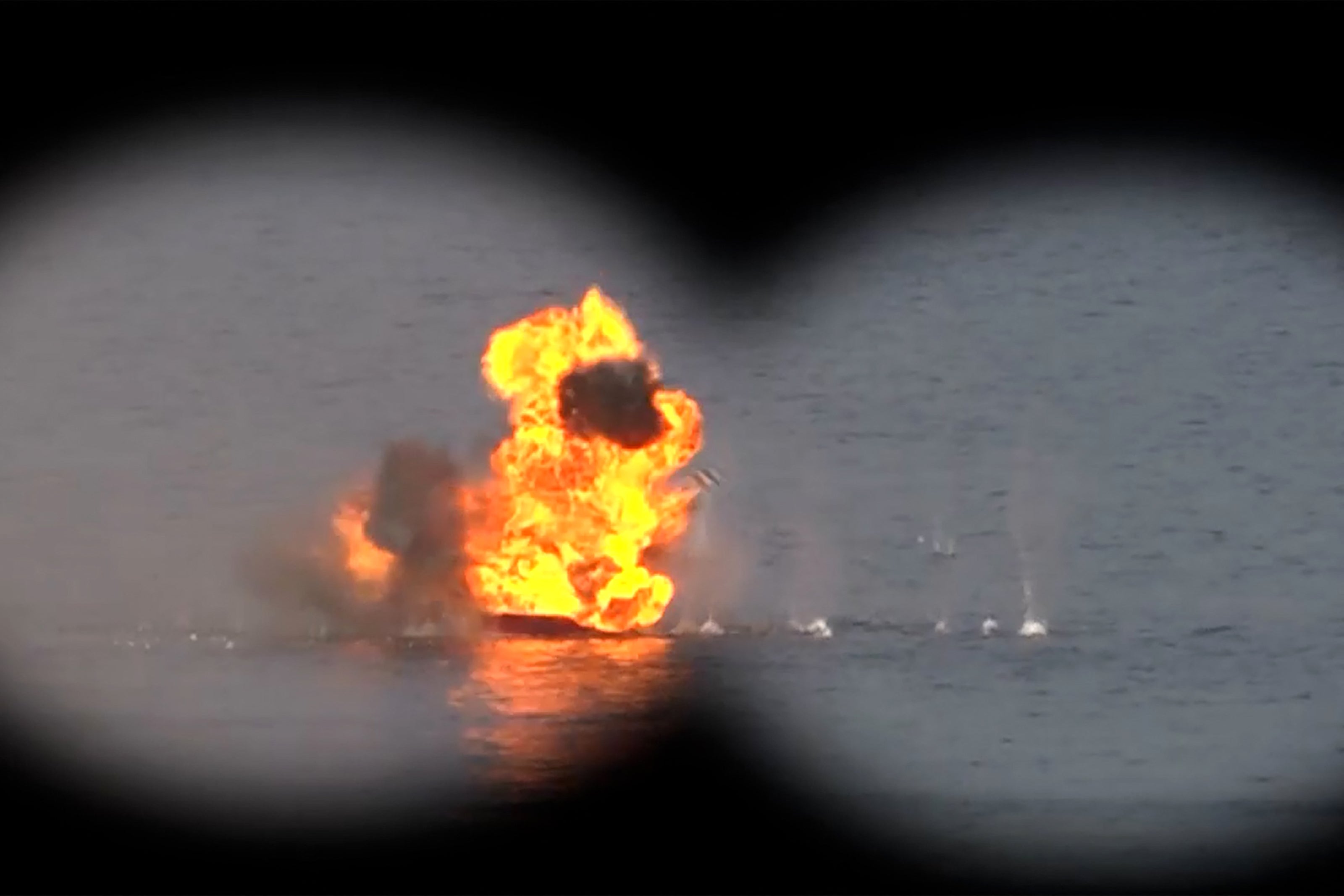
“The Strait of Hormuz is closed. Anyone who wants to pass, our devotee heroes in the IRGC navy and the army will set those ships on fire,” he said. “Don’t come to this region.”
It was Iran’s most explicit warning since informing ships that it was closing the maritime route on Saturday.
Consequently, global oil and gas shipping rates soared and supertanker costs in the Middle East hit all-time highs, shipping data and industry sources told Reuters on Tuesday.

Iran had temporarily restricted sections of the strait during live-fire exercises last month, describing the decision as a safety measure. It was a rare suspension of activity and came amid growing friction with the US following Trump’s threats of military action.
The strait connects the Persian Gulf to the Arabian Sea. It contains two shipping lanes, each nearly two miles wide and separated by a buffer zone, and is transited by about 3,000 vessels each month.
Bridget Payne, head of oil and gas forecasting at Oxford Economics in the UK, describes the strait as “one of the world’s most important energy chokepoints”.

“Around a quarter of seaborne oil and a fifth of global LNG shipments pass through it, mainly from Gulf producers to Asia, and most Gulf suppliers have no alternative sea route for exports,” she tells The Independent.
Payne says that Saudi Arabia and the UAE can bypass the strait via pipelines “but together they can reroute only about three million barrels a day of crude oil”. Roughly five times that volume typically transits the strait.
“The LNG risk is even more acute,” she says. “Qatar is the world’s second-largest LNG exporter, and all of its LNG exports pass through Hormuz with no alternative route. Any disruption would tighten supply quickly, both in Asia and more broadly as buyers compete for available cargoes.”
This danger prompted several countries, including China, to call for de-escalation of the conflict.
“The Persian Gulf and nearby waters are an important route for international trade in goods and energy,” Chinese foreign ministry spokesperson Guo Jiakun earlier said.
“Keeping the region safe and stable serves the common interests of the international community.”
Beijing, he added, stood “ready to step up communication with Iran and other relevant parties to continue playing a constructive role for a de-escalation”.
China would take necessary measures to safeguard its energy security, another spokesperson for the foreign ministry said on Tuesday when asked about the potential impact of US military actions against Venezuela and Iran on China’s oil supply.
“Energy security is very important to the world economy, and all parties should ensure stable and smooth energy supply,” Mao Ning said at a regular press conference.
Japan’s foreign minister Toshimitsu Motegi met with Iranian ambassador Peiman Seadat on Monday and conveyed Tokyo’s position that Tehran must stop attacks on its neighbouring countries and other actions destabilising the region.
Motegi emphasised the importance of ensuring safety in the Strait of Hormuz, which he noted was key to his country’s energy security.
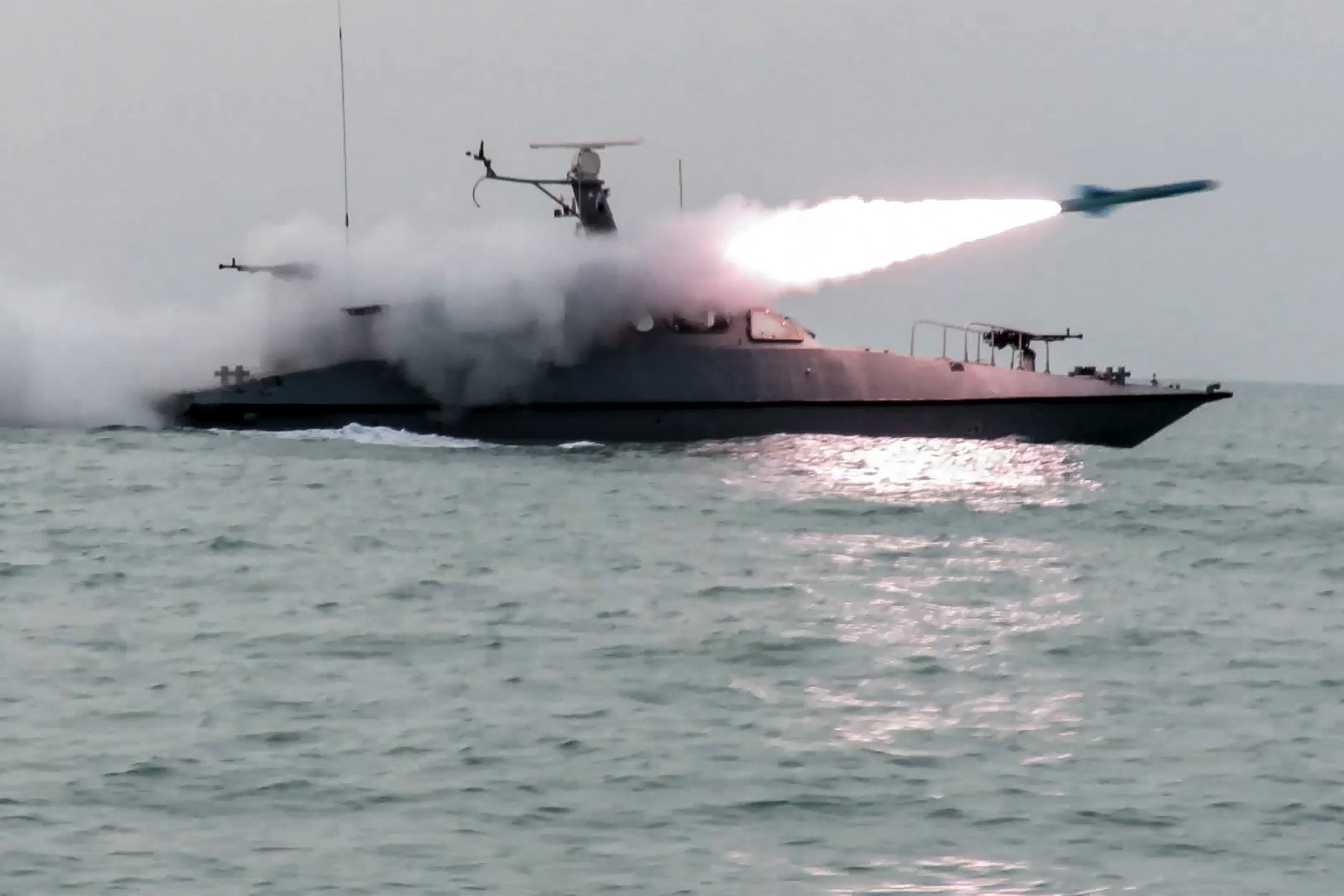
US secretary of state Marco Rubio previously warned that shutting the strait would be “another terrible mistake” on Iran’s part.
“It’s economic suicide it they do it and we retain options to deal with that,” he said. “It would be a massive escalation that would merit a response.”
UK foreign secretary David Lammy had also said it would be a mistake to blockade the strait while EU foreign policy chief Kaja Kallas described it as “extremely dangerous and not good for anybody”.
Payne argues if the Iranian government feels its survival is at stake, it “may be more willing to take options that are costly to itself, including endangering its own exports and damaging relationships with neighbours and key trading partners by disrupting traffic through the strait”.
She also notes that “Iran doesn’t need to ‘close’ the strait to have impact”.
“The more plausible operational intent is to demonstrate that it can disrupt flows on a sliding scale, through interference, jamming, spoofing, harassment, or selective actions that raise insurance and shipping costs and deter some traffic,” she explains. “That kind of partial disruption can move markets quickly without the economic and political blowback of a sustained, total shutdown.”
Such a move will leave Asia reeling, according to the data and analytics firm Kpler.
Muyu Xu, senior research analyst at Kpler, tells The Independent that crude oil and condensate flows through the strait currently run at about 15 million barrels per day, with refined products adding roughly 3.3 million barrels.
“Roughly 85 per cent of these volumes are destined for Asian markets,” Xu notes.
Nearly 57 per cent of China’s seaborne crude imports come from the Middle East, 46 per cent of India’s, 93 per cent of Japan’s, and 70 per cent of South Korea’s, Kpler’s data shows.
Same is the story with LNG exposure, with roughly 27 per cent of Asian imports passing through Hormuz.
Asian economies with high dependence on imported crude and limited inventory buffers – like India, Vietnam and Thailand – will see immediate supply stress in the event of even a two-week disruption.
“The market should be and is concerned about the standoff between Iran and the US,” Kpler lead research analyst Ciaran Tyler argues. “Iran alone accounts for just under eight per cent of global waterborne LPG supplies. Moreover, 27 per cent of global LPG flows move through the Strait of Hormuz. As such, any lengthy closure of the Strait or shipowners insisting vessels not enter the region would significantly tighten LPG supply in Asia.”
Gulf exporters like Iraq, Kuwait and Qatar remain structurally dependent on the strait, while Saudi Arabia and the UAE can partially reroute exports via pipelines.
According to Kpler, seven million barrels a day can be routed via existing alternative infrastructure, assuming full operational availability and no secondary bottlenecks, leaving about 8 million barrels per day stranded in a full closure scenario.
Meaning that while crude can be rerouted via pipelines that bypass the strait, and a small amount can shift through different ports, the overall scope to redirect flows is modest compared with the volumes that normally transit the strait.

“The annual value of crude transiting the strait is approximately $375 billion,” Xu adds, based on 2025 average Dubai benchmark prices, underscoring the economic magnitude of any disruption.
Payne notes that even slight disruptions will generate outsized effects. “Even partial disruption can tighten prompt supply quickly and lift prices via higher freight, insurance, and delays,” she explains. “It’s strategically important for gas – disruption would directly threaten Qatar’s LNG exports. Qatar is the core LNG supplier to Asia, so any interruption would tighten supply rapidly, first in Asia and then more broadly through global competition for cargoes.”
Meanwhile, Australian energy minister Chris Bowen said on Tuesday that consumers did not need to worry about fuel shortages despite concerns the widening US-Israeli war on Iran could deplete the country’s reserves.
Australia currently holds 36 days of petrol, 34 days of diesel and 32 days of jet fuel in reserve, the highest level in more than a decade. “There is no need to rush to the service station and fill up,” he said.
“I do understand people’s concerns but it’s important that people know we do have a good stock of petrol in reserve in Australia, there’s no immediate threat to petrol supplies in Australia.”
Bowen said while petrol prices could come under pressure if oil prices continued to climb, regulators would act against price gouging.
“There is no need for panic buying, that will just make the situation worse,” he said.
Treasurer Jim Chalmers said in a social media post that he had written to the consumer watchdog to ensure fuel retailers “don’t use events in the Middle East to price gouge Australians”.