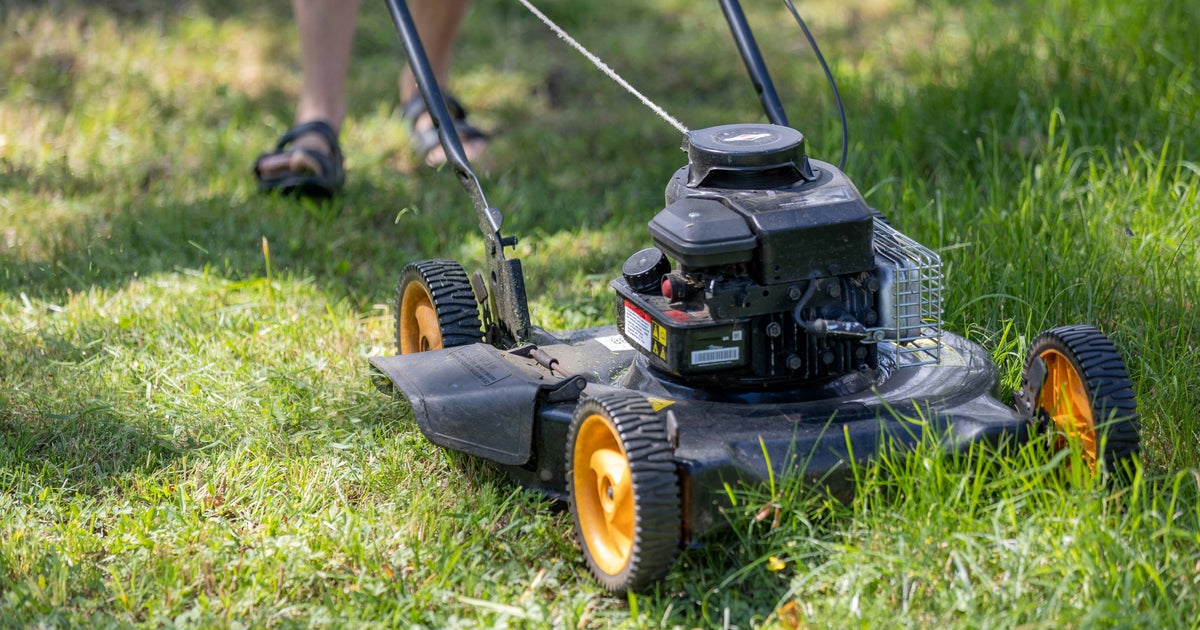

The Ultimate Guide To Perfectly Mowing Your Lawn
There’s a lot to be said for No-Mow May and other initiatives that encourage gardeners to leave some, or all, of their lawns wild. That can help wildlife to flourish.
But to maintain a healthy lawn, sometimes, a haircut is necessary.
Here are 11 rules to help you do it perfectly:
1) Wait for 7°C to start mowing…
Grass begins to grow at this temperature, so there’s no point cutting it when the weather’s any colder. Wait until it’s 7°C or warmer consistently to whip the strimmer out.
2) …And stop mowing at 6°C or lower.
The grass isn’t growing at those temps, which usually begin in late October.
3) Never mow a wet lawn
That can clog your mower, weaken your grass, and leave unsightly imprints.
4) Wait until any new grass is at least 5cm tall to cut it
Any shorter, and you risk “scorching” a new lawn.
5) Do your first mow on the highest blade setting, too
Even if you have an established lawn, do your first mow of the year on your mower blade’s highest setting. If you cut the grass too short early on, you increase the risk of disease, dehydration, and bare patches.
6) Mow at different rates according to season and lawn type
Per the RHS, the following schedule works for these lawns in spring and autumn:
- Conventional lawn: Every 1-2 weeks,
- Wildflower lawns or flower-rich meadows: Leave to grow wild.
- Conventional lawn: Weekly, unless in drought; then, mow fortnightly or less,
- Wildflower lawns or flower-rich meadows: Every 4-6 weeks,
- Long-grass lawns: 1-2 times per summer.
It’s not usually necessary to cut lawns in winter.
7) Follow the one-third rule
Regardless of whether it’s your lawn’s first-ever cut or your third strim of the summer, don’t cut off more than a third of the grass’s height at once.
Even established lawns risk forming clumpy, unpleasant patches and becoming weaker if you cut off a high proportion of their height all at once.
8) Keep your mower blades sharp and clean
Blunt mower blades and mower blades with lots of clogged-up grass in them can make mowing your lawn harder and less effective. Always ensure your mower is switched off before going anywhere near blades, and seek specialist help for cylinder mowers.
9) Skip the job in May
We mentioned No-Mow May before. It involves not cutting your lawn in the month and can boost wildlife, but it doesn’t have to be all or nothing; a “low-mow May,” meaning you mow some parts of your garden but leave others wild, can help too.
10) Clear the lawn before mowing
Check for loose stones and hidden objects, like toys and bulbs, in the garden before mowing. Clear them along with any garden furniture before beginning the task.
11) Change direction every month or so
If you change the direction you mow in about once a month, you’ll be able to cut any blades of grass you’d previously missed and can avoid unsightly wheel ruts.