Forced perspective is one of those tricks you think you understand until someone pulls it apart in front of you. Here’s a fun look at this incredible visual trick.
Coming to you from Corridor Crew, this meticulous video walks through why forced perspective has lasted more than a century and how it still beats a lot of digital shortcuts. The video starts simple, showing how distance alone can make one person look half the size of another, then quickly pushes into the real problem: depth cues that betray the trick. You see how elevated platforms, hidden seams, and careful horizon management keep your brain from realizing one subject is just farther away. The breakdown of classic examples, from early hanging miniatures to those “how is that even real” shots in older fantasy films, gives you concrete ideas you can adapt on your own sets. The more you watch the examples stack up, the more you notice where your own framing quietly gives away scale.
The video then turns to the technical wall that scared off almost everyone else: parallax. As soon as the camera moves through space, the illusion collapses because foreground and background slide at different speeds. The video shows how Jackson’s team on “The Lord of the Rings” attacked that problem by literally moving the actor’s platform to cancel parallax, tied to a motion-controlled camera pass. You see the concept visualized in 3D first, then translated into a real-world build with a robot arm and a hacked motion control rig. The math behind matching camera travel to platform travel stays approachable, but it makes you think very differently about how you move a camera in tight spaces. You start to see why most productions settled for static shots and why committing to this effect at all is such a big choice.
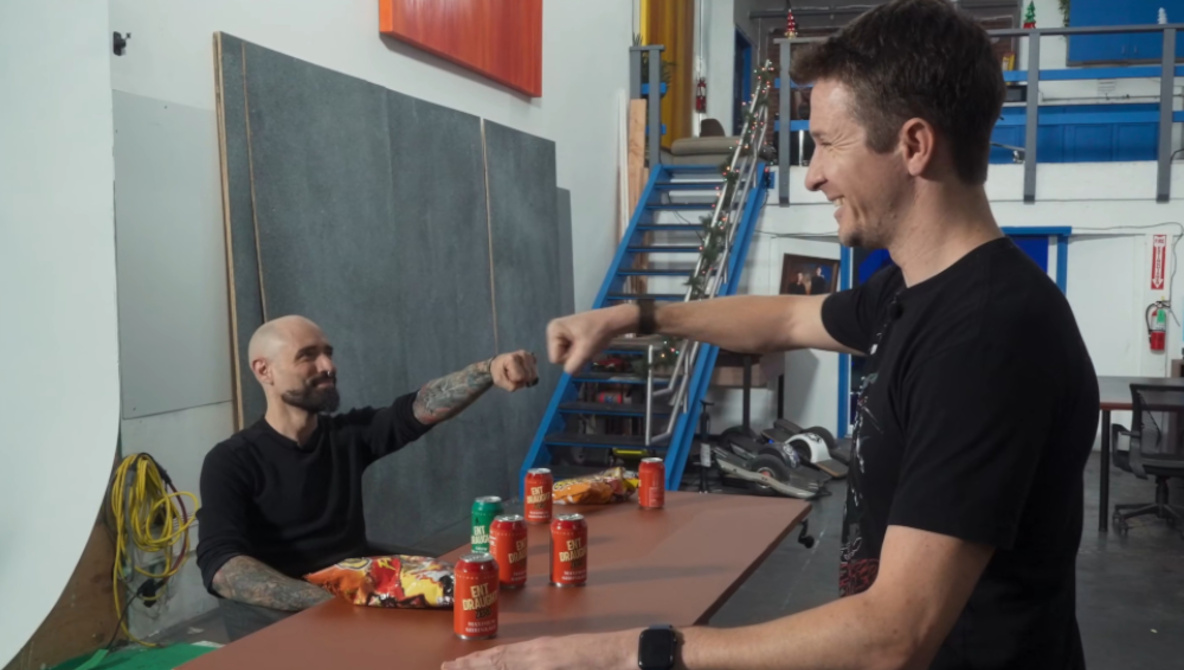
What keeps the video from feeling like a pure history lesson is how much experimentation you watch on screen. The crew chases timing issues between their robot arm and a repurposed slider, discovers the limitations of DIY control boards, and then pivots into weird but effective solutions that actually repeat the move reliably. You also get a close look at all the small cheats that sell the scale: oversized and undersized props, textures that match the implied size of the hands holding them, and eyelines that never quite point where you expect. There is a moment where a simple cut in the table shape suddenly fixes the illusion and pulls the two performers into the same believable space, and seeing that happen in real time gives you a new respect for tiny set-design decisions. Check out the video above for the full rundown.