
Hanes: Vanier's cancellation of Holocaust commemoration 'cowardly,' survivor says
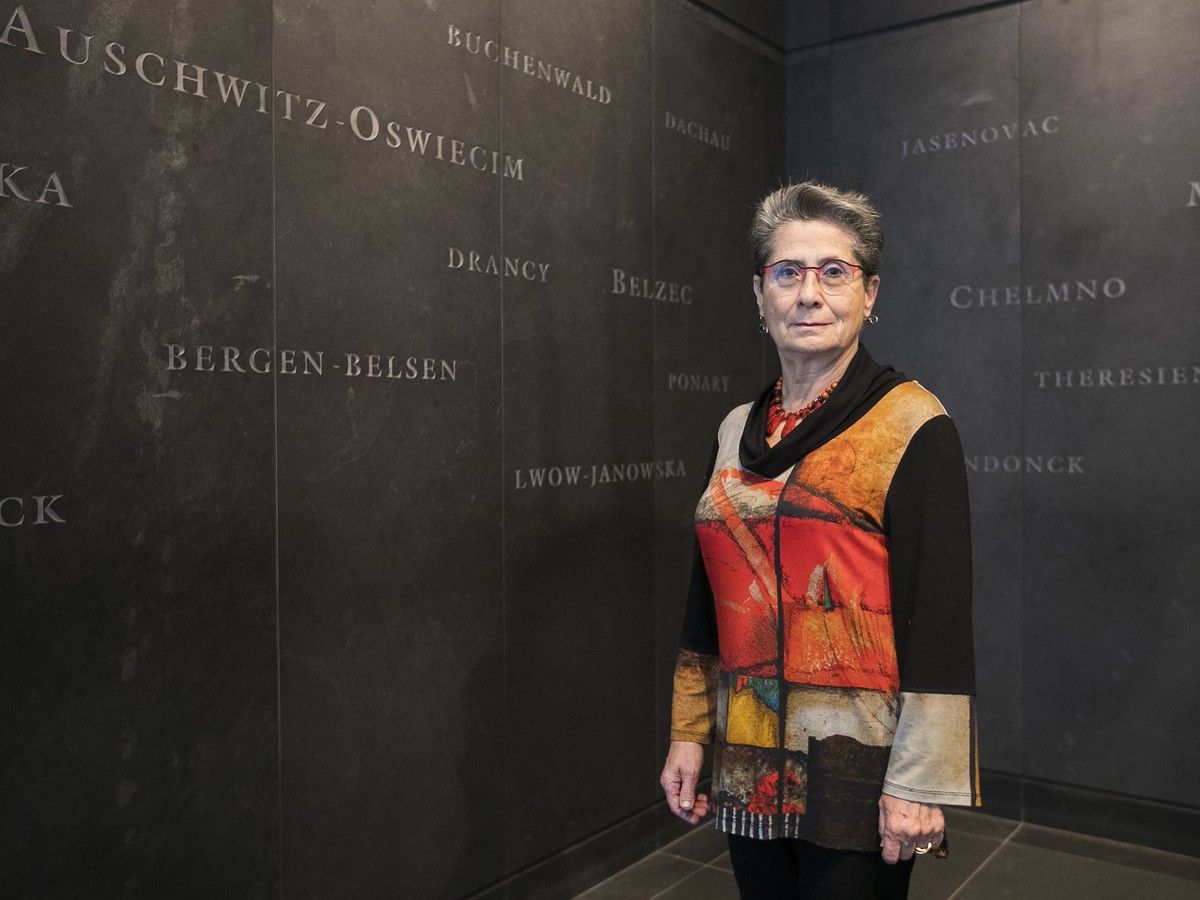
Eva Kuper was scheduled to speak about how she survived the Holocaust during a commemoration Wednesday afternoon at Vanier College.
When Kuper was a baby, her mother managed to hand her off a train bound for a death camp and was never seen again. Then her father hid her away with a Polish nun for the remainder of the Nazi reign of terror.
Since she
uncovered more about her harrowing childhood
as an adult, Kuper has shared her ordeal countless times, as one of the last living witnesses to history and a passionate advocate for Holocaust education.
But last week she learned Vanier suddenly called off the ceremony in which she was slated to participate, amid tensions on campus that have erupted since the war in Gaza and in light of elevated threats ignited when the United States and Israel began strikes on Iran.
Although a weeklong
Symposium on the Holocaust and Genocide
is continuing for a limited audience under tight security, Vanier made the decision to outright cancel the memorial for the six million Jews and other victims exterminated by the Nazis during the Second World War.
Kuper calls the move gutless, given a rising tide of antisemitism that has underscored the need for more reflection on the dangers of hatred and shown how a polarized society has failed to heed the painful lessons of the past.
“I was very disappointed that they took this stand, which in my opinion was cowardly,” she said. “I don’t think that when you’re being bullied by people who have other views that the answer is to kowtow and to cancel. I think that it is their obligation as an educational institution to put students together, even if they are on opposite sides … to help them talk to each other, hear each other, recognize each other as human beings, not as a Palestinian and a Jew or a Black and a white student or whatever separates us.
“We have so much in common as human beings and yet these differences are what cause wars and hatreds, and there’s such outbreaks now — the world is really a disaster.”
Vanier declined to provide anyone from the administration for an interview to explain the rationale and said the symposium organizer was “unavailable.” But it issued a statement saying it is “reviewing the format of its annual Holocaust commemoration ceremony.”
“In light of the current volatile geopolitical climate and given the high-profile nature of the dignitaries scheduled to attend, we have made the difficult decision to cancel the commemoration as originally planned,” it said. “Ensuring the safety of all our guests and the college community remains our priority. We are working to develop an alternative that honours the significance of this historical event that aligns with our values of education, remembrance and community well-being.”
Vanier’s move comes at a troubling moment for the Jewish community. Since Hamas attacked Israel on Oct. 7, 2023, and Israel began its brutal war in Gaza, Jews have felt under siege, scapegoated for the actions of a foreign government, regardless of their political views.
As sympathy for beleaguered Palestinians has soared, antisemitism has surged. Schools and synagogues in Montreal were hit by bullets. Colleges and universities have been on the front lines of growing
animosity, intimidation, disinformation
, stigmatization and delegitimization aimed at Jews.
The fresh war that the U.S. and Israel launched against Iran has inflamed the situation further. In recent weeks,
three Toronto-area Jewish institutions
and the U.S. consulate have been shot at,
a synagogue and daycare in Michigan
was attacked, and Canada’s Integrated Threat Assessment Centre
warned there is a “realistic possibility”
the Jewish community could be targeted by extremist violence in the next six months.
The security threats are ominous and must be taken seriously. But they also provide a convenient excuse to cave under the pressure of an anti-Jewish backlash.
It’s particularly hurtful at Vanier, which has a long history of Holocaust remembrance and education. The weeklong symposium is in its 34th year and once attracted dignitaries, members of the public and renowned speakers.
This year’s forum is open to just 60 participants, down from 150 in previous years, who must show ID to security. There are lectures about the Armenian and Rwandan genocides.
The hasty decision to pull the plug on the remembrance ceremony is “outrageous,” said Marlene Grossman, a retired Vanier psychology professor who spent more than a decade organizing the symposium.
“The Holocaust commemoration service was always one of the highlights,” she said. “It was a great bringing together of students and staff. It was always very meaningful and always had people crying at the end.”
Naomi Kramer, president of the Holocaust Education and Genocide Prevention Foundation, which has been supporting the symposium at Vanier since 1992, called it a “sad day” for the college.
“The danger of cancelling the 34th annual commemoration of the murder of six million Jews, Roma and Sinti, homosexuals, Jehovah’s Witnesses and mentally handicapped people far outweighs the hypothetical threat Vanier College may perceive,” she said.
It’s students who are now missing out.
At the now quashed ceremony, Elizabeth was going to share what she learned on the March of the Living, an educational program that takes teens and young adults to Poland and Israel to bear witness to the history of the Holocaust first-hand.
“The fact that it’s so controversial that it had to be cancelled is quite crazy for me. I wasn’t going to speak about anything political,” said the 17-year-old Vanier student, who didn’t want her last name published. “It makes a lot of Jewish students feel pushed aside.”
Kuper, who has been a frequent guest speaker at Vanier over the years, said the college has failed in its educational mission at a critical moment.
“I think that they’re reneging on their responsibilities. It was their place to call the police department and say: ‘Look, we may be experiencing some problems on this and this day. This is what we’re doing. And we’d appreciate greater coverage. And you need to protect the students,’” she said.
“For me as a Holocaust survivor, I don’t remember this time when I was an infant as you know, but I have lived it and my family’s lived it and it’s in my bones. It feels similar. The Holocaust didn’t happen overnight. It happened by a series of incidents like what we’re seeing now, eventually leading to a curtailing of rights and citizenship for Jewish citizens.”