
Grand National punter’s £100k bet ‘not a publicity stunt’
A substantial £100,000 wager placed on I Am Maximus to win the Randox Grand National was a “real bet” and not a publicity stunt, according to Paul Byrne, owner of Fitzwilliam Sports.
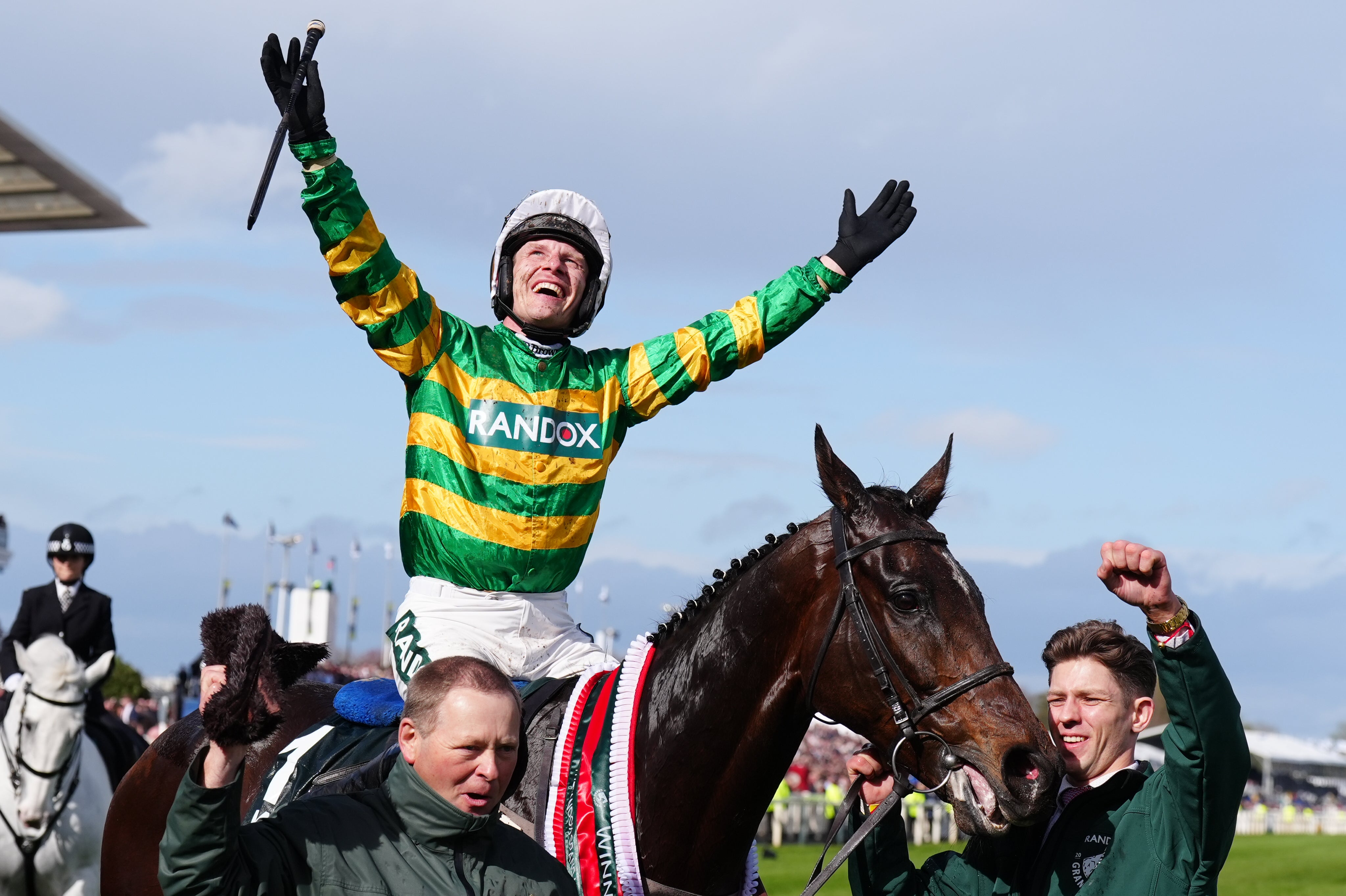
The firm accepted the significant bet on the Willie Mullins-trained, JP McManus-owned horse at odds of 8-1. I Am Maximus, ultimately the heavily-backed 9-2 victor, emulated legendary Red Rum by regaining his Aintree crown.
Johnny Dineen, a well-known pundit and personality who was fronting the Fitzwilliam pitch, highlighted the magnitude of the transaction.
He told the Press Association at the time: “It’s the biggest bet we’ve ever taken, £100,000 at 8-1. It’s our biggest bet by a mile and we’ll have to try to trade some of it off in the ring.”
Mr Byrne, who also owns the Irish Grand National winner Solider In Milan – himself considered a leading contender for Aintree honours next year – confirmed that his firm successfully managed to trade away some of their liability prior to the race’s start.
Speaking on Racing TV’s Luck On Sunday programme, Byrne said: “It was a real bet. Someone wanted to back the horse – 8-1 was freely available, there was 9-1 in places and I thought it was an opportunity to get the bet away.
“I thought there was a way to trade your way out of the bet. There was about three hours before the race. At the time the exchanges were looking full of opportunities to get away at a bigger price.
“In that opportunity you’re looking to get away and maybe either row in behind the punter. At that level you could have I Am Maximus running for £50,000, maybe £100,000 for free in an ideal world. It didn’t work out like that!
“So it was panic stations come the end just to get rid of the money and I think that was most likely the reason for the SP.
“I was surprised how weak the market became for our marquee race. I would say that if there was a delay to the start he would have gone off even shorter.
“When we took the bet there was a little over 10-1 available on the exchanges for a couple of thousand a box.
“We had pretty good avenues and outlets (to trade the bet) and called in them all. And at the finish it was a scramble whether we wanted him to win or lose.
“It wasn’t this romantic way to say the bookmaker’s going to lose £800,000. That was never the idea, it was to get the bet away, (although) I’d be lying if I said I didn’t think of the business itself as well, that it looks good, there’s no point saying otherwise.”