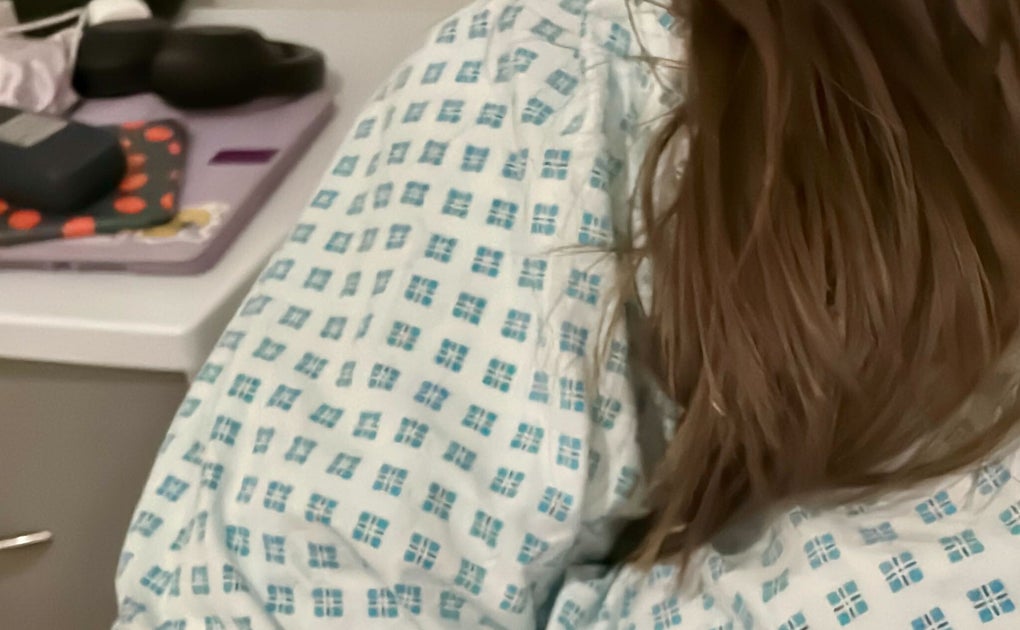

Despite Being Diagnosed And Treated, Endometriosis Still Rules My Life
Back in 2012, at the age of 21, I was finally diagnosed with endometriosis, a whole nine years after I had started to display symptoms. I had spent my school years with heavy periods that would soak through uniforms; wearing multiple sanitary towels to get through back-to-back lessons and fainting during PE lessons.
When I was finally diagnosed via laparoscopic surgery, I was told that I had stage 4 endometriosis and that it was unlikely that I’d ever conceive. I was also informed that my ovaries, uterus and bowel were ‘glued’ together with endometriosis lesions and I’d need surgery to remove them.
At the time I was told that this diagnosis and upcoming treatment was ‘gold standard’ and that I was ‘lucky’. While I understand that being diagnosed is incredibly difficult – according to Endometriosis UK, it takes on average 8 years and 10 months – I didn’t feel lucky. I felt scared but hoped that treatment would give me my life back.
In 2013, I was finally operated on and for a while, thought that the worst days of endo were behind me.
Endometriosis cannot be cured, though
The sad thing is, my story with endometriosis was just starting and I would battle for years to come to get the accommodations I needed in the workplace.
I am very skilled at what I do and I LOVE my job but when an endometriosis flare hits, I’m just not my usual super-capable self. Lil-lets describe endo flare ups as: “Endometriosis flare-ups are bursts of intense endometriosis symptoms. Increased pain is the most common symptom and flare-ups can be debilitating and unexpected.”
Which is about right. For me, it’s increased pain and sensitivity as well as fatigue. It gets really rough and the only thing I can do is take painkillers and rest, which contrasts with my usually busy professional work life.
What I’ve found is that oftentimes, employers aren’t as understanding as they would maybe like to portray that they are. I have been asked when this condition will be cured (never), how I can predict a flare up (I can’t) and if a hysterectomy is worth considering (beyond inappropriate to ask).
The sad fact of the matter is, many of us feel like we don’t matter to our employers if we are experiencing intense endo symptoms. Not even high-flyers are safe.
In fact, Sanju Pal was a high-flyer – ambitious and successful, she won the Asian Woman of Achievement Award, met the late Queen Elizabeth, had been invited to 10 Downing Street because of her work. However, when she was recovering from surgery to remove endometriosis cysts, she lost her job due to not meeting performance targets.
Speaking to the BBC, she said: “I wasn’t a high performer anymore, according to them, because I had a disability, because I was unwell and wasn’t going to be contributing to the business in the way that I had been before.”
Sanju is far from alone. In fact, according to Endometriosis UK, one in six women and those assigned female at birth with endometriosis have to leave the work place due to their condition.
The charity adds: “This is unacceptable and it’s vital that Governments and employers take action to protect those with endometriosis from unfair practices in the workplace.
“Nobody should face discrimination at work or risk losing their job because of their endometriosis, and we’re determined to work with employers and Governments to ensure this isn’t the case.”
I mourn what my career could have been without endometriosis
For the past seven years, I have worked on a self-employed basis and it has been tremendously helpful in managing my illness, as well as the debilitating bout of fibroids that I also experienced.
I am proud of what I’ve achieved in my career and know that I am great at what I do. I also really miss being part of a team, part of a workforce working together to one goal but I do still live in fear of discrimination all these years later as despite multiple surgeries, the condition is still present in my body and I still experience flare-ups.
There is some small progress in this area, though. Sanju won her employment tribunal against the employers that sacked her following surgery, offering hope for future workplace protections.
Additionally, Endometriosis UK are offering employers the opportunity to learn more about the condition so that they can better support their staff with Menstrual Health at Work resources.
I hope things get better soon.
Help and support:
- Mind, open Monday to Friday, 9am-6pm on 0300 123 3393.
- Samaritans offers a listening service which is open 24 hours a day, on 116 123 (UK and ROI – this number is FREE to call and will not appear on your phone bill).
- CALM (the Campaign Against Living Miserably) offer a helpline open 5pm-midnight, 365 days a year, on 0800 58 58 58, and a webchat service.
- The Mix is a free support service for people under 25. Call 0808 808 4994 or email help@themix.org.uk
- Rethink Mental Illness offers practical help through its advice line which can be reached on 0808 801 0525 (Monday to Friday 10am-4pm). More info can be found on rethink.org.