
Dogs Could Help Crack Cancer’s Deadliest Secret Before Symptoms Strike | The Animal Rescue Site
Matthew Russell
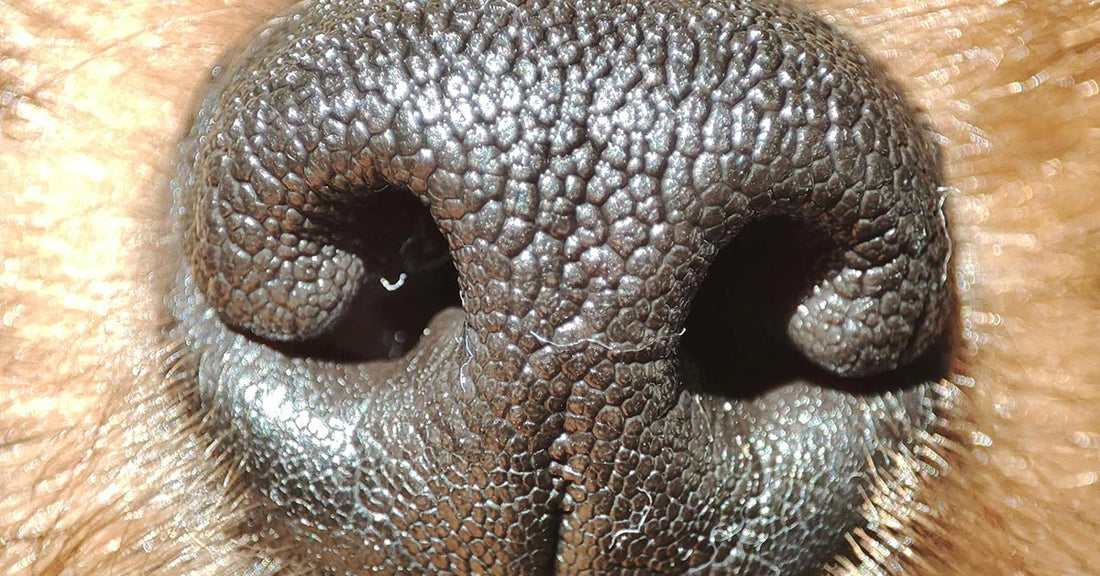
Dogs may be pointing scientists toward one of the simplest ideas in cancer screening: the human breath may carry warning signs of disease long before a patient feels sick.
The EPA says researchers are studying how trained dogs sort exhaled breath aerosol samples into cancer and non-cancer groups, then trying to identify the chemicals behind those decisions in the lab.

Dogs may help scientists spot cancer sooner.
What Dogs Smell That Humans Cannot
Cancer can alter the body’s chemistry. Those changes may release volatile and semi-volatile compounds that drift out in breath. In an early pilot study published in PubMed, ordinary household dogs were trained within weeks to distinguish breath samples from people with lung and breast cancer from samples taken from controls. That work helped establish a striking idea: disease may have an odor signature, and dogs can find it.
Later studies pushed that idea further. A 2021 study published in BMC Cancer via PMC found that trained dogs could identify lung cancer patients from breath and urine samples, while also making clear that researchers still need to pinpoint the exact compounds involved before this can become a standard non-canine test.

A dog’s nose could open a new path to early screening.
Why Breath Samples Matter
Breath has obvious appeal. It is simple to collect, painless, and far less burdensome than many medical procedures. In research published in the Journal of Aerosol Science via PMC, scientists described a non-invasive way to capture exhaled breath aerosol directly from respirators and disposable hospital masks. That matters because it gives researchers a practical way to gather biological material for both canine scent work and chemical analysis.
Another study, published in Journal of Breath Research via PMC, found evidence that low-volatility compounds in exhaled breath aerosol can help sort biological samples into distinct groups. That finding suggests dogs may not just be reacting to a vague smell. They may be detecting a real chemical pattern that instruments could eventually learn to recognize.

Cancer can leave clues in human breath that dogs can smell.
From Canine Nose To Cancer Screening Tool
The field is moving beyond proof of concept. A 2024 study in Scientific Reports evaluated a double-blind, non-invasive multi-cancer screening method that combined trained detection dogs with artificial intelligence to analyze breath samples from 1,386 participants. The goal was not to put dogs in every clinic. It was to use their extraordinary sensing ability as a bridge to something scalable.
That is what makes this research so compelling. Dogs may never replace oncologists, scans, or biopsies. But they could help scientists decode the breath-based signals of cancer earlier than current symptoms allow. If that happens, one of medicine’s most powerful new screening ideas may start with an old companion lowering its nose to a sample and refusing to move.

Read more articles by Matthew Russell.