
Diego Maradona’s childhood home transformed into a soup kitchen
In an unlikely turn of events, the humble birthplace of Argentine football legend Diego Maradona has become a vital community hub, with hundreds queuing weekly for food.
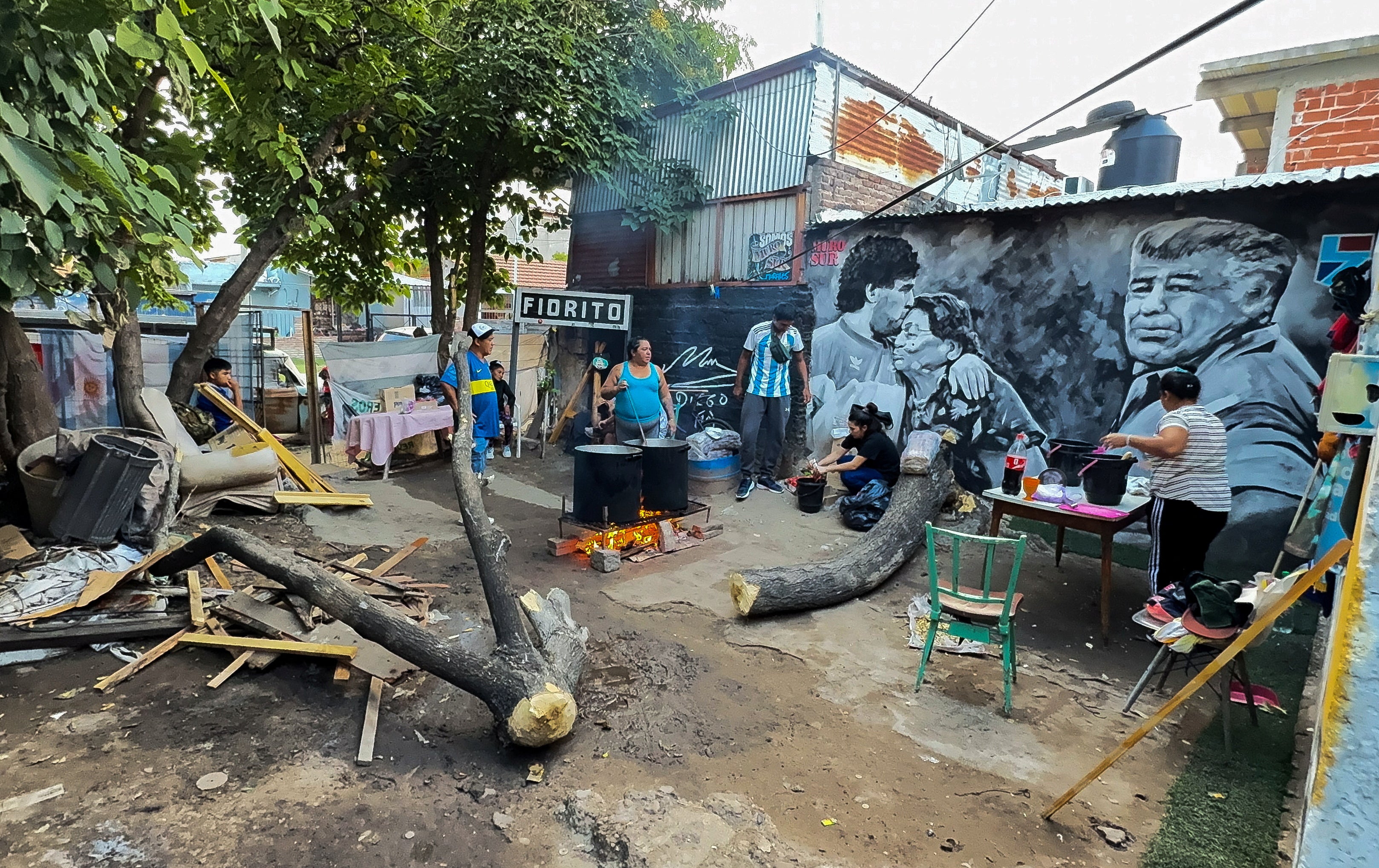
The house in Villa Fiorito, a deprived neighbourhood on the outskirts of Buenos Aires, no longer belongs to Maradona’s family, but its current owner has lent the unpaved yard to volunteers.
Here, a grill is lit and meals are cooked for neighbours. Last Thursday, Maria Torres stirred stew in large pots while others peeled potatoes and chopped chicken. A mural on the house’s facade depicts the footballer alongside the words, “The house of God.”
This initiative unfolds against a backdrop of fluctuating economic fortunes in Argentina.
Official statistics indicate poverty is on a downward trend, dropping to 31.6 per cent in the first half of 2025 from 52.9 per cent in the first half of 2024, following President Javier Milei’s sharp devaluation of the peso and a spike in inflation. Figures for the second half of 2025 are due on Tuesday.
Eduardo Donza, a sociologist at the Catholic University of Argentina, acknowledged a “very important drop” in poverty but stressed the need for GDP growth in labour-intensive sectors like mining, rather than capital-intensive agriculture.
The poverty rate decline has coincided with a substantial fall in monthly inflation, from double digits when Mr Milei took office to 2.9 per cent in February.
However, Mr Milei’s austerity measures have significantly reduced the public sector workforce, and many report a loss of purchasing power due to cuts in transportation and energy subsidies.
Leonardo Fabian Alvarez, a pastor running the makeshift soup kitchen, has witnessed growing demand in Villa Fiorito as small factories close. Deregulation and a stronger peso have led to cheaper imports under the current administration.
“People obviously lost their jobs,” he said, adding that “they come to the line, pick up food, take what we give them.”
Maradona’s home was declared a national historic site in 2021.