Iranian official says nuclear talks will continue after US, Tehran negotiations had ‘a good start’ in Oman


NEWYou can now listen to Fox News articles!

Iranian Foreign Minister Abbas Araghchi said that indirect nuclear talks with the U.S. in Oman were “a good start” and that there was a “consensus” that the negotiations would continue.

“After a long period without dialogue, our viewpoints were conveyed, and our concerns were expressed. Our interests, the rights of the Iranian people, and all matters that needed to be stated were presented in a very positive atmosphere, and the other side’s views were also heard,” Araghchi said.

“It was a good start, but its continuation depends on consultations in our respective capitals and deciding on how to proceed,” he added.

IRAN’S KHAMENEI STAYS AWAY FROM TALKS AS JD VANCE SAYS DYNAMIC MAKES DIPLOMACY ‘MUCH MORE COMPLICATED’
Iranian official says nuclear talks will continue after US, Tehran negotiations had ‘a good start’ in Oman

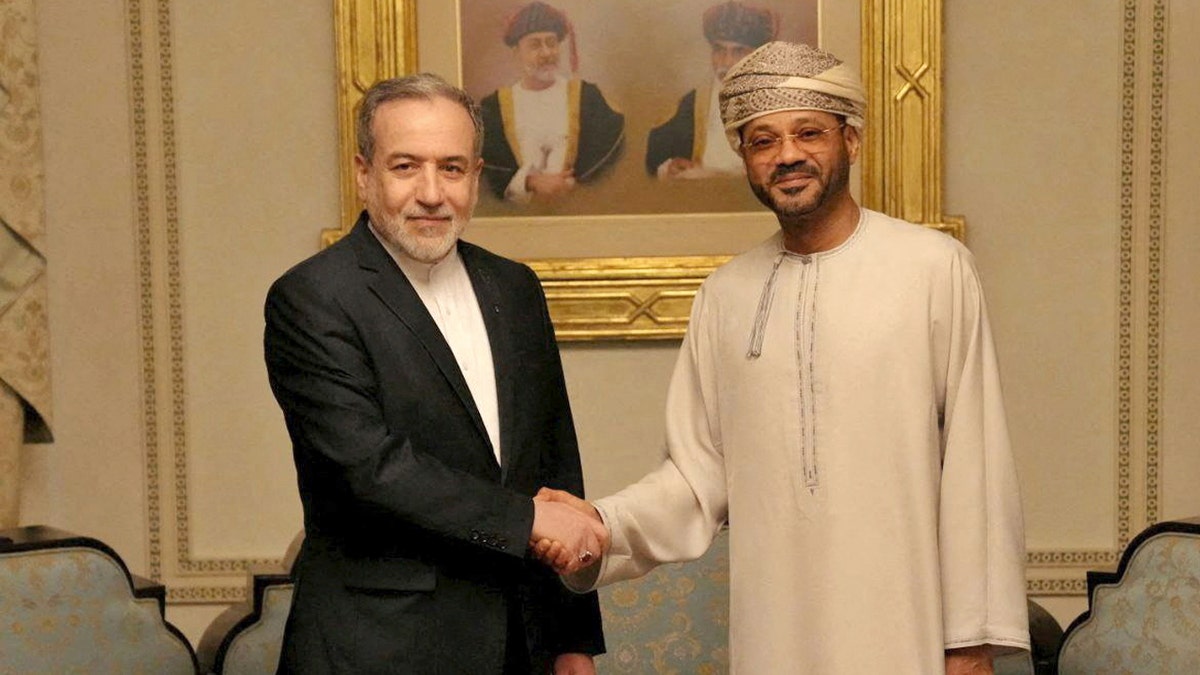
Iranian Foreign Minister Abbas Araghchi meets with Omani Foreign Minister Badr al-Busaidi in Muscat, Oman, Feb. 6, 2026.  (Iranian Foreign Ministry/WANA (West Asia News Agency)/ Handout via Reuters)

Oman’s foreign minister Badr al-Busaidi met with both Iranian and American officials on Friday, the Foreign Ministry of Oman said on X. The ministry said that al-Busaidi held separate meetings with Araghchi and U.S. special envoy Steve Witkoff and Jared Kushner.

“The consultations focused on preparing the appropriate conditions for resuming diplomatic and technical negotiations, while emphasizing their importance, in light of the parties’ determination to ensure their success in achieving sustainable security and stability,” the Foreign Ministry of Oman said.

Oman reportedly put out a public statement acknowledging the talks after journalists with The Associated Press saw Iranian and American officials separately visit the palace, the outlet reported. The AP said it was not immediately clear if talks were done for the day, but noted that the palace was empty after the convoys left.

The Iranian representatives reportedly met with al-Busaidi first, and only after their convoy left the palace did another set of vehicles arrive, one of which had an American flag, according to the AP. The outlet said the SUV flying the American flag stayed at the palace for an hour and a half.
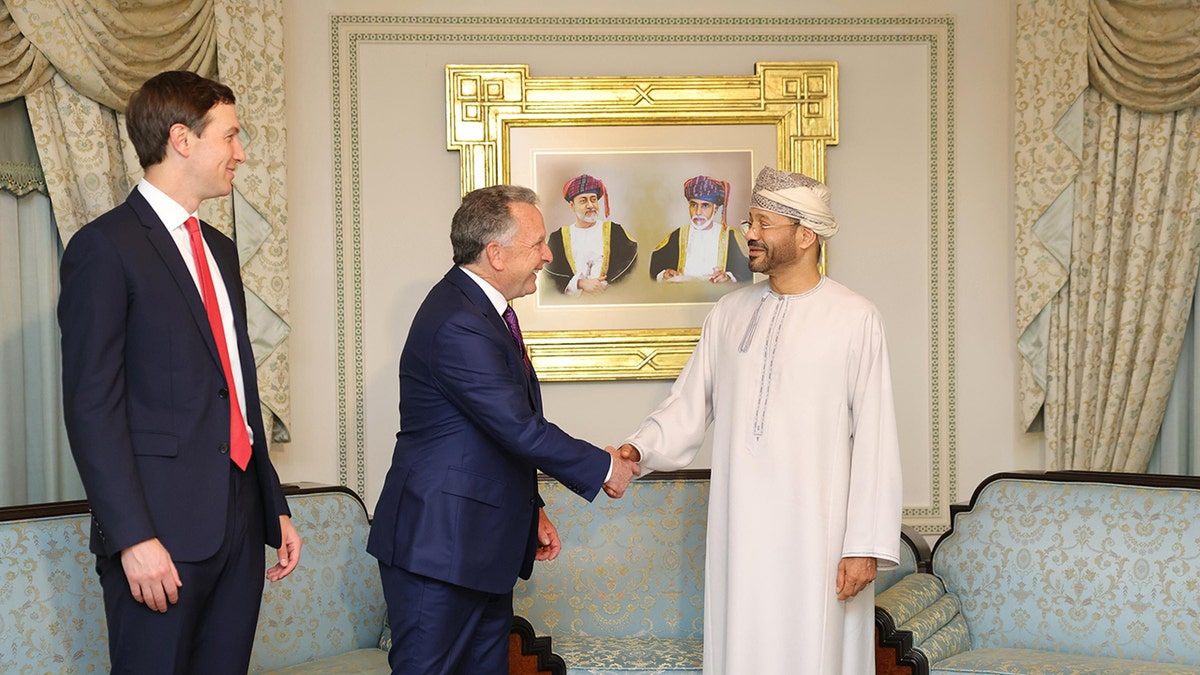
Witkoff, Kushner in Oman for Iran talks

Omani foreign minister Sayyid Badr Hamad Al Busaidi, U.S. special envoy Steve Witkoff and U.S. negotiator Jared Kushner meet ahead of the U.S.-Iran talks, in Muscat, the capital of Oman, on Feb. 6, 2026.  (Oman Foreign Ministry/Anadolu via Getty Images)

TRUMP SAYS IRAN ALREADY HAS US TERMS AS MILITARY STRIKE CLOCK TICKS

The talks were initially set to take place in Turkey, but were later moved, according to Secretary of State Marco Rubio, who confirmed the change in venue on Wednesday.

“We thought we had an established forum that had been agreed to in Turkey. It was put together by a number of partners who wanted to attend and be a part of it,” Rubio said when taking questions from reporters on Wednesday.

“I saw conflicting reports yesterday from the Iranian side saying that they had not agreed to that. So, that’s still being worked through. At the end of the day, the United States is prepared to engage in, has always been prepared to engage with Iran.”

Iranian officials also reportedly tried to limit the talks to a bilateral U.S.-Iran format, excluding other Arab and regional countries, according to Axios.
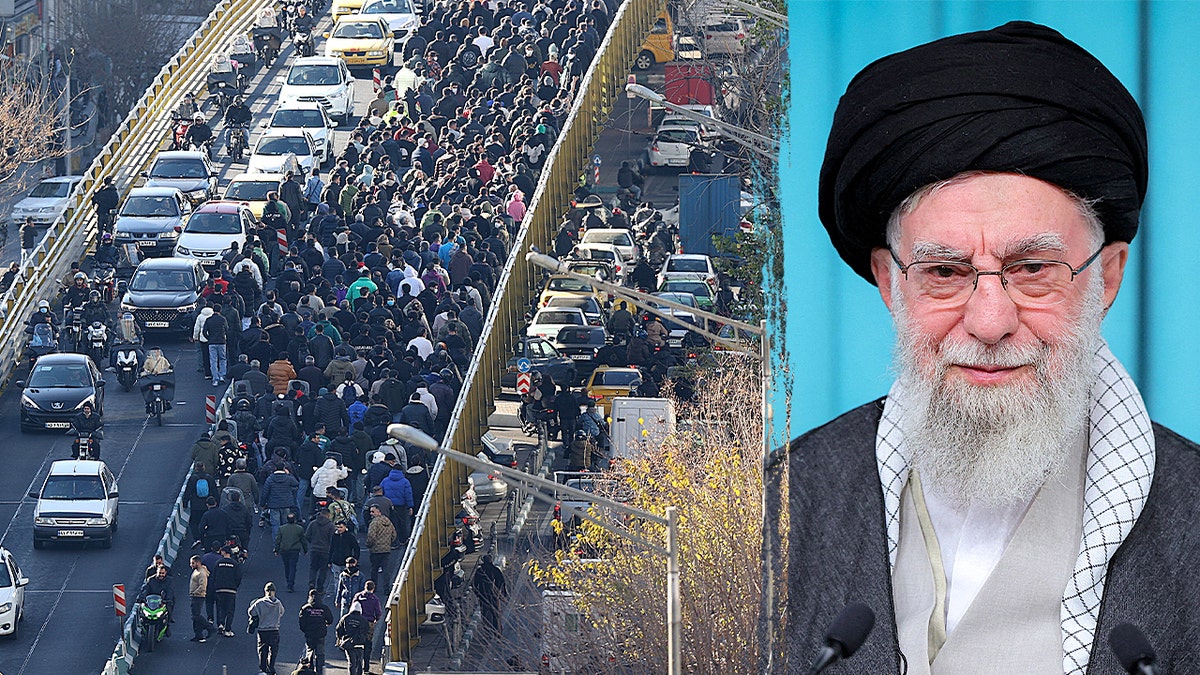
Iran protests and Khamenei

Supreme Leader Khamenei announces new Revolutionary Guard appointment while central bank chief resigns amid protests. (Fars News Agency via AP/Office of the Iranian Supreme Leader/WANA/ Reuters )

RUBIO CONFIRMS IRAN DEMANDED VENUE CHANGE FOR NUCLEAR TALKS

Tensions between Iran and the U.S. have been high since Washington bombed Tehran’s nuclear facilities in the summer of 2025. Things escalated further as the U.S. condemned Iran’s treatment of anti-regime protesters, with President Donald Trump threatening to act if government actors used violence against demonstrators.

Trump recently said in an interview with NBC News that Iranian Supreme Leader Ayatollah Ali Khameni “should be very worried,” though the president acknowledged that the two countries were “negotiating.”

split of Trump and Khamenei

A former Iranian political prisoner said Trump is “the only U.S. President who is not afraid of [the Iranian] regime.” (Majid Saeedi/Getty Images; Yuri Gripas/Abaca/Bloomberg via Getty Images)

CLICK HERE TO DOWNLOAD THE FOX NEWS APP

When pressed about why he has not followed through on threats to take action if the regime used violence against protesters, Trump said that the U.S. “had their back” and that the “country’s a mess right now because of us,” referring to the strikes on Iran’s nuclear facilities. Trump also told NBC News that the U.S. had learned that Iran was attempting to build a new nuclear site in a different part of the country.

The president said that he issued a threat that if Iran were to build a new nuclear facility, the U.S. would “do very bad things.”

It is not immediately clear whether there will be more discussions over the course of the weekend or if there are any plans for direct discussions between Iranian and American officials.

The State Department did not immediately respond to Fox News Digital’s request for comment.


Tributes paid to pilot Arian Abbasi killed in Rochdale light aircraft crash


Tributes have been paid to a pilot who was killed in a light aircraft crash earlier this week. 

Arian Abbasi, 36, was one of two men onboard an aircraft when it crashed into farmland in near Rochdale, Greater Manchester, on Tuesday.

Both men were pronounced dead at the scene.

Police are continuing to comb through the area to find the device that should have deployed his parachute.

Tributes paid to pilot Arian Abbasi killed in Rochdale light aircraft crash
Image:
Flying was Mr Abbasi’s “passion”, his family said in a tribute. Pic: Greater Manchester Police

On Friday the family of Mr Abbasi, from Harrow, London, described him as a “a deeply loving father and a devoted husband.”

The tribute went on: “He lived his life for his family and friends, giving them his constant love, strength, and support.”


Two dead after light aircraft crash

He was due to start his career as a commercial airline pilot on February 23.

“Flying was his passion,” his family added, calling it “a dream he had worked toward with immense pride and determination.”

The aircraft had taken off earlier that morning from Birmingham.

The pair were reportedly flying in a Cirrus SR20, which is fitted with a parachute system designed to deploy in an emergency.

Read more from Sky News:
Police carry searches at Mandelson addresses
Summer camp leader jailed for sexually assaulting children

Photos shared on social media after the crash appeared to show a yellow parachute partly wrapped around the base of an electricity pylon.

Police are still searching for the parachute’s propellant – which is crucial for its deployment.

A Greater Manchester Police spokesperson said: “The nature of the terrain, and the wide area over which it may have travelled, has made finding the device very difficult.

“The device measures approximately 10cm in diameter and 30cm long and has a red anodised finish.

“It weighs less than 2kg. It may have a silver metal collar attached at one end.”

Officers urged people to contact the police immediately if they find the device – via 101 or at gmp.police.uk, quoting log 1056 of 03/02/26 – and not to handle it.


Outrage over video shared by Trump showing Obamas as apes


Donald Trump has been accused of “disgusting behaviour” after sharing a video depicting Barack and Michelle Obama as apes.

The depiction appears towards the end of the video shared by the president, asserting debunked claims that the 2020 election – which he lost to Joe Biden – was stolen from him.

Posted on Mr Trump’s own social media network, Truth Social, the two-second clip shows the Obamas as apes bobbing up and down to the tune of “The Lion Sleeps Tonight”.

The post was later deleted – around 12 hours after being posted.

A White House official said a member of staff “erroneously made the post” and it has now been taken down.

In a message on X, formerly Twitter, Gavin Newsom, the Democratic governor of California, accused the president of “disgusting behaviour” over the post.

He added: “Every single Republican must denounce this. Now.”

Ben Rhodes, who served as deputy national security adviser in the Obama White House, reacted to the video by calling Trump “a stain on our history”.

“Let it haunt Trump and his racist followers that future Americans will embrace the Obamas as beloved figures while studying him as a stain on our history,” he wrote on X.

George Conway – ex-husband of Kellyanne Conway, who managed the president’s successful election campaign in 2016 – responded by highlighting an article he’d written describing Trump as a “racist” in 2019.

The group Republicans Against Trump wrote: “There’s no bottom.”


Is Trump administration ‘normalising misogyny’?

Before the post was removed, White House press secretary Karoline Leavitt defended it and said the depiction formed part of a longer video depicting various politicians as animals.

She said: “This is from an internet meme video depicting President Trump as the King of the Jungle and Democrats as characters from The Lion King.

“Please stop the fake outrage and report on something today that actually matters to the American public.”

Mr Trump has a long history of attacking Mr Obama, his predecessor as president, and was a vocal proponent of the “birther” conspiracy theory.

The theory cast doubt on Mr Obama’s birth in Hawaii, asserting that he was actually born in Kenya, and therefore ineligible to hold the office of president.

Mr Obama produced his long-form birth certificate in 2011. In 2016 Mr Trump publicly accepted that his predecessor was born in the USA.


The truth about energy: why your 40s feel harder than your 20s, but there may be a lift later on


Some of us remember having more energy in our 20s. We could work late, sleep badly, have a night out, recover quickly and still feel capable the next day. By our 40s, that ease has often gone. Fatigue feels harder to shake. It’s tempting to assume this is simply the ageing process – a one‑way decline.

The truth is that the 40s are often the most exhausting decade, not because we are old, but because several small biological changes converge at exactly the same time that life’s demands often peak. Crucially, and optimistically, there is no reason to assume that energy must continue to decline in the same way into our 60s.

Energetic 20s

In early adulthood, multiple systems peak together.

Muscle mass is at its highest, even without deliberate training. As a metabolically active tissue, muscle helps regulate blood sugar and reduces the effort required for everyday tasks. Research shows that skeletal muscle is metabolically active even at rest and contributes substantially to basal metabolic rate (the energy your body uses just to keep you alive when you’re at rest). When you have more muscle, everything costs less energy.

At the cellular level, mitochondria – the structures that convert food into usable energy – are more numerous and more efficient. They produce energy with less waste and less inflammatory byproduct.

Sleep, too, is deeper. Even when sleep is shortened, the brain produces more slow‑wave sleep, the phase most strongly linked to physical restoration.

Hormonal rhythms are also more stable. Cortisol, often described as the body’s stress hormone, melatonin, growth hormone and sex hormones follow predictable daily patterns, making energy more reliable across the day.

Put simply, energy in your 20s is abundant and forgiving. You can mistreat it and still get away with it.

Exhausting 40s

By midlife, none of these systems has collapsed, but small shifts start to matter.

Muscle mass begins to decline from the late 30s onwards unless you exercise to maintain it. This in itself is a top tip – do strength training. The loss of muscle is gradual, but its effects are not. Less muscle means everyday movement costs more energy, even if you don’t consciously notice it.

Mitochondria still produce energy, but less efficiently. In your 20s, poor sleep or stress could be buffered. In your 40s, inefficiency is exposed. Recovery becomes more “expensive”.

Sleep also changes. Many people still get enough hours, but sleep fragments. Less deep sleep means less repair. Fatigue feels cumulative rather than episodic.

Hormones don’t disappear in midlife – they fluctuate, particularly in women. Variability, not deficiency, disrupts temperature regulation, sleep timing and energy rhythms. The body copes better with low levels than with unpredictable ones.

Then there is the brain. Midlife is a period of maximum cognitive and emotional load: leadership, responsibility, vigilance and caring roles. The prefrontal cortex – responsible for planning, making decisions and inhibition – works harder for the same output. Mental multitasking drains energy as effectively as physical labour.

This is why the 40s feel so punishing. Biological efficiency is beginning to shift at exactly the moment when demand is highest.

The truth about energy: why your 40s feel harder than your 20s, but there may be a lift later on
Midlife is often a time of maximum cognitive load.
Krakenimages/Shutterstock.com

Hopeful 60s

Later life is often imagined as a continuation of midlife decline; however, many people report something different.

Hormonal systems often stabilise after periods of transition. Life roles may simplify. Cognitive load can reduce. Experience replaces constant active decision‑making.

Sleep doesn’t automatically worsen with age. When stress is lower and routines are protected, sleep efficiency can improve – even if total sleep time is shorter.

Crucially, muscle and mitochondria still adapt surprisingly well into later life. Strength training in people in their 60s, 70s and beyond can restore strength, improve metabolic health and increase subjective energy within months.

This doesn’t mean later life brings boundless energy, but it often brings something else: predictability.

Good news?

Across adulthood, energy shifts in character rather than simply declining. The mistake we make is assuming that feeling tired in midlife reflects a personal failing, or that it marks the start of an unavoidable decline. Anatomically, it is neither.

Midlife fatigue is best understood as a mismatch between biology and demand: small shifts in efficiency occurring at precisely the point when cognitive, emotional and practical loads are at their highest.

The hopeful message is not that we can reclaim our 20-year-old selves. Rather, it is that energy in later life remains highly modifiable, and that the exhaustion so characteristic of the 40s is not the endpoint of the story. Fatigue at this stage is not a warning of inevitable decline; it is a signal that the rules have changed.


Man jailed after stealing 29 Lindt chocolate bunnies


The thief also stole a number of other items from different shops in the city.

A man has been jailed after stealing 29 chocolate bunnies from a supermarket. Jordan Cole, 36, stole the Lindt chocolate bunnies from Sainbury’s in Sidney Street, Cambridge, on Wednesday, January 28.

Between September 30 and January 24, Cole also stole a range of items from Cambridge shops. These included perfume from John Lewis, laundry products from B&M at the Beehive Centre, meat from Aldi, in Newmarket Road, and T-shirts from Hugo Boss, in Market Hill.

He also breached his criminal behaviour order (CBO) by entering the Aldi on Newmarket Road. At Cambridge Magistrates’ Court on Friday, January 30, Cole, of no fixed abode, pleaded guilty to 12 counts of theft and breaching a CBO.

He was sentenced to 24 weeks in prison and ordered to pay £300 in compensation.

PC Alex Thake, who investigated, said: “Cole’s series of thefts caused significant distress and upheaval for businesses and their employees. We take shoplifting offences seriously and will continue to work hard to bring offenders to justice.”

To get more breaking news and top stories delivered directly to your phone, join our new WhatsApp community. Click this link to receive your daily dose of CambridgeshireLive content.

We also treat our community members to special offers, promotions, and adverts from us and our partners. If you don’t like our community, you can check out any time you like. If you’re curious, you can read our Privacy Notice.


David Cameron wins six-year battle for £50,000 swimming pool at his £1.8million Cotswolds home after neighbour accused him of turning garden into ‘tacky Benidorm resort’


Former PM David Cameron has won a six-year battle for a swimming pool after neighbours accused him of creating a ‘tacky Benidorm’ resort in his garden.

The Tory politician, now a member of the House of Lords, first submitted plans back in 2020 so he could take a dip in the garden of his sprawling Cotswolds home.

Lord Cameron withdrew the original scheme after neighbours feared the posh village could be turned into a holiday resort ‘like Benidorm’, but revived the bid in December last year.

Despite one neighbour again complaining of the potential for ‘rowdy’ pool parties, planners approved the scheme yesterday.

Council officials said they considered the neighbour’s concerns but could not ‘assume unreasonable behaviour’ under planning laws.

Lord and Lady Cameron are part of what was once known as the ‘Chipping Norton set’, featuring the likes of Jeremy Clarkson, Elisabeth Murdoch, and Rebekah Brooks, who all live in or around the town.

They originally bought the detached family home in 2001 for £788,000. According to Rightmove, the home is currently worth up to £1.8million.

Locals feared the addition of a pool to his cottage in the Oxfordshire village, could mean more extravagant parties being hosted there.

Planning official Emile Baldauf-Clark said in the decision notice: ‘One third party objection comment has been received, raising concerns that the proposed swimming pool is unnecessary in a quiet rural village and would lead to unacceptable noise and disturbance from potential pool parties, impacting neighbours’ ability to enjoy their gardens peacefully.

David Cameron wins six-year battle for £50,000 swimming pool at his £1.8million Cotswolds home after neighbour accused him of turning garden into ‘tacky Benidorm resort’

Former PM David Cameron has won a six-year battle for a swimming pool after neighbours accused him of creating a ‘tacky Benidorm’ resort in his garden

Despite one neighbour complaining of the potential for 'rowdy' pool parties, planners approved the scheme at the Oxfordshire home

Despite one neighbour complaining of the potential for ‘rowdy’ pool parties, planners approved the scheme at the Oxfordshire home

A proposed drawing of the swimming pool which was submitted to the council for approval

A proposed drawing of the swimming pool which was submitted to the council for approval

‘The objector also expresses a general concern regarding neighbourliness and the potential for increased disruption arising from the development.’

But Ms Baldauf-Clark said the amended scheme was acceptable and added: ‘While the introduction of a swimming pool may lead to a marginal increase in activity within the garden, the pool is positioned a substantial distance from neighbouring dwellings and is contained within a large semi-rural/residential plot.

‘Given this level of separation, the presence of established landscaping, and the domestic nature of the proposal, any additional noise is expected to be low level, infrequent and typical of an established residential use. It would not be at a level that would materially harm the quiet enjoyment of neighbouring properties.

‘The concerns raised regarding potential noise from gatherings have been considered, however the planning system cannot assume unreasonable behaviour.

‘The proposal does not introduce an intensity of use that would be expected to cause demonstrable harm to residential amenity.’

Cameron’s new pool will measure 13.7 x 4 metres with a depth of 1.6 metres. The application also included two extensions to the home that were also passed.

In a previous complaint over Cameron’s pool plans to West Oxfordshire District Council back in 2020, one neighbour said: ‘As a local I feel I must object to this plan.

‘Swimming pools are totally out of keeping with the local area.

Locals feared the addition of a pool to his Oxfordshire cottage could mean more extravagant parties being hosted there

Locals feared the addition of a pool to his Oxfordshire cottage could mean more extravagant parties being hosted there

‘This plan will cause noise from machinery to heat and filter the pool, light pollution, and most importantly, noise pollution from rowdy pool parties going on into the night.

‘Why can’t people just enjoy the character and charm of the Cotswolds without trying to turn their gardens into some kind of tacky Benidorm resort?’

But in a design and access statement to support the latest plan, Cameron’s representatives wrote: ‘Reflecting on the 2020 proposal, the design and siting has been carefully considered so that the pool is part and parcel of the house and its gardens, thereby not encroaching into the wider landscape.

‘The swimming pool is a minimalist and functional design. It will have a small stone surround but otherwise the surrounding lawn will remain unchanged. 

‘The nature of a swimming pool is that it is embedded into the ground; therefore, there will be no physical or appreciable presence of the swimming pool from outside of the property curtilage.

‘The only minor visible change will be the provision of a small retaining wall and steps which would be wholly in keeping with the existing retaining wall closer to the dwelling.

‘Beyond the immediate surrounds of the pool, the garden is enclosed/screened by tree belts and existing hedgerows.

‘The premise behind the proposals is simply that the applicants wish to enhance the enjoyment of the dwelling of their home, undertaking the works in a sensitive and minimalist manner. 

‘The intention is to provide a provide a swimming pool whilst respecting the local area and character and also their neighbours’ privacy and amenity

‘For the reasons set out above we consider that the proposed extension and swimming pool have been carefully considered and designed to respect the constraints of the site.

‘They would provide owners of the property with the additional space and facilities they require whilst preserving the historic value of the site and not harming the National Landscape or amenity of neighbours.’

The council approved applications for a 1.5 storey extension and a single storey side extension.


Starmer’s Premiership Is Hanging By A Thread Over The Mandelson Scandal. How Did We Get Here?


Keir Starmer’s premiership is hanging by a thread this weekend as new details about Peter Mandelson’s friendship with the convicted paedophile Jeffrey Epstein continue to drip into the public consciousness.

When the prime minister sacked Mandelson as the UK’s ambassador to Washington over his Epstein ties in September, he must have hoped the scandal was dealt with. The events of the past week show how wrong he was.

The latest chapter in the saga was triggered by the US Department of Justice publishing more than three million documents on the late sex offender and his connections to the rich and powerful.

The files revealed that Mandelson was even more entwined with the disgraced financier than previously assumed – putting Starmer’s judgement in appointing him to the plum diplomatic role into sharp focus.

Amid mounting anger from the public and his own MPs, the prime minister ended up apologising on Thursday for ever believing Mandelson’s “lies”.

Here’s a breakdown of how we got to this point – and what might happen next.

Who Is Peter Mandelson?

Mandelson has been in Labour circles for decades, often referred to as the “Prince of Darkness” because of his ruthless nature, capacity for scandals and love of political intrigue.

He worked as the director of communications to then-party leader Neil Kinnock in the 1980s before being elected as the Labour MP for Hartlepool in 1992.

A key architect of the New Labour project, he helped Tony Blair win the party leadership in 1994 and ran Labour’s successful general election campaign in 1997.

Blair rewarded Mandelson with the post of minister without portfolio, a roving commission which gave him enormous power over the government machine.

However, the personal frailties – and the attraction to money – which would later bring about his downfall led to his resignation after barely a year when he failed to declare a loan from a cabinet colleague whose business dealings Mandelson’s own department was investigating.

After a year on the backbenches licking his wounds, Blair brought him back into the cabinet as Northern Ireland secretary the following year, at the time a key role as the peace process faltered.

But once again, barely a year later, Mandelson was forced to resign, this time for lying about his role in brokering a British passport for a wealthy donor to the Millennium Dome project.

After famously declaring he was “a fighter, not a quitter” when retaining his Hartlepool seat in 2001, Mandelson stood down as an MP in 2004 to become a European trade commissioner, a post he held until he made another dramatic political comeback in 2008.

Gordon Brown, who had succeeded Blair the previous year, stunned Westminster by making Mandelson – his New Labour nemesis – a life peer and appointing him business secretary and de facto deputy prime minister.

He finally left frontline politics, apparently for good, when Labour lost the 2010 general election.

Starmer’s Premiership Is Hanging By A Thread Over The Mandelson Scandal. How Did We Get Here?
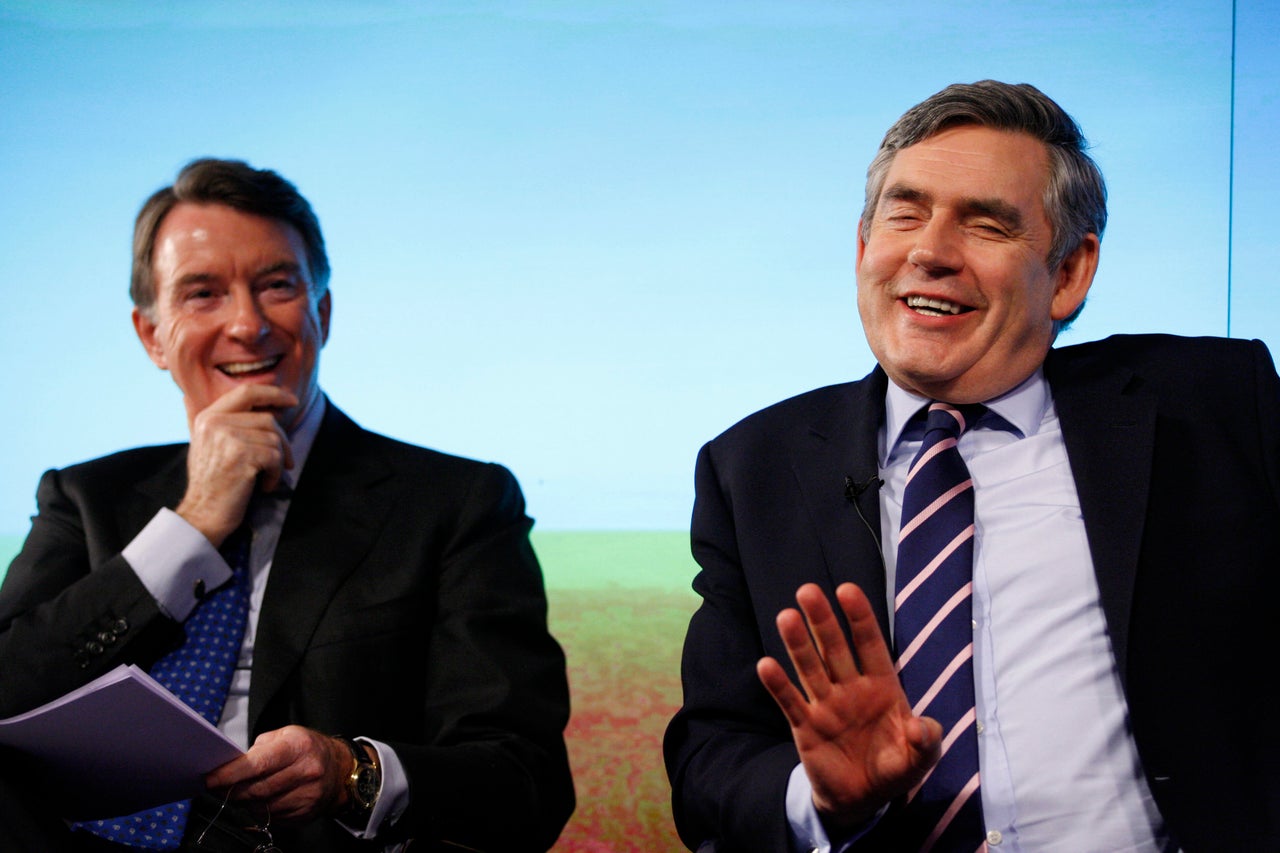
Ex-Prime Minister and Labour Party leader, Gordon Brown, right, and then-Business Secretary Peter Mandelson react as they speak to the media about economy in a press conference in London, Monday, April 19, 2010.

How Did Mandelson Come Back Into Government?

Despite his complete lack of diplomatic experience, Mandelson was appointed the UK’s ambassador to Washington a year ago.

He quickly established a rapport with President Donald Trump and was a key figure in negotiations on a UK/US trade deal and technology partnership.

Mandelson also helped to smooth over American concerns around the UK government’s decision to hand sovereignty over the strategically-important Chagos Islands to Mauritius.

His return to the heart of British politics was seen as a reward for his years of behind-the-scenes work with Morgan McSweeney – now Starmer’s chief of staff – to help return Labour to government.

McSweeney is known to have pushed the PM to give Mandelson the ambassador’s role, a judgement call which has intensified calls from Labour MPs for him to be sacked.

What Was Mandelson’s Relationship To Epstein?

The nature of their friendship has come out in drips and drabs over the years. Here’s a breakdown of what is currently public knowledge – and when it was first revealed.

June 2023

A Financial Times report from June 2023 unveiled how an internal JP Morgan report, dating back to 2019, noted Epstein’s “particularly close relationship with Prince Andrew the Duke of York and Lord Peter Mandelson, a senior member of the British government”.

The report was commissioned to shed light on JPMorgan’s 15-year relationship with Epstein and refers to a range of meetings between the disgraced financier and Mandelson.

The dossier also found Mandelson had stayed at Epstein’s lavish townhouse in Manhatten when he was the UK’s business secretary while the convicted criminal was in prison for soliciting underage sex from a minor.

In this image provided by the New York State Sex Offender Registry, Jeffrey Epstein has his photo taken March 28, 2017.

February 2025

Mandelson was appointed as US ambassador in February last year, after going through routine due diligence and security vetting.

When asked about his Epstein connection by the Financial Times’ George Parker during an extensive interview, the former Labour cabinet minister said: “I regret ever meeting him or being introduced to him by his partner Ghislaine Maxwell.”

Maxwell is currently in prison for recruiting and trafficking underaged girls for the financier.

Mandelson added: “I regret even more the hurt he caused to many young women.”

However, according to the FT report, “an icy chill” then descended during their conversation on the train, and Mandelson added: “I’m not going to go into this. It’s an FT obsession and frankly you can all fuck off. OK?”

When later asked about Mandelson’s language, the prime minister’s spokesperson told reporters: “The prime minister has made clear the expertise and the experience Lord Mandelson has in relation to becoming ambassador to the US.”

September 2025

The seeds of Mandelson’s political demise were sown last autumn, when US lawmakers released a tranche of documemts relating to Epstein.

They included a “birthday book” which contained a message from Mandelson in which he described Epstein as his “best pal”.

But it was a further revelation, that Mandelson told Epstein in an email that “your friends stay with you and love you” even as he was facing child underage sex charges in 2008, that proved to be the final straw.

Despite telling MPs that he had “confidence” in his ambassador, Starmer eventually sacked Mandelson, just seven months after appointing him.

“The emails show that the depth and extent of Peter Mandelson’s relationship with Jeffrey Epstein is materially different from that known at the time of his appointment,” the Foreign Office said.

President Donald Trump, left and former UK ambassador to the United States Peter Mandelson, in the Oval Office.

January 2026

Despite being sacked in disgrace, Mandelson appeared poised to make another remarkable comeback thanks to a series of high-profile media appearances at the start of this year.

They included an interview on Sunday with Laura Kuenssberg, the BBC’s flagship political programme.

However, he caused outrage when he failed to apologise to Epstein’s victims, saying only that he was sorry “for a system” which did not listen to victims’ voices.

“That system gave him protection but not them,” he said. “If I had not known, or if I was in any way complicit or culpable, of course I would apologise for it.”

After an angry backlash, Mandelson rowed back the following day, saying: “I did not want to be held responsible for his [Epstein’s] crimes of which I was ignorant, not indifferent, because of the lies he told me and so many others.

“I was wrong to believe him following his conviction and to continue my association with him afterwards. I apologise unequivocally for doing so to the women and girls who suffered.”

February 2026

A new tranche of documents from the US’s Department of Justice (DoJ) came out at the start of February and finally sealed Mandelson’s fate.

They appeared to show he had accepted $75,000 from the disgraced financier between 2003 and 2004, though Mandelson has said he has no recollection of receiving those payments and did not know if the documents were genuine.

But amid mounting public anger, he announced he was quitting the Labour Party to avoid “further embarrassment” last Sunday.

The scandal has only intensified since then, with Mandelson now facing a criminal investigation over allegations he passed market sensitive information to Epstein when he was business secretary and the government was dealing with the aftermath of the global financial crash.

Responding to the revelations, Starmer said Mandelson had “betrayed” Britain.

Other emails show Mandelson and Epstein sharing crude jokes when the latter was released from prison – an occasion described as “Liberation Day” by the peer.

Lord Mandelson described Jeffrey Epstein’s release after he served his sentence for child sex offences as ‘Liberation Day!’

Mandelson asked Epstein how they should celebrate

Epstein responded with a crude joke about two strippers: ‘With grace and modesty (these are the names of… pic.twitter.com/i4WuDmP5ZK

— Steven Swinford (@Steven_Swinford) February 4, 2026

How Has Mandelson Responded?

Mandelson announced last Tuesday that he was quitting the House of Lords, although it will require a special law to be passed to formally remove his title.

In a self-pitying interview with The Times carried out before the latest revelations, he tried to portray himself as a victim over his sacking as US ambassador.

“It was like a 5.30am drive-by shooting,” he said. “I was at the edge of something. Suddenly, I was put at the centre of it — as a result of historical emails of which I have no memory and no record.”

Suggesting he still had a contribution to make to British politics, he said: “Hiding under a rock would be a disproportionate response to a handful of misguided historical emails, which I deeply regret sending.

“If it hadn’t been for the emails, I’d still be in Washington. Emails sent all those years ago didn’t change the relationship that I had with this monster.

“I feel the same about the recent download of Epstein files, none of which indicate wrongdoing or misdemeanour on my part.”

What Happens Next?

After a Labour rebellion, the government has agreed to publish all documents relating Mandelson’s appointment as ambassador.

It’s thought there could be close to 100,000 government files related to the former Labour peer.

The police inquiry into Mandelson is also likely to continue for months, if not years, drawing out the political pain for Starmer and his government.

Scotland Yard confirmed on Friday they are searching two properties in their investigation, but Mandelson has not been “arrested and enquiries are ongoing”.

What Does This Mean For Starmer?

Questions about Starmer’s judgment – which was already in doubt after a slew of government U-turns – have only intensified over the Mandelson scandal.

While the PM says he was lied to by Mandelson, his critics say the warning signs were already there long before the decision was taken to send him to Washington.

Harriet Harman, for the former Labour deputy leader and a party loyalist, told the Electoral Dysfunction podcast: “He’s got to stop blaming Mandelson and saying ‘he lied to me’ because actually he should never have been considering him in the first place.

“And to say ‘he lied to me’ makes it look weak and naive and gullible. So it’s just completely the wrong thing.”

She added: “If he doesn’t take the path which is necessary, yes, this will finish him off and that will be a tragedy for the government, a tragedy for the country and tragedy for Keir Starmer.”

Mutinous Labour MPs believe Morgan McSweeney’s sacking is a necessary first step in repairing the huge political damage caused by the Mandelson scandal.

However, questions about Starmer’s own future continue to swirl, and are only likely to intensify in the days ahead.

One MP told HuffPost UK: “Taking refuge in constituency stuff this weekend seems appealing.

“But trying to pretend it’s all a bad dream for a few days won’t work, as constituents will be taking the chance to make very clear how they feel about Starmer and Mandelson and that’ll end up feeding into things back in parliament next week.”

While his rivals sharpen their knives, Starmer tried to win back public favour by issuing a frank apology on Thursday, telling Epstein’s victims he’s “sorry” for ever believing Mandelson.

Will it be enough to save him, or is this scandal going to bring him down?


Luigi Mangione shouts at judge at hearing: ‘One plus one is two!’


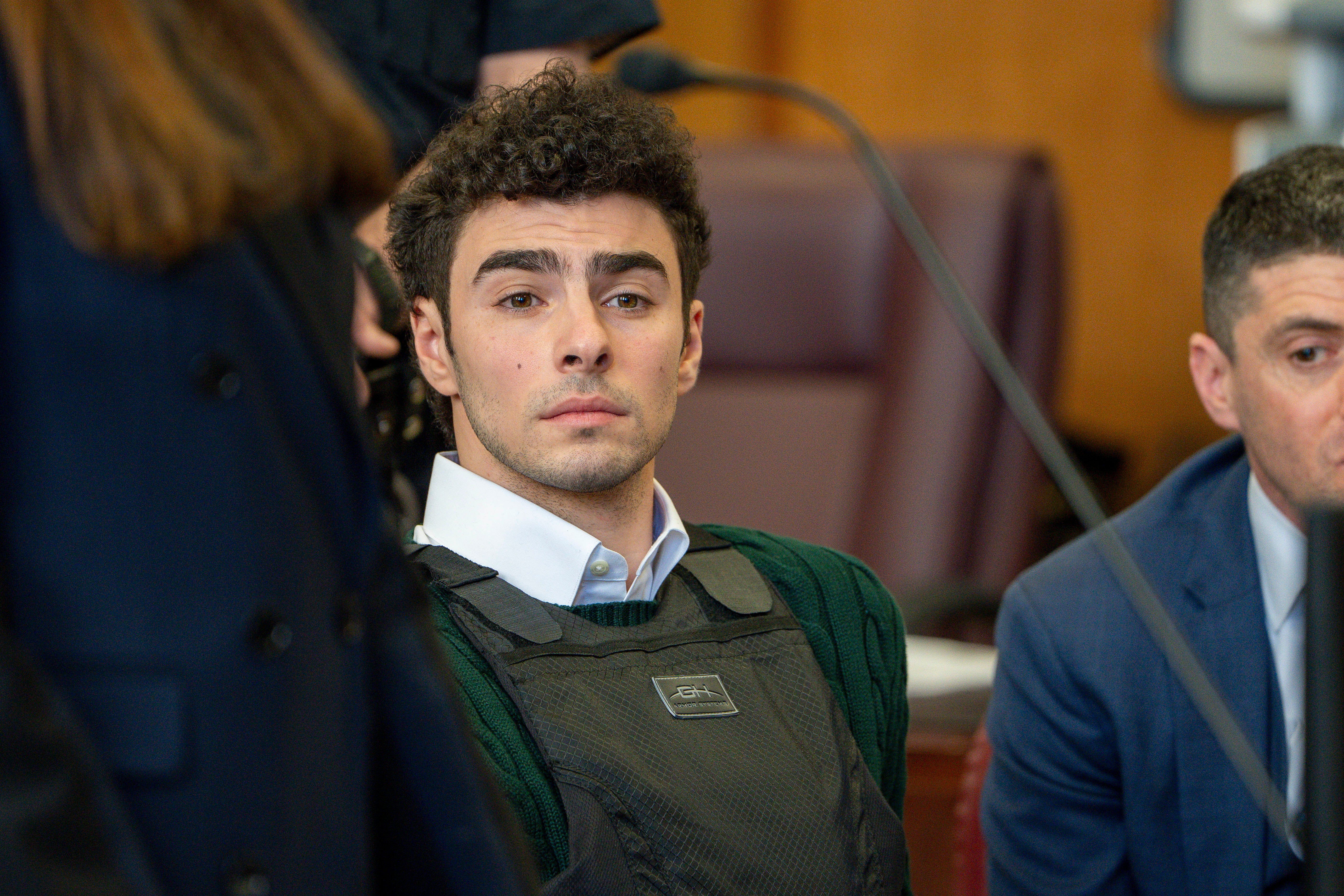
Luigi Mangione shouted at a judge in an emotional outburst in court Friday as a trial date was set over the murder of UnitedHealthcare CEO Brian Thompson.

“It’s the same trial twice,” Mangione yelled as he was led out of court. “One plus one is two. Double jeopardy by any commonsense definition.”

Mangione, 27, made the remarks after the judge scheduled his state murder trial to begin June 8, three months before jury selection in his federal case.

Judge Gregory Carro, matter-of-fact in his decision after a lengthy discussion with prosecutors and defense lawyers at the bench, said the state trial could be delayed until Sept 8 if an appeal delays the federal trial.

Mangione’s lawyers objected to the June trial date, telling Carro that at that time, they’ll be consumed with preparing for the federal trial, which involves allegations that Mangione stalked Thompson before killing him.

Last week, the judge in his federal case ruled that prosecutors can’t seek the death penalty
Last week, the judge in his federal case ruled that prosecutors can’t seek the death penalty (Getty Images)

“Mr. Mangione is being put in an untenable situation,” defense lawyer Karen Friedman Agnifilo said.

“This is a tug-of-war between two different prosecution offices.”

“The defense will not be ready on June 8,” she added.

“Be ready,” Carro replied.

Mangione has pleaded not guilty to state and federal charges, both of which carry the possibility of life in prison. Last week, the judge in the federal case ruled that prosecutors can’t seek the death penalty.

Wearing a tan jail suit, Mangione sat quietly at the defense table until his outburst at the end of the hearing.

Jury selection in the federal case is set for Sept. 8, followed by opening statements and testimony on Oct. 13.

As the trial calendar began to take shape, Manhattan prosecutors last month urged Carro to set a July trial date in the state case.

In a letter, Assistant District Attorney Joel Seidemann asked Carro to begin the New York trial on July 1, arguing that the state’s interests “would be unfairly prejudiced by an unnecessary delay” until after the federal trial.

“It appears the federal government has reneged on its agreement to let the state, which has done most of the work in this case, go first,” Carro said Friday.

Mangione isn’t due in court again in the state case until May, when Carro is expected to rule on a defense request to exclude certain evidence that prosecutors say connects Mangione to the killing.

Those items include a 9 mm handgun that prosecutors say matches the one used to kill Thompson and a notebook in which they say he described his intent to “wack” a health insurance executive.

Last week, the judge in the federal case, Margaret Garnett, ruled that prosecutors can use those items at that trial.

In September, Carro threw out state terrorism charges but kept the rest of the case, including an intentional murder charge.

When Mangione was arrested, federal prosecutors said they anticipated the state case would go to trial first.

Under New York law, the district attorney’s office could be barred from trying Mangione on state murder charges if his federal trial happens first. The state’s double jeopardy protections kick in if a jury has been sworn in a prior prosecution, such as a federal case, or if that prosecution ends in a guilty plea.

Thompson, 50, was killed on Dec. 4, 2024, as he walked to a midtown Manhattan hotel for UnitedHealth Group’s annual investor conference.

Surveillance video showed a masked gunman shooting him from behind. Police say “delay,” “deny” and “depose” were written on the ammunition, mimicking a phrase used to describe how insurers avoid paying claims.

Mangione, a University of Pennsylvania graduate from a wealthy Maryland family, was arrested five days later at a McDonald’s in Altoona, Pennsylvania, about 230 miles (about 370 kilometers) west of Manhattan.


Stellantis CEO says automaker is stronger together as stock plummets amid $26 billion charge


Stellantis CEO Antonio Filosa speaks during an event in Turin, Italy, Nov. 25, 2025.

Daniele Mascolo | Reuters

DETROIT — Stellantis CEO Antonio Filosa on Friday said the automaker plans to move forward as one company amid speculation that it would be better off selling brands or splitting up after disappointing results.

“Stellantis is a very strong global company that is very proud to have very deep regional groups,” Filosa, an Italian native, told reporters during a media call. “It makes all of sense to stay together. We want to stay together for many years to come.”

His comments come hours after the company announced 22 billion euros ($26 billion) in charges from a business restructuring that includes pulling back on electrification plans and reintroducing V8 engines to U.S. models. 

Filosa described the actions as an “important strategic reset of our business model, with the only intention to put our customer preferences back at the center of what we do globally and in each regions.” He said the “mission is to grow” after notable declines in market share in recent years.

Stellantis’ stock plunged more than 20% in Milan and New York markets.

Filosa on Friday did not specifically rule out the possibility of regionally refocusing or shrinking the company’s vast portfolio of 14 auto brands that includes U.S. brands Jeep, Ram and Chrysler, as well as Italian nameplates Fiat and Alfa Romeo, which have not performed well domestically.

Stock Chart IconStock chart icon

Stellantis CEO says automaker is stronger together as stock plummets amid  billion charge

Stellantis-listed shared in Milan and New York

“We want to really manage our brands in the sense to provide to them the products and the technology that our customers, that are now at the center of our strategic reset, will tell us that they want and they need,” he said. “This is our core mission.”

Filosa said additional information about the company’s plans moving forward will come at a May 21 investor day.

Friday’s announcement comes days after Stellantis executives met with the company’s U.S. franchised dealers at their annual National Automobile Dealers Association conference with a message that the automaker planned to grow sales across its U.S. lineup of brands, according to two dealers who attended the meeting.

$26 billion in charges

The majority of Friday’s announced charges — 14.7 billion euros — are related to realigning product plans with consumer preferences and new emission regulations in the U.S.

Other charges include 2.1 billion euros in resizing the company’s EV supply chain, 4.1 billion euros in warranty costs and 1.3 billion euros in restructuring European operations.

The automaker also canceled its dividend for 2026 and issued a 5 billion euro nonconvertible hybrid bond.

2026 Jeep Grand Wagoneer

Jeep

Past mistakes

Stellantis takes €22B hit amid overhaul – shares dive

The merger formed the fourth-largest automaker by volume, but the company has run into significant problems in recent years amid its investments in all-electric vehicles, focus on profits over market share and cost-cutting efforts to the detriment of products.

Stellantis’ global sales under Tavares fell 12.3% from 6.5 million in 2021 — the year the company was formed — to 5.7 million in 2024. That included a roughly 27% collapse in the U.S. in that period to 1.3 million vehicles sold. The automaker dropped from fourth in U.S. sales to sixth, declining from an 11.6% market share to 8% during that time frame.

Stellantis’ global market share has fallen from 8.1% in 2020 to an estimated 6.1% last year, according to S&P Global Mobility.  

Correction: Global market share for Stellantis has fallen from 8.1% in 2020 to an estimated 6.1% last year, according to S&P Global Mobility. An earlier version mischaracterized the percentage.


FACT FOCUS: Trump says tariffs have created an economic miracle. The facts tell a different story


FACT FOCUS: Trump says tariffs have created an economic miracle. The facts tell a different story

By PAUL WISEMAN and CHRISTOPHER RUGABER, AP Economics Writers

WASHINGTON (AP) — Looking back on the first year of his second term, President Donald Trump boasts that he has resurrected the American economy by imposing big import taxes on foreign products.

He made his case in a recent opinion piece in The Wall Street Journal, chiding the paper and critics, including mainstream economists, who predicted that tariffs would backfire, raising prices and threatening growth. “Instead,” the Republican president wrote, “they have created an American economic miracle.”

But the proof he offers is often off-base or wrong altogether.

Here’s a look at the facts around Trump’s assessment of tariffs:

CLAIM: “Just over one year ago, we were a ‘DEAD’ country. Now, we are the ‘HOTTEST” country anywhere in the world!’ ’’

THE FACTS: This is a standard statement from Trump. But the U.S. economy was hardly “dead’’ when Trump returned to office last year. And in Trump’s second term, it’s performed strongly — after getting off to a bumpy start.

In 2024, the last year of the Biden presidency, American gross domestic product grew 2.8%, adjusted for inflation, faster than any wealthy country in the world except Spain. It also expanded at a healthy rate from 2021 through 2023.

The numbers for all of 2025 aren’t out yet. But during the first three quarters of the year, Trump’s tariffs — or the threat of them — delivered mixed results for the American economy.

From January to March, U.S. GDP actually shrank for the first time in three years. The main culprit was easy to identify: a surge in imports, which are subtracted from GDP, as American companies rushed to buy foreign products before Trump could impose tariffs on them.

But growth rebounded in the second half of the year. From April through June, the economy expanded at a healthy 3.8% pace. And from July through September, it grew even faster — 4.4%. A big part of the surge was a drop in imports, likely reflecting Trump’s tariffs as well as the fact that importers had already stocked up at the start of the year. Strong consumer spending also drove economic growth.

Trump also likes point to solid gains in the U.S. stock market. He noted that stocks hit new highs 52 times in 2025. It’s true that the American stock market did well last year. But it underperformed many foreign stock markets. The benchmark S&P 500 index climbed 17% — a nice gain but short of a 71% surge in South Korea, 29% in Hong Kong, 26% in Japan, 22% in Germany and 21% in the United Kingdom.


CLAIM: “Annual core inflation for the past three months has dropped to just 1.4% — far lower than almost anyone, other than me, had predicted.”

THE FACTS: The president is using cherry-picked data to vastly exaggerate where inflation stands.

His figure for annual inflation in the past three months — which excludes the volatile food and energy prices — is low, but reflects data distorted by the government shutdown in October and November, which disrupted the government’s data collection and forced the agency that compiles the figures to plug in rough estimates in some categories that artificially lowered overall inflation.

Annual core inflation for the final six months of 2025 is higher at 2.6%. That is down from January 2025’s level but about where it was in October 2024. Overall, inflation has leveled off this year, and was 3% in September before the government shutdown, the same as it had been in January 2025.

It’s true that inflation hasn’t been as high as many economists worried it would be when Trump started rolling out tariffs last spring, but that is partly because many of the “Liberation Day” tariffs were withdrawn, reduced or riddled with exemptions. When Democrats won some high-profile elections last year by highlighting “affordability” concerns, the administration rolled back existing or planned tariffs on coffee, beef and kitchen cabinets, for example, a backhanded acknowledgment that the duties were raising prices.

The impact of tariffs can be more clearly seen in core goods prices, which also exclude food and energy. Before the pandemic, core goods costs typically barely rose — or even fell — each year, but last December they were 1.4% higher than a year earlier. That was the largest increase, outside the pandemic, since 2011.

Alberto Cavallo, an economist at Harvard and the author of a study on the impact of tariffs cited by Trump in his op-ed, has found that Trump’s tariffs have boosted overall inflation by roughly three-quarters of a percentage point.


CLAIM: “The data shows that the burden, or ‘incidence,’ of the tariffs has fallen overwhelmingly on foreign producers and middlemen, including large corporations that are not from the U.S. According to a recent study by the Harvard Business School, these groups are paying at least 80% of tariff costs.”

THE FACTS: The study Trump cited appears to conclude the opposite of what Trump claimed. Authored by Cavallo and two colleagues, it finds that “U.S. consumers were bearing roughly 43% of the tariff-induced border cost after seven months, with the remainder absorbed mostly by U.S. firms.” Cavallo said by email that import prices hadn’t fallen much, “which suggests foreign exporters did not reduce their pre-tariff prices enough to shoulder a large share of the burden.″


CLAIM: “We have slashed our monthly trade deficit by an astonishing 77%.”

THE FACTS: This claim involves more cherry-picking, reflecting the percentage drop from a very high trade deficit in January 2025, when the president took office, to a super-low deficit in October.

The story is more complicated than the president makes it. The trade deficit — the gap between what the U.S. sells other countries and what it buys from them — has actually risen since he returned to the White House.

From January through November in 2025, the U.S. accumulated a trade deficit of nearly $840 billion, up 4% from the same period of 2024. In the first three months of 2025, importers rushed to buy foreign products — before Trump could slap tariffs on them. After that, monthly trade deficits came in consistently lower than they were in 2024. But the January-March import surge was so big that the 2025 year-to-date trade deficit still exceeds 2024’s.


CLAIM: “I have successfully wielded the tariff tool to secure colossal Investments in America, like no other country has ever seen before. … In less than one year, we have secured commitments for more than $18 trillion, a number that is unfathomable to many.’’

THE FACTS: Trump did, in fact, use the tariff threat to pry investment commitments from America’s major trading partners. The European Union, for instance, pledged $600 billion over four years.

But Trump hasn’t said how he came up with $18 trillion. The White House has published a figure of $9.6 trillion, which includes private and public investment commitments from other countries.