CBP used anti-drone laser before FAA closed El Paso airspace: reports


The sudden shutdown of airspace in Texas earlier this week was due to a lack of communication over the use of an anti-drone laser by U.S. Customs and Border Patrol during an apparent attempt to stop operations by Mexican drug cartels, according to reports.

The use of the laser, sanctioned by the Pentagon but not relayed to aviation authorities, resulted in the sudden closure of the airspace over El Paso, Texas by the Federal Aviation Administration late Tuesday, according to The New York Times.

A Trump administration official told The Independent that Mexican cartel drones “breached” American airspace, though sources close to the matter told The Times that what USCBP officials believed to be a drone turned out to be a party balloon.

Defense Department officials were reportedly present during the incident, the outlet reported. However, the department later claimed that the threat from “drones” were no longer present.

The Independent has contacted the Defense Department, the Department of Homeland Security and the FAA for clarity over the incident.
CBP used anti-drone laser before FAA closed El Paso airspace: reports

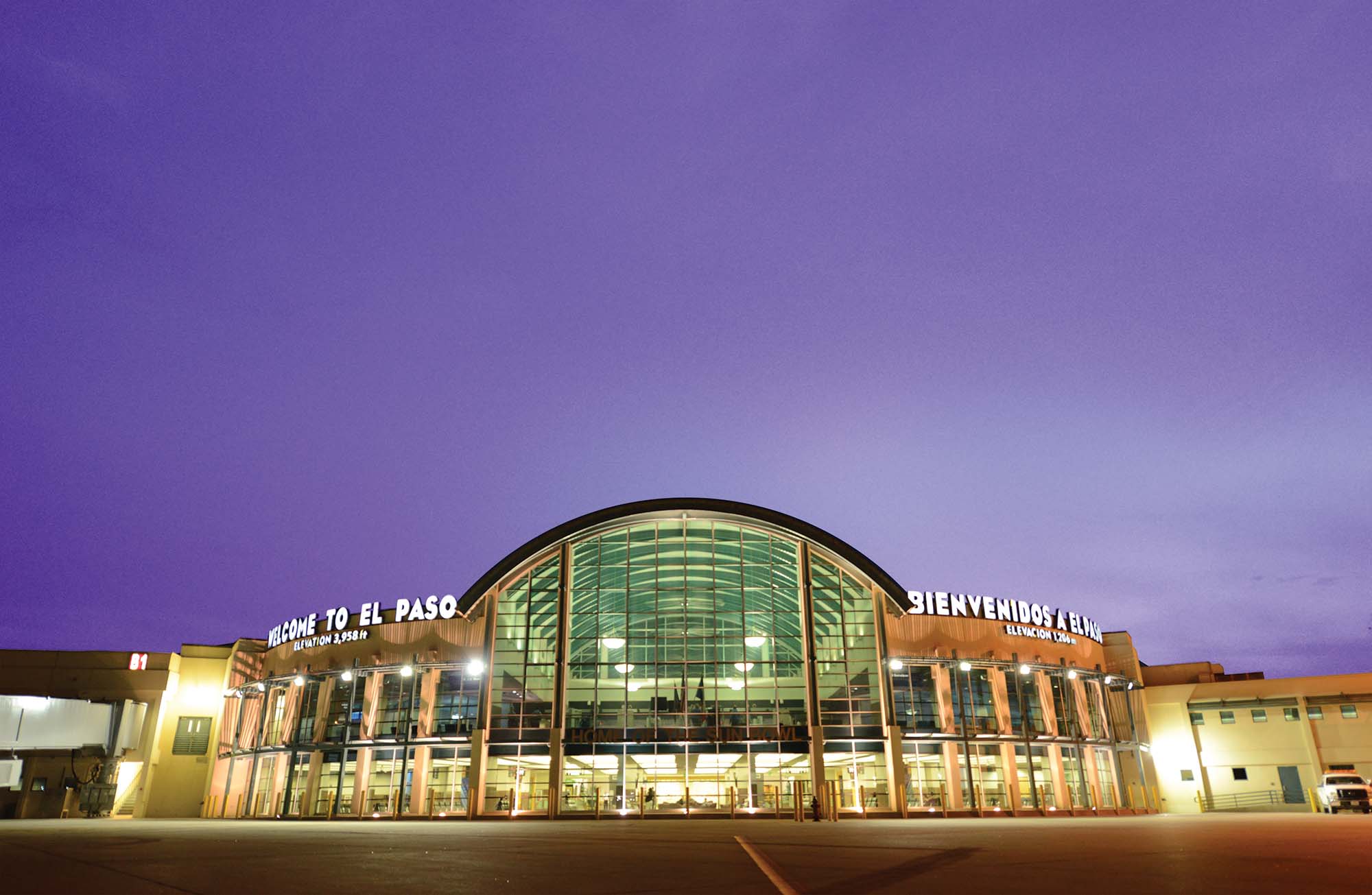
A Trump administration official said the ban resulted from Mexican cartel drones (El Paso Airport)

A source told AP that the laser was deployed near Fort Bliss without coordinating with the FAA, which decided then to close the airspace to ensure commercial air safety. FAA Administrator Bryan Bedford did not consult the White House, Pentagon or Homeland Security officials over the decision.

The technology was used this week used despite a meeting scheduled for later this month between the Pentagon and the FAA to discuss the issue, the sources added.

In its initial announcement online the FAA stated that all flight operations at the southwestern airport — located near the U.S.-Mexico border — would be prohibited for 10 days from February 11-21 due to “special security reasons.”

The ban spanned a radius of 10 nautical miles and it applied from the ground up to about 18,000 feet. “No pilots may operate an aircraft in the areas covered,” the FAA said, though it noted that Mexican airspace is excluded.

However, instead of days the ban was lifted just hours later.

“The temporary closure of airspace over El Paso has been lifted,” the FAA said in a statement on Wednesday morning. “There is no threat to commercial aviation. All flights will resume as normal.”

In a travel advisory posted on Wednesday, the airport said that the ban impacts all flights, including “commercial, cargo and general aviation.” It noted that travelers should get into contact with airlines for the “most up-to-date flight status information.”

Meanwhile, the same flight prohibition had also been issued over Santa Teresa, New Mexico, located a few miles from El Paso, according to the FAA.

Reactions from officials

On Wednesday morning, Congresswoman Veronica Escobar, who represents El Paso, described the ban as unusual, and that she was still scrambling to get the facts.

“The highly consequential decision by FAA to shut down the El Paso Airport for 10 days is unprecedented and has resulted in significant concern within the community,” she wrote in a post on X on Wednesday morning.

“From what my office and I have been able to gather overnight and early this morning there is no immediate threat to the community or surrounding areas,” she said, adding that she has urged the federal government to lift the ban immediately.

In a statement, City Representative Chris Canales said that there is no indication the area faces any “kind of imminent safety threat.” But he described the lack of advance notice as “especially troubling.”
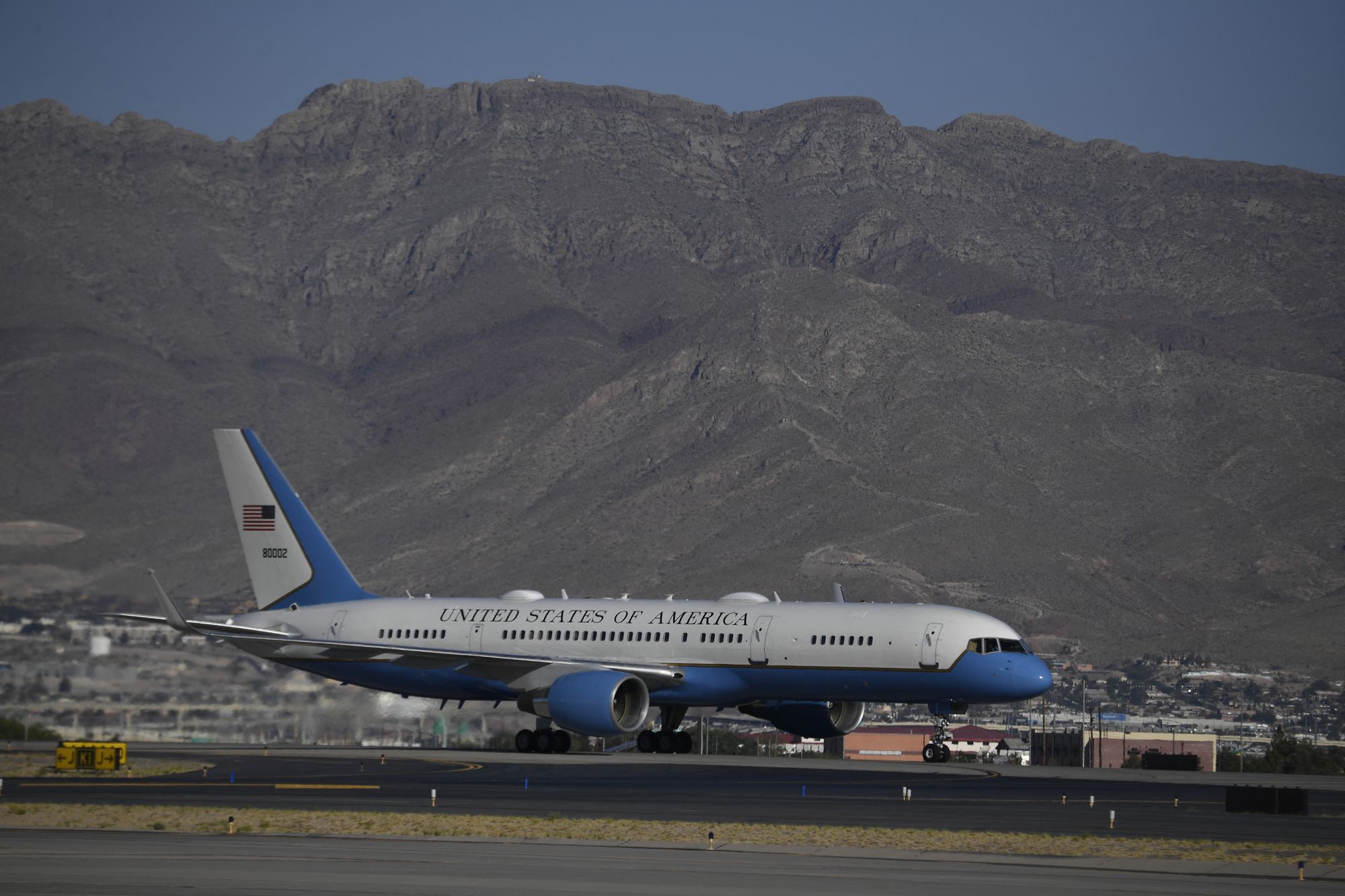
Air Force Two at El Paso International Airport in 2021. The airport services over three million people per year

Air Force Two at El Paso International Airport in 2021. The airport services over three million people per year (AFP via Getty Images)

“This is going to have a deep economic impact” on the region, “including in southern New Mexico,” New Mexico Rep. Gabe Vasquez said in a video posted on X on Wednesday morning.

The medium-sized El Paso airport — which is the seventy-third largest in the nation — services over three million people per year. Over 1,000 flights were scheduled during the next 10 days, according to Cirium, an aviation firm, indicating thousands of travelers could have been impacted.

At a news conference on Wednesday after the ban was lifted, El Paso Mayor Renard Johnson criticized the federal government’s actions.

“I want to be very, very clear that this should’ve never happened,”Johnson said. “You cannot restrict air space over a major city without coordinating with the city, the airport, the hospitals, the community leadership…That failure to communicate is unacceptable.”

The lack of a clear explanation for the sudden closure — and quick reversal — has fueled fear and speculation online.

“Shouldn’t the citizens of El Paso know if they’re in any danger?” one user wrote on X. “I would hate to think our government is causing unnecessary panic.”

“Folks. Pay attention. This is unprecedented,” Juliette Kayyem, a CNN national security analyst, wrote on social media. “El Paso airport is the ‘gateway to Mexico.’ He’s going after the cartels, I suspect.”

What travelers should do

According to the FAA, there are no federal requirements pertaining to cancelled or delayed flights. Instead, each airline has its own policies.

“If an airline has made a commitment to provide a particular service or compensation, then the Department can hold the airline accountable,” the Department of Transportation’s website states.

It notes that stranded travelers can ask airline staff if they can compensate them for the cost of hotels or meals.

Following the El Paso airport closure, United Airlines issued a statement saying that travelers can exchange their tickets for new flights without paying a fee or fare difference. Southwest Airlines said it had “notified affected customers and will share additional information as it becomes available.”



Meet the high-profile Emirati business leader lawmakers are linking to Epstein ‘torture’ email


Jeffrey Epstein and Sultan Ahmed bin Sulayem, Group CEO of DP World.

House Oversight Committee Democrats

U.S. officials made new disclosures from the Epstein files on Monday, naming who they believe was the recipient behind a disturbing email sent by the deceased financier and sex criminal Jeffrey Epstein, in which he referenced a supposed “torture video.”

That name is Sultan Ahmed bin Sulayem, one of the Emirates’ most powerful business figures, who, for years, maintained a relationship with Epstein, with the communications often including explicit content, according to documents recently released by the U.S. Justice Department.

The latest revelation comes after Rep. Thomas Massie, R-Ky. and Rep. Ro Khanna, D-Calif. reviewed unredacted documents at the Justice Department on Monday.

Massie posted a screenshot of the email on the social media platform X. In the email, Epstein wrote to a redacted recipient: “where are you? Are you ok, I loved the torture video.”  The reply stated: “I am in china I will be in the US 2nd week of May.”

Meet the high-profile Emirati business leader lawmakers are linking to Epstein ‘torture’ email

Alongside the screenshot, Massie wrote that, “a sultan seems to have sent this,” and called on the DOJ to make the information public.

That caught the attention of Deputy Attorney General Todd Blanche, who responded to Massie on X, stating the redaction protected personally identifiable information in an email address. He added that Sulayem’s name appeared unredacted elsewhere in the released files and linked to a document containing his name.

Massie later said Blanche had “tacitly admitted that Sultan Ahmed bin Sulayem was the sender of the torture video.”

CNBC sought comment from Sulayem through DP World, where he serves as chairman and CEO, but did not receive a response. Sulayem has not been accused of any criminal wrongdoing. It is also unclear exactly what the referenced “torture video” was, and whether it had actually been sent from Sulayem to Epstein.

Authorities have stressed that a mention in the Epstein files does not indicate evidence of wrongdoing nor prove that the name was part of a purported client list or blackmail scheme.

However, the email adds yet another thread to a tapestry of years of communications between Sulayem and Epstein, which referenced everything from business deals, politics to sex.

A most trusted friend

The Epstein files, especially following the latest releases, have shed new light on how the deceased sex criminal networked and fraternized with influential figures in politics and business.

Yet amongst the many names prominently featured, Sulayem stands out, not only for his level of intimacy with Epstein, but for his prominence and sway in both the political and global business realms.

In his home city of Dubai, Sulayem is regarded as a leading business figure, coming from one of the Emirate’s main families. His father was an advisor to the ruling Al Maktoum family and Sulayem himself played a key role in the ascendance of Dubai as an economic hub.

File picture showing Emirati Prime Minister Sheikh Mohammed bin Rashed al-Maktum (C), DP World chairman Sultan Ahmed bin Sulayem (L) and the chairman of Emaar projects chief Mohammad Ali al-Abbar attending a golf tournament in the Gulf emirate of Dubai on March 7, 2004.

Nasser Younes | Afp | Getty Images

Sulayem oversaw the growth of Dubai’s Jebel Ali port into a major deep-water shipping hub and the creation of DP World, a logistics empire that now spans the globe and oversees ports that handle a tenth of the world’s container trade.

He also led Nakheel Properties, a Dubai government-owned developer behind large artificial island projects, though he was replaced amid a major board restructuring following Dubai World’s debt crisis during the 2008 financial crisis.

His prominent leadership roles made him an important representative of Dubai’s economy amongst both the leadership in the UAE and the international community. Sulayem appeared regularly in international forums, including the World Economic Forum in Davos, often rubbing shoulders with politicians and giving speaking engagements.

However, emails released by the DOJ suggest that Epstein saw a very different side of the Sultan — and in him, a friend and confidant, trusted enough to engage in high-stakes discussions of business and sex.

A search of the name “Sulayem” on the DOJ’s Epstein library yields thousands of results, many of which appear to be email exchanges between the two from around 2007 through 2019, long after the financier was convicted of soliciting prostitution from a minor in 2008.

The DOJ’s file release shows that Epstein once referred to Sulayem as a “close personal friend” he had known for 8 years. He also described Sulayem as one of his most trusted friends in other writings. 

In the world of Epstein, being a trusted friend appeared to have come with intimate communications regarding topics including but not limited to: arrangements with masseuses; sexual encounters with women; escort and prostitution services; lewd comments and jokes; and pornography.

The two often appeared to be discussing in-person meetings. On several occasions, Sulayem corresponded with Epstein about Little St. James, Epstein’s private island in the U.S. Virgin Islands, which prosecutors allege was used as a base for sex trafficking.

Jeffrey Epstein and Sultan Ahmed bin Sulayem, Group CEO of DP World.

House Oversight Committee Democrats

Political and business ties

The Epstein-Sulayem emails also highlight how Epstein often acted as a superconnector and liaison for his rich and powerful confidants.

In one 2014 email, Epstein appeared to invite former Labour cabinet minister Peter Mandelson to join a board of Sulayem’s, writing: “sultan [sic] has asked me to encourage you to join his board.”

The files also appear to show Epstein connecting former Israeli Prime Minister Ehud Barak and Sulayem via email in 2015. That comes after a report from Drop Site News in January suggested that Epstein had brokered several meetings between Ehud Barak and Sulayem, citing previously released emails.

Ehud Barak has previously defended his business with Epstein, explaining that at the time, he believed the businessman had paid his debt to society, and that he himself hadn’t been accused of wrongdoing. 

According to Bloomberg’s viewing of the public files and others obtained by the outlet last summer, Epstein also tried to help connect Sulayem to figures such as an aide to former French President Nicolas Sarkozy; Les Wexner, the retail billionaire and longtime Epstein patron behind Victoria’s Secret; and Jes Staley, who in the late 2000s was a senior executive at JPMorgan Chase & Co.

Sarkozy has not publicly addressed alleged ties to Epstein. Wexner said in 2019 that he had previously employed Epstein but was unaware of the illegal conduct for which Epstein was later indicted. In June, Staley failed to overturn a decision by the U.K. Financial Conduct Authority that found he had “recklessly” misled regulators in 2019 about the nature of his relationship with Epstein.

CNBC also confirmed that the latest DOJ files include a 2010 email from Epstein to Sulayem, asking him if he wanted to meet Thomas Pritzker, executive chairman of Hyatt Hotels. A representative of Pritzker declined to comment.

In the wake of the global financial crisis in 2009, Epstein sent an email addressing an unidentified “sultan” regarding an apparent investment deal and a payment to be made to Epstein. “Your people should talk to Pritsker,” Epstein wrote, adding that “Hyatt is the =erfect answer to MGM. not Barrrack.”

Epstein may’ve been referring to casino operator MGM Mirage, which Epstein and Sulayem had exchanged articles about. In 2009, Sulayem’s Dubai World had reportedly filed a lawsuit against the MGM Mirage for massive cost overruns.

Epstein also appeared to refer the “sultan” to Pritzker’s Hyatt over “Barrrack.” It is unclear who he was referring to, but private equity real estate investor Thomas Barrack appeared in other Epstein’s emails with Sulayem. 

In a December 2009 email, Epstein sent a couple of emails to Staley regarding investments and a potential meeting, also with an unspecified “sultan.”

Epstein and Sulaymen also shared details of their separate meetings with other prominent figures, notably U.S. President Donald Trump and people within his circle.

Jeffrey Epstein and Steve Bannon.

House Oversight Committee Democrats

The Epstein files indicate Sulayem was invited to Trump’s first presidential inauguration by Thomas Barrack, a U.S. diplomat currently serving as U.S. ambassador to Turkey and special envoy for Syria. “Should I accept the invitation,” Sulayem asked Epstein in a January 2017 email.  

Epstein, according to files, was also linked to Steve Bannon, Trump’s former senior adviser and a key architect of his 2016 election victory. 

“We have become friends you will like him,” Epstein said of Bannon to Sulayem in an email in February 2018. “Trump doesn’t like him,” Sulayem replied. “dont belive the press,” responded Epstein.

Bannon has said little publicly about his relationship with Epstein, though he has called for the release of the Epstein files.

Incoming fallout? 

DP World did not respond to a request for comment from CNBC on this story, including on whether the company planned to keep Sulayem in his position.

No action has been taken against Sulayem since his messages with Epstein were first published last month.

On Wednesday, Canada’s second-largest pension fund told CNBC it would halt future deals with Dubai’s DP World following the Epstein revelations, saying it had “made it clear to the company that we expect it to shed light on the situation and take the necessary actions.”

It was also not immediately clear whether international institutions with which Sulayem has been involved would respond to the disclosures. For example, Sulayem is listed as an agenda contributor at the World Economic Forum.

DP World, in March 2022, also became a “Champion” of the UN Women HeForShe Alliance, an initiative encouraging men and institutions to support gender equality. Sulayem and DP World had been welcomed into the program to help “spearhead transformative change and allyship to achieve a gender equal world,” a spokesperson said at the time.

Sulayem was quoted as saying: “Becoming a UN Women HeForShe Champion is a great honor, and I feel very humbled to be working alongside such esteemed leaders to accelerate progress toward gender equality.” 

“I believe in not just attracting, developing, and retaining female talent in the trade and logistics industry, but truly focusing on efforts to build a global ecosystem that is equitable and fair for all.”

In a statement to CNBC, a UN Women spokesperson said the group’s past interactions with Sulayem and DPWorld were limited under the initiative, which ended in December 2024. 

“The objective was to influence institutional practices of DP World to positively influence gender norms and promote women’s leadership in a traditionally male-dominated sector … UN Women has no current partnership or collaboration with Sultan Ahmed Bin Sulayem or DPWorld,” she added.

— CNBC’s Emma Graham and Matthew Chin contributed to this report


No. 16 Texas Tech rolls past CU Buffs


No. 16 Texas Tech rolls past CU Buffs

LUBBOCK, Texas — There was no stirring comeback this time.

And the end result was the same as it has been in each of Colorado’s most recent road outings — discouraging, embarrassing and downright ugly.

No. 16 Texas Tech battered the Buffaloes into submission Wednesday, topping CU 78-44 at United Supermarkets Arena. It was the Buffs’ 12th consecutive loss against a team ranked in the Associated Press Top 25, and their 24th consecutive loss against an AP Top 25 foe in a true road game.

Texas Tech (18-6, 8-3 Big 12) pushed its lead to 16 points in the first half when the Buffs received a spark from freshman wing Ian Inman, who came off the bench to knock down four consecutive 3-pointers. The last of those 3-pointers cut the Red Raiders’ lead to eight points with 3 minutes, 41 seconds remaining in the first half, and the Buffs were in position to get a defensive stop when LeJuan Watts launched an awkward 3-pointer at the shot clock buzzer.

Watts, though, tracked down his own offensive rebound, leading to a 3-pointer from Tech’s Jaylen Petty on the extra possession. That shot started a 12-3 half-closing run for the Red Raiders, who owned a 39-22 lead at the break.

Texas Tech nearly squandered a 24-point lead in Boulder last month, with a Buffs rally falling short in a two-point loss, but this time the Red Raiders didn’t let CU back in the game. Tech opened the second half with an 11-1 run, holding the Buffs without a field goal for the first 4 minutes, 54 seconds after halftime.

Texas Tech dominated the glass, posting a 47-30 rebounding advantage while turning 17 offensive rebounds into a 21-0 edge in second-chance points.

Texas Tech forward JT Toppin posted is Big 12-leading 15th double-double, finishing with 16 points and 18 rebounds. Inman finished 4-for-5 on 3-pointers with a season-high 12 points, but the rest of the Buffs finished just 2-for-20 from long range. CU shot a season-low .291 overall.

CU (14-11, 4-8 Big 12) faces another tough road challenge Saturday at No. 22 BYU (2 p.m. MT, Fox Sports 1).


Montreal shooting survivor shares how she regained sense of safety | Globalnews.ca


École Polytechnique shooting survivor Nathalie Provost says it took her several weeks to return to the site of the Montreal massacre, but doing so allowed her to reclaim her life and create a sense of safety again.

Montreal shooting survivor shares how she regained sense of safety  | Globalnews.ca

She was shot in the leg, foot and forehead by a gunman who killed 14 women and injured more than a dozen people in 1989, including six of her classmates.

“We cannot live in the fear that it can happen,” Provost said, emotion still ripe in her voice 37 years later.


Gun control advocate and survivor of the1989 École Polytechnique massacre Nathalie Provost speaks at a press conference on new measures to strengthen gun control in Ottawa on Thursday, Dec. 5, 2024.

THE CANADIAN PRESS/ Patrick Doyle

Her reflections on healing come in response to one of the worst school shootings in the country’s history on Tuesday in Tumbler Ridge, a small community in British Columbia, where nine people are dead, including the suspect.

Story continues below advertisement

Provost, now a member of Parliament in Quebec, says going back to school to finish her undergraduate degree once she was released from hospital was her way of moving forward. She says that was the best thing she could have done at the time.

For news impacting Canada and around the world, sign up for breaking news alerts delivered directly to you when they happen.

Get breaking National news

For news impacting Canada and around the world, sign up for breaking news alerts delivered directly to you when they happen.

Now as a mother of four, she acknowledges how difficult that must have been for her own mother, breaking into tears as she speaks of the sorrow and fear that must be consuming the parents of Tumbler Ridge right now.

“I’m so sad. I just cannot imagine what it is being 12, 13, 15, 16 years old and looking at what they were looking at yesterday evening. I remember what I saw. And for all of those who saw horror in their life, I am so sad,” she said.


Click to play video: 'Quebec announces major investment at Polytechnique Montréal, questions linger for CEGEPs'


Quebec announces major investment at Polytechnique Montréal, questions linger for CEGEPs


Like many other parents across the county, Vancouver psychologist Dr. Valerie Caldeira says it was difficult to send her kids to daycare Wednesday morning.

Story continues below advertisement

“My sense of safety, also shattered,” she said, adding, “You kind of have to trust that they will be OK.”

Caldeira says it’s going to take time for the country to recover and that returning to routine is an important step, whether that’s going to extracurriculars or sticking to meal times.

“To have that sense of normalcy – that will really help restore a sense of safety,” Caldeira said.

While our sense of danger might be heightened, Dr. Allison Crawford, a chief medical officer for 9-8-8: Suicide Crisis Helpline, says that is not permanent, and there is hope for restoration.


She said it’s normal to feel overwhelmed, shocked, devastated, and that just knowing other Canadians are feeling this way can be validating and establish social cohesion.

“While we acknowledge the magnitude of this loss now, and have to do work to help people feel a sense of safety and connection …that’s not permanently shattered,” Crawford said.

“I think there’s lots of hope that we will collectively come back together and have that sense of safety restored.”

This report by The Canadian Press was first published Feb. 11, 2026.

Canadian Press health coverage receives support through a partnership with the Canadian Medical Association. CP is solely responsible for this content.

Story continues below advertisement

&copy 2026 The Canadian Press


1st phase of Winnipeg’s $3.2B North End sewage treatment plant upgrade nearing completion | CBC News


1st phase of Winnipeg’s .2B North End sewage treatment plant upgrade nearing completion | CBC News

Listen to this article

Estimated 3 minutes

The audio version of this article is generated by AI-based technology. Mispronunciations can occur. We are working with our partners to continually review and improve the results.

As work on the first phase of the North End sewage treatment plant nears completion, City of Winnipeg officials provided a look inside the construction of the most expensive project in Winnipeg’s history. 

At an estimated $3.2 billion, the total project cost is more than the city’s entire 2026 budget. On top of the cost, it’s also one of the most complex projects the city has ever undertaken, officials said on Wednesday.

“One of our colleagues in the city drew an analogy between doing multiple organ transplants, while the patient is alive,” Matt Dryburgh, the city’s deputy chief administrative officer, told reporters. 

Every day, millions of litres of raw sewage continue flowing through the site even as crews connect new infrastructure to the old.

The North End facility treats roughly 70 per cent of Winnipeg’s wastewater and all of the solids removed from the city’s sewer system. 

With capacity in the existing plant expected to run out in four to six years, the city is under increasing pressure to finish the project. Construction of the first phase — the new headworks and power supply facility — is expected to wrap up this summer.

The headworks is the first stage of the treatment process, where grit, sand and debris are separated from incoming wastewater before it moves through the rest of the plant. 

Tying that new system into the existing one has required careful planning and around-the-clock work, city officials say.

“We’ve had to undertake that work with divers working nights on a 24/7 basis to fit it in with the plant operations,” said deputy project manager Rob Black.

WATCH | Take a look inside the sewage treatment plant upgrade:

First phase of North End sewage treatment plant upgrade nearing completion

Take a look inside the first phase of the upgrade project at Winnipeg’s North End sewage treatment plant, which is expected to wrap up later this year.

Several storeys below ground, massive pumps lift incoming sewage roughly 22 metres so it can continue flowing by gravity through the treatment process. 

The reinforced concrete structure housing the equipment stretches deep underground, with walls metres thick to contain the flow.

City officials say once the headworks phase is fully operational, it will improve reliability and efficiency at the aging plant, which was first commissioned in 1937.

Construction on the overall upgrade began in 2021. The city expects to move into the second phase, the biosolids removal facility, later this year. 

A third and final phase — a nutrient removal facility  — still requires $1 billion in additional funding to proceed.


One in 14 children who die in England have closely related parents, study finds


One in 14 children who died in England in a four-year period had parents who were close relatives, according to “stark” figures revealed by the first study of its kind.

The figures, published by the National Child Mortality Database (NCMD), based at the University of Bristol, analysed all 13,045 child deaths in England between 2019 and 2023. Of these, 926 (7%) were found to be of children born to consanguineous parents, meaning the mother and father are close blood relatives, such as first cousins.

Although the exact number of children with consanguineous parents across England is unclear, the data clearly shows their overrepresentation within mortality statistics and requires “urgent action”, according to researchers.

The largest geographical estimate of consanguinity currently available is from a large study following the lives of 13,000 babies born in Bradford. It found that one in six of these children had parents who were first cousins, most of whom come from the city’s Pakistani community.

“This is the first analysis of its kind globally looking at consanguinity-related child deaths across a whole country and over a number of years,” said Prof Karen Luyt, the director of the NCMD and lead author of the study. “The NCMD’s dataset is unique: it is timely, complete and comprehensive, and it gives us a clearer insight than we have ever had of the impact of consanguinity on child mortality.”

She added: “Seven per cent of child deaths over the period were of children born to consanguineous parents. These children might have died from any cause, but the data shows us very clearly that they are overrepresented in mortality statistics. Action is urgently required to improve outcomes for this group.”

The report also revealed stark ethnic and socioeconomic disparities in child mortality and consanguinity. Of the deceased children with parents who were close relatives, four in five (79%) were from an Asian ethnic background, with the most common ethnicity being Pakistani, the research found.

Furthermore, almost a third (30%) of children from Asian backgrounds who died had parents who were close relatives, compared with only 5% of children from a Black background, and 1% from a white or mixed background.

Of the deceased children whose parents were close relatives, more than half (52%) lived in the most deprived areas of England, compared with only 5% living in the least deprived areas.

Previous studies have shown that children born to parents who are close relatives have an increased likelihood of experiencing worse health outcomes on an array of measures. For example, children born to these parents are twice as likely to be born with a congenital anomaly, as well as having an increased risk of experiencing issues with speech and language development.

More than a quarter (27%) of all child deaths occurring within this period were related to chromosomal, genetic and congenital anomalies, according to the research. Of children born to parents who were close relatives, almost three in five (59%) of these deaths were due to chromosomal, genetic and congenital anomalies. Of these child deaths due to genetic factors, almost 17% were born to parents who were close relatives.

An NHS spokesperson said: “This report provides further clear evidence on the increased risk of genetic conditions and serious illness that having closely related parents carries and highlights a worrying number of deaths in more deprived areas.

“With hundreds of children losing their lives in recent years, the NHS is running a small pilot which will test whether nurses with specialist training in these complications could prevent the death of vulnerable babies, targeted in areas where close-relative marriage is prevalent.”


Ukraine war briefing: Elections will be held only after ceasefire, says Zelenskyy


  • Ukraine will hold elections only once it has security guarantees in place and a ceasefire with Russia, Volodymyr Zelenskyy has said, pushing back at suggestions he is planning to stage fresh ballots under US pressure. “We will move to elections when all the necessary security guarantees are in place,” the Ukrainian president told reporters on Wednesday in a voice note. “I have said it’s very simple to do: establish a ceasefire, and there will be elections.” He also said that if Russia agreed, it might be possible to “end hostilities by summer”. Elections in Ukraine have been effectively suspended since Russia invaded in 2022 due to martial law.

  • Senior Ukrainian officials agreed on Wednesday to boost air defence capabilities around the capital to counter possible further Russian air attacks on energy infrastructure, the energy minister said. “We also identified and prioritised other critical infrastructure facilities that require protection,” Denys Shmyhal said on Telegram on Wednesday after a meeting of the military staff. The fresh preparations follow attacks on Kyiv that have left officials scrambling to repair damage that has left thousands in the cold and darkness.

  • Russian strikes killed four civilians on Wednesday in different localities in Ukraine’s south-eastern Dnipropetrovsk region, the regional governor said. The attacks occurred in three small localities near the town of Synelnykove, east of the regional centre of Dnipro, Oleksandr Ganzha said on Telegram. In one attack, a man was killed and his wife wounded. In a different locality, a couple and their 45-year-old son was killed and a man wounded. A woman was hurt in a third village.

  • Zelenskyy said the US needed to put more pressure on Russia if it wanted the war to end by summer, adding it is unclear whether Moscow would attend US-brokered peace talks next week. “It depends not only on Ukraine, but also on America, which must exert pressure – excuse me for saying so, but there is no other way: it must exert pressure on Russia,” he said on Wednesday, after previously saying Washington wants to end the war by June. Zelenskyy said Russia was still deliberating over whether to participate in the proposed next round of trilateral peace talks in Miami but that Ukraine was ready to attend.

  • The Ukrainian skeleton racer Vladyslav Heraskevych says he is ready to be disqualified on Thursday because he does not want to betray his country’s dead athletes, reports Sean Ingle. Heraskevych has vowed to wear his “helmet of memory” in the skeleton, even though the International Olympic Committee has told him it will kick him out if he does. “I will not betray these athletes,” he said after finishing first on the final day of practice.

  • British defence minister John Healey says the UK has committed £150m ($205m) to the so-called prioritised Ukraine requirements list (Purl) initiative to supply Ukraine with US weapons. Purl was set up last summer to keep US weapons flowing to Ukraine at a time when new US military assistance had stalled. “Together we must provide Ukraine with the critical air defence it needs in response to Putin’s brutal onslaught,” Healey said in a statement on Wednesday. Allies have already put forward more than $4.5bn through the programme, the US ambassador to Nato, Matthew Whitaker, said on Tuesday.

  • A Russian crackdown on the Telegram social media app risks damaging its own army, pro-war bloggers have warned, as the platform’s founder refused to bend to pressure from Moscow, reports Pjotr Sauer. Russia’s communications watchdog said on Wednesday that the app – used by more than 60 million Russians each day – would begin slowing nationwide, accusing it of failing to address earlier regulatory violations.

  • Europe’s largest nuclear power plant can be restarted safely only if it is returned to Ukrainian control, the head of Ukraine’s nuclear power operator said on Tuesday. The six reactors at the Zaporizhzhia nuclear power plant have been shut down since Russian forces captured the area, and Moscow announced last year it was aiming to restart at least one reactor. But Pavlo Kovtoniuk, boss of Ukrainian state nuclear firm Energoatom, said Russia lacked some equipment and spare parts to operate it, and risked a nuclear accident if it tries.


  • Man suspected of killing 6 people at 2 residences in Florida: Authorities


    A man is suspected of killing two people, including a person he was in a prior relationship with, and then gunning down four more at another home hundreds of miles away in connected homicides, authorities in Florida said.

    Law enforcement in Fort Lauderdale and Sarasota County on Wednesday both identified 51-year-old Russell Kot as a suspect in the homicides. He died of apparent self-inflicted wounds on Tuesday following his alleged killing spree, authorities said.

    Deputies in Sarasota County initially responded midday Tuesday to a shooting at a residence in a gated community, authorities said.

    Four people were killed — including a man who was shot while approaching the front door, according to the Sarasota County Sheriff’s Office. Two women and another man were found dead inside the home, located in the Amberlea neighborhood, authorities said.

    Man suspected of killing 6 people at 2 residences in Florida: Authorities

    Authorities respond to a homicide investigation at a residence in Sarasota County, Florida, Feb. 10, 2026.

    WWSB

    The suspect, Kot, was also found dead in the home, the Sarasota County Sheriff’s Office said. Video showed his vehicle entering the neighborhood at around 11 a.m. Tuesday, it said. Shortly after, a neighbor’s Ring camera captured the sound of gunfire, the sheriff’s office said.

    The man who was shot outside the residence was seen entering the neighborhood in his vehicle about 37 minutes later, the sheriff’s office said. Responding deputies found neighbors performing CPR on him in the front yard, it said.

    Later Tuesday afternoon, over 200 miles away on Florida’s east coast, police conducting a well-being check at a residence in the Victoria Park section of Fort Lauderdale found two people dead inside a residence, police said.

    While authorities in Sarasota County were working to identify the victims and suspect in their case, the sheriff’s department said Fort Lauderdale police contacted them to advise that they believed the double homicide and Sarasota County shooting might be related. 

    Following the Fort Lauderdale homicide, the suspect’s vehicle was captured on camera traveling near Sarasota, before the quadruple homicide in Amberlea, authorities said.  

    Police say two people were found dead inside a residence in Fort Lauderdale.

    WSVN

    Kot lived in Fort Lauderdale and had a “previous romantic relationship” with one of the Fort Lauderdale victims, according to the Sarasota County Sheriff’s Office. That victim was connected to the Sarasota County victims, officials said, though they did not elaborate.

    Police on Wednesday identified the victims in Fort Lauderdale as Larisa Blyudaya, 46, and Ben Azivov, 18.

    The victims in Sarasota County were identified by the sheriff’s office on Wednesday as Olga Greinert, 49; Florita Stolyar, 66; Anatoly Ioffe, 61; and Yaroslav Blyudoy, 39.

    The homicides remain under investigation. 

    A motive in the Sarasota County incident is unknown at this time, the sheriff’s office said Wednesday.

    “Based on our preliminary investigation, it appears that the suspect died of self-inflicted wounds, and there are no known documented mental health crises nor history of violence associated with him,” the Sarasota County Sheriff’s Office said.


    Watch: Principals, Teachers, Unions Organize School Anti-ICE Walkouts


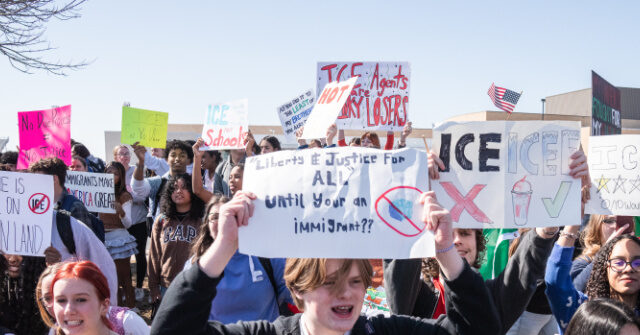
    Teachers and school administrators across the country continue to lead children out of classrooms and off school grounds into often violence-prone and dangerous left-wing protests against Immigration and Customs Enforcement (ICE).

    On the west coast, for instance, teachers at Issaquah High School in Issaquah, Washington, helped students begin an anti-ICE protest which soon exploded in violence as they began beating up a mother this week.

    After the violent confrontation, school principal Erin Connolly dismissed the incident by admitting that there was violence but waving it all off because there were no “serious injuries.” Connolly also did not condemn the violence and even reiterated that students had a right to protest.

    Teachers led Issaquah’s middle school kids in a protest that same day. That protest, too, devolved into violence and property destruction.

    Other reports found that the UTLA had been caught planning ICE “resistance” and using kids as their pawns in pushing the political agenda.

    According to the report at Defending Education, the UTLA has passed around planning documents and materials that advocate for use of school resources as a “form of resistance” against ICE and is urging teachers to begin “engaging students in community self-defense” by offering “service learning hours” in school.

    Kids in Dallas, Texas, also walked out of school and blocked traffic during their anti-ICE protest.

    Walkouts continue to occur across the country, taking kids out of the safety of school grounds and allowing them to engage in risky protests.


    Some parents, though, are condemning the schools for allowing kids to leave school grounds and engaging in dangerous activities.


    Follow Warner Todd Huston on Facebook at: Facebook.com/Warner.Todd.Huston, Truth Social @WarnerToddHuston, or at X/Twitter @WTHuston