The laughter doesn’t stop with the winners of the Nikon Comedy Wildlife Awards 2025. Now, it’s your turn to join the fun. The Comedy Wildlife Awards 2025 People’s Choice voting is officially open, and one lucky voter will win £500 (around $670) just for taking part.
With just two weeks left before the STERNA People’s Choice Award closes, the organizers are calling on wildlife lovers everywhere to cast their vote and spread the word. If you’ve already fallen in love with the dancing gorilla who stole the overall title, or if another finalist made you laugh out loud, now’s your chance to help crown the crowd favorite.
How To Vote In The Comedy Wildlife Awards 2025 People’s Choice
Voting in the Comedy Wildlife Awards 2025 People’s Choice is simple and takes just a minute:
• Head to the People’s Choice Award vote page • Pick your favorite image from the 43 finalists • Enter your email and tick the box if you’d like to join the prize draw
That’s it. Voting closes at midnight on March 1, 2026, so don’t wait too long to choose your winner.
Among the finalists are some of the most joyful and perfectly timed wildlife moments of the year. From expressive primates to mid-air bird drama and wonderfully awkward animal encounters, the shortlist proves once again that nature has impeccable comedic timing.
I personally love that some photo contests offer public voting, especially this one that’s loved by so many people. While judges focus on technical excellence, storytelling, and originality, we tend to vote with our hearts. And in the case of the Comedy Wildlife competition, we can simply cast our vote based on which photo caused us to chuckle or downright laugh out loud. Isn’t it wonderful?
With 43 finalists competing for the Comedy Wildlife Awards 2025 People’s Choice title, every vote helps shape the final result. Whether you’re drawn to clever timing, hilarious expressions, or pure chaotic wildlife energy, there’s bound to be one image that makes you grin.
And remember – one randomly selected voter will walk away with £500. Not bad for a minute spent enjoying some of the funniest wildlife photography of the year.
WANDRD’s Latest Backpacks Hold Big Kits for Under $350
Subscribe here for an ad-free experience!
We use cookies to ensure that we give you the best experience on our website. If you continue to use this site we will assume that you are happy with it.
Mobile Crossbody Multi-Strap, Mobile Crossbody Strap and Mobile Cuff Deliver Secure, Low-Profile Carry for Phones and Compact Cameras
Peak Design introduces three new additions to its Mobile ecosystem: the Mobile Crossbody Multi-Strap, Mobile Crossbody Strap, and Mobile Cuff. Designed for creators, travellers and everyday users alike, the Mobile Strap Family combines secure carry, refined aesthetics and effortless functionality, all built around Peak Design’s innovative Micro Anchor™ connection system.
Whether worn crossbody or around the wrist, each strap is engineered to keep your phone or compact camera secure, accessible and tangle-free, without adding bulk.
Mobile Crossbody Strap
Mobile Crossbody Multi-Strap
The Mobile Crossbody Multi-Strap is a versatile, low-profile strap designed to carry your phone, keys and small essentials securely. Built with Peak Design’s Micro Anchor™ system, it offers faster, stronger and more intuitive attachment, complete with a built-in swivel to prevent twisting.
A custom-machined and anodized aluminum carabiner holds up to three Micro Anchors™ and locks shut for added security. The custom-developed rope strikes a careful balance between strength, comfort and stretch, while sleek glass-reinforced nylon hardware enables quick length adjustments.
Key Features:
Compatible with any Peak Design case, Apple iPhone 17 case and small point-and-shoot cameras, plus third-party cases using the included adapter Mobile Crossbody Multi-Strap
Secure aluminum carabiner with locking mechanism
Adjustable length from 90cm to 168cm
Fair Trade Certified and backed by a lifetime guarantee
MSRP: $59.95 – Available in Black, Ocean and Ibis.
Mobile Crossbody Strap
Mobile Crossbody Strap
The Mobile Crossbody Strap delivers a streamlined 2-point carry solution for phones and compact cameras. Designed for all-day wear, it combines minimalist aesthetics with practical security.
Like the Multi-Strap, it features the Micro Anchor™ system with integrated swivel functionality to prevent twisting. The strap also includes accessory loop hardware, allowing users to convert to single-point carry or stow the strap on their body when the device is detached.
Key Features:
Works with Peak Design and Apple iPhone 17 cases, plus third-party cases via included adapter Mobile Crossbody Strap
Adjustable from 88cm to 164cm
Lightweight, comfortable rope construction
Fair Trade Certified with lifetime guarantee
MSRP: $49.95 – Available in Black, Ocean and Ibis.
Mobile Cuff
Mobile Cuff
For those who prefer wrist carry, the Mobile Cuff offers simple, durable and low-profile drop protection. Ideal for phones, point-and-shoot cameras or any small device with a strap connection point, the Cuff automatically cinches down on the wrist in the event of an accidental drop.
Constructed from ultra-durable woven rope, the Mobile Cuff incorporates aluminum adjustment and stopper hardware to customise fit and minimum loop size. The Micro Anchor™ system ensures fast and secure attachment with the same anti-twist swivel design found across the range.
Key Features:
Compatible with Peak Design cases, Apple iPhone 17 cases and third-party cases via adapter Mobile Cuff
Automatically self-cinching for drop protection
Adjustable loop sizing
Fair Trade Certified and backed by a lifetime guarantee
MSRP: $29.95 – Available in Ibis, Black and Ocean.
Built for Everyday Creativity
The Mobile Strap Family reflects Peak Design’s ongoing commitment to thoughtful design, durability and sustainability. Each product integrates seamlessly into the broader Peak Design Mobile ecosystem, offering users secure, flexible carry options without compromising style or performance.
With quick-connect Micro Anchors™, premium materials and Fair Trade Certified manufacturing, these new straps provide practical protection for modern devices while maintaining the clean, refined aesthetic Peak Design is known for.
For full specifications, color and more, please visit the Peak Design Website.
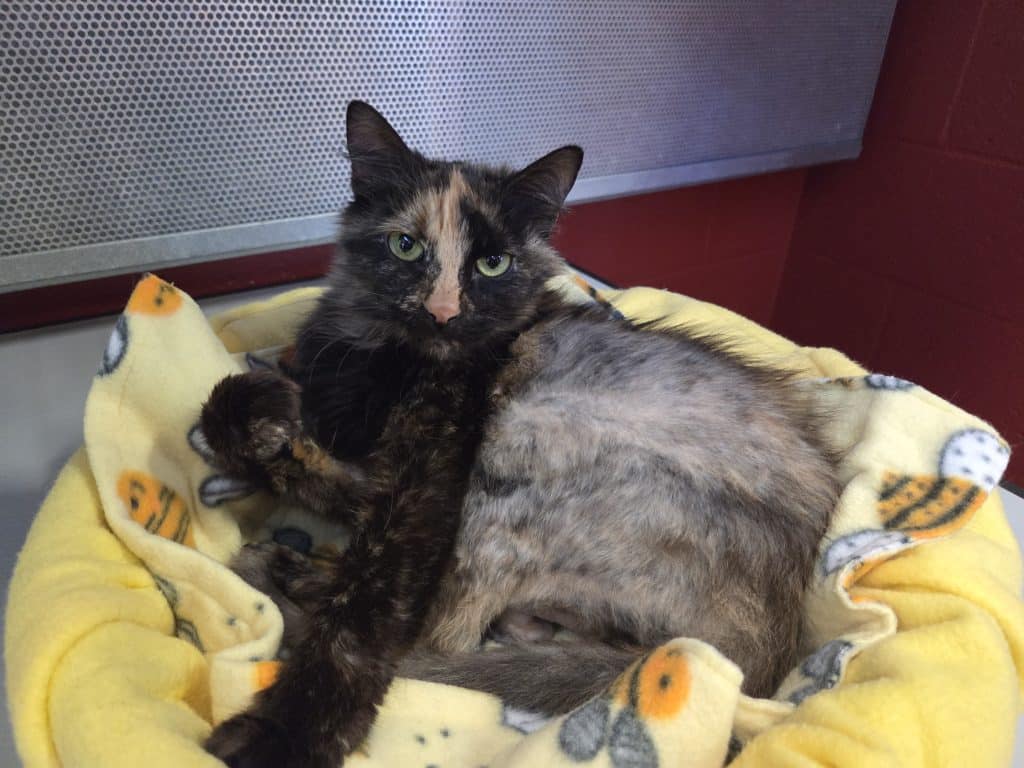
Carrot Cake has endured more than any kitty ever should.
She was found on the side of the road, struggling to breathe—likely struck by a car and left fighting for her life. She suffered multiple internal injuries, and dangerous fluid had built up around her lungs. Without immediate intervention, she would not have survived.
Thanks to emergency surgery, expert veterinary care, and her incredible will to live, Carrot Cake pulled through. Today, she’s healing beautifully, and the last of her surgical staples will be removed next week.
Through it all, she has remained nothing but sweetness—soft eyes, a calm spirit, and a heart ready to love again.
We are deeply grateful that Cat Depot was awarded $16,500 from the Community Foundation of Sarasota County to support the lifesaving rescue of cats like Carrot Cake from Sarasota County. Funding for our extraordinary veterinary care of homeless cats and kittens was generously provided through the Jo Ann Sutton Fund, Helen C. Schwieder Fund, Lucretia Davidson Beach Memorial Fund, and Robert Parker Fund at the Community Foundation of Sarasota County.
Cat Depot serves as a lifeline for cats and kittens in urgent need of medical care—brought to us by local shelters, rescue groups, community cat caregivers, Good Samaritans, and pet owners seeking help for animals with complex medical needs.
Grant funds were put to work immediately, helping cover the extensive veterinary expenses for sweet Carrot Cake, whose critical condition required rapid, specialized treatment.
And her story has the best possible ending—Carrot Cake has been adopted into a loving home, where she is continuing her recovery under the watchful eye of her devoted adopter.
Because of community support and compassionate partners, lives like Carrot Cake’s are not only saved—they’re given a second chance to thrive.
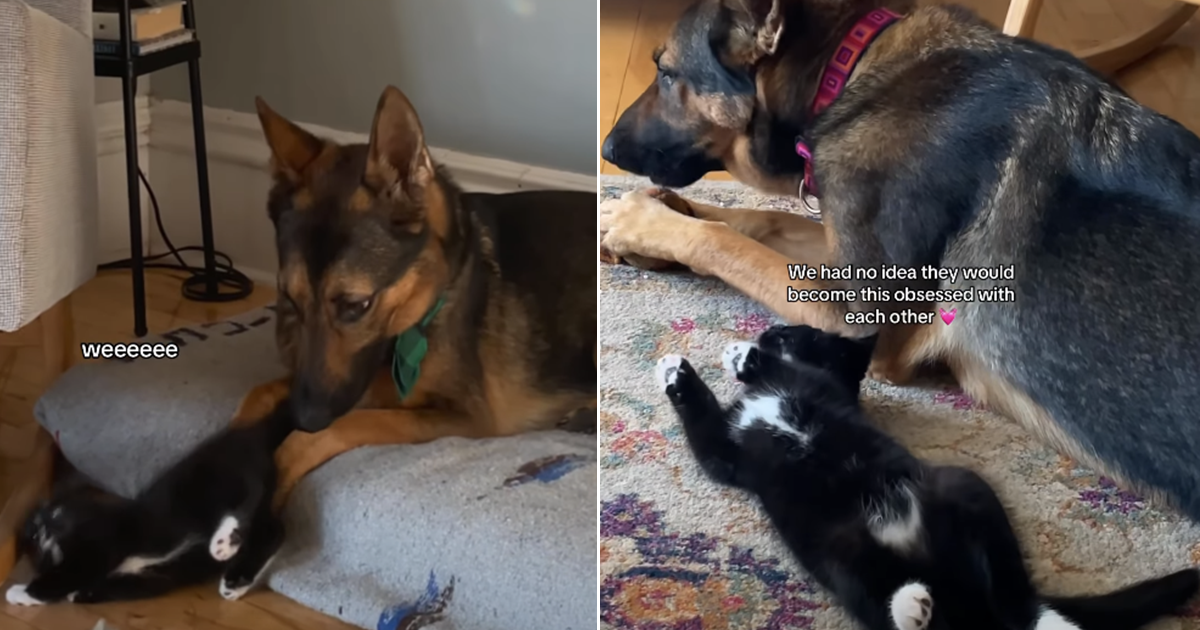
There’s nothing more gratifying for a pet parent to witness their dog getting along with their cat. This video captured an adorable first interaction between a kitten and a German Shepherd. On February 15, the owner of the two dogs post a heartwarming video on Instagram from the account @emileamay. Since then, the clip has gone viral. It currently boasts more than 34K likes.
Kitten and German Shepherd have gotten along since first interaction
A heartwarming video on Instagram showcased how a cute little kitten and a big German Shepherd Dog got along from the very beginning. The video has been winning hearts online, as people can’t get enough of the two puppies’ instant bond. In the post caption, the dog and cat’s owner happily wrote, “A moment for the pets.”
The Instagram video began with a closer look at the tiny kitten approaching the German Shepherd Dog, who was calmly sitting on a dog bed. In the meantime, the text written over the clip read, “POV: you bring a kitten home not knowing how your 8 year old, anxious, german shepherd would react and this was their first interaction.”
As the video continued, viewers saw the dog gently welcoming the act into his life immediately after their meeting. He was so calm, “patient” and “sweet” with the little cat, that it would melt anyone’s heart. The kitten got super comfortable with the dog immediately. Soon, the two fur babies’ bond became even stronger. The video will brighten up anybody’s day.
In the comments section, one fan wrote, “One of my favorite things is cats loving dogs against the dog’s inclinations and making a bestie in the process.” Meanwhile, another admirer’s comment read, “The paw slide!! My heart.” “This is the content we all need right now,” added another fan.
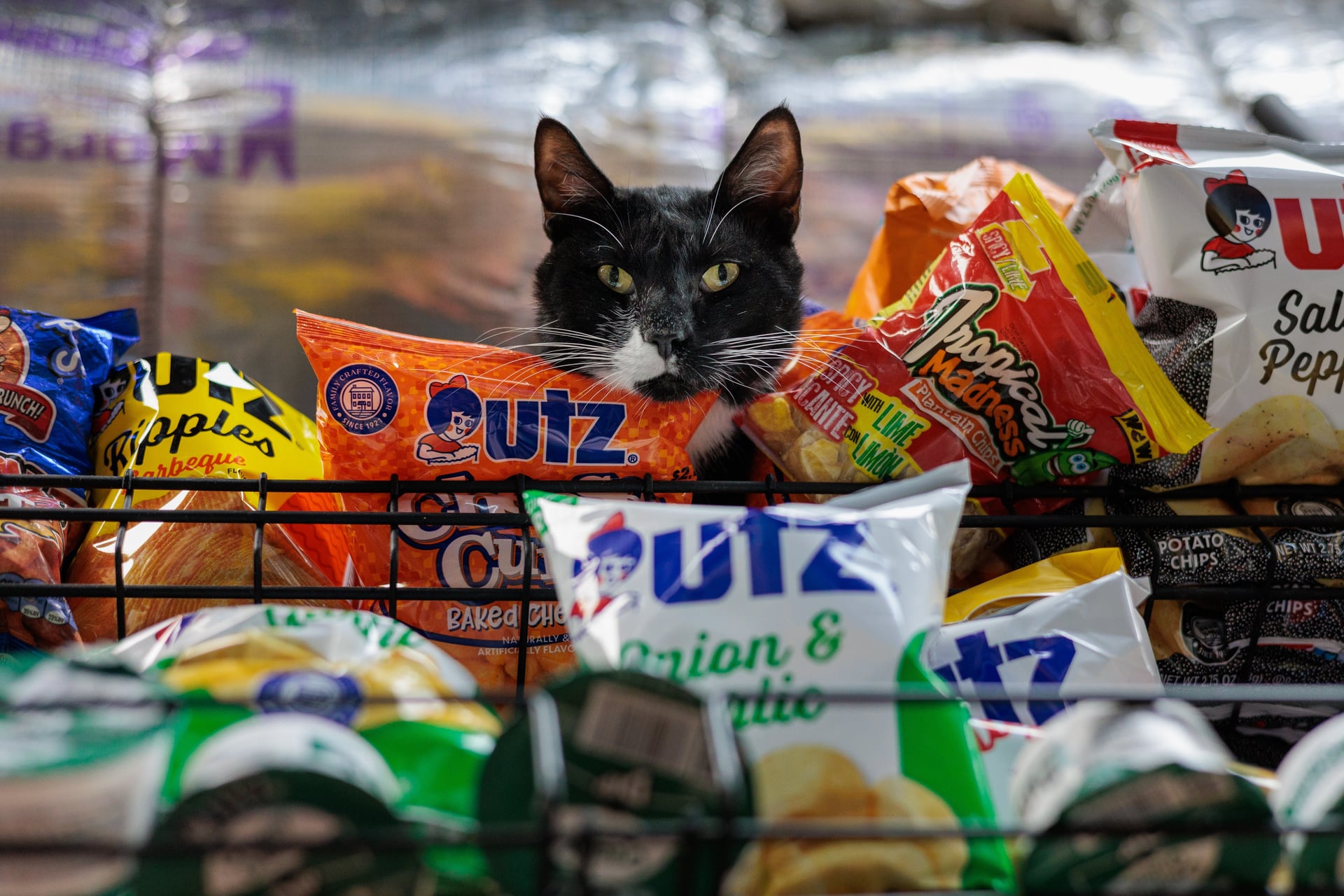
The Bodega: cultural cornerstone of every New York neighborhood. Alongside the milk, deli meats, bread, and mysterious miscellaneous items in the dusty back corner, is one essential item: The Bodega Cat. A resident feline (or felines) is something that has become synonymous with these local corner stores, and many of these customer-friendly cats have been in residence longer than the current employees. The Bodega Cat is such a New York icon that one man has made it his mission to make sure these furry store greeters receive the attention and protection they deserve.
Back in 2020, as bodegas stayed open while most of the world was shut down due to the COVID pandemic, author Dan Rimada started to photograph and document the various cats he encountered in his neighborhood. After a while, strangers started to send him photos and stories about their local bodega cats, and Rimada realized that this was a story that needed to be told.
Image Credit: Bodega Cats of New York
Along with photographer Gulce Kilkis, Rimade spent four years collecting tales and images of this unique aspect of everyday life across all five boroughs. The culmination of that work, the book
As his collection of bodega cats grew, he became aware of a problem that could mean the end of this New York institution.
Under current regulations, a cat in a food establishment is a health code violation, one that attracts a fine of $200. For years, bodega owners have continued to encourage their feline visitors as they help keep a larger (and more expensive) problem at bay: rats. If rats (or evidence of rats) are detected during a health inspection, the fine is $1000, not to mention the cost to the bodega’s reputation. The threat of an occasional $200 fee has been largely accepted as a ‘rat tax’ by bodega owners, and many health inspectors have been known to look the other way when it comes to the resident feline, aware that they are providing an essential service.
However, ‘rat math’ and goodwill are shaky foundations to stand on, which is why Rimada decided it was time to give these cats the security of being rightly designated as service animals.
Image Credit: Bodega Cats of New York
Changing the Law
Like many movements, this one started small. What began as a simple documentation project has become a coalition for change. Thousands of petition signatures, millions of followers, and now two state bills headed to the Senate.
Council Member Keith Powers reached out to Rimada on Instagram and has introduced Int. 1471: Cats In Retail Food Stores, which would override the provisions of the New York City Health Code that prohibit owners of retail food stores from keeping a cat within their store. At the same time, unbeknownst to Rimada, State Assembly Member Linda Rosenthal presented A08341, which requires the establishment of health and safety guidelines for cats living in retail food stores to ensure the humane treatment of such cats while adhering to relevant health code provisions. If passed, these laws would not only protect the status of the Bodega Cat but also ensure that the State Department of Agriculture and Markets create official health and safety guidelines for cats in retail food stores, including regular vet check-ups, mandatory spaying or neutering, proper nutrition, and designated “cat zones” separate from food prep and storage.
Image Credit: Bodega Cats of New York
Of course, the battle is far from over, and there are some serious hurdles to overcome before these bills are passed as laws. According to Rimada, Bodega Cats of New York needs a partner in the Senate, and asks his fellow New Yorkers to lend their support.
“If you live in New York, now is the time to call your State Senator. Tell them there’s a bill in the Assembly that would create care standards for working cats in retail food stores, and it needs a champion in the Senate.”
As long as there are bodegas, there should be Bodega Cats.
Feature Image Credit: Bodega Cats of New York
Did You Know?
Our brand-new posts are rounded up and included in our weekly emails. Don’t miss out on the latest – sign up for our newsletter below!
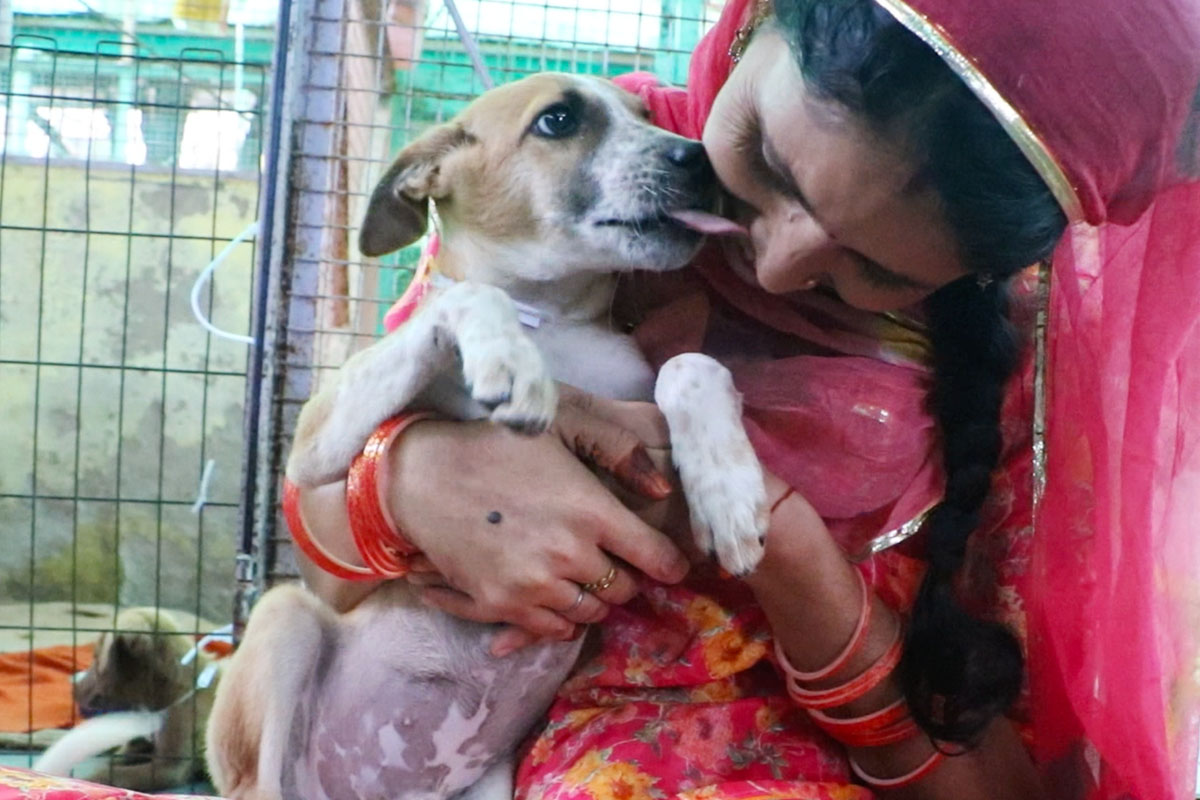
His neighbors must have gasped when they saw the size of this puppy’s wound.
They reported, astonished, that he even wagged his tail when they bent to pick him up, and they themselves hired a rickshaw to rush him to the hospital.
The little angel would definitely have died within a few hours if not immediately treated. We gave him pain medicine right away, and prepared him for surgery as soon as he’d been off feed for a few hours.
He needed stitches internal and external, and luckily there was enough skin for our surgeon to close this horrific wound. And meet beautiful Leo now!
This story was originally shared on The Animal Rescue Site. Submit your own rescue story here. Your story just might be the next to be featured on our blog!
This is my beautiful Hannah girl 💗
She found me at the Animal Protection Society in Keysborough.
John Carlon
She was my best friend, my companion, and the most loyal living being I’ve ever had in my life. I owe her so much — she truly saved me 💗
John Carlon
Unfortunately, she passed over the rainbow bridge nearly two years ago, and it was one of the worst days of my life having to say goodbye 💔
John Carlon
They were the best 16 years of my life. Until we meet again, my beautiful girl, I will never forget you 💔❤️
Story submitted by John Carlon
This story was originally shared on The Animal Rescue Site. Share your very own rescue story here!
The Nikon ZR promises cinema-level features in a body that overlaps heavily with the Nikon Z8, and that overlap raises a real question about what you’re actually gaining. If you shoot both photo and video, the choice affects how you work day to day, not just how your footage looks.
Building a DIY photography prop box gives you a versatile pedestal for posing models, displaying products, and creating dynamic compositions in your studio. Commercial prop boxes cost $200-400, but you can build your own custom photography prop box for around $100 using materials from your local hardware store. This DIY project takes a few hours and results in a professional 24×24-inch pedestal that supports various weights and adapts to different shooting needs.
Why Build Your DIY Photography Prop Box
A photography prop box serves multiple purposes in the studio. Models can sit or stand on it for different posing angles, products display at ideal heights, and you gain creative flexibility for portrait photography and commercial work. The ability to customize dimensions means you build exactly what your shooting style requires.
This modular design allows you to change the height by adding or removing sections. Start with a 2-foot-tall photography prop box, then build additional modules to create a 3-foot version when needed. The removable top also provides storage space inside for lights, modifiers, or other equipment when the box isn’t in use.
Materials for Your DIY Photography Prop Box
Purchase these materials from your local Home Depot or hardware store:
Wood:
3 pieces of plywood (24″ x 24″, 3/4″ thick)
2 pieces of plywood (24″ x 22.5″, 3/4″ thick)
Hardware:
Wood screws (shorter than 3/4″ board thickness)
Metal angle brackets (plan for 2-3 per corner)
Screws for angle brackets
4 wooden dowel pins (1/4″ diameter)
Tools:
Power drill with Phillips head bit
Drill bits (including 1/4″ for dowel holes)
Tape measure
Marker
Sandpaper
Hammer and nails (alternative to a drill)
Finishing:
White gloss spray paint with primer
Optional: plastic wood filler
Total cost: Approximately $100 for all materials and tools if you don’t already own basic equipment.
DIY Photography Prop Box Wood Dimensions
This DIY photography prop box uses specific dimensions to create a perfect 24×24 inch square. Three pieces measure 24×24 inches, while two pieces measure 24×22.5 inches. This difference accounts for board thickness when assembling the box.
When you place a 22.5-inch board between two 24-inch boards, the total length becomes 24 inches (22.5″ + 0.75″ + 0.75″ = 24″). This ensures all sides measure exactly 24 inches square. The shorter pieces sit on top of the longer pieces during assembly, maintaining proper dimensions throughout.
Alternative Design for Seamless Look
If you want a seamless DIY photography prop box where the top isn’t visible, modify the design slightly. Purchase four 2×4 boards cut to 22 inches in length. Mount these inside the box perimeter as support ledges. Cut your top piece to 22.5×22.5 inches so it sits inside the frame on these ledges rather than on top of the box.
This creates a flush appearance where you don’t see the top edge. The trade-off is losing the modular capability of easily removing the top. Choose based on whether you prioritize appearance or functionality for your DIY photography prop box needs.
Before drilling, mark where the screws will go. Place three screws evenly spaced along each edge where boards connect. Measure and mark at 6 inches, 12 inches, and 18 inches from the edge. This creates even distribution along the 24-inch length.
Also, mark the depth positioning. Since boards are 3/4 inch thick, mark at approximately 3/8 inch from the edge. This helps keep the screws centered within the board’s thickness, preventing them from breaking through either surface. Accurate marking ensures your photography prop box assembles properly.
Step 2: Attach Angle Brackets
Before joining boards together, attach angle brackets to the inside corners. Position brackets where two boards will meet. Use screws shorter than your board thickness to attach brackets. Remember that 3/4 inch boards require screws no longer than 3/4 inch, or they’ll poke through the surface.
Place at least two angle brackets per corner. For additional support, use three brackets per corner since they cost only about 50 cents each. The extra reinforcement matters when your photography prop box supports heavier models or equipment during studio sessions.
Step 3: Assemble the First Two Boards
Take one 24×24-inch board and one 22.5×24-inch board. The shorter board sits on top of the longer board’s edge, not beside it. This maintains the 24-inch total dimension. Position the boards at a right angle and drill pilot holes through your marked positions.
Drive screws through the pilot holes to connect the boards. The angle brackets you installed provide interior support, while the screws provide exterior joining strength. This dual attachment method creates a strong corner for your photography prop box.
Connect the third board to create an L-shape with two boards attached. Then add the fourth board to complete the square frame. Throughout assembly, verify that shorter boards (22.5 inches) sit on top of longer boards (24 inches) to maintain proper dimensions.
After joining all four sides, measure the frame to confirm it’s 24×24 inches on all sides. Check both top and side measurements. This verification ensures your top piece will fit properly and your DIY photography prop box maintains its square shape.
Step 5: Validate Your Measurements
Double-check measurements before proceeding. The frame should measure exactly 24 inches in both directions. If measurements are off, the 24×24 inch top piece won’t sit flush. Take time to verify dimensions now rather than discovering problems later.
Place the top piece on the frame to test the fit. It should rest evenly across all edges without gaps or overhangs. If fit isn’t perfect, identify which board is misaligned and adjust before final assembly.
Step 6: Create Dowel Pin Holes for Modular Top
For a removable top that allows height modifications, use dowel pins instead of screws. Mark the center point on two opposite sides of your frame’s top edge. This is 12 inches from either end. Also mark 3/8 inch from the outer edge to center the hole in the board thickness.
Drill pilot holes at these marks using a smaller drill bit first. This guides the larger 1/4 inch bit that creates the actual dowel holes. Drill carefully to keep holes perpendicular to the board surface. Repeat the process on the corresponding spots on the underside of your top piece.
Step 7: Install Dowel Pins
Cut wooden dowel pins to the appropriate length. You need enough length to extend into both the frame and the top piece, roughly 1.25 inches total. Insert dowel pins into the holes on the frame. They should fit snugly but not so tightly that they’re impossible to remove.
Test fit the top piece by aligning its holes with the protruding dowel pins. The top should seat firmly onto the pins. This connection holds the top in place during use, especially with a model’s weight pressing down, but allows you to lift it off when needed.
If you don’t want a modular DIY photography prop box, skip the dowel pins and simply screw or bracket the top permanently to the frame. Use angle brackets mounted inside the box, attaching them to both the frame and the underside of the top piece.
Step 8: Sand All Edges
Before painting, sand every edge of your DIY photography prop box. Pay special attention to corners and edges where models might sit or lean. Sharp edges can snag clothing or scratch skin, so round them off with medium-grit sandpaper.
Sand in smooth, even strokes along each edge. You don’t need to remove much material, just enough to eliminate sharp corners. This safety step takes only 10-15 minutes but prevents accidents during photoshoots.
Step 9: Apply Primer and Paint
Work in a controlled environment rather than outdoors. Wind wastes spray paint and creates uneven coverage. A garage or covered area works better. Use white gloss spray paint that includes primer, or apply separate primer first, then paint.
Apply thin, even coats rather than trying to cover everything in one pass. Hold the spray can about 12 inches from the surface and use smooth, overlapping strokes. Allow each coat to dry completely before adding the next. Plan for at least two to three coats for full coverage on your photography prop box.
Pay attention to corners and edges where paint tends to pool. Multiple thin coats create better results than single thick coats that drip and run. The gloss finish gives your photography prop box a professional appearance that photographs cleanly.
Use solid wood boards rather than plywood if possible. Plywood consists of thin layers glued together, making it harder to drill and screw accurately. Solid wood accepts fasteners more reliably and creates stronger joints for your DIY photography prop box.
If the visible top edge bothers you, fill gaps with plastic wood filler before painting. Sand the filler smooth once dry, then paint over it. Alternatively, remove the top edge in post-production using Photoshop’s clone stamp tool. This takes seconds and eliminates the need for additional construction work.
Add extra angle brackets beyond the minimum. At 50 cents each, the cost is negligible, but the added support significantly strengthens your photography prop box. Consider three brackets per corner instead of two, especially if you’ll be photographing heavier subjects.
Paint in a controlled environment to avoid waste and achieve better coverage. Outdoor painting loses product to wind and creates uneven coats. A garage or covered workspace provides the control needed for professional results.
Using Your DIY Photography Prop Box
Position your completed photography prop box anywhere in your studio for creative compositions. Models can sit on it for portraits, products can be displayed at ideal heights for tabletop photography, or it can be used as a platform for fashion shoots.
The white finish reflects light cleanly and doesn’t introduce color casts. This neutral surface works with any backdrop or lighting setup. The 24-inch square top provides ample space for various poses and products.
For added versatility, build multiple modules at different heights. Stack them to create taller pedestals or use them separately throughout your studio. The modular design means you adapt to different shooting scenarios without buying multiple fixed-height boxes.
Storage Benefits
The removable top transforms your DIY photography prop box into storage when not in use. Store RGB lights, small light modifiers, cables, or other equipment inside the hollow frame. This maximizes studio space efficiency by giving equipment a dedicated storage spot that doubles as a functional prop.
The sturdy construction supports storage weight without issue. Simply lift the top, place items inside, and replace the top. Your photography prop box maintains a clean exterior appearance while organizing gear internally.
Customization Options
Paint your DIY photography prop box any color to match your studio aesthetic or specific shoot requirements. Black creates dramatic contrast, gray offers neutral tones, or use custom colors for branded commercial photography. The modular design accepts any spray paint finish.
Build boxes in different dimensions for varied applications. Smaller boxes work for product photography, while larger versions accommodate full-body posing. The construction process remains identical regardless of size – just adjust your wood dimensions accordingly.
Build Your Studio Essential
Creating a DIY photography prop box for around $100 gives you a professional studio tool that rivals commercial options costing several times more. The customizable design adapts to different shooting needs, the sturdy construction supports various weights, and the modular top allows height adjustments as your requirements change.
This project demonstrates that professional studio equipment doesn’t require professional budgets. With basic materials from the hardware store and a few hours of work, you gain a versatile pedestal that enhances portrait sessions, product shoots, and creative compositions. Your photography prop box proves that thoughtful DIY solutions deliver professional results.