Kitten Spotted in the Cold Under Deck Starts to Change When He’s Given a Chance to Become a House Cat


A kitten spotted in the cold, hiding under a deck, began to change when he was given a chance to become a house cat.

Kitten Spotted in the Cold Under Deck Starts to Change When He’s Given a Chance to Become a House Cat Whiskers-a-GoGo

Leanne, a dedicated volunteer with Whiskers-a-GoGo, was on a rescue mission to help a colony of cats living in a neighbor’s backyard.

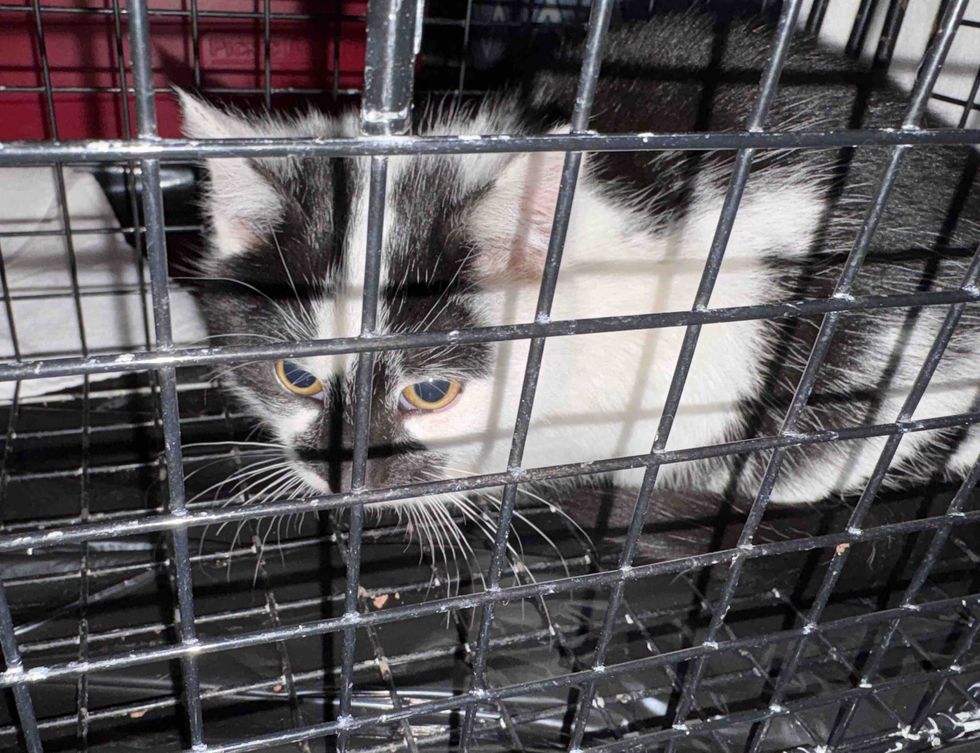
With freezing temperatures setting in, a black-and-white kitten had taken shelter under the deck with his two siblings. Leanne and her team set humane traps near a small opening in the fence, using food to coax the kittens to safety.

“Finally, they found their courage (and hunger) and ventured into the yard with the traps,” Leanne told Love Meow.

feral kitten rescue Whiskers-a-GoGo

The kittens were terrified, hissing and growling as they tried to protect themselves the only way they knew how. On the drive to the spay/neuter clinic, their hisses faded, replaced by tiny, tentative meows. Leanne knew immediately that these kittens had potential and deserved a chance.

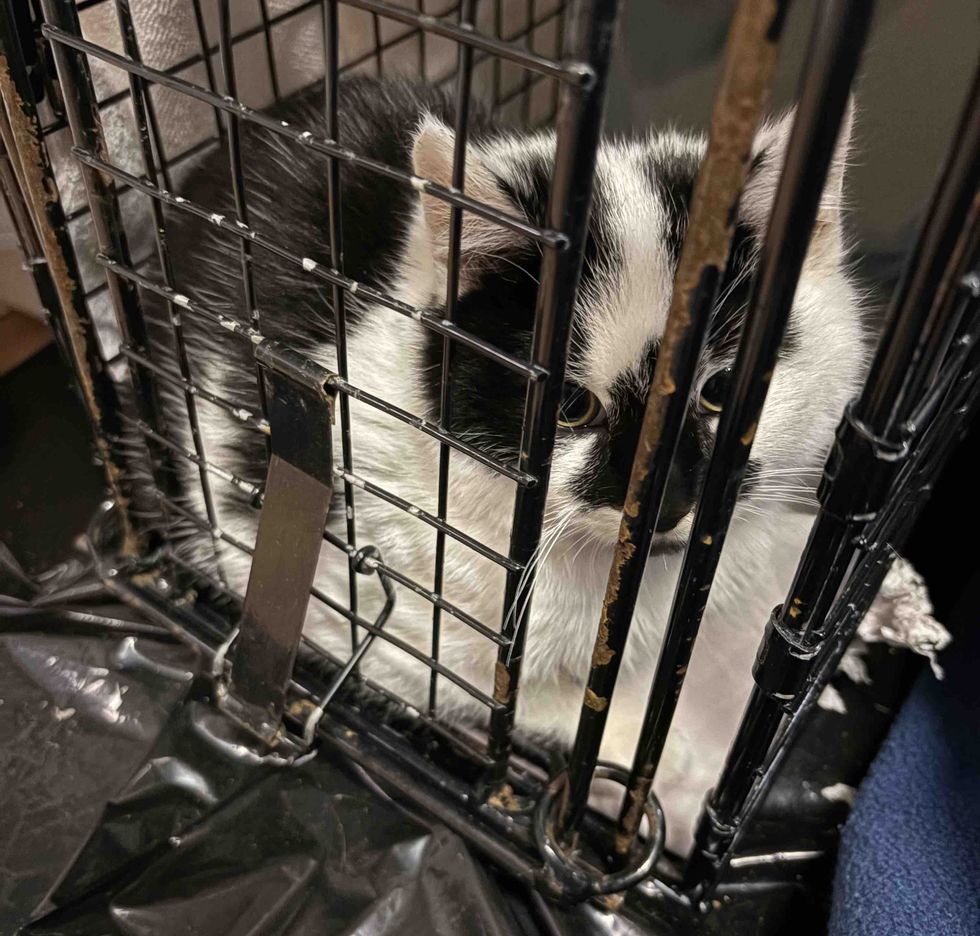
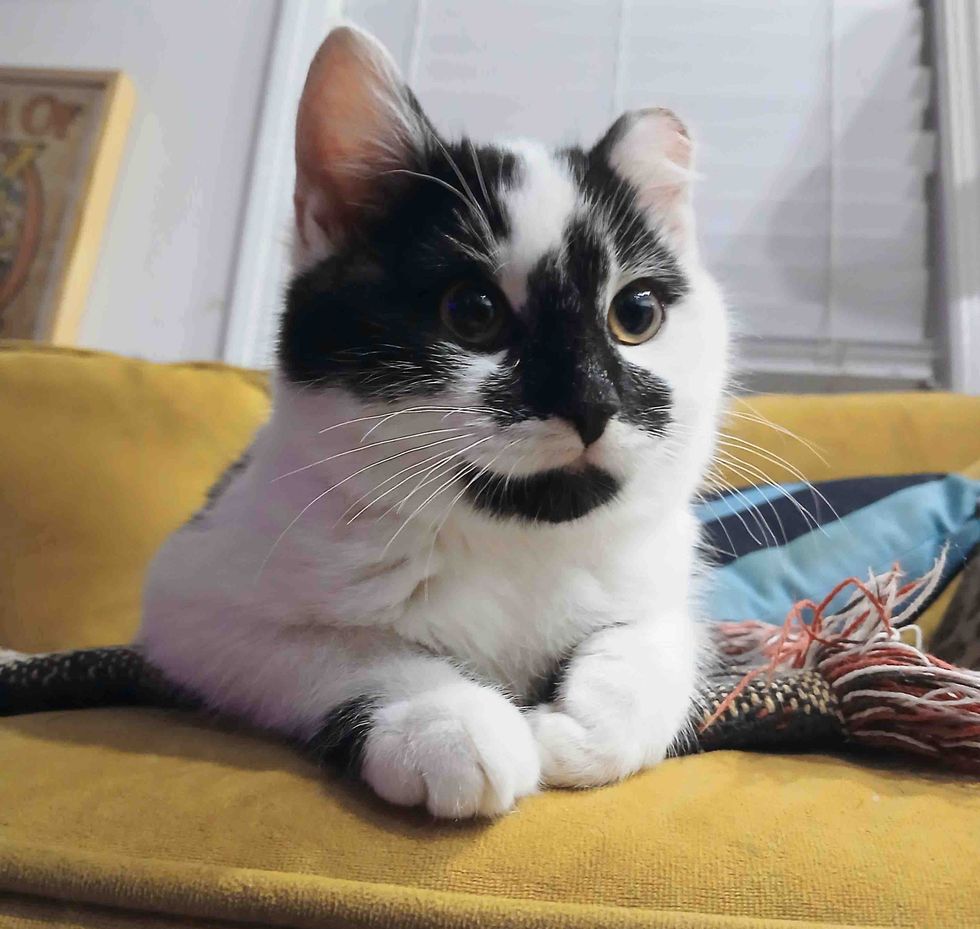
The little one with cow-like markings was especially displeased, unaware that everything was about to change for the better.

feral kitten carrier Whiskers-a-GoGo

When Delilah, a foster volunteer, met the kitten, she was instantly smitten. “He is so rotund and cute and looks like a Beanie Baby. I decided to give him the most ridiculous, reactionary name ever: Gosh Darnit,” Delilah told Love Meow.

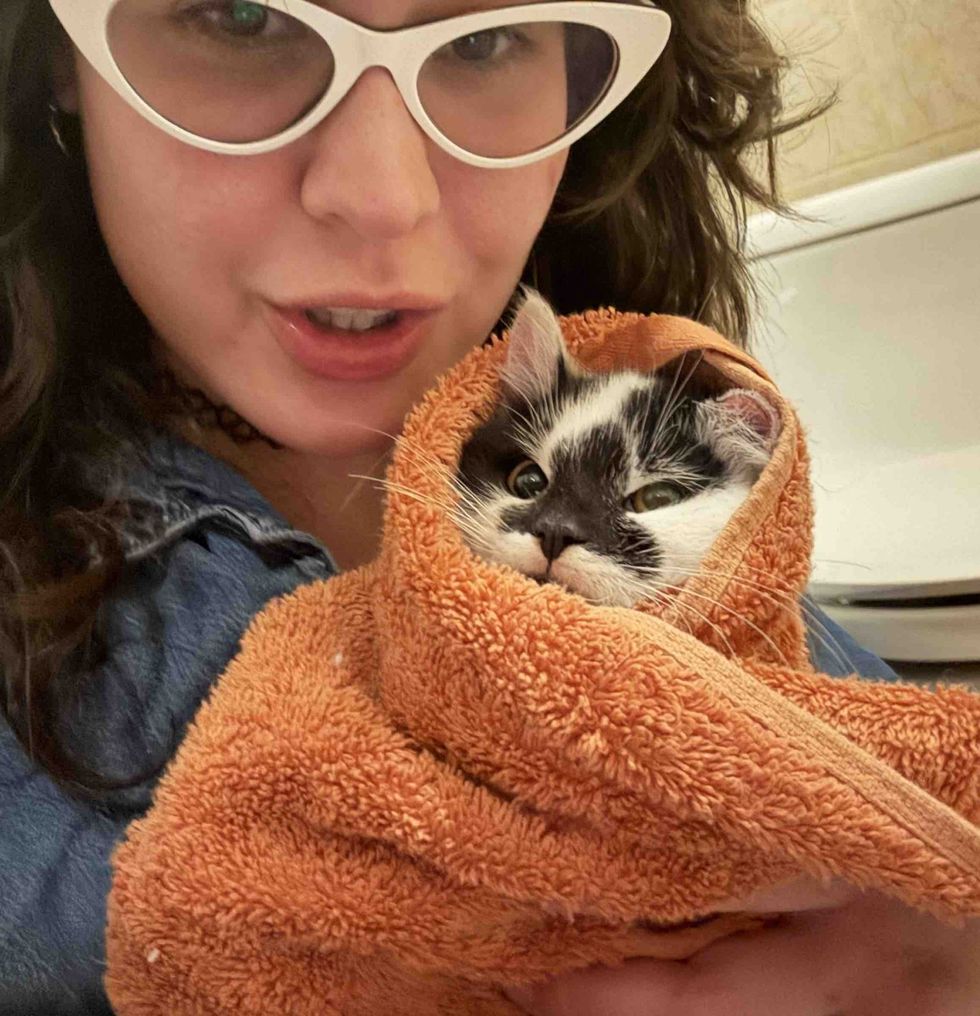
To begin socializing him, Delilah gently wrapped him in a towel and held him close. His eyes darted nervously, his heart pounding out of his chest, but soon, his defenses began to soften.

socializing kitten purrito Whiskers-a-GoGo

Working through the initial squirming and hissing turned out to be much easier than expected. “I would put him in a burrito and sing to him very cheesy 1980s rock songs. I think singing helped him relax and get more acquainted with humans.”

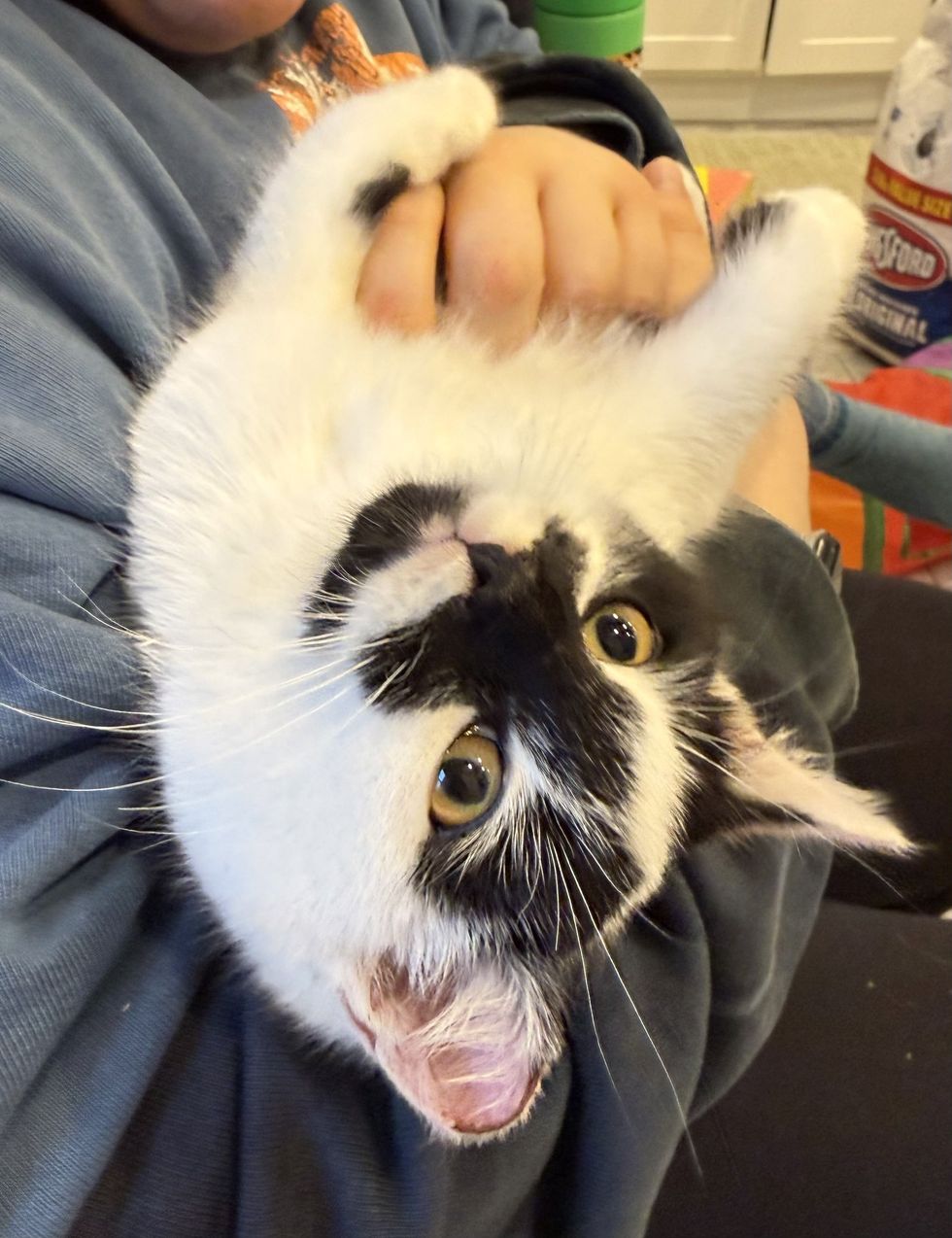
A steady stream of kisses, cuddles, and treats did the trick. Within a few days, he was completely won over.

snuggle kitten in arms Whiskers-a-GoGo

Once he realized he was safe and that his foster mom was kind, his true personality began to shine. He explored his surroundings, claiming everything he touched. Curious, he wanted to be part of whatever was happening.

“Nothing seems to faze him now, and I can’t even remember him being scared or grouchy when I think of him.”

kitten supervisor indoors Whiskers-a-GoGo

While the kittens continued to thrive in foster care, the adult cats were spayed or neutered and returned to the backyard they had called home. They now have access to a heated shelter and a dedicated caretaker who ensures they are fed and safe.

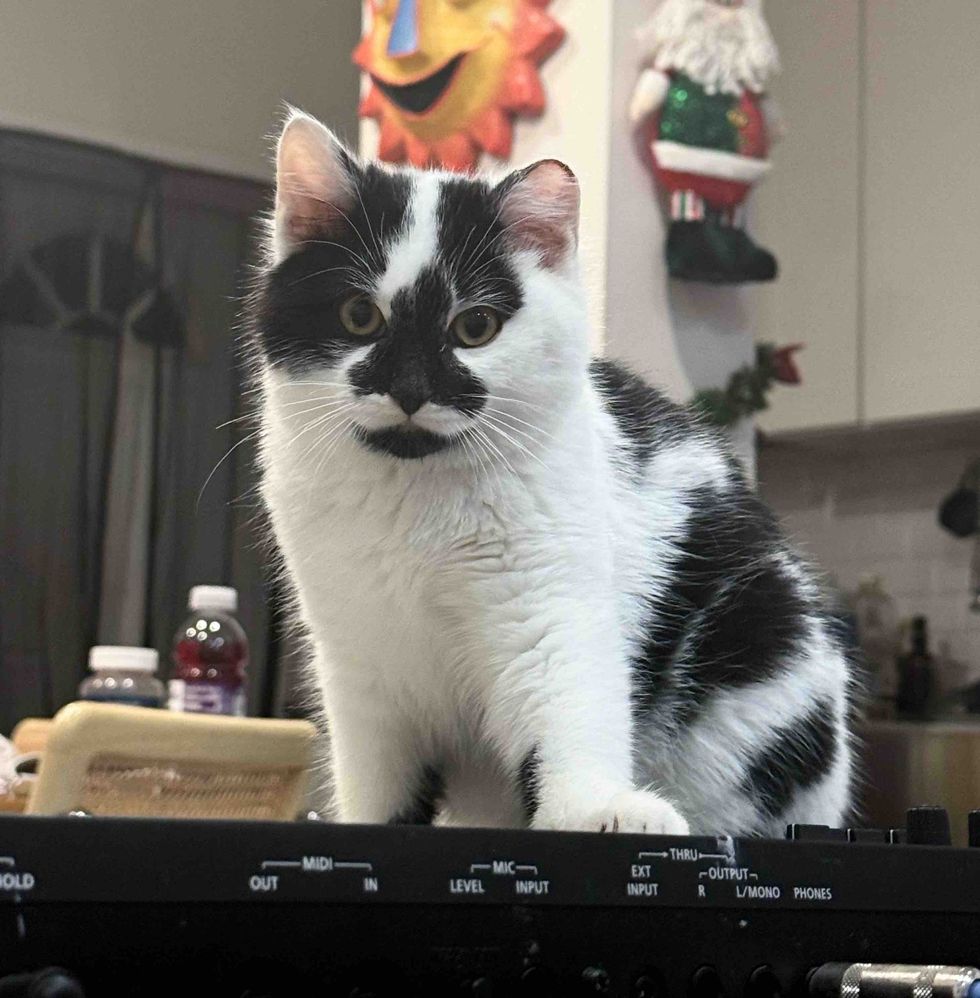
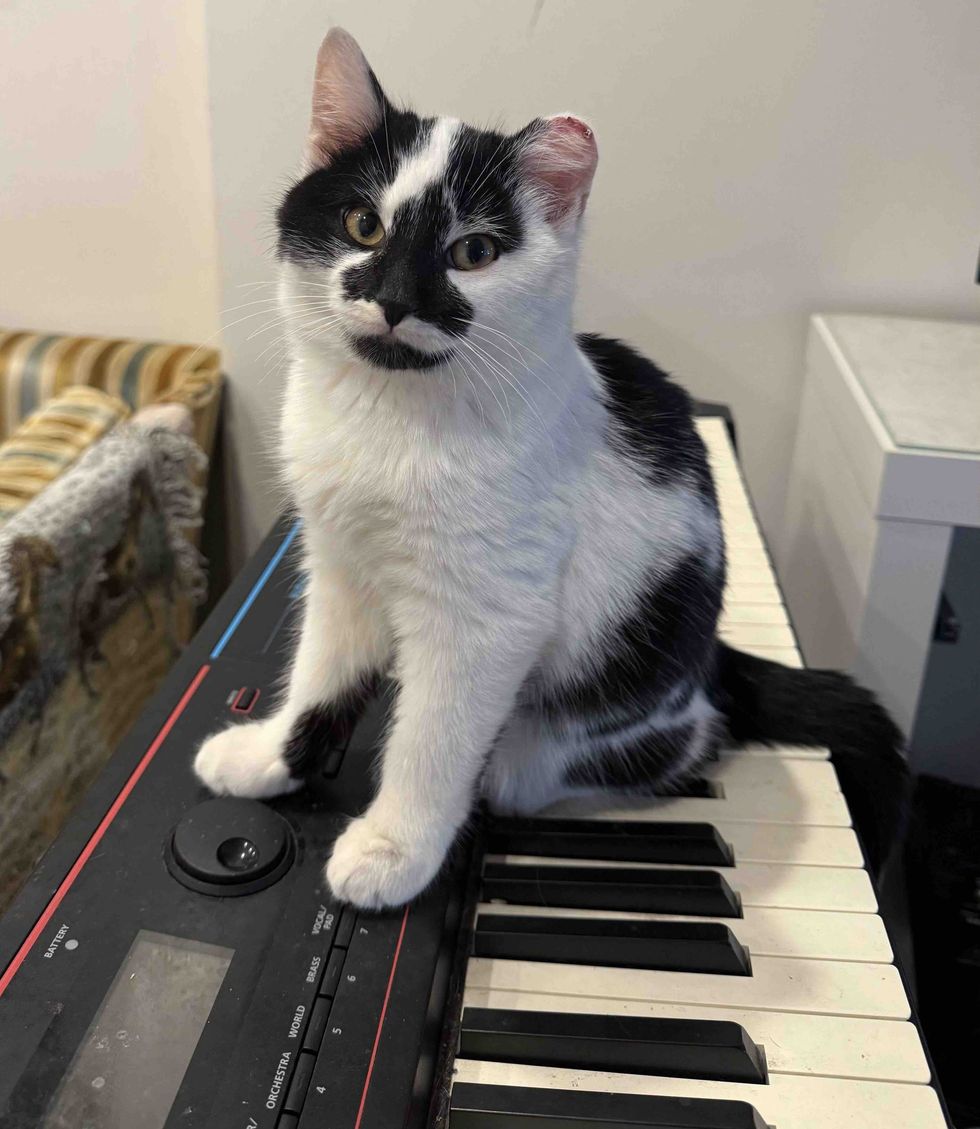
No longer the hissy little jalapeno he once was, Gosh Darnit transformed into a tiny supervisor. He perched on the piano keys, as if offering himself as a muse or insisting on being involved in the creative process.

kitten piano keys Whiskers-a-GoGo

As his confidence grew, so did his voice. Even as a small kitten, he was chatty and loud, announcing his presence wherever he went. “I never had trouble finding him because he loves making his presence known.”

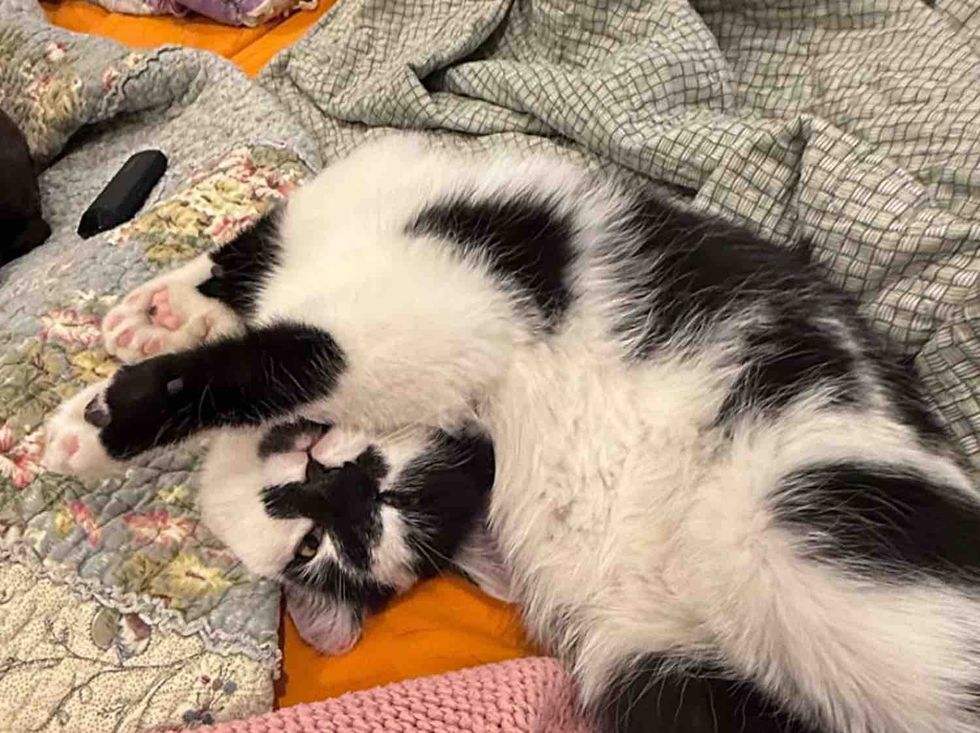
“He’s a perfect cat. His only ‘flaw’ is his love of playing ‘broken neck’ when he sleeps.”

bendy kitten nap time Whiskers-a-GoGo

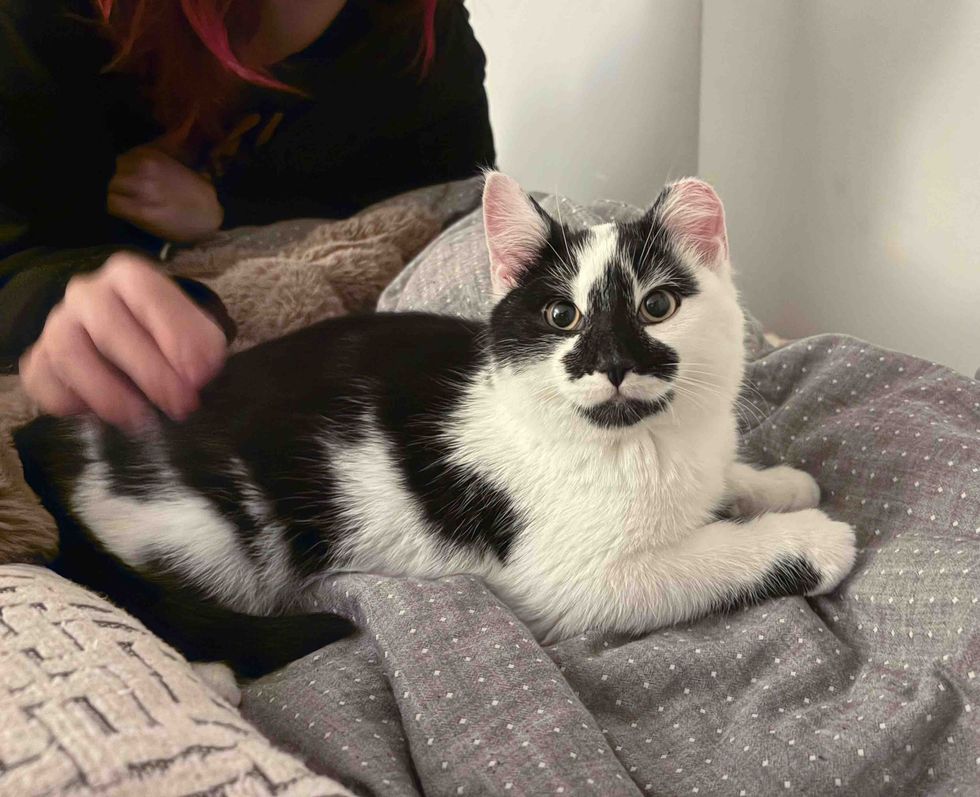
When it came time for adoption, Gosh Darnit didn’t have to wait long to find his perfect match. “We had more than a dozen applications for this little grouch,” Leanne shared.

“He’s doing really well in his new home and gets along beautifully with his new sibling.”

happy kitten cat home Whiskers-a-GoGo

Thanks to the tireless efforts of the volunteers, the kittens were given a second chance at life. They will never again face the cold or spend another day outdoors. Their future is bright, filled with warmth, comfort, and love.

The moment Gosh Darnit spotted a big, soft blanket in his new home, he hopped onto the bed and claimed it as his own.

cat big soft blanket Whiskers-a-GoGo

Share this story with your friends. More cats and kittens at Whiskers-a-GoGo on Instagram @whiskers_agogo and Facebook.

Related story: They Bring in a Litter of Kittens and Notice One is Extra Small, Turns Out the Tiny Cat Needs Special Help


Duvet Day Inside


Today, weather-wise, has been unspeakable – sleet, a freezing gale force wind, and we are all very miserable and bored of this.  Apparently Shetland has been stuck in a bad weather system for a while now.

So, Daisy and I decided to get everyone inside for a rest from this.  A Duvet Day, if you will.

No one needed asking twice.  The Shetland ponies were straight in and with no mucking around either about which stall to go in.  Oh, no. In they went and waited quietly while Daisy took Tiddles’ rug off.

Duvet Day Inside

Silver was a white/grey pony before he rolled.

But the ponies are happy and eating unlimited hay to their hearts’ content.

Then it was the turn of the old folk.  Straight in, no questions asked and, again, waiting patiently while I undid all their rugs without rolling first, which grosses me out (I have a thing about wet sand).

It is the first time anyone has had their rug off for many weeks and it was good to see a) how well they looked and b) how perfectly dry they all were.

And lastly, the old ladies trotted enthusaistically in, once Daisy had been to catch them because they were determined to wait by their bowls rather than follow the others like they should’ve.

Again, nice and dry and also looking rather good for the time of year. I am pleased.

The sheep are also having a Duvet Day.

They don’t believe in going outside and quite honestly, I don’t blame them.

Daisy and I went back to the big shed after lunch to find everyone was just fine (and had poo’ed a lot).  Seeing Waffle having a snooze was exactly what I wanted.  It is important that everyone has a rest from the weather and relaxes for 24 hours.

I am intending to throw them all out tomorrow as it should’ve thawed considerably by then and normal service can then resume.


Discover more from My Shetland

Subscribe to get the latest posts sent to your email.


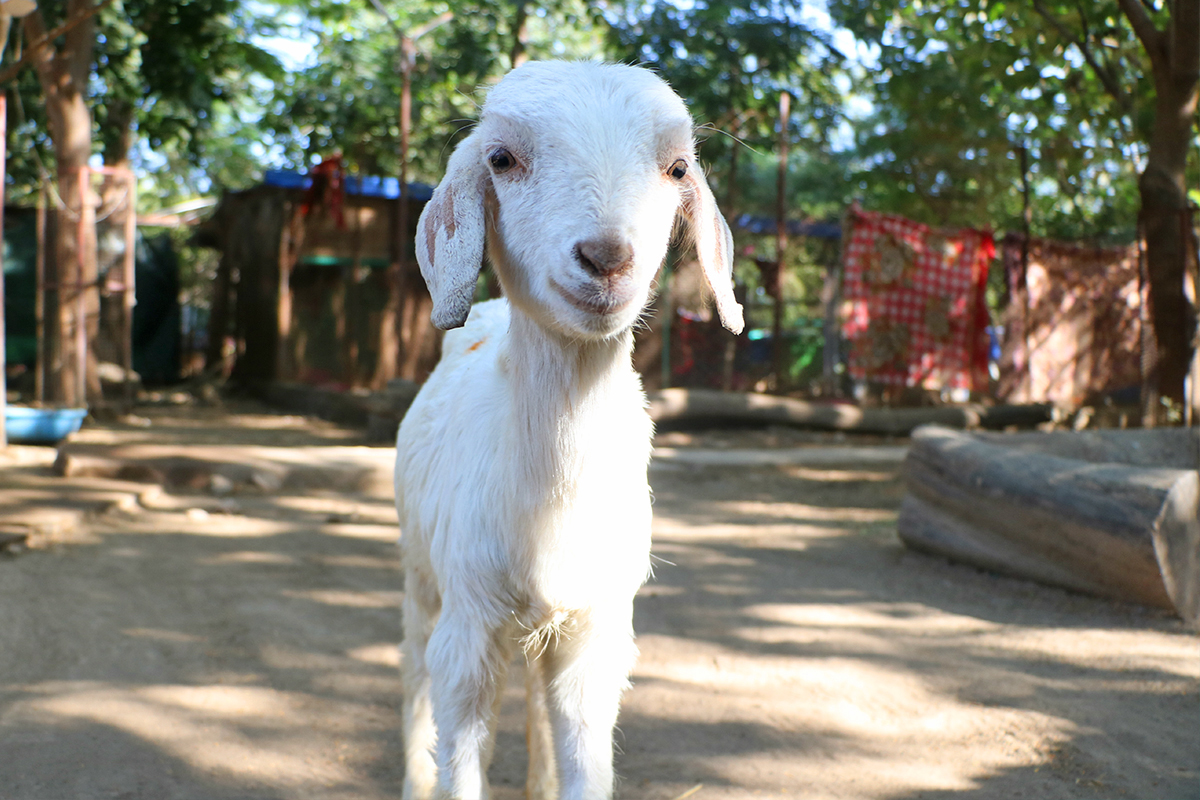
A darling baby goat was abandoned on the road with a neck injury… – Animal Aid Unlimited


January 31, 2026

This baby goat must have suffered a head injury but we have no idea how.

She was found in the road, unable to stand, and neighbors lifted her to a safe spot on their verandah. Sometimes shepherds will leave an injured kid to die rather than to seek treatment. This must have been the sad case with Marshmallow. Luckily, the villagers knew about Animal Aid, and called us to rescue her.

She had no visible wounds, but she couldn’t lift her head at first. We treated Marshmallow for pain, hydrated her with an IV drip, and lay her down in a cozy secure little spot knowing that rest was essential. Within hours, her appetite roared (as goats love to nibble almost constantly.) Up she sat and began to munch on grass. Meet Marshmallow now, an authentic living angel. To meet Snow is simply to fall in love.


Away to Me, the First Mystery Novel from Patricia McConnell PhD


We caught up with Patricia McConnell, PhD, to find out all about her first mystery novel, Away to Me, which is set in the dog world (of course).

Away to Me, the First Mystery Novel from Patricia McConnell PhD

Watch Episode 51 of The Pawsitive Post in Conversation on Youtube or below, listen wherever you get your podcasts (Apple, Spotify) or below, or scroll down for the show notes.

An interview with Patricia McConnell, PhD, about her new book Away to Me

This page contains affiliate links which means I may earn a commission on qualifying purchases at no cost to you.

Away to Me is Patricia McConnell PhD’s first mystery novel, and it’s gorgeous. I fell in love with the main character, Maddie, and all of the dogs in the book, and I know you will too. Kristi and I chatted with Patricia to learn more about the book and why she decided to write fiction set in the dog world.

We talk about:

  •     What made Patricia decide to write a mystery novel
  •     The main character, Maddie McGowan
  •     Whether it was fun to be writing dogs as characters
  •     How she wrote about the dogs as real characters & without turning the interactions into negative/aversive ones.
  •     The many different dog training cases that appear as secondary characters in the book
  •     Patricia has previously written many wonderful non-fiction books, including her memoir, The Education of Will. What’s different about writing fiction?
  •     The power and importance of friendships and how dogs are one of the ways that many people can find a community?
  •     What motivates her to write, and will we see more of Maddie after this? 
The cover of Away to Me shows farmland in shades of orange and green, with a person and dog standing by a farmhouse

Away to Me will be published on Feb 24th and is available for pre-order wherever books are sold, including Bookshop, which supports independent bookstores in the US.

Also mentioned:


The book Patricia recommend is The Salt Stones by Helen Whybrow.

The cover of the book Patricia recommended, The Salt Stones by Helen Whybrow, shows a landscape with sheep

Patricia McConnell PhD is an internationally-renowned applied animal behaviourist who has dedicated her life to improving the relationship between people and animals. Amongst her many treasured dog training books, The Other End of the Leash draws our attention to the human side of dog training. Her memoir, The Education of Will, is a beautifully-written and uplifting account of how to reclaim life after trauma, for both humans and dogs. Her first mystery novel, Away to Me, publishes on 24 Feb 2026.

Learn more about Patricia and her book, Away to Me, on her website.

A quote from Patricia McConnell saying that for about 10 years she's had a scene in her head that starts at a sheepdog trial. As well, the cover of Away to Me and the banner for Bark! Fest, the book festival for animal lovers
Patricia McConnell first told us about the book at Bark! Fest

As an Amazon Associate, I earn from qualifying purchases.

Disclosure: If you buy books linked to our site, we may earn a commission from Bookshop.org, which supports independent bookstores.


World Wetlands Day 2026: Understanding Wetlands and the Laws That Protect Them


Biodiversity in Wetlands

Since wetlands offer a variety of unique characteristics distinct from other ecosystems, wetland animals adapt their habits and their physical appearance to blend well within these habitats. Common characteristics include webbed feet, streamlined bodies, camouflage, and feeding techniques/adaptations that allow for probing in the mud. 

Wetlands are especially vital as breeding grounds, and their destruction has far-reaching impacts. In fact, 95% of commercial fishing revenue in the U.S. is linked to species that breed in wetlands. Without these habitats, not only does biodiversity suffer, but so does a significant portion of our economy and food supply.

National Protections – Clean Water Act and Endangered Species Act

Under the Clean Water Act of 1972, wetlands that are connected to Waters of the United States (WOTUS)—such as major rivers, lakes, and coastal areas—are federally protected. These connected wetlands play a crucial role in commerce, environmental health, and flood control.

However, isolated wetlands that aren’t linked to WOTUS often fall through the cracks. Without federal protection, they are vulnerable to being drained, filled, or developed.

Here’s where the Endangered Species Act (ESA) steps in. More than one-third of all species listed under the ESA depend on wetlands for survival—whether for breeding, feeding, or shelter. This includes amphibians (ex: eastern hellbender salamanders), birds (ex: whooping crane), mammals (ex: Florida panther), and fish (ex: killfish)  that are increasingly threatened by habitat destruction. 

State governments have passed protections for wetlands and endangered species too, but it’s a patchwork of protections that vary in strength – some states don’t have any protections at all. And, political border lines mean nothing to water and wildlife. That’s why national frameworks for protections are an important part of the strategy to save wetlands.

Since returning to office in 2025, the Trump administration has proposed extreme rollbacks to the implementation of both the Clean Water Act and the Endangered Species Act.

Why It Matters

While protecting wetlands helps save frogs or keeps birds chirping, it’s about preserving ecosystems that support human life, too. The fight to save wetlands is ultimately a fight to sustain the balance of nature and the services it quietly provides every day.


Five Inspiring Animals Saved From the Meat Industry


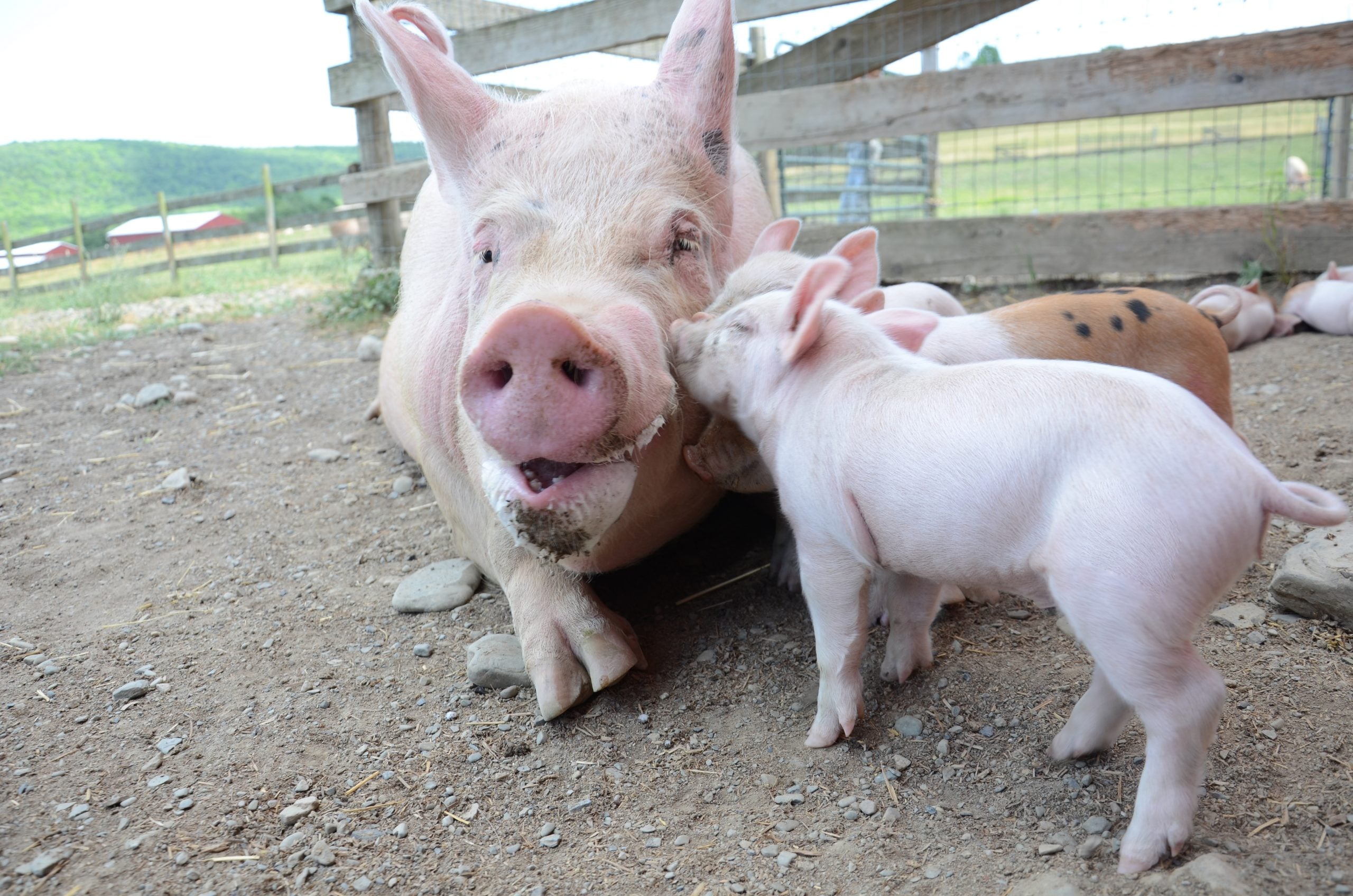
Julia pig came to Farm Sanctuary because authorities alerted us to the violent abuse the pregnant pig was facing, after a factory farm worker recorded her screams of pain and fear. As she was being moved from a gestation crate to a farrowing crate, where she would have given birth, she was beaten and shocked with an electric prod. When she collapsed, she was dragged by her ears. As heartbreaking as her story is, the cruelty Julia faced is common in animal agriculture, where mothers and babies are treated like commodities.

Thankfully, just eight hours after arriving at our New York sanctuary, Julia gave birth in safety. Her 16 piglets were born prematurely, and Julia was still injured—but with round-the-clock care, we helped this family heal. Unlike most pigs born into the heartless world of factory farming, Julia’s babies grew up at her side, and this protective mother never needed to be afraid again.


Cincinnati Zoo Paper Publication Makes Conservation Model Accessible to All  – Cincinnati Zoo & Botanical Garden


Study provides analysis of effective conservation partnerships
Cincinnati Zoo Paper Publication Makes Conservation Model Accessible to All  – Cincinnati Zoo & Botanical Garden
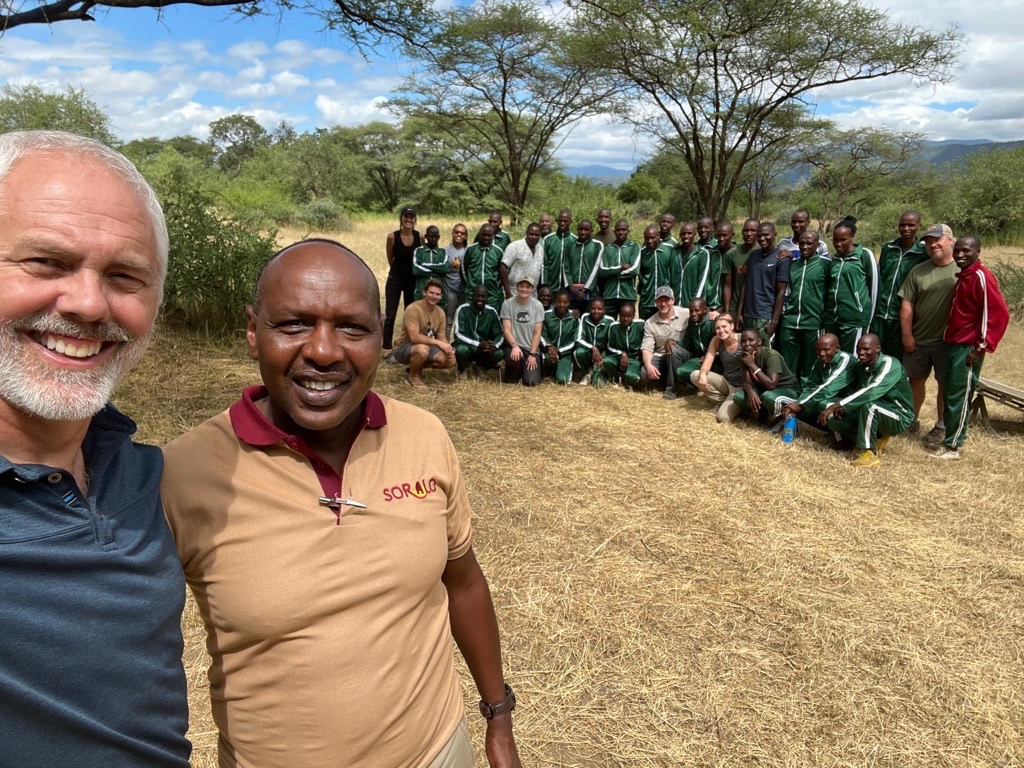
Dave Jenike and John Kamanga

The Cincinnati Zoo & Botanical Garden is thrilled to announce that its collaborative research paper, “Growing together: Strengthening the partnership and impact of a zoo and community‐led conservation organization,” has been published in Ecological Solutions and Evidence!  The study highlights the strengths, challenges, and growth opportunities of a decades-long partnership between the Zoo and the South Rift Association of Land Owners (SORALO), a community-driven conservation organization representing 30 Indigenous Maasai communities in Kenya, and provides a model that can be adopted by other international conservation organizations.

“This paper provides a roadmap for other conservation organizations to join forces with community-driven organizations, and its publication makes the principles it contains more widely accessible,” said Cincinnati Zoo coexistence manager and publication lead author Bailey Cadena. “Zoos have an opportunity and even a responsibility to support the work being done by our conservation partners and to learn and grow alongside them. One way we can do this is to grow our collective capacity, and this model facilitates greater impact.”

Cincinnati Zoo has been mentored by SORALO on why community-driven conservation work is vital to a world where both people and wildlife thrive. The SORALO team invited the Zoo’s leaders to listen and learn from African community conservation leaders as they developed what is now called the Naivasha Vision.

“It was an honor for our leaders to be present to hear what our conservation partners discussed as they crafted this guide to effective partnerships. The Naivasha Vision, which is described in more detail in the publication, includes a strong call to action for organizations like our Zoo to establish a shared purpose and vision and to put the needs of the community first,” said Cadena.

Key findings from the paper emphasize:
The effectiveness of trust-based, long-term partnerships in achieving conservation and community development goals.

The importance of cultural respect, transparency, and empathy in fostering collaboration between international organizations and local communities.

Practical recommendations for conservation organizations worldwide to strengthen partnerships and enhance coexistence strategies.

The study was conducted by Cincinnati Zoo staff and SORALO staff, including the founder and executive director, Mr. John Kamanga. The collaboration led to a friendship between Kamanga and the Zoo’s new CEO, David Jenike. Kamanga has taught Jenike and the Zoo the meaning of coexistence between wildlife and people, which has steered the strategic direction for all the Zoo’s conservation efforts. This collaboration was also recognized by the Association of Zoos and Aquariums and received its 2025 International Conservation Award.

“Working together to document our collective work reflects the dedication of both organizations to advancing conservation through collaboration, capacity building, and shared vision,” said Dr. Lily Maynard, vice president of conservation impact at the Cincinnati Zoo. “Our hope is that more organizations will embrace this conservation model, and that is why we’re excited about the paper being published to share applicable best practices.”

Cincinnati Zoo & Botanical Garden has ongoing partnerships with other conservation organizations around the globe in support of its mission to create a future where people and wildlife thrive together.  Learn more about how the Zoo is Saving Wildlife and supporting the next generation of conservation leaders.


Bird Mental Enrichment Toys: Boost Your Pet’s Cognitive Health


Why Mental Stimulation Matters for Your Bird’s Wellbeing

Birds are incredibly intelligent creatures with complex cognitive abilities that rival those of many mammals. In the wild, they spend hours foraging, exploring, and problem-solving. When kept as pets, however, they often lack these natural stimuli, which can lead to boredom, stress, and even destructive behaviors. Bird mental enrichment toys are not just accessories but necessities for maintaining your feathered friend’s psychological health and happiness.

Mental stimulation is as crucial for birds as proper nutrition and physical exercise. Without adequate cognitive challenges, birds can develop behavioral issues like feather plucking, excessive vocalization, and aggression. The right enrichment toys can prevent these problems while encouraging natural behaviors and keeping your avian companion mentally sharp and emotionally fulfilled.

Understanding Your Bird’s Enrichment Needs

Different bird species have varying intelligence levels and natural behaviors that influence their enrichment requirements. Parrots, for instance, are known for their problem-solving abilities and need more complex toys, while finches might benefit from simpler forms of enrichment that encourage natural foraging behaviors.

Signs Your Bird Needs More Mental Stimulation

Recognizing when your bird is understimulated can help you address the issue before problematic behaviors develop. Watch for these warning signs:

  1. Feather plucking or self-mutilation – A clear indication of stress or boredom
  2. Excessive screaming or vocalization – Birds often make noise when they’re seeking attention or stimulation
  3. Repetitive movements – Such as pacing, head swinging, or rocking
  4. Aggression – Including biting, lunging, or territorial behavior
  5. Lethargy or depression – Decreased activity or interest in surroundings
  6. Decreased appetite – Boredom can affect eating habits

If you notice any of these signs, it’s time to reassess your bird’s environment and introduce more engaging mental enrichment toys.

Types of Bird Mental Enrichment Toys

The market offers a wide variety of bird mental enrichment toys designed to challenge different aspects of avian intelligence. Understanding the purpose behind each type will help you create a well-rounded collection for your feathered friend.

Foraging Toys: Mimicking Natural Food-Finding Behaviors

In the wild, birds spend a significant portion of their day searching for food. Foraging toys replicate this essential activity by making your bird work for treats or regular food items.

Popular foraging toy options include:

  • Puzzle feeders – These require birds to solve simple mechanisms to access food
  • Treat-dispensing balls – Birds must roll or manipulate these toys to release treats
  • Foraging boxes – Filled with paper or other materials where treats can be hidden
  • Food kabobs – Allow you to skewer fruits and vegetables for your bird to work at
  • Piñata-style toys – Birds must tear through materials to reach hidden treasures

Foraging toys not only provide mental stimulation but also extend feeding time, which better mimics natural eating patterns and prevents obesity from rapid food consumption.

Problem-Solving Toys: Challenging Your Bird’s Intelligence

Birds are natural problem solvers, and toys that require them to figure out mechanisms or sequences provide excellent cognitive exercise.

Effective problem-solving toys include:

  • Sliding puzzles – Birds must move pieces to reveal treats
  • Stacking toys – Require birds to manipulate and rearrange components
  • Lock and key toys – Birds must figure out how to open compartments
  • Sequential puzzles – Require multiple steps to solve

These toys are particularly beneficial for larger parrots like African Greys, Amazons, and Macaws, who have the cognitive abilities comparable to toddlers and need regular intellectual challenges.

Destructible Toys: Satisfying Natural Urges

Birds naturally chew, shred, and destroy materials as part of their foraging and nest-building behaviors. Providing appropriate destructible toys allows them to engage in these instinctual activities safely.

Safe destructible toy materials include:

  • Untreated wood – Provides a natural chewing experience
  • Palm leaf – Offers satisfying shredding opportunities
  • Seagrass – Durable yet destructible for moderate chewers
  • Paper products – Including bird-safe paper rolls and cardboard
  • Natural fibers – Such as sisal, cotton rope (monitored for fraying), and coconut fiber

These toys should be replaced regularly as they become worn to prevent ingestion of small pieces and maintain your bird’s interest.

Interactive Toys: Building Trust and Bonding

Some enrichment toys are designed to be used together with your bird, strengthening your bond while providing mental stimulation.

Bonding enrichment activities include:

  • Training props – Used for teaching tricks and commands
  • Target sticks – For positive reinforcement training
  • Manipulative toys – That you and your bird can work on together
  • Musical toys – Many birds enjoy making sounds and “dancing”

These interactive experiences not only stimulate your bird mentally but also build trust and communication between you and your feathered companion.

Rotating and Introducing New Bird Enrichment Toys

Even the most engaging toy will eventually lose its appeal if it’s always available. Creating a rotation system keeps your bird’s environment fresh and interesting.

Creating an Effective Toy Schedule for Maximum Engagement

Follow these guidelines for an effective toy rotation:

  1. Divide toys into groups – Create 3-4 sets of different toys
  2. Rotate weekly – Switch out toys every 7-10 days
  3. Clean before storage – Sanitize toys before putting them away
  4. Observe preferences – Note which toys your bird favors and include at least one favorite in each rotation
  5. Introduce gradually – Some birds are neophobic (fear new things), so introduce new toys slowly

When introducing new bird mental enrichment toys, place them outside the cage first so your bird can observe them from a safe distance. Once your bird shows curiosity rather than fear, move the toy to the cage periphery before finally placing it in an accessible location.

DIY Bird Enrichment Toys: Budget-Friendly Options

Creating homemade enrichment toys can be cost-effective and allows you to customize based on your bird’s preferences. Simple DIY options include:

  • Paper cup puzzles – Hide treats inside stacked and folded paper cups
  • Cardboard foraging boxes – Fill with shredded paper and hidden treats
  • Toilet paper roll toys – Stuff with treats and fold the ends
  • Ice cube treat toys – Freeze small pieces of fruit in ice for a refreshing challenge

Always ensure DIY materials are bird-safe, avoiding toxic materials, small parts that could be swallowed, or dyes that might be harmful.

Safety Considerations for Bird Enrichment Toys

While providing mental stimulation is important, safety must always come first when selecting bird enrichment toys.

Key safety guidelines include:

  • Appropriate sizing – Toys should match your bird’s size to prevent entanglement
  • Non-toxic materials – Avoid zinc, lead, treated woods, or harmful dyes
  • Regular inspection – Check toys daily for damage and replace as needed
  • Supervision with new toys – Monitor how your bird interacts with unfamiliar items
  • Proper placement – Position toys where they won’t interfere with movement or feeding

Enrichment Beyond Toys: Creating a Stimulating Environment

Mental enrichment extends beyond physical toys to include the overall environment and experiences you provide for your bird.

Additional enrichment strategies include:

  • Rotating cage locations – Offering different views and surroundings
  • Nature sounds – Playing recordings of outdoor environments
  • Supervised exploration – Allowing safe out-of-cage time in different rooms
  • Social interaction – Regular conversation and attention from human companions
  • Training sessions – Teaching new tricks or behaviors using positive reinforcement

Enhancing Your Bird’s Life Through Mental Enrichment

Investing in quality bird mental enrichment toys is truly an investment in your feathered friend’s overall wellbeing and longevity. Birds are remarkably intelligent creatures with complex emotional and cognitive needs that must be met for them to thrive in captivity.

Regular mental stimulation through varied toys helps prevent behavioral issues while strengthening the bond between you and your avian companion. By understanding your bird’s natural behaviors and providing appropriate challenges, you create an environment where they can express their instincts and abilities.

Start enhancing your bird’s environment today with toys that challenge their mind and satisfy their natural instincts. Your feathered friend will reward you with better behavior, increased interaction, and the joy of watching them engage with their world in meaningful ways. Remember that the happiest birds are those whose physical and mental needs are both thoughtfully addressed through proper care, nutrition, and enrichment.

Florida’s ‘Frozen’ Iguanas: Why Compassion Matters For These Vulnerable Reptiles – World Animal News


Florida’s ‘Frozen’ Iguanas: Why Compassion Matters For These Vulnerable Reptiles – World Animal News


As Florida experienced a rare cold snap in early February 2026, residents were alarmed to see green iguanas falling from trees and lying motionless on sidewalks, lawns, and roads. Despite the shock, these unique reptiles are not frozen or dead. They are in a natural, temporary state called torpor, a cold-induced coma that helps them conserve energy when temperatures drop below 40°F.

Once temperatures rise, the iguanas can recover quickly. Even though green iguanas are invasive in Florida, these extreme weather events show how vulnerable these creatures can be. They are surviving in an environment far from their natural habitat, and human intervention can either protect or unnecessarily harm them.

Green iguanas were imported from Central and South America as pets beginning in the 1960s and 1970s. Some were intentionally released when their owners could not handle their large size, while others escaped captivity. Florida’s warm, subtropical climate allows iguanas to reproduce quickly, with females laying multiple clutches of eggs per year. Today, their population is estimated at hundreds of thousands to over a million, primarily in South and Central Florida.

On January 30, 2026, the Florida Fish and Wildlife Conservation Commission (FWC) issued Executive Order 26‑03, temporarily allowing the public to collect cold-stunned green iguanas without a permit on February 1–2, 2026, and transport them to designated FWC offices. The order has since expired, and the FWC is no longer accepting live iguanas from the public.

Some of the iguanas brought to FWC drop-off locations were transferred to permitted holders, who can legally care for them or, sadly, sell them outside the state. Iguanas that could not be transferred were euthanized by FWC staff.

WAN and Peace 4 Animals stress that the cold snap should not be used as an excuse for unnecessary euthanasia. Whenever possible, iguanas should be handled humanely, and relocation to permitted, suitable facilities or habitats outside Florida should be considered as an alternative to immediate killing.

Florida’s state anti-cruelty laws apply to green iguanas. Intentional harm or unnecessary suffering is illegal. Humane handling is always required.

Above all, these cold-stunned green iguanas deserve to be treated with respect and compassion, reflecting our responsibility to all animals that rely on us for their survival.


Forest Officials Scramble To Rescue 2-Year-Old Elephant Calf From Deep Well | The Animal Rescue Site


The story of a baby elephant trapped in a well in Kerala, India, reads like a tense rescue drama with a hopeful ending. In the Ernakulam district, plantation workers discovered a calf stranded 20 feet down in a narrow shaft, struggling to keep its head above water. What could have been a heartbreaking tragedy instead became a powerful example of human compassion and careful coordination, as wildlife experts and local workers teamed up to carry out a dramatic elephant rescue that ultimately gave the young animal a second chance.

According to the report, the situation unfolded on a rubber plantation where workers first heard or saw signs of distress and found the calf at the bottom of the well. The shaft was deep and tight, and water inside the well made the situation even more precarious. The baby elephant was trying to stay afloat, its head bobbing above the surface as it fought to survive long enough for help to arrive. Moments like this highlight how fragile life can be, even for an animal as strong and resilient as an elephant.

Forest Officials Scramble To Rescue 2-Year-Old Elephant Calf From Deep Well | The Animal Rescue Site

At first, the workers did not immediately rush into a rescue attempt, and their hesitation had a serious reason. The calf’s herd was nearby, and anyone who understands elephant behavior knows how protective adults can be of their young. A sudden attempt to intervene could have provoked a stampede, putting both the humans and the elephants in danger. That concern created a painful tension. The baby clearly needed help, yet moving too quickly or without a plan risked escalating the crisis instead of resolving it. The decision to pause and call wildlife experts reflected not only caution but also respect for the herd and for the workers’ own safety.

Once wildlife specialists arrived on scene, the rescue effort shifted from worry to action. Rather than attempting to haul the calf directly up the narrow shaft, which might have injured the animal or caused the walls to collapse, the team opted for a more patient and deliberate strategy. They began to dig an escape route. It was not a quick solution, and it required methodical work, but it was a plan that kept the calf’s safety at the center while also taking the surrounding elephants into account.

Rescue team helps a baby elephant trapped in a muddy pit in the forest.

In that setting, every movement mattered. Imagining the scene, the ground around the well would have been carefully assessed for stability, and each shovelful of earth removed would bring rescuers one step closer to creating a path the baby elephant could navigate. While the original report keeps the details concise, the phrase “painstaking task” speaks volumes. It evokes coordinated teamwork, sweat, and persistence, likely under pressure from time and the growing concern of everyone watching.

The emotional weight of the moment is easy to picture. Plantation workers who discovered the animal, experts guiding the rescue, and anyone else who gathered to watch would all be feeling a mixture of anxiety and hope. At the bottom of the well, the calf had to keep treading water and maintaining its energy while the escape route slowly took shape. Every minute of effort carried the possibility of success or failure. The knowledge that the herd was nearby would have added a layer of urgency, since elephants are social animals and separation from the group is highly stressful for a young calf.

What followed, as the article notes, was a successful conclusion. The baby elephant had a “lucky escape,” a simple phrase that captures a complex turn of events. Luck may have been in the timing of the discovery and the presence of workers close enough to notice the crisis. Skill and planning, however, were clearly supplied by the wildlife team who knew how to conduct an animal rescue in a way that protected both humans and elephants. I found this detail striking because it underscores how effective cooperation between local communities and trained experts can be when an animal’s life hangs in the balance.

The rescue was dramatic enough that it has been shared as a video, allowing viewers far from Kerala to witness the moment the calf finally gained its freedom. Stories like this tend to resonate widely because they show people and animals intersecting in a moment of vulnerability and care. Instead of conflict, the focus is on problem solving, patience, and the shared desire to see a living being survive. For many viewers, the most memorable part will likely be the final moments when the elephant, at last, climbs out of the well and returns toward safety.

While the report does not go into detail about what happened after the calf emerged, it is reasonable to imagine a scene of relief for everyone involved. The plantation workers who had been afraid of triggering a stampede could finally breathe easier. The wildlife experts who had committed time and effort to digging that escape route could see their work pay off in the best possible way. And somewhere nearby, the rest of the herd would have one of its youngest members back. That reunion, even if not described in the article, sits at the heart of why this rescue story carries such emotional weight.

Beyond the event itself, the outlet that shared this account frames it as part of a broader effort to spotlight “good news” in a world that often feels crowded with crisis and conflict. By inviting audiences to submit their own uplifting, cute, or inspiring videos, and by offering a newsletter dedicated to positive stories, the platform positions stories like the Kerala elephant rescue as reminders that compassion remains very much alive. This particular rescue also fits into a larger pattern of human and wildlife encounters in India, a country where elephants share space with villages, farms, and plantations, and where coexistence can be complicated yet deeply meaningful.

For those looking to step away from heavy headlines, the same source encourages readers to find a “news break” through its PLAY hub, which features puzzles, games, and more. That context reinforces the idea that amid daily responsibilities and worries, there is value in pausing to absorb hopeful moments. A baby elephant clambering free from a well after a coordinated, careful rescue is not just an isolated incident. It is one example of how thoughtful human action can change the course of a life. Sharing such stories, whether by watching the rescue video, signing up for a newsletter focused on uplifting content, or exploring lighthearted activities, offers a quiet counterbalance to stress and uncertainty. In the end, the Kerala well rescue reminds us that in the face of risk and fear, empathy and expertise can work together to pull something small yet immensely important back to safety.

Read more at