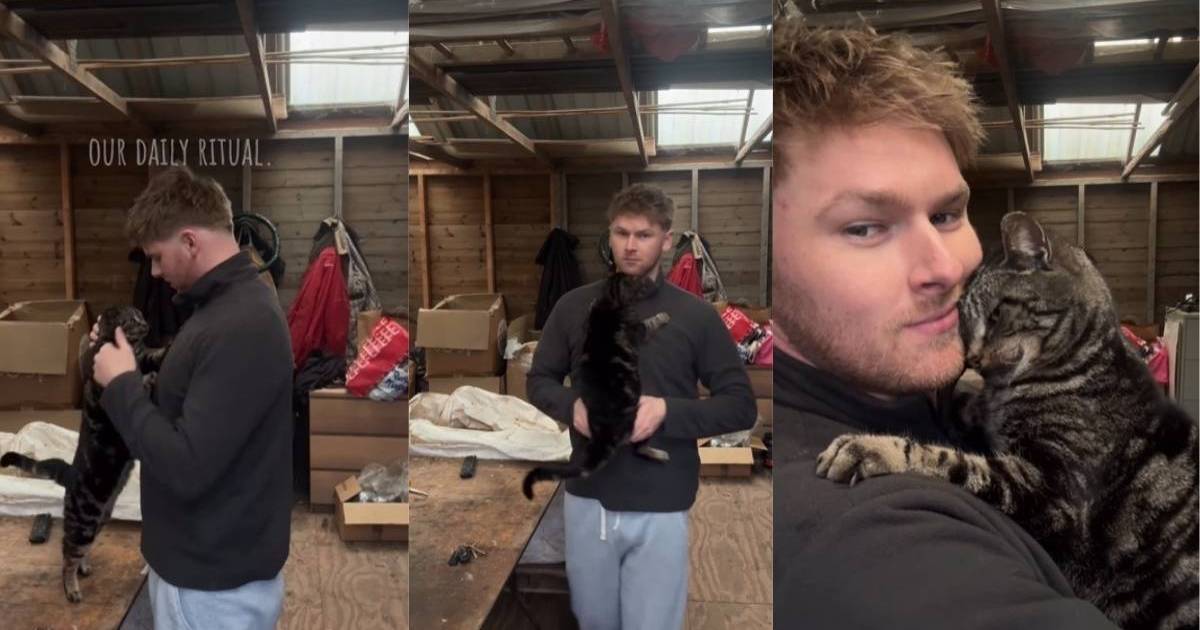
In an adorable Instagram video from user @harryandlippy, a tabby cat named Lippy demands hugs from her dad in the sweetest way possible, and who can deny such an opportunity? The cat starts her routine perched on a table. Amid a chaotic background, Lippy focuses on her dad, her human being, whom she wants to cozy up to.
Cat can’t stop hugging dad in adorable video
As soon as her dad steps in front of her in the adorable video, the cat lifts both front paws into the air and leans forward. Before you know it, she jumps up into her human’s arms. Then, Lippy wraps her paws around her dad’s neck and settles her whole body against his chest, purring loudly as if she is trying to drown out the rest of the world.
The on-screen caption calls it “Our daily ritual,” and the video shows why. Lippy rubs her face against her dad’s face, keeps purring, and even receives a soft kiss without moving an inch. And then her eyes start to droop. Still hugging on tight and purring as adorably as a cat could, she drifts into a comfortable sleep right there in her owner’s arms.
The video’s caption highlights, “The way she starts going to sleep in my arms ??”
Lippy’s body language says a lot: when cats press their faces into someone, they often do it for comfort and to share scent, which is basically their unique way of saying, “You’re mine, and I feel safe here.” And purring is more than just an adorable sound. Many cats use it to settle themselves down when they feel calm and secure.
Viewers couldn’t get over this sense of calmness and security. One person noted, “The paws round the neck,” while another wrote, “This warms my heart,” adding that it was “Just unconditional love at its purest.” And judging by the cat’s daily ritual with her dad in the video, it is, in fact, love that they share.
An orange cat dad helped care for kittens after leaving the street life. His wish came true with two kittens by his side.
Harry and MerleTails of the Forgotten Paws
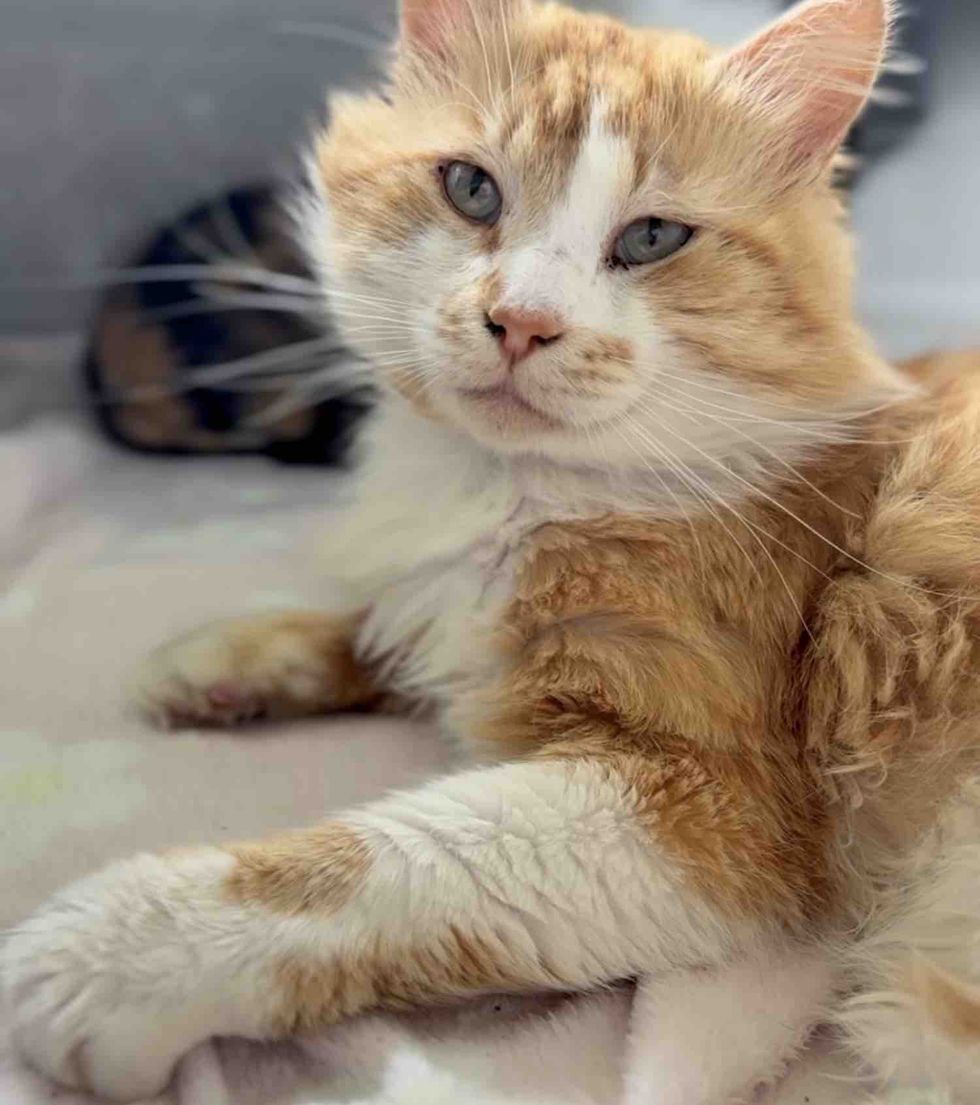
After wandering the streets for some time, an orange cat named Harry was finally rescued, alongside a heavily pregnant calico named Reba.
Amber, an experienced foster volunteer with Tails of the Forgotten Paws, prepared a quiet, cozy space for the pair. While Reba was shy and reserved, Harry quickly warmed up to Amber, greeting her with loud purrs and affectionate snuggles.
Once cleaned up and fed, Harry kneaded his blanket with joy and filled the room with his contented purrs.
Amber
Harry was likely once someone’s pet, but somehow ended up unwanted and left behind. Given a second chance, he regained his trust in people and touched everyone he met with his gentle, loving nature.
A few days later, Reba welcomed five healthy kittens into the world: two calicos, two gingers, and one white with tabby markings. She immediately embraced motherhood, feeding, cleaning, and showering her babies with love.
Amber
While nestled close to their mom, the bolder kittens turned into tiny lion cubs, hissing their fiercest little hisses at unfamiliar scents. Harry, believed to be the kittens’ father, was soon neutered. He respectfully gave Reba the space she needed while quietly keeping her company.
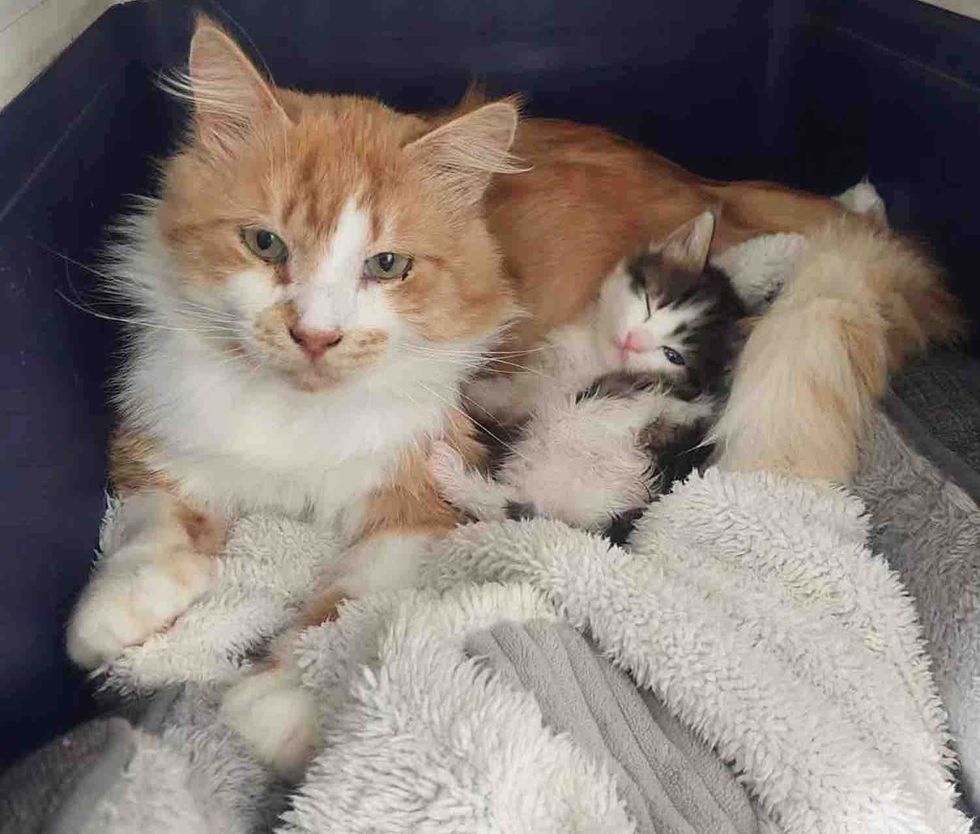
When the kittens were upgraded to a larger playpen, they began waddling around. During one of Reba’s breaks, Patsy, one of the calicos, made a beeline for Harry and curled up beside him.
Harry and PatsyAmber
Within weeks, the kittens’ eyes were wide open, and their curiosity soared.
As soon as they found their footing, they toddled around the nest, setting off on tiny adventures. Fully convinced they were sprinting at top speed, the kittens crept across the room in slow motion.
Amber
As the kittens grew more playful and independent, Reba started taking more time for herself. But the moment she heard their cries, she chirped back, prompting them to gather around her for another round of nursing.
No longer timid or wanting to hide, Reba began seeking affection, leaning into chin scratches and happily accepting pets from ears to tail.
Amber
The kittens blossomed into confident, mischievous youngsters. Their boundless energy and playful antics awakened the inner kitten in Harry. He happily joined in their games, shared toys, and watched the little ones fall asleep mid-play.
While Reba enjoys some well-earned me-time, Harry doesn’t mind the kittens climbing all over him for attention. They race around the room, keeping him fully entertained.
Amber
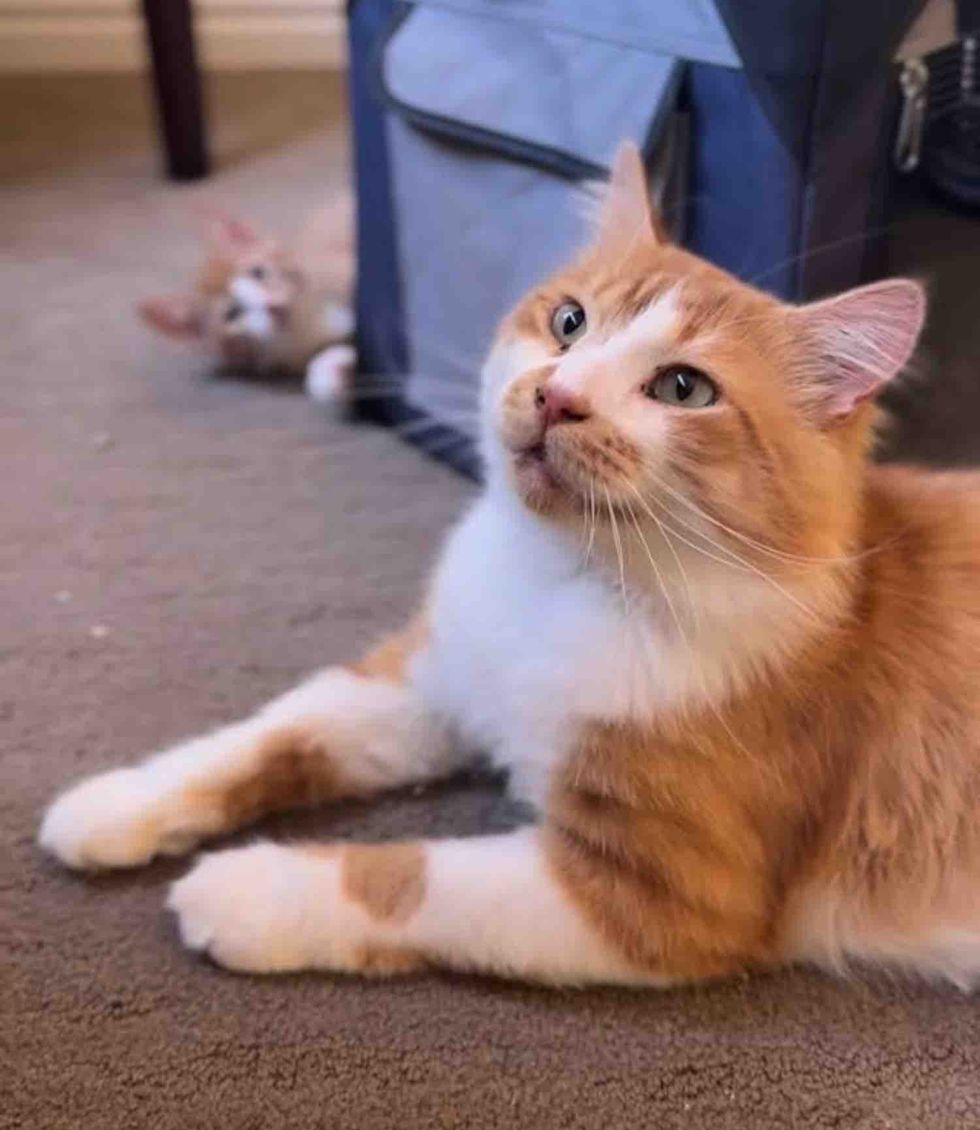
Kenny is Harry’s little mini-me and greets him with gentle paws. She’s always nearby, ready to play and soak up his affection.
When adoption time arrived, three of the kittens (Patsy, Hank, and Lainey) quickly found their forever families. An adopter named Julie came to meet Harry when she learned that his two other kittens (Kenny and Merle) were still waiting for a home.
Kenny and HarryAmber
“I couldn’t believe it when Julie told me she wanted to adopt all three,” Amber shared. “I don’t dance and have never done a happy dance in my life, but I did yesterday.”
As Harry and all the kittens prepare for their forever homes, Reba can finally focus on herself. “This will give her a chance to shine all on her own. She’s a beautiful, quiet girl who will flourish given some one-on-one time. Then we can find Reba her fabulous forever home as well.”
They will be spayed or neutered before embarking on their new journeyAmber
Harry is thriving with his little ones racing around him, and there’s never a dull moment. He’s been an incredible dad and a loyal companion, and now he’ll get to spend the rest of his life with his daughter and son.
Understanding Ant Farm Kits: The Foundation of Your Myrmecological Adventure
Ant farm kits for beginners represent a fascinating intersection of education, entertainment, and naturalistic observation. These carefully curated ecosystems provide novice myrmecologists—ant enthusiasts—with everything necessary to establish a thriving colony within their homes. Unlike traditional pet ownership, ant farming offers a unique glimpse into one of nature’s most sophisticated social structures.
A comprehensive ant farm kit typically includes a transparent habitat, nutritional gel medium, observation tools, and detailed instructions. The formicarium—the technical term for an ant habitat—allows you to witness the intricate tunneling patterns, hierarchical behaviors, and collective intelligence that define these remarkable arthropods. For pet owners accustomed to conventional companions, ants present an entirely different caregiving experience that requires minimal daily intervention yet provides maximum educational value.
The appeal extends beyond mere observation. These miniature ecosystems demonstrate principles of architecture, social organization, and environmental adaptation. Children and adults alike develop appreciation for complex biological systems while maintaining a low-maintenance pet alternative that fits seamlessly into busy lifestyles.
Essential Components of Quality Ant Farm Kits
Habitat Design and Materials
Premium ant farm kits feature crystal-clear acrylic or polycarbonate construction that withstands daily handling while providing unobstructed viewing angles. The substrate material—whether traditional sand, proprietary gel, or hybrid mediums—directly impacts colony development and tunneling patterns. Gel-based formicaria offer several advantages for beginners: they eliminate the need for separate water sources, reduce maintenance requirements, and create distinctive blue or green aesthetic appeal.
Ventilation systems deserve particular attention when selecting your kit. Microscopic air holes prevent condensation buildup while maintaining proper humidity levels. Poor ventilation can lead to mold development or colony collapse, making this feature non-negotiable for successful ant farming.
Nutritional Support Systems
Quality kits incorporate nutritional gel that serves dual purposes: structural medium for tunneling and complete dietary source. This innovative approach eliminates the complexity of feeding schedules while ensuring consistent nutrition. The gel contains carbohydrates, proteins, and essential minerals required for healthy colony development.
“The nutritional gel medium revolutionized beginner ant farming by simplifying care requirements while maintaining optimal colony health conditions.”
Some advanced kits include supplementary feeding stations for introducing variety into the ants’ diet. Fresh fruits, honey drops, or specialized ant foods can enhance the viewing experience while supporting colony growth.
Choosing the Right Ant Species for Beginners
Species selection significantly impacts your myrmecological journey’s success and enjoyment. Harvester ants (Pogonomyrmex species) represent the gold standard for novice ant farmers due to their robust nature, impressive digging capabilities, and moderate activity levels. These industrious creatures create extensive tunnel networks that showcase their remarkable engineering abilities.
Pavement ants offer another excellent option for beginners. Their adaptability to various environments and consistent activity patterns make them ideal for educational purposes. Unlike some species that exhibit nocturnal behaviors, pavement ants remain active during daylight hours, maximizing observation opportunities.
Avoid carpenter ants or fire ants as initial species choices. These varieties require specialized care conditions and may present safety concerns for inexperienced handlers. Stick with recommended species until you develop confidence in colony management techniques.
Setting Up Your First Ant Colony
Initial Preparation Steps
Location selection proves crucial for colony success. Choose a stable surface away from direct sunlight, heating vents, and high-traffic areas. Ants prefer consistent temperatures between 65-75°F and minimal vibrations that might disrupt their construction activities.
Before introducing ants to their new habitat, allow the setup to reach room temperature. Temperature shock can stress or harm ants during the transition period. Prepare your observation tools—magnifying glass, notebook, and camera—to document the fascinating establishment process.
Introducing Ants to Their New Environment
Most beginner kits arrive with ants in temporary containers. The introduction process requires patience and gentle handling. Create small access holes in the gel medium if not pre-made, allowing ants to enter naturally without forcing the process.
Initial activity may appear chaotic as ants explore their new environment and establish territorial boundaries. Within 24-48 hours, organized digging patterns typically emerge as the colony begins creating their subterranean network.
Daily Care and Maintenance Protocols
Ant farming demands minimal daily intervention, making it perfect for busy pet owners seeking low-maintenance companions. Primary responsibilities include monitoring colony health, maintaining proper environmental conditions, and documenting behavioral observations.
Maintenance Task
Frequency
Duration
Visual health check
Daily
2-3 minutes
Habitat cleaning
Weekly
10-15 minutes
Gel replacement
Monthly
20-30 minutes
Temperature monitoring ensures colony comfort and productivity. Sudden temperature fluctuations can trigger defensive behaviors or reduce activity levels. Room temperature generally suffices, but extreme seasonal variations may require minor adjustments.
Observe for signs of mold growth, particularly in humid environments. White or green fuzzy growths indicate moisture problems requiring immediate attention. Prevention through proper ventilation surpasses treatment in maintaining healthy colonies.
Educational Benefits and Learning Opportunities
Ant farms transform abstract biological concepts into tangible, observable phenomena. Children witness firsthand the principles of cooperation, division of labor, and environmental adaptation. These living laboratories demonstrate scientific concepts more effectively than textbooks or digital media alone.
The mathematical precision of tunnel construction reveals geometric principles in action. Ants instinctively create efficient transportation networks that minimize energy expenditure while maximizing structural integrity. Engineering students often find inspiration in these natural construction techniques.
Social behavior observation provides insights into communication methods, hierarchical structures, and collective problem-solving. Watching ants navigate obstacles or respond to environmental changes develops appreciation for adaptive intelligence in seemingly simple organisms.
Troubleshooting Common Challenges
New ant farmers frequently encounter predictable obstacles that simple interventions can resolve. Inactive colonies often result from temperature stress, inadequate ventilation, or overcrowding. Adjusting environmental conditions typically restores normal activity levels within days.
Ensure proper temperature ranges between 65-75°F
Verify adequate ventilation without creating drafts
Check for overcrowding if using multiple colonies
Monitor humidity levels to prevent mold development
Provide consistent lighting cycles mimicking natural patterns
Gel degradation represents another common concern. Quality nutritional gels maintain consistency for 4-6 weeks under normal conditions. Premature breakdown suggests environmental issues requiring attention before complete replacement becomes necessary.
Expanding Your Myrmecological Interests
Successful initial experiences often spark deeper interests in ant biology and behavior. Consider upgrading to larger habitats, experimenting with different species, or joining local entomological societies. Advanced hobbyists frequently maintain multiple colonies representing various species and geographic regions.
Photography presents an engaging extension activity. Macro lenses reveal intricate details of ant anatomy and behavior invisible to naked eye observation. Time-lapse photography captures tunnel construction progress over extended periods.
Research projects emerge naturally from careful observation. Track tunnel development patterns, document behavioral changes, or investigate responses to environmental modifications. These activities transform passive observation into active scientific inquiry.
Ant farm kits for beginners open doorways to understanding complex natural systems through accessible, engaging formats. Whether pursuing educational goals or seeking unique pet alternatives, these remarkable ecosystems deliver lasting value that extends far beyond initial investment costs. Start your myrmecological adventure today and discover the fascinating world thriving beneath our feet.
California Fish And Game Commission To Vote On Mountain Lion Protections, Feb. 11–12 – World Animal News
For the first time in decades, California’s mountain lions in Southern California and the Central Coast may finally receive official state protections. The California Fish and Game Commission is scheduled to vote on February 11–12, 2026, on whether to list these populations as threatened under the California Endangered Species Act.
This vote follows a detailed status review by the California Department of Fish and Wildlife, completed in December 2025, which confirmed that six mountain lion populations, including those in the Santa Monica Mountains, Santa Ana Mountains, San Gabriel and San Bernardino Mountains, Central Coast, Santa Cruz Mountains, and Eastern Peninsular Ranges, are at serious risk. Scientists cited habitat loss, fragmentation, vehicle collisions, and human-wildlife conflict as major threats pushing these iconic big cats toward decline.
According to the Mountain Lion Foundation, the recommendation stems from a 2019 petition filed by the Foundation and the Center for Biological Diversity documenting six genetically distinct populations at risk of extinction. The petition triggered emergency protections in 2020 while CDFW conducted its review.
If the Commission approves the listing, it would mark a major victory for wildlife in California, potentially safeguarding critical habitats, reducing conflicts with humans, and preserving the genetic diversity of these crucial apex predators.
Conservationists and animal lovers alike are watching closely. Mountain lions are vital to California’s ecosystems, and protecting them now is critical, not just for the lions themselves, but for the health and balance of the landscapes they sustain.
The outcome of the vote will shape the future of mountain lion conservation in California for years to come. Residents are encouraged to stay informed and support efforts to protect these magnificent big cats.
Speak up for Central Coast and Southern California mountain lions HERE!
If you thought smart glasses were the next big wearable for everyday use, the US military’s latest guidance may give you pause.
The US Air Force recently updated its uniform and appearance policies to prohibit service members from wearing Meta, or any other smart glasses with cameras or recording technology, while in uniform, according to a report by the Military Times.
The move reflects deep‑rooted concerns about operational security and the potential for sensitive information to be captured and transmitted often without the wearer’s knowledge. This change puts smart glasses alongside other devices previously restricted due to security vulnerabilities and highlights how new technologies can clash with military requirements for safety and information control.
Why Smart Glasses Sparked Security Concerns
The January 9 memo from the Air Force did not spell out every reason for the ban, but an Air Force spokesperson explained to The Military Times that the change is being made for operational security purposes.
Smart glasses, like Meta AI‑equipped models, pose risks because they can continuously capture audio and video data and store or transmit that information without the user knowing. Such data, if stored or sent in unauthorized environments, could be exploited by adversaries.
Smart glasses from companies like Meta include built‑in cameras, microphones, always‑on sensors, and cloud connectivity. While those features can be convenient for capturing images, accessing information, or staying connected, they also present challenges in secure environments.
In military contexts, these devices can inadvertently record and transmit operational details, locations, personnel activities, or other sensitive information that should not be shared outside controlled channels.
The Air Force’s concern mirrors earlier restrictions placed on wearable devices. Over the past few years, services have barred the use of smart electronics such as fitness trackers and devices that rely on geolocation. The Pentagon noted that the rapidly evolving market of devices with location capabilities presents a significant risk to personnel and operations.
Example Of A Previous Tech Ban: DJI Drones
A useful comparison is the long-running US restrictions on DJI drones, which were not limited to military use but gradually expanded across government and civilian technology policy.
Concerns centered on data security, surveillance risk, and the possibility that images, metadata, and flight logs could be accessed or transmitted through foreign-controlled infrastructure, particularly given DJI’s China-based ownership.
These concerns first surfaced publicly in 2017, when the US Army halted the use of DJI drones due to cybersecurity risks, and later spread to other federal agencies, including the Department of the Interior, which grounded its DJI fleet in 2020.
By 2024 and 2025, those concerns had moved firmly into civilian regulatory space. US lawmakers pushed for broader restrictions through the National Defense Authorization Act, triggering a formal security review of DJI by the Federal Communications Commission. In December 2025, the FCC placed DJI on its “Covered List,” effectively blocking authorization of new DJI drone models for sale or import in the US, while stopping short of banning drones already in use.
The DJI case shows how a device widely praised by photographers and filmmakers can still be treated as a national security risk when it records, stores, or transmits visual data at scale, a logic that now extends well beyond drones.
If you use or enjoy smart glasses in civilian life, you will want to be mindful of how these devices are viewed within military contexts. The policies highlight the tension between cutting‑edge consumer technology and the strict security requirements of military operations.
Understanding these differences helps you navigate both worlds responsibly and stay informed about how wearable tech is regulated in uniformed service.
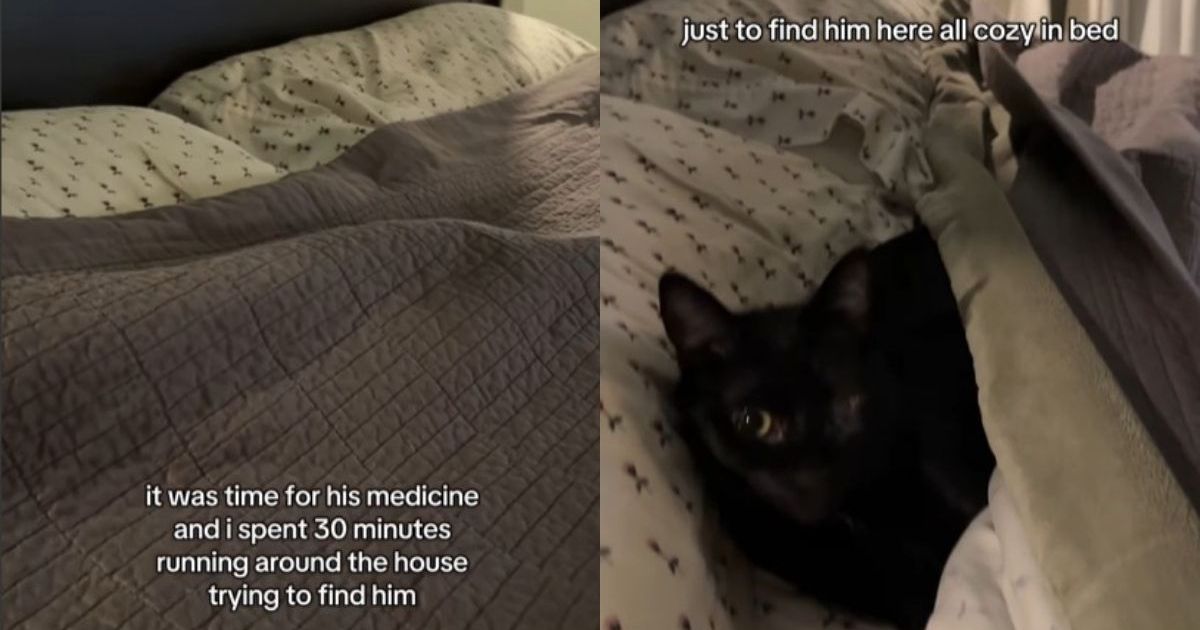
In an Instagram video from the user @iamgooseontheloose, Otter’s owner explains that their cat is deaf, which turns a normal “Where did he go?” moment into something much more stressful. Otter usually isn’t hard to locate, but this time, he was nowhere in sight. But what his owner found was unexpected and lowkey hilarious, given that it started out with a lot of stress.
cat got cozy under the blanket, while owner looked for him
In the video, the on-screen text explains that the owner is trying to find their deaf cat while the camera points toward a neatly made bed with a gray quilt. Nothing looks out of place. In fact, there’s not even a suspicious bump, just an empty bed that gives absolutely nothing away.
As the on-screen caption explains, the owner spent 30 minutes searching the house. But the scary part is that you can’t just call a deaf cat and listen for a response. Deaf cats often rely on routines and visual cues instead of sound. So, if they tuck themselves away in some unknown spot, they might not notice you looking, especially if they are asleep.
But then comes the reveal. The owner pulls back the covers, and there he is. Otter, fully tucked in underneath like he doesn’t have a care for the world. He blinks up from his cozy hiding place, looking completely unbothered by the chaos, though unbeknownst to him, he caused.
The video’s caption notes, “life with a deaf cat. he was just trying to be cozy ?”
In the comments, people related hard, because cats, deaf or not, love a blanket hideout. One viewer joked, “Lol. It’s always the lump in the bed?” Another called him “Just a comfy little guy,” while others shared practical ideas for the next time Otter goes missing. Many suggested using an Air Tag, while another wrote, “Get one of those back massagers, turn it on, and put it to the ground. Then when he notices it give him a treat… Then when you can’t find him just do that and he should come running every time!!!”
And for anyone who has ever searched a home top to bottom, only to find your cat cozying up, this video will speak to you.
Ukraine is full of homeless and abandoned animals due to the war. Krystina and fellow rescuers continue to receive calls for help for these animals, as well as for ones being abused by cruel individuals.
A heartbreaking abuse video was shared showing a person swinging a small dog by his leash and collar in circles before throwing him off a cliff.
The cruelty was witnessed by the entire family who can be heard laughing in the video. This reached rescuers who took swift action to save the dog.
Miraculously the dog survived the fall with only minor scrapes and was rescued along with other mistreated and malnourished dogs on the property.
Photo: Under the Sun (dog on left thrown off cliff)
Krystina shared that the person shown in the video showed no remorse when rescuers arrived to take the dogs and said he would do it again. Police were notified and she hopes that they will act against such cruelty to animals.
Photo: Under the Sun
All the dogs are underweight and scared of humans. They cower in fear when Krystina tries to pat them. They have never known a kind touch, until now.
Photo: Under the Sun
They are finally safe but have a long road to recovery ahead to regain their health and trust in mankind. Donate today to help Krystina care for them and hundreds more that reside at her rescue, Under the Sun.
Andrea Powell
Andrea Powell is an animal enthusiast who resides in West Michigan. When not writing, she is exploring the great outdoors with her dogs and horses.
Using clamshell lighting portraits creates that soft, flattering look beauty photographers adore. This simple two-light technique positions one light above and another below your subject. Beauty and fashion photographers have relied on this clamshell lighting portrait pattern for decades.
The name describes exactly what the setup looks like. Two lights surround your subject’s face like clamshell halves. The top light acts as your main source while the bottom fills in shadows. This creates glowing, even illumination that flatters every face shape.
Why Choose This Portrait Lighting Pattern
The technique reduces visible lines and wrinkles naturally. Shadows become softer while facial features stay defined. Your subjects look refreshed and glowing in every frame. Skin appears smooth without looking artificially edited.
This pattern creates distinctive double catchlights in the eyes. These bright spots appear at the top and bottom of each eye. Some photographers prefer just one set of catchlights. Others love the glamorous look double catchlights create.
The soft illumination draws attention directly to your subject’s eyes. Those sparkling catchlights bring life and energy to portraits. Without proper catchlights, the eyes look dull and lifeless. The overhead position ensures those essential upper catchlights appear naturally.
This setup sculpts cheekbones without harsh shadows falling across the face. The chin line appears defined yet soft. Your subject’s face gains dimension while maintaining a gentle appearance. Portrait lighting that flatters consistently matters for professional work.
The even illumination minimizes skin texture issues naturally. Pores appear smaller, and blemishes are less obvious. This happens through lighting rather than heavy retouching. Clients appreciate how good they look straight out of the camera.
Essential Equipment for Clamshell Lighting
You need surprisingly little gear to start creating gorgeous clamshell lighting portraits. Most photographers already own everything required. The technique adapts easily to various equipment levels. Smart equipment choices matter more than expensive brands.
Light Sources for Your Setup
Your main light can be a studio strobe or speedlight. Studio strobes recycle faster for rapid-fire shooting. Speedlights work perfectly for this technique, too. LED panels provide constant light if you prefer seeing results before shooting.
Choose lights with enough power for your shooting space. Underpowered lights force you to raise ISO unnecessarily. Most standard speedlights work great for headshots and beauty shots. Studio strobes provide more power for full-body portraits.
Light Modifiers for Clamshell Lighting Portraits
Softboxes create the softest, most flattering light. Large octagonal softboxes work beautifully as main lights. The round shape produces natural-looking catchlights in the eyes. Choose 36 inches or larger for full-face coverage with wrapping light.
Strip boxes work well in spaces with low ceilings. Position them horizontally above your subject’s head. These long, narrow modifiers provide excellent overhead clearance. Beauty dishes produce slightly harder light than softboxes with more definition.
White beauty dishes work better than silver for this setup. Silver creates too much contrast for soft lighting styles. Umbrellas provide the most budget-friendly modifier choice. Shoot-through umbrellas work well for beginners learning this pattern.
Fill Light Options
Your fill light can be another strobe or a simple reflector. Reflectors cost nothing compared to lights and work wonderfully for clamshell lighting portraits. White reflectors create subtle, gentle fill light that looks natural. Silver reflectors bounce more intense light back toward your subject’s face.
Curved reflectors like the Westcott Eyelighter work specifically for this setup. These specialized light modifiers wrap light around your subject’s face beautifully. They create gorgeous wraparound illumination that flatters every face shape.
Perfect Your Clamshell Lighting Portrait Setup
Position your subject three to five feet from your background. This distance prevents shadows from falling on your backdrop. Your subject should face directly toward your camera position.
Positioning for Successful Clamshell Lighting Portraits
Place your main light directly in front of your subject. The light should align with their nose when viewing from above. Raise it one to two feet above your subject’s eye level.
Angle it downward at approximately 45 degrees toward their face. Position your light two to four feet from your subject’s face. Check that your studio lighting doesn’t create heat discomfort.
Adding Your Fill Light Source
Your fill light goes directly below your camera position. Angle it upward toward your subject’s face at 45 degrees. Keep your fill light at a lower power than your main source.
Start with your fill at half the power of your main light. Too much fill creates flat lighting without dimension. Place a reflector at waist level if using passive fill.
Test different angles and distances for your fill source. Take test shots and review them carefully before shooting your session.
Creating Portraits With One Light
You don’t need two lights for beautiful clamshell lighting portraits. A single light plus reflector produces excellent results. This minimal setup costs less and takes up less space. Many professional photographers prefer this simpler approach.
Position your main light as described above using proper overhead placement. Use a large softbox or umbrella for maximum softness and wrapping quality. This single light creates the upper catchlight and defines facial features naturally.
Add a large white or silver reflector below your subject’s chin area. Position it close enough to bounce significant light back upward. This reflected light acts as your fill source without additional equipment.
Silver reflectors create more intense fill than white surfaces for brighter results. They produce brighter, lower catchlights in eyes that sparkle dramatically. White reflectors create gentler fill for subtle, natural-looking results. Test both to see which aesthetic you prefer for different clients.
Curved reflectors work even better than flat ones for this clamshell lighting portraits technique. They wrap light around your subject’s face more effectively than flat surfaces. Products designed specifically for portrait photography excel at creating this wraparound effect.
Camera Settings for Professional Results
Choose f/4 to f/5.6 for beautiful background separation. These apertures keep your subject’s entire face sharp while softening backgrounds. Your shutter speed should match your flash sync speed.
Most cameras sync between 1/160 and 1/250 of a second. Keep ISO as low as possible for maximum quality. Shoot in the RAW format for maximum editing flexibility later.
Use spot metering to ensure accurate facial exposure. Take test shots and check your histogram regularly.
Common Mistakes to Avoid
Positioning your fill light too high creates competing shadows. The fill should angle upward from the camera position. Using equal power on both lights eliminates all dimensions.
Forgetting to check for catchlights causes dull eyes. Adjust your main light position until clear catchlights appear. Placing lights too far away reduces their effectiveness.
Using modifiers that are too small creates harder shadows. Choose softboxes at least 24 inches for headshots.
Working With Different Subject Types
Beauty photography benefits most from this soft lighting approach. The even illumination makes skin look flawless and glowing. Fashion magazines use this technique constantly.
Headshot photography relies heavily on this pattern for flattering results. Corporate headshots need that polished, professional appearance. Actors need versatile headshots that showcase their features clearly.
Model portfolio shoots use this for clean beauty shots. The soft shadows flatter various face shapes naturally. Wedding photographers use this for bridal portraits and couples shots.
Variations on the Classic Technique
Try different modifier sizes for varying effects. Smaller softboxes create more defined shadows with more contrast. Larger modifiers produce extremely soft, wrapping light.
Add background lights to separate subjects from backdrops. Place lights behind and to the sides of your subject. Use colored gels on background lights for creative effects.
Incorporate fill cards on the sides of your subject. White cards bounce additional light onto cheeks and ears. Black cards absorb light for more dramatic shadowing.
Try using strip boxes vertically as fill lights. Experiment with beauty dishes as main lights for more contrast.
Comparing This Pattern to Others
Butterfly lighting uses just one overhead light source. This creates that signature butterfly shadow under the nose. Clamshell softens those shadows with additional fill light.
Rembrandt lighting positions the light at 45 degrees to the side. The dramatic shadowing suits character portraits better than beauty work. Loop lighting moves the main light slightly off-center.
Split lighting places light 90 degrees to your subject’s side. This dramatic pattern suits masculine portraits and character studies.
Troubleshooting Your Setup
Missing upper catchlights indicate your main light sits too high. Lower it until you see bright reflections in the upper eyes. Dark shadows under the chin mean insufficient fill light.
Flat lighting results from too much fill power. Reduce your fill light’s intensity or move it farther away. Harsh shadows indicate insufficient light diffusion.
Uneven lighting across the face means your main light isn’t centered. Check its position from directly above your subject. Double shadows appear when the fill light sits beside rather than below.
Post-Processing Tips
The soft lighting requires minimal retouching in post-production. Skin already looks smooth and even from proper lighting. Focus your editing on color correction and fine-tuning exposure. Professional resources like B&H Photo provide excellent post-processing tutorials for portraits.
Adjust white balance to ensure accurate skin tones. Fine-tune exposure to ensure faces sit in the proper zone. Subtly adjust contrast to add dimension if needed.
Dodge eyes slightly to make catchlights more prominent. Reduce any remaining blemishes or distractions carefully. Sharpen eyes and important details selectively.
Perfect Your Clamshell Lighting Portrait Setup
Start with patient friends or family as practice subjects. Take time adjusting lights and observing the results. Join photography communities to share work and receive feedback. Other photographers provide valuable insights when you’re learning clamshell lighting portrait techniques.
Study magazine covers and editorial spreads carefully. Notice how photographers use this technique for glamorous results. We have a ton of detailed tutorials and examples on DIY Photography’s Learn section. Check them out – you can access them ALL FOR FREE! Beauty editorials showcase this lighting pattern constantly for maximum impact.
Book practice sessions with aspiring models needing portfolio images. This creates win-win situations for both parties involved. Shoot the same subject with different modifier combinations for comparison. Study your results critically after every session to improve quickly.
Your journey starts with that first test shot. Position your lights, check your catchlights, and press the shutter. Each frame teaches something new about creating beautiful clamshell lighting portraits.
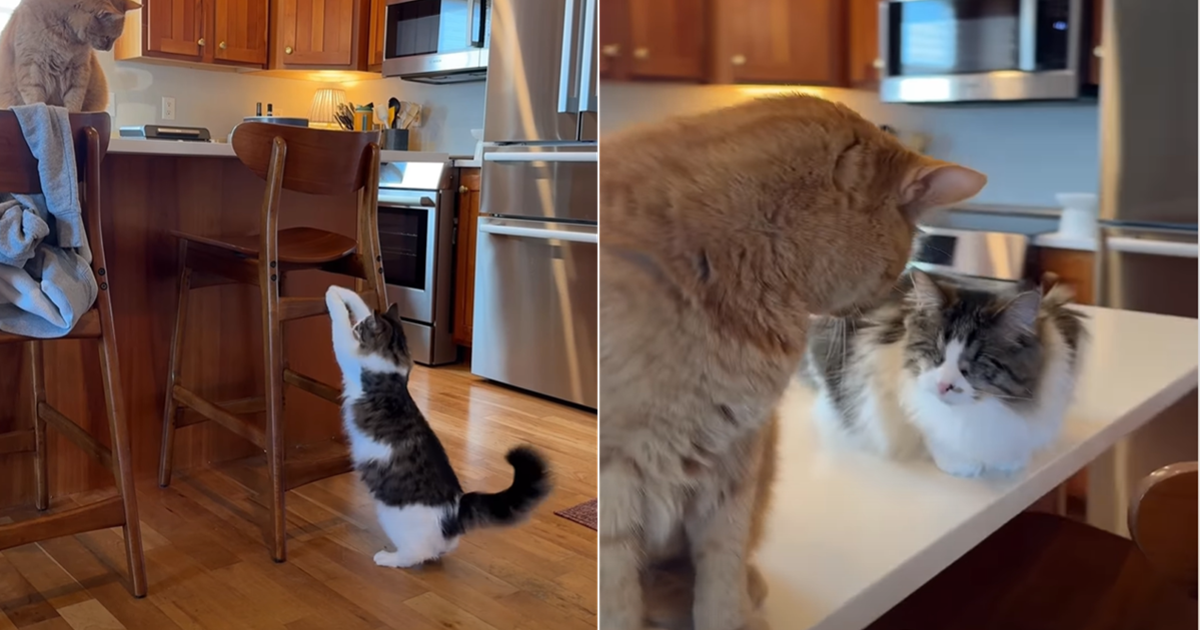
There’s nothing more gratifying for a cat owner to witness their fur baby doing something challenging all by themselves. This specific video captured an adorable blind cat named Lettuce learning how to get onto the kitchen counter all by herself without any help.
On February 8, the owner of the blind cat posted the video on Instagram through the account @iamgooseontheloose. Since then, the clip has begun to gain a lot of attention from viewers all around the world. It currently boasts more than 4K likes.
Blind cat amazes owner by getting onto kitchen counter without any help
A heartwarming video on Instagram showed a cute blind cat named Lettuce surprising her owner by getting onto the kitchen counter without assistance. The clip has been winning hearts on social media as people are loving how agile the cat is. In the caption, the pet parent penned, “I’m convinced she can do literally anything she sets her mind on.” The cat owner continued, “I love how talkative she is as she works through it too.”
The Instagram video started by showing the blind cat standing on the floor around the kitchen counter. Meanwhile, her furry sibling, another cat named Goose, was sitting on the kitchen counter. After Lettuce heard her sibling’s voice from there, she was determined to get onto the kitchen counter all by herself.
As the clip went on, viewers could see the blind fur baby slowly but steadily climbing up a chair. Soon, she finally got onto the kitchen counter successfully. The video will brighten up anyone’s day.
People have been sharing their thoughts and views on the video in the comments section. One admirer wrote, “She’s amazing! cats are so cool.” In the meantime, another fan’s comment read, “She’s soo precious! I love her trills as she’s like yes this is it!” “Good job letty! Beautiful with a floofy tail and smart too,” gushed another admirer.
Welcome to our “Ask Dr. Paola” series, where every Monday we bring expert advice straight from Dr. Paola Cuevas (MVZ) to help our readers better understand their cat’s health and well-being.
Whether you’re a new pet parent or a seasoned cat lover, Dr. Paola is here to provide answers to your most pressing questions. From nutrition tips and preventive care to troubleshooting common behavioral issues, Dr. Paola is ready to offer insights that will keep your kitty happy, healthy, and feline fine. Stay tuned for expert guidance on a range of topics that matter most to you and your cat, so you can make informed decisions and provide the best possible care for your furry companion.
Have a question? Send it in here!
Help! I Think My Cat is Depressed!
“My older cat died and my other cat Bootsie who was extremely fond of him is depressed. I have tried play, putting together a new scratching post for her, and holding her, but nothing seems to be working, possibly because she senses i am missing him as well. Do you have any suggestions? I would really appreciate any you would have!” – Joey
Dear Joey,
I am very sorry for your loss, and what you are seeing in Bootsie is a genuine and well-recognized response to losing a bonded companion. Some cats do form strong social attachments, and when one cat disappears from their daily life, the remaining cat can show signs such as withdrawal, reduced interest in play, changes in sleep patterns, or eating less. This is not simply because she senses your sadness, although cats are sensitive to changes in routine and household mood. It is more about the sudden absence of a familiar presence, shared interactions, and predictable daily rhythms that helped her feel secure.
During this period, it is common for cats to seem uninterested in toys or new enrichment, because their stress level is higher and novelty can feel like too much rather than comforting. What tends to help most is consistency and calm. Keeping feeding times, lighting, and daily routines steady gives her nervous system something reliable to settle around. Offering companionship without pressure, sitting quietly nearby, and letting her choose contact is often more soothing than holding her or encouraging activity before she is ready. Familiar scents can also be reassuring, so keeping items that still smell like her companion, if available, may help soften the transition.
If this low mood continues for several weeks, or if you notice concerning changes such as reduced appetite or weight loss, a veterinary visit is important. Stress-related behavioral changes can sometimes overlap with medical issues in cats, especially as they age. With time, patience, and a predictable environment, most cats gradually adapt to the loss, even though the process can be slow and uneven. You are already doing many of the right things by being attentive and compassionate during a difficult adjustment for both of you. My sincere condolences, and I wish you strength and peace during this difficult time.
Best wishes,
– Dr. Paola
If you’d like to talk with a vet, like Dr. Paola or one of our other expert veterinarians, you can head over to PangoVet. It’s our online service where you can talk with a vet online and get the advice you need for your cat — all at an affordable price!
Catster reader exclusive deal: Save 65% on your first call, use code ASKDRPCATSTER65 at checkout.
Help! Is My Cat Too Old for Spaying?
“My 2 year old cat Bunny has not been spayed, is she too old and what are the risks?“– Linda
Hi Linda,
Bunny is absolutely not too old to be spayed, and at two years of age, the procedure is still very commonly and safely performed. From a medical standpoint, spaying removes the ovaries and uterus, which eliminates heat cycles and prevents pregnancy, but more importantly, it significantly reduces health risks over her lifetime. Unspayed female cats have a high risk of developing uterine infections called pyometra, which can be life-threatening, and they also face a much higher chance of mammary cancer, especially if they go through repeated heat cycles. You can think of spaying as preventive maintenance; it removes organs that are prone to serious disease later on.
As with any surgery, there are risks related to anesthesia and the procedure itself, but in a healthy young adult cat, those risks are considered low when proper preoperative evaluation and modern anesthetic protocols are used. Females do tend to have a slightly more involved surgery than males because it is an abdominal procedure, but recovery is typically smooth, with most cats returning to normal behavior within a few days. At two years old, Bunny is still young, resilient, and an excellent candidate from a healing and anesthesia standpoint.
Beyond medical benefits, spaying also improves quality of life by preventing repeated heat cycles, which can be stressful for cats and frustrating for pet parents due to vocalization, restlessness, and escape behaviors. If you have any concerns about anesthesia or recovery, your veterinarian can discuss pre-surgical screening and pain management options to tailor the procedure to Bunny’s individual needs. Overall, spaying at her age remains a proactive decision that protects both her health and her long-term wellbeing. Best wishes,
– Dr. Paola
Help! My Cat Always Has Runny Poops!
“Snickers is a 7-year-old Maine Coon/Ragdoll mix. Ever since we adopted her 4 years ago, we’ve been unable to find food that doesn’t cause soft, loose poops. We’ve had poop tests confirming she is worm/parasite/bacteria free. We’ve had her on a gluten/grain-free diet of moist/dry food. We’ve tried so many different brands but she continues to have loose (not diarrhea) stools. We’ve given her probiotics and prebiotics in her food. We’ve tried homeopathic remedies for food sensitivities. We had a saliva test to measure microbiomes and found out she needs probiotics but she still has runny poops. We’re confused and discouraged. Can you help?”– Elizabeth
Dear Elizabeth,
I can hear how exhausting and discouraging this has been, especially when you have clearly been thoughtful and persistent in trying to help Snickers feel better. When a cat has chronic soft stools without true diarrhea and repeated fecal tests are normal, the most common explanation is not infection but how the intestines are responding to food. In many cats, this pattern fits with food-responsive enteropathy or a mild inflammatory bowel process, where digestion and absorption are slightly inefficient rather than severely diseased. Grain-free or gluten-free diets are not necessarily gentler for cats, and some are actually higher in fat or certain proteins that can worsen stool consistency even when everything else appears normal.
Many grain-free diets rely heavily on legumes such as peas, lentils, chickpeas, or pea protein to replace grains. Cats are obligate carnivores, and these plant-based proteins are not well utilized by their digestive system, which can lead to increased fermentation in the colon and chronically soft stools even when there is no true disease present. In that situation, the stool may never become watery, but it also never firms up properly. Beyond legumes, certain animal proteins can also be problematic depending on the individual cat’s immune response. Chicken, fish, and beef are the most commonly used proteins in commercial cat foods, and repeated exposure over time can lead to food-responsive enteropathy in some cats. This does not mean the protein is low quality or harmful in general, but rather that Snickers’ immune system may be reacting to something it sees as familiar and irritating. That is why hydrolyzed diets, where proteins are broken down into pieces too small to trigger an immune response, or truly novel proteins that the cat has never eaten before, are often more successful than simply switching brands or staying grain-free.
One important point to clarify is the saliva-based microbiome testing. At this time, there is no solid scientific evidence that saliva testing accurately reflects the intestinal microbiome in cats or reliably guides treatment decisions. That can make things feel even more frustrating, because it suggests an answer without leading to improvement. Probiotics can be helpful in some cats, but not all products are equal, and adding them without first stabilizing the diet often does not resolve the underlying issue. Homeopathic remedies, while appealing, have not been shown in controlled veterinary studies to correct chronic gastrointestinal signs, which likely explains why they have not made a meaningful difference for Snickers.
What is most likely to help at this stage is a very structured dietary approach rather than continuing to rotate foods. A strict trial with a veterinary prescription hydrolyzed diet or a truly novel protein diet, fed exclusively for several weeks, is often the most effective next step, even if many over-the-counter diets have already been tried. These diets are designed to reduce immune stimulation in the gut, not just limit ingredients. If stool quality does not improve with that approach, further evaluation for inflammatory bowel disease may be appropriate. Try to think of Snickers’ intestines as overly sensitive rather than damaged; they react to certain inputs even when tests look reassuring. With a systematic plan and patience, many cats with this long history do achieve firmer stools and a better quality of life.
Kind regards,
– Dr. Paola
This article is a part of our weekly Ask Dr. Paola series

 Amber
Amber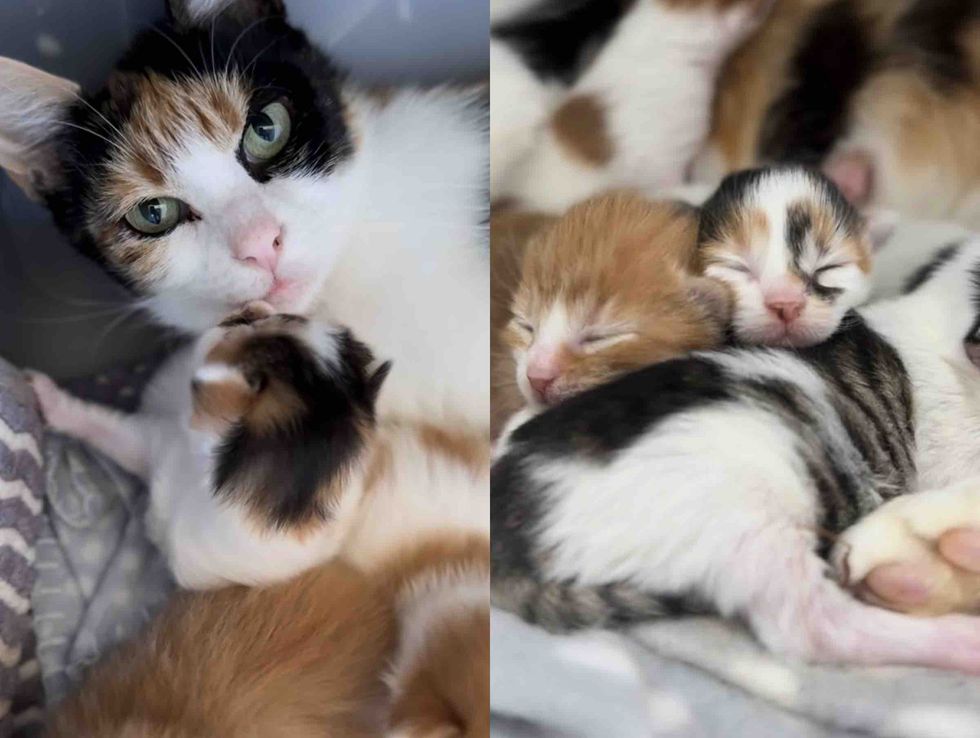 Amber
Amber Harry and PatsyAmber
 Amber
Amber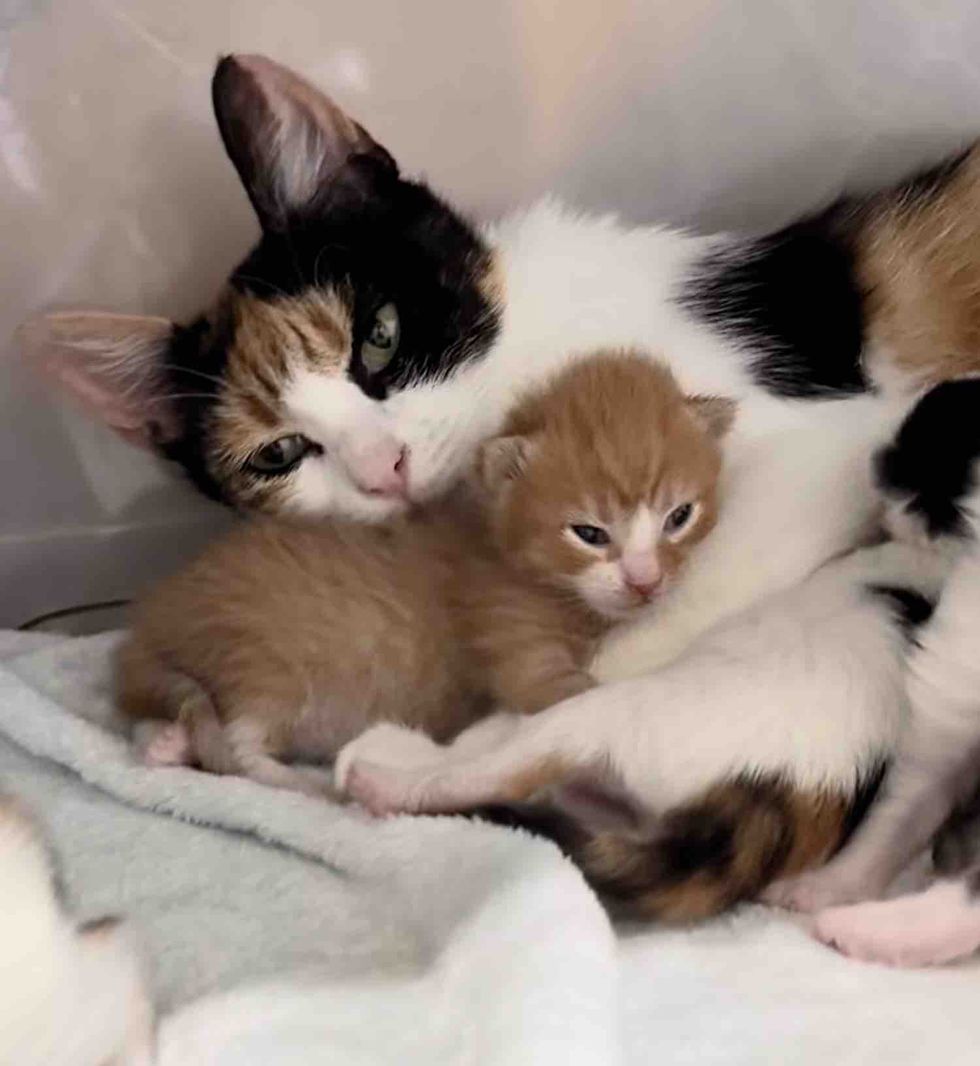 Amber
Amber Amber
Amber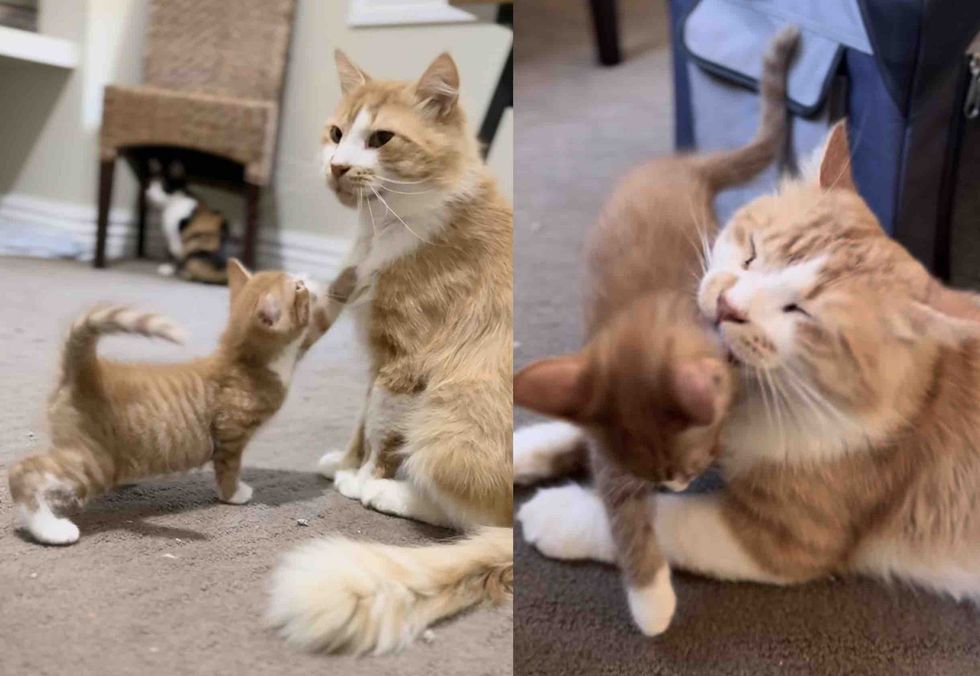 Kenny and HarryAmber
 They will be spayed or neutered before embarking on their new journeyAmber
 Amber
Amber