Xposure is the Festival for All of Us Who Are Sick of Gear
top of page

bottom of page
An adorable Instagram video from user @ellawatchestv_ showed a cat named Ella who had a nightly routine of watching her beloved show, “Oswald.” In the clip, the late cat sits on the carpet facing the TV, holding still as the cartoon plays, while the onscreen caption reads, “my cat loves oswald so most nights we watch oswald.”
The video backs up the claim. Ella looked composed, as if she had settled in for her favorite show rather than something her owner put on in the background.
In the video, the cat remains the main character on the floor as she looks locked in on “Oswald.” The video caption adds a tender note about who she was off camera, too, reading, “She was always such a dainty girl.” And looking at the video, she does not just appear dainty but also really sophisticated.
The idea of a cat becoming an “Oswald” fan is hilarious, but the sound cues and shapes that stand out on a bright screen may always attract them. And if a television show becomes part of a nightly routine, cats can also treat it like a familiar and comforting part of their evening.
In the comments section, viewers responded with warmth and grief, since many already knew Ella had passed, with one writing, “I miss her so much,” and another adding, “Thank you for still posting these videos… We miss her too!” Moreover, another viewer called her “a true Miss Ma’am.”
Others connected Ella’s calm behavior to the show itself, with a viewer commenting, “Oswald was so peaceful and sweet when I was little, just like ella,” and another sharing, “Oswald is one of my favorite children’s TV shows.”
The video proves that a small and ordinary habit of a cat can end up meaning a lot to the people who loved her — even if that habit is to watch “Oswald” on a regular basis.
Remarkably, it has been over six years since the world stood still for Covid-19, and whether you are amongst those who were deeply affected by the pandemic, or someone who believes that 7 million people worldwide dropped dead as part of an epic hoax, for many, the effects of the virus are still being felt. Something you may not be aware of is how much the research into feline coronavirus, more commonly known as Feline Infectious Peritonitis or FIP, has both benefited and been benefitted by the emergence of this most recent viral strain.
Not too long ago, we reported on some groundbreaking new FIP treatments that have become available over the past five years, turning a previously fatal illness into one with a relatively high recovery rate, thanks in very large part to Professor Neils Pederson, who has dedicated more than half-a-century of research into this perplexing disease.1 Prior to 2020, a diagnosis with FIP was a death sentence; one that was seemingly more heartbreaking as most patients were kittens under the age of 12 months. Although the injectable antiviral drug, Remdisivir, produced mixed results in humans,2 it remains the only recommended antiviral for use in hospitalized patients with COVID-19.3 It also paved the way for successful FIP treatment with miraculous results, and now an oral formulation has also been developed. In addition to the mutually beneficial parallels in the treatment of feline and human coronavirus, there have also been some cross-species advancements made in the development of vaccines.

When the first Covid-19 vaccine was announced, there was great suspicion regarding the speed of its development. What most people didn’t realize (and those behind the development of these vaccines are not widely advertising), is that the vaccine was being formulated back around 2005, following the outbreak of an earlier coronavirus strain causing severe-acute respiratory syndrome (SARS-CoV) in 2002-2004.4 However, predictions of a global SARS pandemic proved to be exaggerated, which was likely a huge blow to those invested in the vaccine production. As a result, research and development slowed down, but as much of the groundwork had been laid, mass vaccine production was able to occur at a rapid rate when a far greater viral outbreak rocked the world in late 2019, providing great relief to the global population and pharmaceutical investors. Now, if you’re really after a conspiracy theory, that’s one worth looking into!
Although the Covid-19 crisis has subsided, there are millions of people still suffering with long-term effects of the virus, with post Covid-19 condition (PCC) or ‘long covid’. Similar in many ways to the debilitating myalgic encephalomyelitis/chronic fatigue syndrome (ME/CFS), long covid presents in human patients with a previous history of infection with the virus as an array of clinical signs including:
Most frustrating for sufferers is the lack of understanding of the condition, with no effective treatment in sight…until now. A team of researchers at the University of California, Davis, have discovered a feature of feline coronavirus (FIP) that may have huge implications for humans.

For years, the prevailing belief was that the virus infected just one type of immune cell, but in a recent interview, Amir Kol, lead author of the scientific study, shared the exciting discovery.
“What we found is that it actually infects a much broader range of immune cells, including those that are critical for fighting infection.”
The team found viral material inside several types of immune cells, including B lymphocytes, which produce antibodies, and T lymphocytes, which are a key component of long term virus recognition and defense. Even more significant was evidence that the virus was actively replicating itself inside these immune cells, not just leaving behind harmless fragments.
Although scientists have long suspected that the clinical signs of long Covid may be due to the virus persisting in the body, the lack of access to human lymph tissues for research has limited their ability to prove their hypothesis.
“This is where cats give us a unique opportunity,” Kol said. “We can directly study infected immune tissues in a naturally occurring coronavirus disease – something that’s very difficult to do in people.”
The research found that traces of the virus remained in immune cells after treatment had ended and the cats appeared to have made a full recovery. Because some immune cell types live for years, this could explain why some clinical signs persist or relapse.
Although human and feline coronaviruses differ, they share enough similarities that the findings of the research in cats could act as a real-world model for improving the understanding of the behavior of the human infection. Just as our feline patients have benefited from the fight against human coronavirus, the fight against FIP may provide the answers millions of people around the world are desperately seeking in their struggle with long Covid.
There are actually not enough Tunnocks teacakes (the dark chocolate ones) in the world for how I feel today.

This morning I phoned the Pain Clinic to see what time to turn up on Monday for my much-needed spinal epidural injections only to be told that my appointment has been cancelled.

The re-scheduled me for March 2nd, the next clinic.

I cried. Honestly, I know its not anyone’s fault but this is a huge mountain for me.
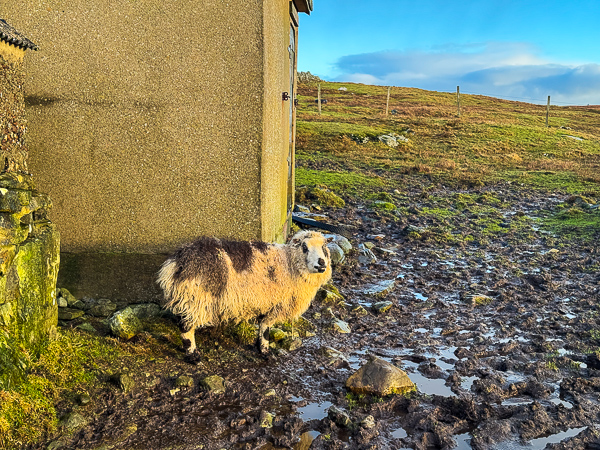
Just when I thought I could possibly see the end, it has been swiftly taken away from me. I now have to endure two more weeks of chronic back pain along with shifting sciatica (now front upper and inner thigh) and its not easy to live with. The pain is unceasing and eroding.

Usually by now I would be making a large flock of sheep to sell when the cruise ships arrive in early spring but now I have no stock as I can’t sit for long periods (the sciatica won’t let me) and think I will have to close my little field in Lerwick. So that’s an essential source of funding gone.

I’m feeling very sorry for myself today. Life is not good, not good enough and I am tired and don’t have control of my life. Someone else is making decisions about me and, in my opionion, they’re not doing a very good job of it.
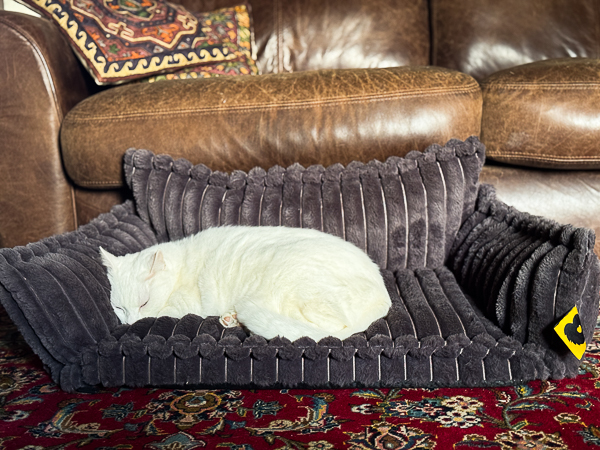
And there’s more snow forecast.
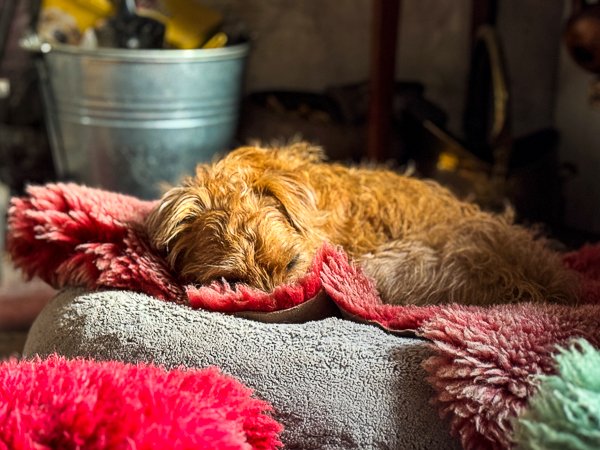
So now I am even more fed up.
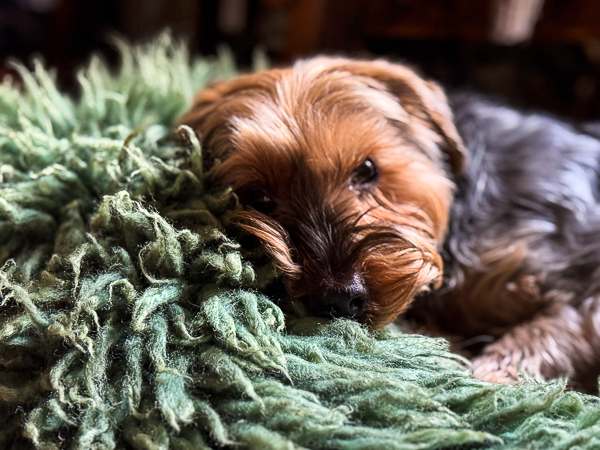
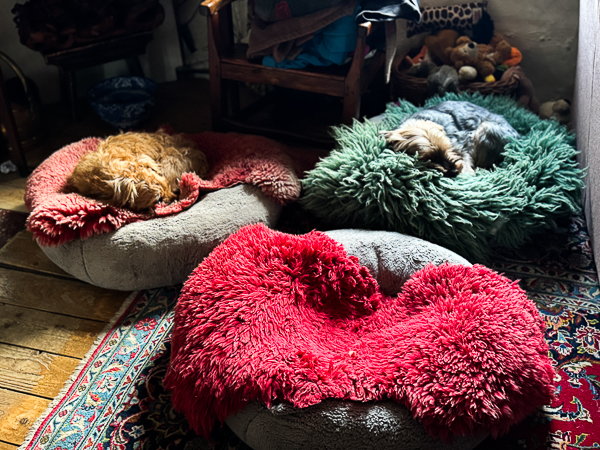
(but the sun did make an appearance today and there was lovely blue sky too. And Monster got “The Bed”!)
Subscribe to get the latest posts sent to your email.

This story was originally shared on The Animal Rescue Site. Submit your own rescue story here. Your story just might be the next to be featured on our blog!
I’ve had a lifelong fascination with bright chestnut horses, probably dating back to watching Secretariat win the Triple Crown — especially that unforgettable Belmont run. That moment inspired me to beg my parents for riding lessons at age eight. Over the next five decades, I rode, owned, or leased many horses of all colors.

Robin Blakeman
After stepping away from the horse world for twenty years, I reconnected with an old horse friend who introduced me to Heart of Phoenix Equine Rescue. After several years of lessons and coaching, I felt ready to find a horse of my own again.

Robin Blakeman
In 2024, while following the Heart of Phoenix Appalachian Trainer Face Off, I saw him — a tall, bright chestnut gelding with a wide white blaze. He was described as an Anglo-Arabian with riding experience who just needed a tune-up. I updated my adoption application immediately and was approved to meet him.

Robin Blakeman
By early July, I had adopted Dyno, also known as Puff the Magic Dragon. From the first ride, he felt like a horse I could truly trust. Working with him on the ground has been just as rewarding. We’ve had challenges, as all new partnerships do, but Dyno has completely captured my heart. I’m hopeful we’ll have many wonderful years together.
Story submitted by Robin Blakeman
This story was originally shared on The Animal Rescue Site. Share your very own rescue story here!


Carrying a small camera to a place like Malibu sounds casual, but it exposes how you shoot when nothing else gets in the way. The choices you make in the field usually echo later when deciding what images deserve space on your website.
[Read More]

Super Bowl LX is more than a football game. It’s the most-watched live broadcast in the United States and one of the most technically demanding productions in sports. When Super Bowl 2026 kicked off in San Francisco, it wasn’t just the players and coaches under pressure. Thousands of photographers, videographers, engineers, and broadcast technicians work hard behind the scenes to capture every split-second moment (and that epic Bad Bunny’s performance, if I may add).
This year, Sony’s footprint at Super Bowl LX is bigger than ever. But what does that actually mean for the people on the sidelines and in the broadcast trucks? And what does it take to cover an event at this scale? Let’s break it down.
[Related Reading: What it’s like to photograph football players]
Covering Super Bowl LX means preparing for unpredictable lighting, extreme weather possibilities, and, of course, constant motion at high speed. Add the deafening crowd noise and real-time file delivery to media outlets, and you have one super-challenging environment for everyone covering the event.
According to Sony’s official announcement, more than 175 Sony cameras will be on and around the field on game day to make sure everything is covered and delivered timely. This includes broadcast HDC systems and Sony Alpha mirrorless camera bodies.
The Associated Press will be working with 55 Sony camera bodies, 80 lenses, and 15 portable data transmitters. Add in the NFL’s in-house photography team and Sony Imaging PRO Support loaner gear, and you’re looking at dozens more full-frame mirrorless bodies circulating the stadium.
Missing focus on a game-winning catch isn’t an option. Neither is a corrupted file or a delayed upload. The coverage also requires high frame rate capture and wireless mobility. They’re no longer luxury features – they’re expected. Whew, the pressure!

The halftime show at Super Bowl LX is essentially a live stadium concert broadcast to a global audience. There’s an elaborate set, rapid choreography, dramatic lighting shifts, all sorts of effects, and nonstop movement – everything unfolding in real time, just like the games themselves.
For this portion of Super Bowl 2026, 11 Sony VENICE 2 digital cinema cameras and three BURANO digital cinema cameras are being deployed. This isn’t standard sports coverage. It’s feature-film-level production in a live environment. From a videographer’s perspective, that means:
Switching from NFL gameplay to concert cinematography in minutes is one of the most complex transitions in live television. And as we’ve all seen, it turned out amazing!
Aside from cameras and lenses, for Super Bowl 2026, all 32 NFL teams are using Sony’s NFL Coach’s Headsets, built for clarity and durability in high-noise stadium environments. On the officiating side, Sony’s Hawk-Eye Virtual Measurement system is being used in a Super Bowl for the first time, delivering precise Line to Gain measurements once the ball is spotted. The Hawk-Eye SkeleTRACK system adds optical player and 3D ball tracking, working alongside RFID wearables to enhance positional accuracy and replay analysis. Together, these systems form a data-driven backbone that supports faster decisions, clearer communication, and a more consistent experience on the NFL’s biggest stage.
During Super Bowl 2026, multiple systems operate simultaneously:
Sony shared with us the full list of the gear used for this year’s Super Bowl, and it’s pretty impressive. I’ve decided to share it in its entirety here for the gearheads among you. 🙂 Thanks to Sony, we can also take a peek at the gear depot!


Covering Super Bowl LX is a logistical and technical challenge on a scale few events can match. Photographers must anticipate peak action in fractions of a second while transmitting images instantly. Videographers balance cinematic quality with live broadcast demands. Engineers monitor data feeds, replay systems, and wireless networks without interruption.
Every layer of the game, including imaging, audio, tracking, transmission, has to function flawlessly under immense pressure. Super Bowl 2026 isn’t just a championship game; it’s one of the most complex live productions in sports, where precision, preparation, and teamwork determine whether the world sees the moment as it happens.
This talkative cat video offers a quick, humorous look at Cosmo turning everyday check-ins into a full conversation. The chatty cat clip plays like a back-and-forth exchange, with his owner asking simple questions and Cosmo responding with nonstop little sounds. It is cute, but also serves as a gentle warning for anyone who dreams of a quiet pet. Cosmo clearly has opinions, and he shares them repeatedly.
The clip was posted by @kosmothetalkingcat, a page that shares snippets of Cosmo’s daily life. It was posted on January 18 and received about 101.6K likes and 877 comments. In the video, Cosmo sits on a wood floor indoors, facing the camera with wide eyes. Text on screen reads, “To the people who wish to have a talkative cat this is what my day looks like so choose wisely ?.”
Cosmo’s owner starts calmly, asking, “Cosmo, what happened?” and “What’s wrong?” Cosmo responds with a string of meows that sound more like talking than a single yelp. As the “conversation” continues, the owner tries to regain control, saying, “Alright, alright, we get it, we get it,” while Cosmo continues anyway.
Based on his sleek blue-gray coat and bright eyes, Cosmo appears to resemble a Russian Blue-type cat. That breed and similar mixes can be social and vocal, especially when they want attention. This reel of a talkative cat stands out because Cosmo’s timing feels almost human, as if he is reacting to every single word.
Fans responded quickly. One wrote, “Love this breed! They are so intelligent and yes, they run their mouths!!!! ?”. Another said, “He said he wanted whatever it was that he wants ‘right now’. I heard it ?.” A third added, “He tickles me ??? he sounds like a kid ?”. Someone else admitted, “I want my future cat to be talking to me like this ?”.