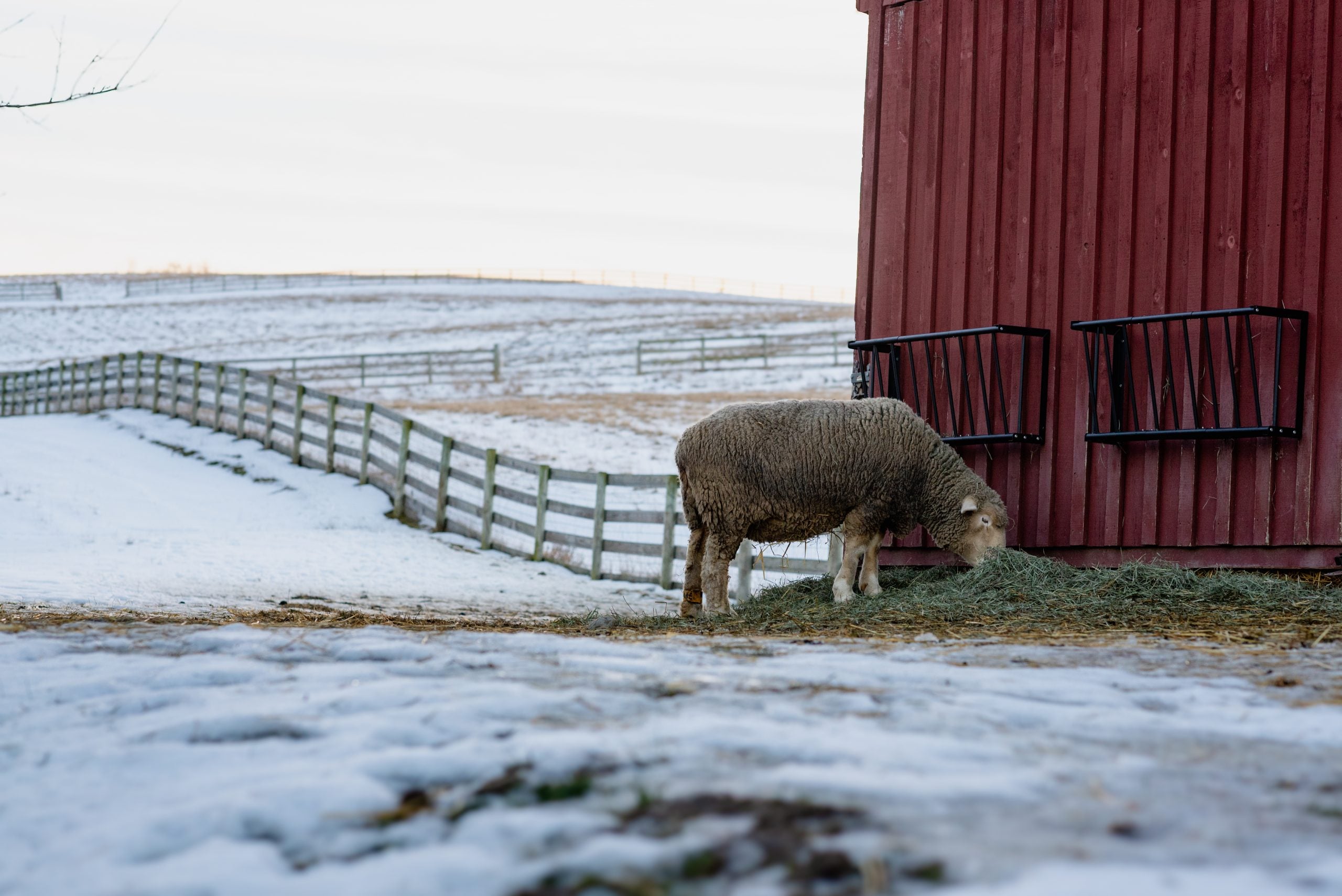
Winter is a beautiful time to visit Farm Sanctuary in Watkins Glen, NY, if you’d like to avoid the Finger Lakes’ busy tourist season. Snow transforms the landscape, creating a serene backdrop for meeting our rescued residents.
There’s nothing quite like witnessing hundreds of farm animals thriving in peace and comfort—a powerful glimpse of the life that every animal deserves.
Plan your visit before spring arrives! Book a private tour (public tours reopen in the spring), reserve a stay, or sign up to volunteer.
Modern-day astrophotography increasingly favors compact, fast optical systems that reduce setup complexity while maintaining field quality. The new Askar 50P has been launched as a dedicated imaging astrograph built with a quadruplet Petzval architecture. The design integrates field correction within the optical tube and aims to deliver a flat imaging plane at the native focal length.
This telescope has a 50 mm aperture and a focal length of 190 mm. This configuration produces a focal ratio of f/3.8. Such a fast system targets wide-field deep-sky imaging rather than high-magnification work. The optical layout includes one SD glass element to suppress chromatic aberration, which becomes more critical as focal ratios decrease.
Quadruplet petzval design and field correction
One of the defining features of the Askar 50P is its quadruplet Petzval configuration. In classical refractor systems, field curvature often requires an external flattener to maintain star shape across the sensor. However, the Petzval concept places corrective elements within the optical path. This produces a naturally flatter field at the design focal distance.
Askar’s implementation uses four optical elements arranged to maintain correction across the supported image circle. The inclusion of SD glass indicates an effort to control secondary spectrum, especially important in fast systems where color errors can become visible near the field edge.
Because the field flattener is internal, the telescope operates at its native focal length without additional optics. This has several practical consequences. First, it reduces the number of threaded interfaces in the imaging train. Second, it minimizes spacing uncertainty. Third, it improves mechanical rigidity compared to add-on correctors.
The fast f/3.8 focal ratio is central to the system’s identity. At this speed, extended nebulae and narrowband targets reach useful signal levels more quickly. While total integration time still governs final image quality, the shorter focal ratio improves photon efficiency per exposure.
The new Askar 50P has a quadruplet optical design
Mechanical structure and physical configuration
Askar designed the 50P with portability in mind. The optical tube measures 147 mm in length with the dew shield retracted. When extended, the length increases to 182 mm. These compact dimensions place the telescope firmly in the travel-friendly category.
The manufacturer lists the total weight as approximately 1.4 kg, including the tube rings and dovetail plate. This weight keeps the telescope compatible with lightweight equatorial mounts and many star trackers. It also reduces the overall load on harmonic drive mounts that prioritize compact payloads.
The telescope weighs only 1.4 kg
The retractable dew shield contributes to the short storage length. For astrophotographers who transport equipment frequently, this detail has practical value. A shorter tube fits more easily into airline-safe cases and small field bags.
At the rear, the telescope uses an M48 interface with M48×0.75 filter threading. This choice aligns with current astrophotography standards. Many CMOS cameras, filter drawers, and filter wheels already support M48 connections. As a result, users can integrate the telescope into existing imaging systems without unusual adapters.
The recommended backfocus distance is 55 mm, with an acceptable range between 50 mm and 65 mm. This tolerance provides some flexibility when inserting filters or tilt adjusters. However, users should still aim for precise spacing to obtain optimal edge performance.
The Askar 50P telescope can fit into portable star trackers
Sensor coverage and imaging considerations
Askar states that the 50P supports APS-C sensors while optimizing the optical performance around 1-inch formats. This wording deserves careful interpretation. Optimization typically indicates where the optical system performs at its highest level. Support indicates the usable limit of the corrected field.
Practically speaking, 1-inch square sensors should fall comfortably within the well-corrected region. APS-C sensors extend closer to the edge of the image circle. Users working with larger sensors may need to pay closer attention to tilt, spacing, and mechanical alignment.
The Askar 50P’s small size makes it highly portable
The short focal length of 190 mm defines the telescope’s imaging role. It captures large sky regions in a single frame. Wide emission nebulae, extended hydrogen-alpha complexes, and dense Milky Way star fields fit naturally within this focal length.
The fast focal ratio also benefits narrowband imaging. At f/3.8, the system collects photons quickly from extended sources. This can help reduce individual sub-exposure times under light-polluted conditions. It also suits portable imaging sessions where the total available time is limited.
However, the focal length limits angular resolution for small targets. Compact galaxies and planetary nebulae will appear small on most sensors. The 50P functions best as part of a multi-scope imaging strategy rather than a single-instrument solution.
Diagram of the Askar 50P telescope
Key specifications, price, and availability
Here is a glance at some of the key specifications of the Askar 50P astrograph:
Aperture size
50mm
Focal length
190mm
Focal ratio
f/3.8
Objective lens
Quadruplet petzval APO
Total length
147mm(when the dew shield is contracted) 182mm(when the dew shield is stretched)
Format specifications
Supporting APS-C format and optimized for 1-inch sensors
Gross weight
1.4kg
Askar has yet to announce the price for the 50P telescope. We expect the price to be around $700, given its optics. The telescope is currently listed as back-ordered on Askar’s official website.
Package contents of Askar 50P astrograph
An addition to the small astrograph segment
The small-aperture astrograph category has expanded rapidly in recent years. Manufacturers increasingly emphasize fast focal ratios and integrated correction. Within this context, the 50P occupies a defined position.
Its most distinctive specification is the f/3.8 focal ratio. Many competing small refractors operate between f/5 and f/6. By pushing the focal ratio lower, Askar prioritizes photon efficiency for extended objects. This does not increase aperture-limited resolution, but it does improve surface brightness capture per unit time.
The telescope’s 50 mm aperture keeps the system compact and lightweight. This design choice favors portability over raw light-gathering power. Users who already own longer focal length refractors may view the 50P as a complementary wide-field instrument.
The optimization around 1-inch sensors also shows current camera trends. Square sensors have become popular for mosaics and balanced framing. Importantly, the telescope does not attempt to serve visual observers. Its optical configuration and backfocus requirements prioritize imaging. This focus allows Askar to refine the design around a specific use case rather than compromise for dual-purpose operation.
Cody Roberts, a Wyoming man at the center of a widely condemned case involving the torture and killing of a female wolf has reached a plea agreement that could allow him to avoid prison time.
According to court filings in Sublette County District Court, Roberts is expected to withdraw his earlier not guilty plea and enter a plea of guilty or no contest to a felony animal cruelty charge. The agreement must still be approved by a judge.
Under the terms of the deal, Roberts faces a potential prison sentence of 18 to 24 months, but that term would be suspended if he successfully completes 18 months of supervised probation and pays a $1,000 fine.
As part of his probation, Roberts would be subject to a number of conditions, including:
A ban on hunting and fishing
Prohibition on consuming alcohol or entering bars or liquor establishments
Mandatory compliance with recommended addiction treatment
Additional standard probation requirements may also be imposed at the court’s discretion.
If Roberts violates his probation, the suspended prison sentence could be activated, meaning he could serve up to two years behind bars and face additional fines of up to $4,000.
The plea agreement gives the judge a choice: if the judge refuses to accept it, Roberts would be permitted to withdraw his plea and could either go to trial or seek a different deal.
The case attracted international attention after video footage surfaced showing the torture and subsequent killing of a female wolf in Wyoming. Wildlife advocates and animal welfare organizations condemned the act, urging authorities to impose harsh penalties.
________________________________
Update: 2/12/26
The felony animal cruelty case against Cody Roberts heads to trial after no plea agreement was reached by the judge’s court-imposed deadline.
According to Wyoming Wildlife Advocates, yesterday was the judge’s deadline for a plea deal. The judge signaled they wouldn’t move forward with jury selection or other trial proceedings if a deal was still on the table.
With no agreement reached, Roberts will now face trial as scheduled.
Jury proceedings are set to begin on March 9th at 9:00 a.m. at the Sublette County District Court in Pinedale, Wyoming.
The case stems from the torture and brutal killing of a female gray wolf, an incident that sparked national outrage and intensified calls for stronger protections for wildlife.
WAN will continue to provide updates as the trial unfolds.
__________________________________
Update: 2/3/26
Judge Richard L. Lavery has DENIED the defense’s motion to dismiss the felony animal cruelty charge against Cody J. Roberts, meaning the charge will stand and the prosecution will move forward, according to Wyoming Wildlife Advocates.
Roberts’ attorney had argued the felony charge should be thrown out, but Judge Lavery rejected that claim, finding there is sufficient evidence for the prosecution to pursue the case.
With the motion denied, the clock is now ticking: there are eight days remaining for a plea deal. If no agreement is reached, the case is scheduled to proceed to trial on March 9, 2026, in Sublette County District Court.
The court is still awaiting a ruling on whether Kenneth Mills, lead wolf biologist with the Wyoming Game and Fish Department, will be allowed to testify as an expert witness, a decision that could be crucial in presenting scientific evidence at trial.
This felony case stems from Roberts’ alleged torture and killing of a female wolf in February 2024, an act that sparked nationwide outrage after photos and video of the injured animal circulated online.
WAN will continue to closely track this case and provide updates as the legal process unfolds.
__________________________________
Update: 1/29/26
A Wyoming judge has reserved the judgement to dismiss the felony animal cruelty charge against Cody Roberts for allegedly torturing and killing a female wolf in Wyoming, keeping the case on track for a jury trial.
On January 28, 2026, Sweetwater County District Court Judge Richard Lavery heard arguments on the defense’s motion to dismiss Robert’s case. The defense argued that Wyoming law allows predators to be killed “in any manner,” claiming the statute exempted Roberts’ actions from animal cruelty laws.
Judge Lavery took the matter under advisement and did not issue an immediate ruling. No motions were granted, and the felony animal cruelty charge remains pending.
During the hearing, Judge Lavery expressed skepticism toward the defense’s interpretation, stating that fully exempting predators from cruelty laws “seems a bridge too far.”
The court also addressed disputes over expert testimony. Prosecutors plan to call wolf biologist Kenneth Mills to testify about normal wolf behavior, which they say is relevant to whether the animal suffered while restrained inside a bar. The defense is seeking to exclude the testimony, arguing it is opinion-based and outside Mills’ specific expertise.
Roberts’ legal team continues to rely on Wyoming State Statute 6-3-1008, which permits predators to be killed “in any manner.” Prosecutors argue the case is not about hunting, but about the treatment of a live animal while under human control.
Potential jury selection could begin on February 12, 2026, with a five-day trial possibly starting on March 9. Around 100 potential jurors are expected to be summoned.
World Animal News will continue to provide updates as the case proceeds.
__________________________________
Update: On January 28, a Wyoming judge will decide whether the felony animal-cruelty case against Cody Roberts moves forward—or gets thrown out before ever reaching trial.
While we wait for the decision to be handed down (and don’t support interference with the legal process), we encourage you to make your voice heard with Congress by taking action today at TeamWolf.org.If the House’s anti-wolf bill passes the Senate, it will be immune from judicial review. Help put a stop to policy dictated by politics over science.
__________________________________
Justice is finally being served! Eighteen months after Cody Roberts brutally killed a female gray wolf, sparking global outrage, Roberts has finally been indicted by a Wyoming grand jury for felony animal cruelty. In February 2024, Roberts chased down a young gray wolf with a snowmobile, taped her mouth shut, and tortured her before parading her through a bar and eventually killing her.
The grand jury, composed of 12 individuals, determined that Roberts should face serious charges, which could result in up to two years in prison and $5,000 in fines.
This case has exposed the egregious flaws in Wyoming’s approach to wolves, an issue conservationists and advocates have been speaking out against for years. In Wyoming, wolves are legally classified as “predators,” allowing them to be hunted year-round in most parts of the state and leaving them unprotected by the state’s animal cruelty laws—until now. The indictment shows that even under these flawed policies, there are limits to what society will tolerate.
This is a significant step toward accountability, but it is still a far cry from achieving true justice until Wyoming enacts meaningful changes in its approach to wolves and other apex predators.
Help wolves by sharing this news to keep the pressure on Wyoming, and take action today at TeamWolf.org
Real estate photography has long been one of the most consistent forms of paid work for photographers. Add video, floor plans, and immersive drone-style marketing content, and you quickly become that one trusted professional who can handle everything with reliable, high-quality results.
This month, thanks to your generosity, ACE has awarded $1,897,538 from our Recommended Charity Fund to our Recommended Charities. This is the second largest amount disbursed since launching the fund in 2017, and a $60,000 increase over last February’s distribution. We are eager to see the positive change these charities can accomplish for farmed and wild animals over the next six months with this funding.
Last August, ACE’s Recommended Charity Fund awarded $821,224 to our Recommended Charities. Those organizations shared how they used their grants to make a positive impact on animals, and we’re thrilled to share their achievements with you. Please enjoy the highlights below, made possible with your support. Thank you!
Donating to our Recommended Charity Fund supports high-impact charities that reduce the suffering of some of the world’s most neglected animals. Much of the inspiring work highlighted below depends on grants from this fund. Thank you for making these achievements for farmed and wild animals possible!
Discover what ACE’s Recommended Charities have accomplished for animals in the second half of 2025 with support from the Recommended Charity Fund.
Aquatic Life Institute
$90,192 grant
Aquatic Life Institute (ALI) continued to utilize donor support to transform food systems and protect aquatic animals, as guided by its impact measurement framework: Recognition, Protection, and Prioritization.
Recognition – Is aquatic animal welfare seen as relevant, legitimate, and urgent?
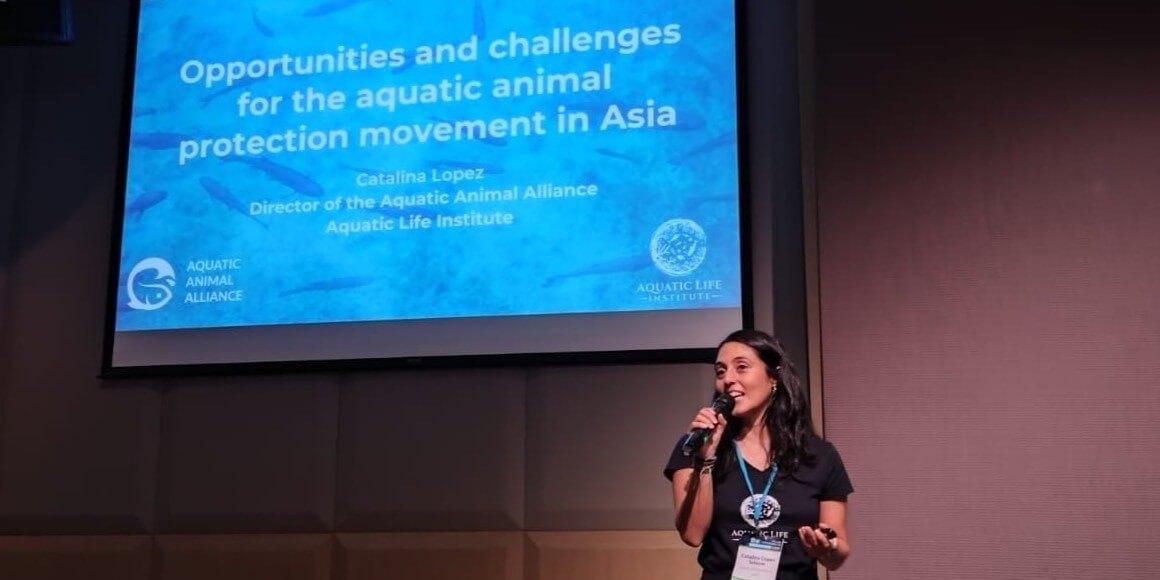
ALI delivered the first-ever aquatic animal welfare session at the Asia for Animals Conference, elevating aquatic animals within the regional animal protection agenda and strengthening the Aquatic Animal Alliance’s coordination role.
ALI reframed sustainability narratives within the seafood industry through a feature in Feed & Additive Magazine, reaching decision-makers representing an estimated 62% of the global aquafeed market and positioning animal welfare as a core sustainability consideration.
Protection – Are commitments and regulations being adopted to protect aquatic animals?
Prioritization – Is aquatic animal welfare embedded in long-term decision-making?
In 2025, ALI strengthened its organizational foundations to support stable, accountable, and effective delivery across a growing global team. Read the full Year End Report here.
Çiftlik Hayvanlarını Koruma Derneği
$80,698 grant
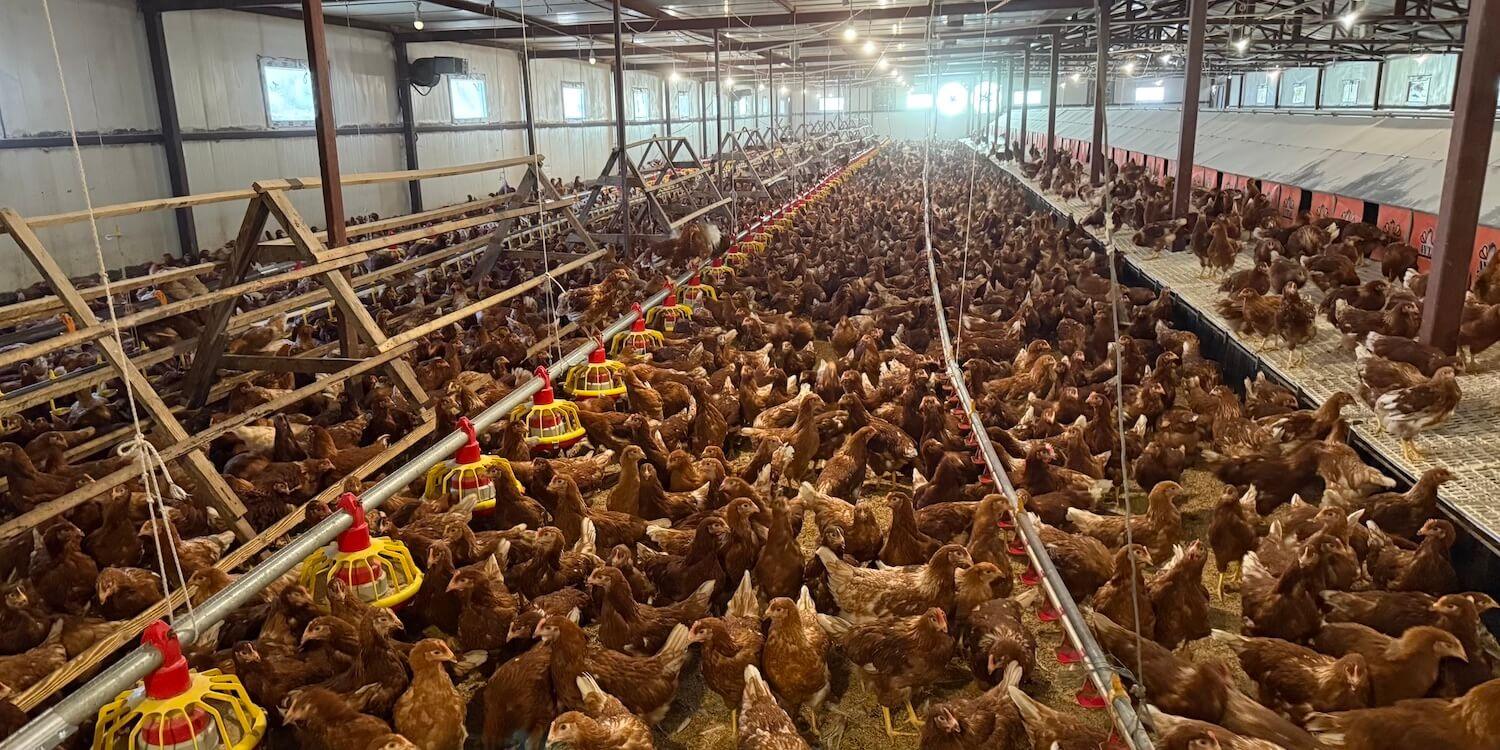
Kafessiz Türkiye conducted four visits to cage-freeproducers in Türkiye. The goals of these visits are to observe the living conditions of animals and assess the scale of cage-free production capacity in Türkiye.
ASLI reported implementing their transition to cage-free eggs.
Future For Fish organised a research project to assess the effectiveness of electrical stunning machines used by aquaculture companies in Türkiye.
Kafessiz Türkiye renewed its social media profile and website after redesigning its communications strategy. This new approach has enabled their Instagram account to steadily grow 0.5% every week.
Dansk Vegetarisk Forening
$104,433 grant
Dansk Vegetarisk Forening (DVF) held the international policy summit, Plant Food Summit, in collaboration with the Danish Government and the EU Presidency, on October 20-21, 2025. 425 stakeholders from 38 countries participated, including 75+ government officials representing 24 EU member states, as well as 40+ representatives from farmers’ associations. There are signs the summit has inspired subsequent political action in several countries, including governments inviting national stakeholders to submit proposals for national action plans. Based on the success, DVF is now considering a global policy summit in 2028.
During Denmark’s EU Presidency, DVF organized participation of Danish key stakeholders at multiple events across Europe under the initiative Danish Plant-Based Diplomacy, which is supported by several farmers’ associations and other mainstream stakeholders. This included events at embassies in France and Spain, as well as other events in Finland, Ireland, Hungary, France, Italy and Spain. It also included co-organizing a delegation of 15 stakeholders from Poland visiting Denmark.
DVF was an official partner at Denmark’s Pavilion at COP30. In total, DVF organized or co-organized 10 events at COP30 (with participation of ministers from Denmark, Brazil and Ghana), while also appearing in seven events organized by others, and distributing a large number of hard copies of Denmark’s plant-based policies, including to several ministers and high-level officials. Six weeks before COP30, DVF hosted an event at the Danish Embassy in Brasilia, which was attended by 12 government officials from Brazil, and a civil society roundtable with 25 Brazilian stakeholders.
To diversify income sources, DVF invested in fundraising and thereby increased the annual value of recurring small-donor donations by an additional $50,000 USD, while increasing their number of email contacts from 18,000 to 30,000 by creating a health-focused newsletter. This will ensure future growth in small-donor donations, while also educating and inspiring thousands of people.
Faunalytics
$37,976 grant
Faunalytics completed the following research studies, analyses, and data visualizations in the second half of 2025.
Aquaculture Fundamentals, a comprehensive, single-page resource that gives you a rundown on the major issues involved with aquaculture.
The 4th Annual Research Symposium, Fauna Connections, welcomed 459 attendees from 61 countries, and session recordings have received over 518,000 views on YouTube.
Additionally, throughout the year, over 90 advocates and organizations were assisted with free one-on-one support through Faunalytics’ Office Hours program, where they help advocates find and apply data to their campaigns. They also published over 250 articles, summarizing external studies on important topics in animal advocacy. Read on to view their full 2025 Year In Review and 2026 Plans.
Good Food Fund
$47,470 grant
Best-Practice Casebook
As part of its fifth annual case collection program, the Good Food China Action Hub curated 18 rigorously reviewed best-practice case reports and compiled them into a professionally designed, visually accessible casebook, supporting knowledge sharing and cross-sector learning.
Selected Hand-Drawn Poster Exhibition
Selected first- and second-prize winning posters from the “Exploring Eastern Plant-Based Diets” national hand-drawn poster competition were professionally exhibited at the Good Food Summit, with a dedicated display area that amplified youth voices and generated strong engagement from conference participants.
Award-Winning Poster Collection Book
Winning posters were curated into a professionally designed bilingual (Chinese–English) collection; the book was showcased at the Good Food Summit and the World Food Forum, receiving strong and positive audience engagement.
Institutional Catering Engagement
Completed case studies of three domestic and four international universities.
A roundtable during the Good Food Summit identified the distinct priorities and challenges of university dining directors, researchers, and contract caterers. In-depth discussions laid groundwork for future collaboration.
Engagement with WHO Asia-Pacific Centre for Environment and Health (ACE)
Under WHO ACE’s new Strategic Plan, GFF is collaborating closely to co-develop its China implementation program, acting as a key connector. A workshop was convened in Beijing in October, bringing together diverse institutions and experts.
GFF is leading a baseline assessment on school meals within the program. Next steps include mapping the current landscape, policy and training systems, and good practices, in deep collaboration with Chinese CDC to identify high-impact leverage points.
Developing a China-specific EAT-Lancet Report
Co-initiated by GFF and Prof. Pan An (2025 EAT-Lancet Commissioner) in late 2025, this research project will deliver an overall assessment and a China-specific reference diet.
An advisory committee is formed, including top level experts.
Active engagement underway with EAT and The Lancet to target publication by 2028.
Legal Impact for Chickens
$61,710 grant
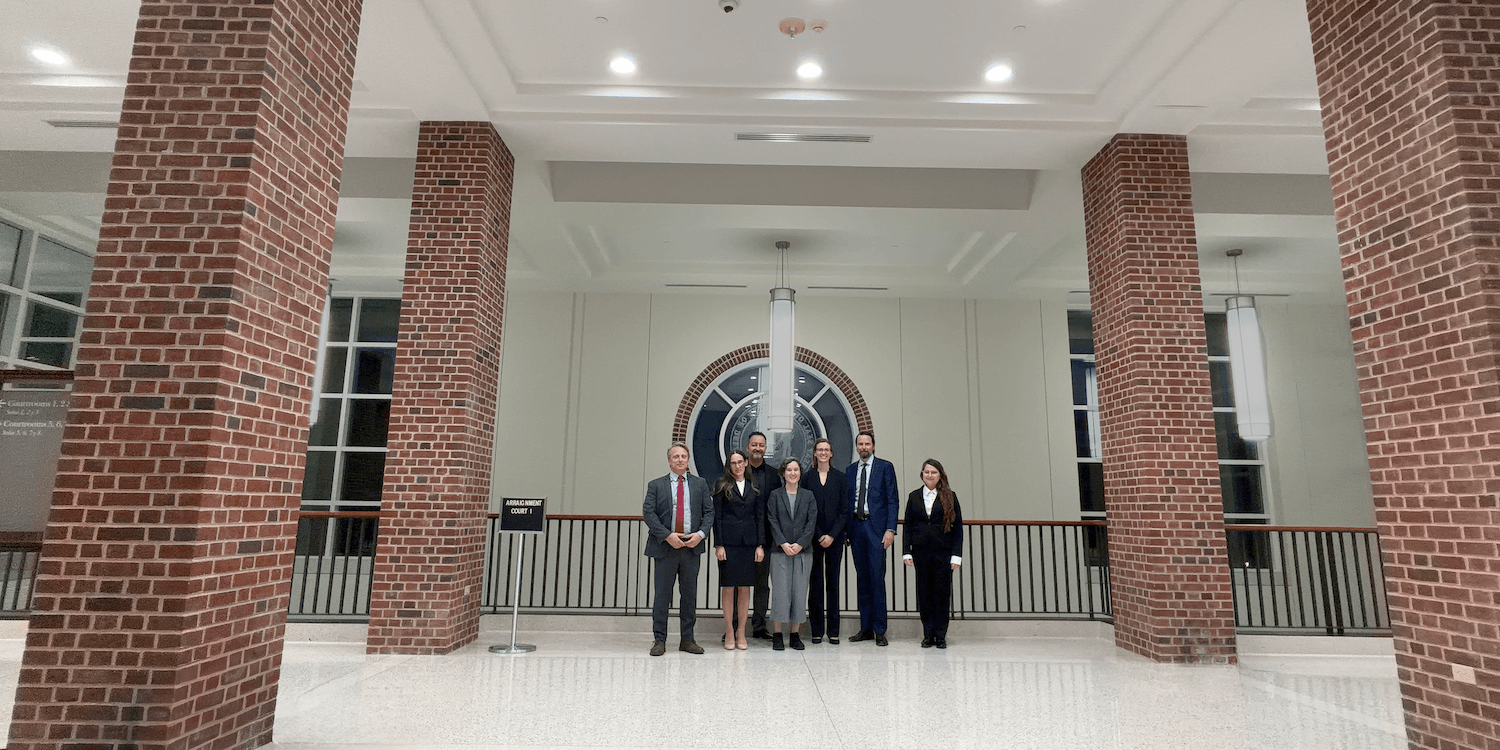
Victory! On September 11, 2025, the California Court of Appeal summarily denied defendant Alexandre’s writ petition in the animal-cruelty case Legal Impact for Chickens v. Alexandre. This appellate-court decision essentially upholds the Humboldt County Superior Court’s ruling that Legal Impact for Chickens has the power, as a California society for the prevention of cruelty to animals (SPCA), to prevent cruelty through civil litigation. The animal-cruelty case against Alexandre Family Farm will thus continue. The case has since returned to Humboldt County Superior Court to determine whether Alexandre illegally neglects and abuses its cattle. And the parties have begun discovery, a legal process where each can demand and receive information from the other.
On August 21st, 2025, Legal Impact for Chickens represented a Tyson shareholder in filing a Delaware Code section 220 lawsuit in the Delaware Court of Chancery. The complaint demands that Tyson allow LIC’s client to view records documenting the company’s treatment of workers and animals. Tyson turned over some records to the shareholder. The Court of Chancery then held a trial on December 9, 2025 on whether Tyson must produce additional records.
Legal Impact for Chickens released a PSA starring Oscar-nominated actor James Cromwell and former poultry grower Craig Watts urging chicken-industry workers to speak out about animal abuse and neglect.
New Roots Institute
$42,723 grant
Between August 2025 and January 2026, New Roots Institute advanced cost-effective, scalable strategies to reduce factory farming by building leadership capacity and securing institutional change across food systems, policy, and education.
Leadership Pipeline
New Roots welcomed 100+ fellows from 21 U.S. states and 12 countries through our Summer Leadership Academy, with many continuing into the Academic Year Fellowship. Fellows developed campaign, policy, and movement-building skills focused on high-leverage interventions.
Academic Year Fellowship
During the fall, fellows launched nearly 50 campaigns targeting tractable opportunities for systemic change. As they continue their work this spring, notable initial outcomes include:
Institutional procurement reform: A Forward Food Pledge secured at Pomona College, committing to more sustainable food purchasing policies.
Behavioral defaults: An oat milk default pilot launched at the University of British Columbia to reduce animal product consumption using evidence-based nudges.
Education as pipeline building: Creation of a new for-credit course at Haverford College on transforming global food systems.
Movement integration: Fellows and alumni represented New Roots at Effective Altruism Summits in Berlin, Los Angeles, Vancouver, and Nigeria.
Policy career capital: Fellows secured placements in climate and food-adjacent policy roles, including a Climate Finance Policy Internship at the U.S. Climate Alliance.
Alumni Outcomes
As of early 2026, New Roots alumni are contributing to reducing factory farming across 100+ organizations in 200+ roles, totaling 150,000+ hours of impact. Recent highlights include:
Elimination of plant-based milk upcharges at UC San Diego dining.
Appointment of an alum as a Youth Climate Commissioner for Los Angeles County.
Contracts with UC Berkeley and the University of Michigan to reduce animal products by 10% in year one, for a 50% reduction commitment over 5 years.
Together, these outcomes reflect New Roots’ focus on scalable institutional change, evidence-based interventions, and long-term talent development in neglected yet high-impact cause areas.
Shrimp Welfare Project
$71,204 grant
Scaling Proven Solutions
Shrimp Welfare Project supported the shrimp farming industry in its transition to humane slaughter by signing 9 new memorandums of understanding (MOUs) with producers and seafood suppliers, bringing the total to 30. Once all stunners are delivered and operational, their Humane Slaughter Initiative will be helping about 5.4 billion shrimps per year.
Retailer momentum is growing in Europe, with Dutch retailer Jumbo and French retailer Les Mousquetaires recently publishing shrimp welfare policies. In total, 11 major supermarkets across the UK and Europe have committed to humane slaughter and eyestalk ablation-free supply chains.
Shrimp Welfare Project provided hands-on implementation support to help ensure that corporate commitments translate into practical solutions on farms by assisting with commissioning, training, and improving protocols for stunning equipment. They are currently hiring for two Technical Field Coordinators based in Latin America and Asia, respectively.
Strengthening the Evidence Base
Shrimp Welfare Project continued catalyzing research projects intended to reduce key uncertainties and improve best-practice guidance for humane slaughter, including academic studies and technical development efforts.
The organisation also continued building its monitoring, learning, and evaluation work, including releasing its first Corporate Impact Metrics report for 2025.
Growing the Shrimp Welfare Ecosystem
Shrimp welfare reached new audiences through impactful outreach including a feature story inVox and an industry-facing Q&A published in trade outletShrimp Insights.
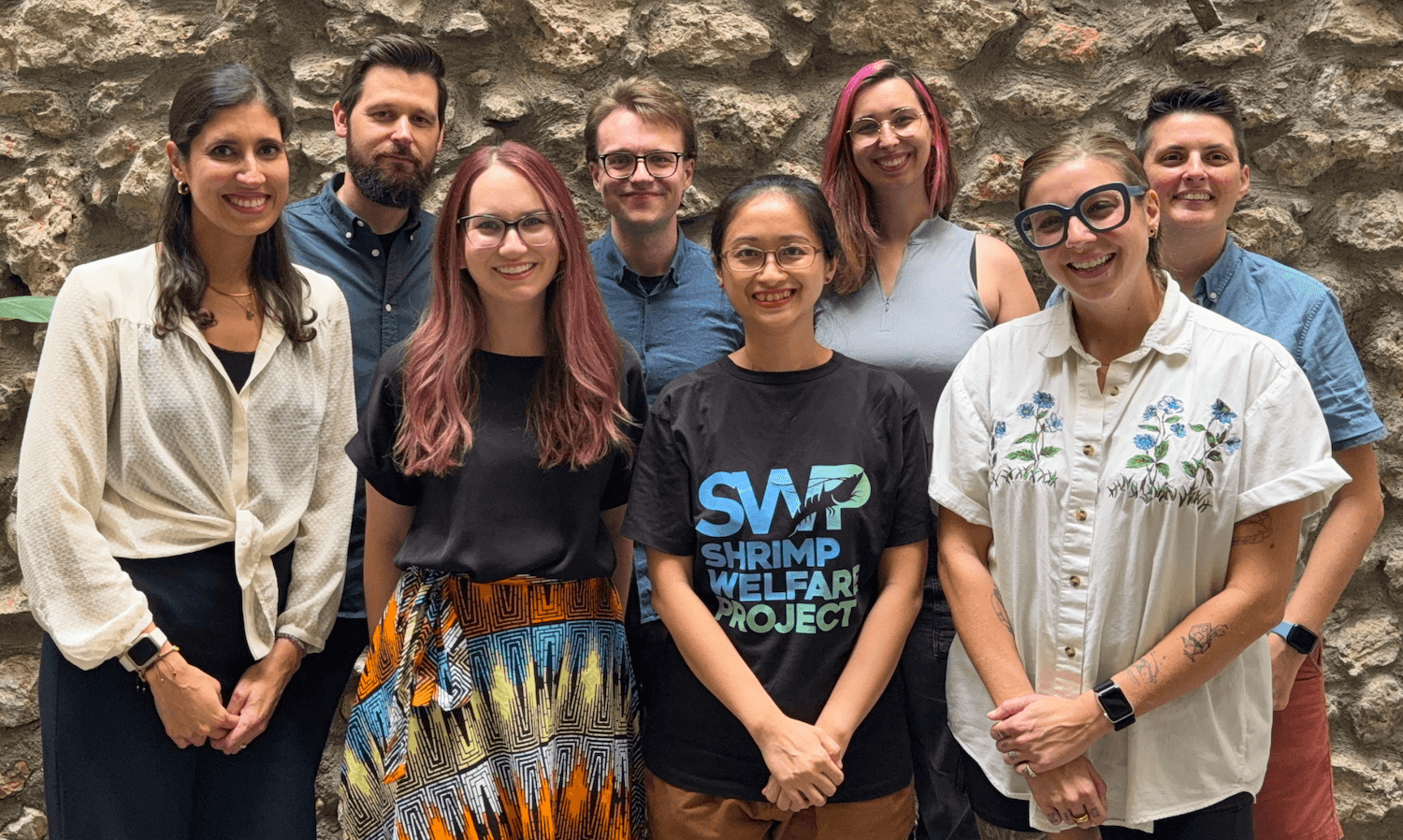
Shrimp Welfare Project met with key stakeholders at shrimp industry conferences including the Catch Welfare Platform Conference and the Global Shrimp Forum — where Chief Programmes Officer Krzysztof Wojtas spoke on a panel about shrimp welfare. The team also met in-person for “Shrimposium,” their annual strategy retreat.
Following the 11 commitments secured in the first half of the year, Sinergia Animal secured 12 additional corporate commitments between August and December, bringing the total to 23 new commitments in 2025 to phase out cruel confinement systems such as battery cages and gestation crates across Southeast Asia and Latin America.
The Nourishing Tomorrow program significantly expanded its reach in the second semester, adding 24 new institutional diet-change commitments (up from the initial agreements in Argentina), bringing the total to over 2.6 million plant-based meals annually across 168 locations.
The organization published the fifth edition of the Cage-Free Tracker, an essential accountability tool that monitors 110 companies in Latin America and Southeast Asia, revealing that 66% of the companies evaluated are already reporting progress on their welfare pledges.
Following a 2024 joint investigation by Sinergia Animal and We Animals Media exposing severe animal welfare and public health risks at the Cañuelas Cattle Market, SENASA, Argentina’s National Service for Agrifood Health and Quality, announced it will launch new animal welfare guidelines and protocols for the market. This regulatory step closely followed Sinergia Animal’s formal letter urging stricter rules, oversight, and enforcement.
The Humane League
$85,445 grant
In the second half of 2025, The Humane League (THL) was laser-focused on holding companies accountable for sparing hens from suffering. Thanks to their work, 46 companies including Best Western, Pret A Manger, and 7-Eleven reported progress on their commitments to spare 82.8 million hens from cages. Based on the progress these companies made, THL estimates they spared 2.5 million hens from cages.
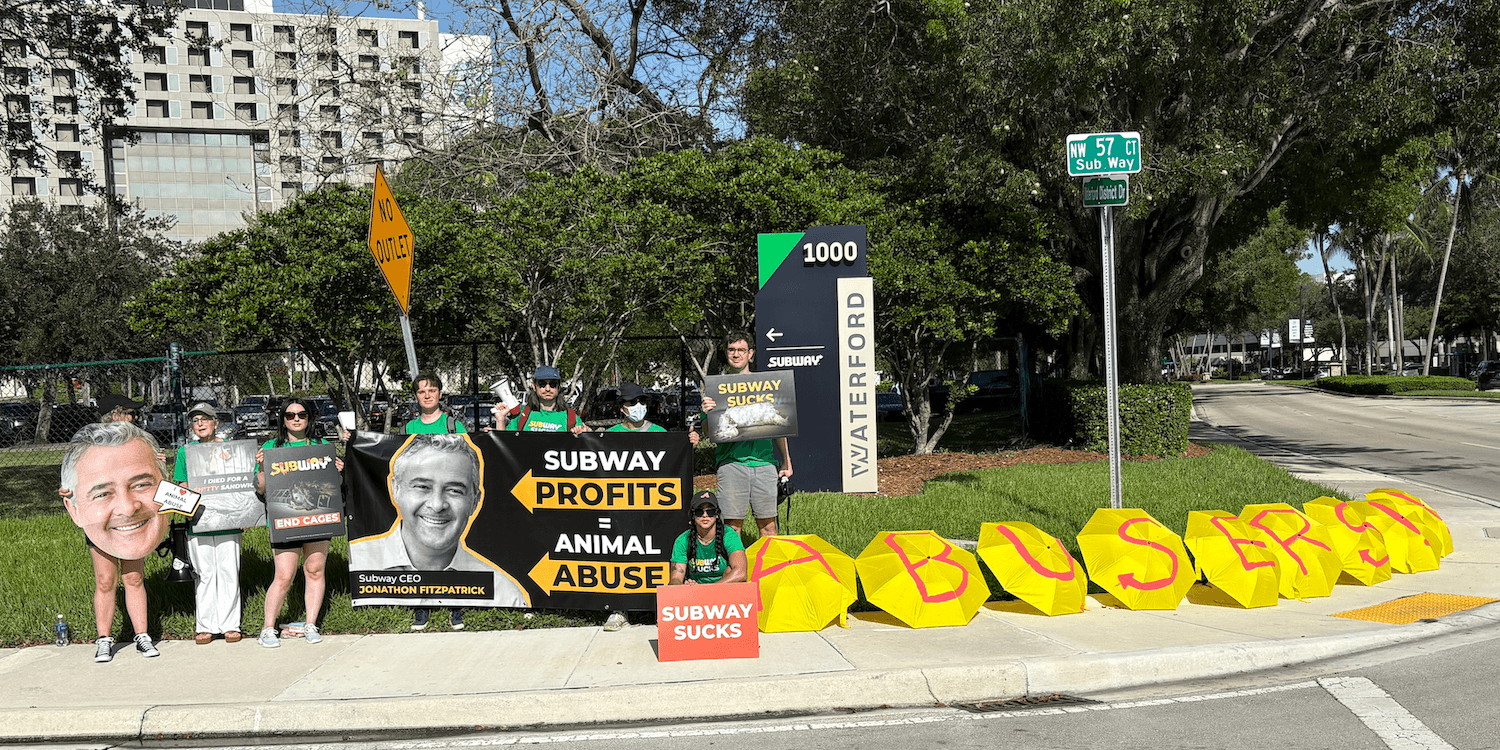
In the US, THL led a fierce campaign against Subway, the largest restaurant chain in North America. As a result, Subway fulfilled its cage-free promise, sparing more than 340,000 hens annually. And THL continued to pressure Ahold Delhaize, a major retail conglomerate, to uphold its cage-free commitment. For five weeks, THL staff, Changemakers, and coalition partners protested at the headquarters of Ahold Delhaize subsidiaries Stop & Shop in Quincy, MA and Food Lion in Salisbury, NC to ensure decision-makers felt the heat.
The OWA’s annual Cage-free Fulfillment Report found that as of July 2025, 92% of all cage-free commitments due in 2024 or earlier have been fulfilled. This is up from 89% in 2024, and confirms a trend: thanks to the work of THL and coalition partners, companies continue to fulfill their cage-free commitments at high rates, and even those that miss their initial deadlines may fulfill them in subsequent years with sustained pressure.
Wild Animal Initiative
$104,433 grant
Wild Animal Initiative became formally represented by Strategy Director Mal Graham on the Roundtable on Science and Welfare of Animals Involved in Research, housed within the National Academies’ ‘Board on Animal Health Sciences, Conservation, and Research (BAHSCR). Mal will continue in this role for at least one year.
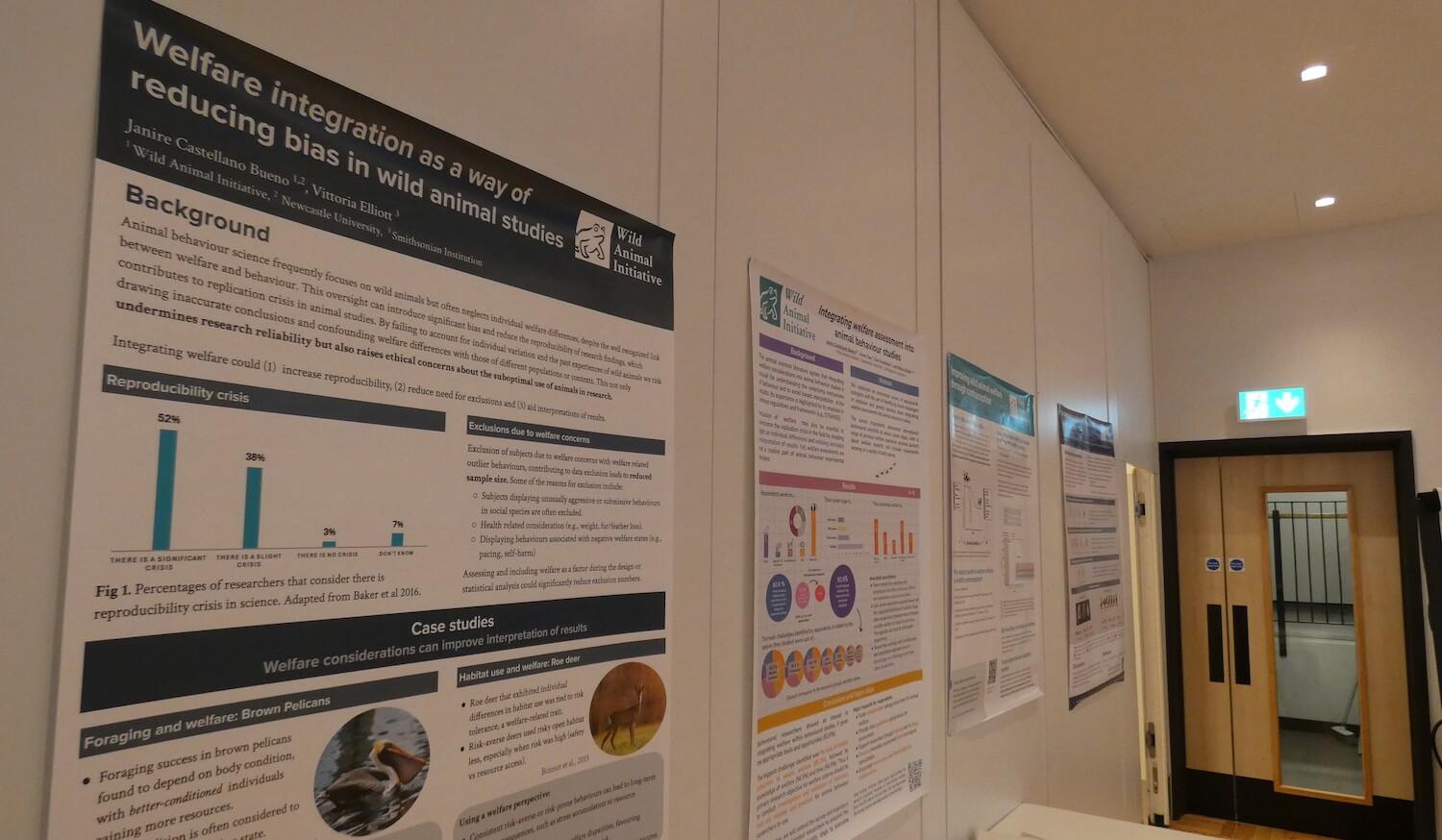
Presented at High-Impact Conferences
Technology in Wildlife Welfare, offering wildlife professionals, academics and technology experts an opportunity to explore technologies that monitor and improve wild animal welfare.
Priority topics: welfare indicator validation, interspecific interactions, population dynamics, juvenile welfare, and invertebrate and fish welfare.
Key Research Projects
In-house field study on house sparrows, completing fieldwork banding 28 birds and conducting experiments across five sites, collecting over 50 hours of video and 25 hours of audio. Now analyzing data to validate behavioral welfare indicators.
We hope that you are inspired by these achievements!
If you want to fuel more positive progress for neglected animals, please support ACE’s Recommended Charity Fund and share this update with a friend. Your action today will help reduce animal suffering tomorrow. Thank you!
About Heather Herrell
Heather joined ACE in 2018, continuing her professional career in the nonprofit sector. A lifelong animal advocate and donor, she is committed to creating a more compassionate world for all creatures. Heather is excited to use her fundraising expertise in a context where these skills can help achieve the greatest positive impact for animals.
ACE is dedicated to creating a world where all animals can thrive, regardless of their species. We take the
guesswork out of supporting animal advocacy by directing funds toward the most impactful charities and programs,
based on evidence and research.
167 Recipients working on promising projects
42 Countries across six continents.
$68M Donations within the animal advocacy movement.
$58,000,000+ in donations already made to our recommended charities between January 2019 and March 2025
Looking to make your first donation? We’re happy to help
Making DIY light modifiers lets you create professional lighting setups without spending hundreds on industry-standard equipment. These budget-friendly alternatives use household items and hardware store materials to replicate techniques used on professional film sets. Whether you’re building bounce boards, diffusion panels, or negative fill, these DIY light modifier projects prove you don’t need expensive gear to achieve cinematic results.
Understanding Light Modifiers
Light modifiers control how light falls on your subject. They can soften harsh light, redirect it, add contrast, or create specific moods. Professional sets use specialized equipment like magic cloth, foam bounce cards, and Hollywood floppies. These work beautifully but cost money many filmmakers don’t have when starting out.
The good news is you can replicate these effects using DIY light modifier alternatives. The principles remain the same whether you’re using expensive gear or homemade solutions. Understanding how light behaves helps you create effective modifiers from everyday materials.
DIY Bounce Board: Five-in-One Reflector Method
Foam bounce boards (sometimes called “pizza boxes” by film crews because of their size and shape) provide neutral white surfaces that spread light evenly. These professional reflectors cost $50-100 depending on size. For a DIY light modifier alternative, start with a five-in-one reflector if you already own one.
Most photographers have these collapsible reflectors with multiple surfaces including white, silver, gold, and black sides. Use the neutral white side to bounce light onto your subject. This creates the same effect as professional bounce boards without the shiny hotspots that metallic surfaces produce.
Step 2: Position Your Light Source
Aim your LED panel light at the reflector rather than directly at your talent. Angle the light so it hits the white surface and bounces toward your subject.
Step 3: Adjust the Bounce Angle
Reposition the reflector until light bounces evenly onto your subject’s face. The reflected light becomes softer and more flattering than direct illumination. This DIY light modifier technique works perfectly for portrait photography and video interviews.
DIY Bounce Board: Insulation Board Method
If you don’t own a reflector, build your own bounce board from materials available at any hardware store.
Step 1: Buy Insulation Board
Visit your local hardware store and purchase foam insulation board. These boards have one shiny side and one paper-covered side. Choose boards large enough for your needs, typically 2×3 feet or 3×4 feet.
Step 2: Cut to Size
Cut the board to your desired dimensions using a utility knife. Match standard bounce board sizes or create custom dimensions for your space. The paper side provides neutral white bounce while the shiny side creates unwanted hotspots, so plan accordingly.
Step 3: Mount the Board
Use the paper-covered side facing your subject. This neutral white surface spreads light evenly without the harsh reflections that shiny surfaces create. Your DIY light modifier bounce board is now ready to use.
Building DIY PVC Light Stands
Professional C-stands cost $100-200 each. Build functional alternatives from PVC pipes for under $20.
Purchase PVC pipes and joints from your hardware store. You’ll need pipes of various lengths and T-joints or elbow joints to create a stable base. Standard 1-inch diameter PVC works well for most applications.
Step 2: Assemble the Stand Base
Connect PVC pipes to create a tripod-style base. Use three legs for stability. The exact design can vary, but aim for a base that won’t tip over when supporting your modifiers.
Step 3: Create the Vertical Support
Attach a tall vertical pipe to your base. This becomes the stand that holds your bounce boards or diffusion panels. Make it tall enough to position modifiers at the appropriate height for your shooting needs.
Step 4: Attach Hardware Store Clamps
Use large clamps from the hardware store to attach your bounce boards to the PVC stands. Position clamps at both top and bottom contact points for stability. This prevents boards from shifting during shooting and keeps your DIY light modifier setup secure.
Creating Diffusion from a Five-in-One Reflector
Magic cloth is the professional standard for diffusion, softening light beautifully while maintaining intensity. Repurpose equipment you already own instead of buying expensive alternatives.
Step 1: Remove the Reflector Cover
Take your five-in-one reflector and remove all the outer zippered covers. This reveals the translucent white diffusion material inside that normally serves as the base layer.
Step 2: Position the Diffusion
Raise this diffusion material between your light source and the bounce board. Use a C-stand or one of your DIY PVC stands to hold it in place at the proper height.
Step 3: Create a Book Light Setup
Position your light behind the diffusion so it shines through, then bounces off your reflector card before reaching your subject. This creates incredibly soft, flattering illumination perfect for studio photography and video work.
Building Frame Diffusion Panels with PVC
Create large professional-quality diffusion panels for just a few dollars in materials.
Using the same PVC pipes and joints as your light stands, create a square or rectangular frame. Connect four pieces of pipe with corner joints to form your frame shape. Common sizes are 2×2 feet or 3×3 feet.
Step 2: Choose Your Diffusion Material
Buy white tablecloths from grocery stores. These thin fabrics diffuse light effectively while costing just a few dollars. Look for plain white without patterns or textures.
Step 3: Attach the Fabric
Stretch the tablecloth across your PVC frame. Secure it with clamps, zip ties, or even duct tape at the corners and midpoints. Pull the fabric taut to prevent wrinkles that create uneven light patterns.
Step 4: Mount and Position
Place your DIY light modifier diffusion panel on your PVC stands between your light source and subject. Raise it to the appropriate height and angle it to spread light evenly. This setup works great for professional lighting effects on virtually no budget.
DIY Negative Fill: Black T-Shirt Method
Negative fill adds contrast by preventing light from bouncing back onto the shadow side of your subject’s face. Start with the simplest approach using items from your closet.
Step 1: Find a Black T-Shirt
Grab any black t-shirt from your wardrobe. The darker and less faded, the better it absorbs light.
Step 2: Thread Through C-Stand Arm
If you have a C-stand arm available, thread it through the t-shirt sleeves like dressing a scarecrow. One sleeve on each side of the arm creates a vertical black panel.
Step 3: Position for Contrast
Raise the arm until the shirt hangs vertically beside your subject. Position it on the opposite side from your key light to absorb bounce and create deeper shadows. This simple DIY light modifier adds dimension to your dramatic lighting setups.
Building Black Flag Frames for Negative Fill
For larger negative fill panels, build dedicated frames using the same techniques as your diffusion panels.
Step 1: Create Another PVC Frame
Build a PVC frame using the same method as your diffusion panels. Make this frame slightly larger if you want more dramatic contrast control.
Step 2: Attach Black Fabric
Instead of white tablecloths, attach black tablecloths, curtains, or any dark fabric. The material absorbs light rather than diffusing it, creating the contrast needed for professional-looking imagery.
Step 3: Mount or Hand-Hold
If you built enough PVC stands, mount your black flag on one. Otherwise, have a friend or production assistant hold the frame. This “Hollywood” method works perfectly on set and costs nothing extra.
Step 4: Position for Maximum Effect
Place the black flag close to your subject on the shadow side. The closer the black surface, the stronger the contrast effect. Adjust the distance based on how much drama you want in your video lighting setup.
Creating a Complete Book Light Setup
Combine all your DIY light modifier elements to replicate professional book light techniques.
Step 1: Position Your Bounce Board
Set up your bounce board (either five-in-one reflector or insulation board) on a stand. Angle it toward where your subject will sit.
Step 2: Add Your Light Source
Position your LED panel pointing at the bounce board, not at your subject. The light should hit the reflector first.
Step 3: Insert Diffusion Layer
Place your diffusion panel (either the five-in-one interior or your PVC frame with tablecloth) between the light and the bounce board. This creates the book light effect, where light passes through diffusion, bounces off the reflector, and wraps around your subject.
Step 4: Add Negative Fill
Position your black flag or t-shirt on the opposite side from your key light. This prevents flat lighting and creates dimension, separating your subject from the background.
Step 5: Fine-Tune the Setup
Adjust distances and angles until you achieve the desired look. Move elements closer or farther to control light intensity and spread. This complete DIY light modifier setup costs under $50 while replicating techniques used on major film productions.
Materials and Costs Breakdown
Here’s what you need for a complete DIY light modifier kit:
Insulation board for bounce: $10-15
PVC pipes and joints for stands: $15-20
White tablecloth for diffusion: $5-10
Black tablecloth for negative fill: $5-10
Hardware store clamps: $10-15
Black t-shirt for negative fill: Free from your closet
Total investment: Under $50 for everything. Compare this to $500+ for professional equivalents. You’re achieving the same lighting quality for a fraction of the cost.
Tips for Using Your DIY Light Modifiers
Position your bounce board at angles that direct light toward your subject’s face. Experiment with distances since moving the bounce closer or farther changes light intensity and spread. For cinematic video work, consistency matters more than perfection.
Keep diffusion material taut on frames to prevent shadows or hotspots. Wrinkled fabric creates uneven light patterns. Use enough clamps or ties to stretch tablecloths smoothly across PVC frames. Check your frames periodically during shoots since fabric can sag over time.
When using negative fill, position it close enough to absorb bounce without entering your frame. The closer the black surface, the stronger the contrast effect. For portrait sessions, subtle negative fill often works better than dramatic contrast.
Side-by-side comparisons show minimal difference between professional modifiers and DIY light modifier alternatives. The physics of light don’t change based on equipment cost. A white surface bounces light, whether it’s a $100 foam board or a $10 insulation panel. Black fabric absorbs light regardless of price.
The main advantages of professional gear are durability and convenience. C-stands adjust more smoothly than PVC pipes. Magic cloth lasts longer than tablecloths. But for actual light quality in your final image, DIY light modifier solutions deliver comparable results.
Building DIY light modifier equipment from hardware store materials and household items proves that professional lighting quality doesn’t require professional budgets. A complete modifier kit costing under $50 replicates techniques used on major film productions. The key is understanding how light behaves and using that knowledge to shape illumination exactly how you need it.
These budget-friendly solutions work perfectly for content creation, product photography, independent films, and any project where lighting matters. Stop letting budget constraints hold back your creative vision. With basic materials and these step-by-step techniques, you’re ready to light scenes that look expensive regardless of what you actually spent.
Dental disease in cats is both more common and more impactful than you may think. Studies estimate that up to 70 percent of cats over the age of three show signs of dental disease, which can range from mild gingivitis to severe periodontal disease. If left untreated, dental disease can lead to chronic pain, tooth loss, and systemic health problems affecting the heart, kidneys, and liver.
The most prevalent types of feline dental disease include gingivitis (inflammation of the gums), periodontitis (inflammation affecting deeper structures around the tooth), and tooth resorption, a painful condition in which the tooth structure begins to break down. These conditions are often caused by plaque and tartar buildup resulting from poor oral hygiene.
Does Your Cat Have Dental Disease? What to Watch For
Signs of dental disease in cats may be subtle, as cats are adept at hiding pain and discomfort. Here’s what to look for.
Common Symptoms of Dental Disease in Cats
Bad breath
Red or swollen gums
Drooling
Difficulty eating, perhaps favouring one side of the mouth or choosing to eat only soft food
Pawing at the mouth
Changes in appetite
Noticeable decrease in grooming behaviour
Irritability
Visible tartar or calculus on the teeth
How to Prevent Dental Disease in Cats
Brushing your cat’s teeth is one of the most effective ways to prevent dental disease. Start slow and early. Specially formulated dental treats and dental water additives has also been shown to reduce plaque and tartar.
What to Do If You Suspect Your Cat Has Dental Disease
If you suspect your cat has dental disease, an oral examination by your vet is needed—professional dental cleaning under anesthesia may be recommended. Remember, dental disease not only causes pain and discomfort but impacts your cat’s overall wellbeing!
How to Help Cats with Dental Disease: Modern Cats Product Picks
A Brush-Free Bad Breath Solution
Bid stinky cat breath adieu with thePet Dental Water Additivefrom Oxyfresh. Just add this brush-free solution for bad breath, tartar, irritated gums, and cleaner teeth to your cat’s drinking water. Tasteless and odourless, it neutralizes bad-breath-causing sulfur compounds and destroys bacteria responsible for plaque and tartar buildup, helping prevent periodontal disease. ($18, oxyfresh.com)
A Toothbrush Just For Cats
The Ryercat toothbrush is designed especially for a cat’s anatomy,making a dreaded task stress-free! The dual-sided micro heads sized for feline mouths mean brushing is safe, easy, and gentle. ($20, ryercat.com)
A Soothing Oral Gel
Oratene Enzymatic Brushless Oral Gel provides intensive carefor inflamed gums and oral conditions like periodontal disease, thanks to its potent enzymes. The patented, antiseptic formula is flavourless—just spread on your cat’s gums, no brushing needed—to soothe and maintain gum health. ($13, zymox.com)
A Cat Toy that Cleans Teeth
Canophera’s all-natural braided rope CocoBall cat toy is made from 100% all-natural coconut husk fibers for playtime fun that simultaneously cleans your cat’s teeth!($7, canophera.com)
This article originally appeared in the award-winning Modern Cat magazine.Subscribe today!
Cats are particular about where they sleep. Not just a little particular, but obsessively, methodically particular. They’ll test seventeen surfaces, circle a spot four times, and reject a $200 cat bed in favor of a cardboard box. Where a cat chooses to sleep isn’t random. It’s information.
And when that choice changes—suddenly or gradually— it usually means something in their world has shifted. Sometimes it’s minor. Sometimes it’s worth paying attention to.
Now, if your cat has recently stopped sleeping with you, you may be taking it personally and wondering why. It’s a question that puzzles cat owners everywhere. Your once-loyal bedtime companion now prefers the couch, the closet, or literally anywhere else. While there are common explanations for this behavior shift, some reasons might surprise you.
The truth is, cats are creatures of comfort and routine. When they change their sleeping habits, something in their world has shifted. Let’s explore what might be going on and what you can actually do about it.
The Stress Connection
Image Credit: Zhukova_Anastasia, Shutterstock
Cats hide stress better than they hide from the vacuum cleaner, but it shows up in their sleep patterns. Environmental changes hit them hard: a new roommate, rearranged furniture, a different work schedule, or persistent loud noises from construction next door.
What actually helps: Create predictable calm. Spend more time with them during the day, especially if your schedule changed. Make sure multi-cat households have enough resources. Separate food bowls, water stations, and litter boxes prevent territorial anxiety. Give them hiding spots like cardboard boxes where they can decompress. If the behavior persists alongside other changes, your vet can rule out anxiety disorders.
When Pain Changes Everything
A cat in pain becomes a master of disguise, but their sleep gives them away. They’ll shift positions constantly, avoid jumping up to their usual spots, or seek out different surfaces depending on what hurts.
This could stem from arthritis in older cats, dental pain, urinary tract issues, or injuries you didn’t witness.
What actually helps: Book a vet appointment, especially if you notice other subtle changes like reluctance to jump, different walking patterns, reduced grooming, or new vocalizations. Treatment ranges from medication and dietary changes to physical therapy, laser therapy, or acupuncture, depending on the diagnosis.
Image Credit: Sasquillian, Pixabay
The Boredom Factor
An under-stimulated cat is a restless cat. If your indoor cat spends 16 hours a day staring at the same four walls with nothing to hunt or investigate, they might relocate to a more “interesting” sleeping spot like the windowsill with the bird view.
What actually helps: Puzzle feeders turn mealtime into mental work. Rotate toys instead of leaving the same ones out indefinitely. Install cat shelves near windows for vertical territory and entertainment. Even 10 minutes of interactive play before bed can tire them out enough to return to old sleeping patterns.
Temperature Troubles
Cats seek out their comfort zone obsessively. If you recently started blasting the AC, your fluffy cat might abandon your bed for the warm laundry pile. Conversely, if you’re a furnace sleeper and summer hit, your shorthair might relocate to the cool bathroom tiles.
What actually helps: Keep your home temperature consistent where possible. Provide options: a heated bed in winter, access to cooler rooms in summer. If your cat seems excessively hot or cold despite normal temperatures, that’s a vet visit.
Health Issues Lurking Underneath
Sometimes the reason is medical, but not painful. Think thyroid issues, kidney disease, or urinary problems. These conditions can cause restlessness, increased thirst (meaning more bathroom trips at night), or general malaise that makes them seek different sleeping arrangements.
What actually helps: Watch for accompanying symptoms like increased water consumption, litter box changes, weight loss, or decreased grooming. Annual vet checkups catch these issues early. Treatment varies depending on diagnosis and may include medication, surgery, or specialized diets.
Image credit: one photo, Shutterstock
You’re the Problem (Sorry!)
If you snore loudly or thrash around at night, your cat may get tired of the disturbance. Cats are light sleepers who wake easily, and if your sleep patterns make you an unreliable bed partner, they’ll find somewhere quieter.
What actually helps: For your cat, provide a cozy alternative bed in a peaceful room. For you, consider seeing a doctor about sleep apnea or allergies. Treatments range from medication to CPAP machines for severe sleep apnea.
Outside Interference
Other cats prowling outside your bedroom window can turn your cat’s favorite sleep spot into a stress zone. The sounds, scents, and visual stimulation of outdoor cats can trigger territorial anxiety.
What actually helps: Heavy blackout curtains block both the sight and sound of outdoor cats. Pheromone diffusers create a calming environment that counteracts anxiety from outside threats.
New Additions to the Family
A baby or new pet changes everything for a resident cat. Unfamiliar sounds and new scents can make your bedroom feel like foreign territory. Some cats adapt quickly; others need time and space.
What actually helps: Give your cat a separate, quiet room during the adjustment period. Gradually reintroduce them to shared spaces. Make sure they still get one-on-one attention so they don’t feel replaced.
Image Credit: Patrick Hatt, Shutterstock
Final Thoughts
Most sleep location changes aren’t emergencies. Cats are independent, and their preferences shift. If your cat seems healthy otherwise (eating normally, playing, grooming, using the litter box consistently), they probably just found a new favorite spot.
The time to worry is when the behavior change comes with other red flags: hiding constantly, appetite changes, litter box issues, or visible discomfort.
Set up a comfortable alternative sleeping area with their favorite blanket or an unwashed shirt that smells like you. Give them time. Most cats eventually cycle back to their old spots once they’ve worked through whatever prompted the change.
And if they don’t? They’re still your cat, just a more independent roommate than you thought.
Feature Image Credit: Alex Zotov, Shutterstock
Did You Know?
Our brand-new posts are rounded up and included in our weekly emails. Don’t miss out on the latest – sign up for our newsletter below!
New York’s Livingston County Takes Stand Against Animal Cruelty With Animal Abuser Registry – World Animal News
In a decisive move to protect animals and hold abusers accountable, the Livingston County Board of Supervisors has adopted Local Law No. A-2026, creating a public online Animal Abuser Registry.
The law was approved during the Board’s meeting on January 28, 2026, following a public hearing, and takes effect immediately upon filing with the Secretary of State.
Livingston County is making it clear: animal cruelty will not be tolerated, and anyone who harms animals will face serious consequences. The registry will publicly identify convicted animal abusers and prevent them from adopting, purchasing, or otherwise obtaining animals within the County — a critical safeguard to protect innocent lives and reduce repeat offenses.
Under the law, any resident 18 years or older convicted of an animal abuse crime must register with the Livingston County Sheriff’s Office, which will maintain the registry online.
“With this law, the board is sending a clear message that the cruel treatment of animals is unacceptable in Livingston County,” said Board Chair David LeFeber. “The Animal Abuser Registry will provide community members, particularly animal shelters, farms, pet sellers, and anyone else involved in the sale, exchange or adoption of animals, with the identities of convicted animal abusers. We want to ensure that all our animals are placed in safe, caring environments and kept away from proven offenders.”
All offenders must register within five business days of release from incarceration or, if not incarcerated, from the date of conviction. Failure to comply is a Class A misdemeanor, carrying fines starting at $1,000 and/or up to one year in prison.
Fines collected will directly support the care and protection of animals through the Livingston County Humane Society or another animal cruelty prevention organization designated by the Board of Supervisors, ensuring that accountability also funds lifesaving efforts.
Under the law:
First-time offenders remain on the registry for 15 years after release or conviction.
Repeat offenders remain listed for life.
Registry participants are strictly prohibited from owning animals and may not harbor animals in their home, even if legally owned by someone else.
Animal advocates emphasize that transparency and prevention are essential to breaking cycles of abuse. By making the identities of convicted animal abusers publicly accessible, Livingston County is prioritizing both animal protection and community awareness.
When two golden retriever puppies were abandoned at a rural shelter in North Carolina, staff quickly realized something was wrong. The full-bred golden retrievers, later named Blanche and Dorothy, could not stand up straight or walk like other puppies their age. Their legs splayed out to the sides, and instead of taking steps, they appeared to paddle against the floor. The shelter reached out to Forgotten, Now Family Rescue in Charlotte, hoping that founder Chrissy Elder could help. What followed became a powerful story of resilience, rescue, and second chances, and a moving example of how swimmer puppy syndrome does not have to define a dog’s future.
Instagram/forgotten_now_family_rescue
According to Elder, Blanche and Dorothy had been born with swimmer puppy syndrome, often called “swimmers.” In this condition, a puppy’s legs extend out from the sides of their body, and they make swimming-like motions when trying to move. Without intervention, they struggle to stand or walk, and their quality of life can be severely affected. In Blanche and Dorothy’s case, the breeder who owned them apparently saw no value in puppies who could not walk, and they were left at the shelter once it became clear they were not “perfect” in the commercial sense.
Elder shared that this was not the first time she had seen puppies with medical conditions abandoned when they required extra care. She noted that to the breeder, these little dogs were suddenly worth nothing financially, so they were dropped at the shelter and forgotten. Yet for Elder and her rescue, these puppies were not a burden. They were exactly the kind of animals Forgotten, Now Family Rescue exists to help.
When Elder first met Blanche and Dorothy, she felt an immediate connection. The shelter staff were already heartbroken by the situation, but they understood that the rescue could provide the specialized attention these puppies needed. Elder later wrote that she fell in love as soon as she saw them. The puppies were at an age when many dogs are exploring the world on wobbly legs and playful paws. Blanche and Dorothy, however, could only press their bellies against the ground and move their limbs in wide, swimming motions.
Swimmer puppy syndrome can sound intimidating, but Elder had experience on her side. She had fostered and rehabilitated other “swimmers” before, and she knew there was real hope for Blanche and Dorothy. She explained that she had worked with many puppies who started life just like these two, and those dogs eventually learned to run. With a track record of successful rehabilitation behind her, she felt confident that the golden sisters could have the same outcome. I found this detail striking because it highlights how knowledge and patience can transform what at first looks like a hopeless situation into a story of possibility.
Once Elder brought Blanche and Dorothy home, an intensive treatment plan began. There was no quick fix, only consistent, daily work. The process included physical therapy to help strengthen their muscles and encourage correct leg positioning. Water therapy also played a role, giving the puppies a way to practice movement with less pressure on their joints. In addition, brace assistance helped guide their legs into more natural alignment, giving their bodies a chance to relearn how to stand.
Recovery is rarely a straight line, and Blanche and Dorothy’s journey took time. At first, they struggled simply to get their legs underneath them. Their bodies had grown used to splaying out, and every small correction required patience. Elder committed to the long-term effort, trusting that each day’s exercises would eventually add up to real change. Throughout this period, the two puppies lived in her home, surrounded by care, structure, and affection while they worked through their physical challenges.
The healing, however, was not one-sided. Elder herself was recovering from surgery when she took in Blanche and Dorothy. As she focused on her own post-operative recovery, the puppies became a source of comfort and calm. She described them as the best cuddle buddies, a presence that helped her through a vulnerable time. In that sense, each participant helped the others heal. The puppies relied on Elder for the therapy and support that would allow them to walk, while Elder found in them companionship and a renewed connection to the mission of her rescue.
Gradually, Blanche and Dorothy began to change. What started as an inability to stand grew into moments where they could support themselves on their legs. Over time, those small victories evolved into the ability to straighten their limbs and hold themselves upright. The transformation was not just physical. As their bodies grew stronger, their personalities had more room to shine through playful movement and exploration.
Soon, the once-splayed legs that had kept them grounded began to carry them forward. According to Elder, the puppies eventually progressed to standing tall, then to running. Watching them move freely for the first time was a powerful moment. The same dogs who had been left at a shelter because they could not walk were now hopping, playing, and racing around like any other young golden retrievers. Their journey from the floor of a kennel to running in open space underscored just how life changing early intervention and compassionate care can be for puppies with swimmer puppy syndrome.
As their rehabilitation continued, Elder became increasingly confident that Blanche and Dorothy would be ready for adoption soon. She shared that the two golden girls were progressing incredibly and that they might be ready to go to their forever homes within a few weeks. Finding the right families is an essential part of the process. The goal is not only to place the puppies in homes, but to ensure those homes understand their history and are ready to provide a lifetime of love and care.
For Elder, Blanche and Dorothy embody everything Forgotten, Now Family Rescue stands for. The puppies were easily disregarded by the breeder once they did not meet narrow standards, yet the rescue saw them as deserving companions with bright futures. Elder described fostering them as an honor and emphasized that, within her organization, these dogs are not throwaways; they are family. Their story serves as a reminder that animals with special challenges are not broken or less worthy. With informed care, many can thrive and live full, joyful lives.
Blanche and Dorothy’s transformation from abandoned swimmer puppies to confident runners is more than a feel-good moment. It illustrates the impact that specialized rescues, dedicated fosters, and proper rehabilitation can have on animals who might otherwise be overlooked. By sharing stories like this, organizations help raise awareness about conditions such as swimmer puppy syndrome and encourage more people to consider adopting animals who need a little extra support.
As Blanche and Dorothy prepare for the next chapter in their lives, the love and work invested in them continues to echo the guiding belief behind Forgotten, Now Family Rescue: no animal is disposable, and every dog deserves a chance to be seen, helped, and cherished. Read more at