Attempting To Edit An Entire Wedding On Macbook Neo


Attempting To Edit An Entire Wedding On Macbook Neo

After hearing that “no professional would ever use” a cheap laptop, I decided to test it. I edited an entire wedding, about 2,600 RAW files, on Apple’s budget MacBook Neo and compared it to a MacBook Pro. The twist: I let AI do almost everything. 

Using Aftershoot, I automated culling, cropping, masking, and editing. The MacBook Pro finished in 52 minutes. The Neo took 3 hours 25 minutes. But that time difference barely matters when you’re not actually doing any work.

[Read More]


Luminar Spring Upgrade 2026: Smarter AI, Better Portrait Tools & a More Seamless Workflow


I can finally share a proper look at what’s coming in the latest Spring update for Skylum’s Luminar Neo, and this one feels like a bit of a shift, especially for those of us who shoot portraits.

Now, I’ll be honest. While I’ve always liked Luminar Neo for creative edits and quick workflows, I’ve actually been leaning pretty heavily on Aperty when it comes to portrait work. It just handled skin and facial adjustments in a way that felt a little more refined straight out of the box.

This update brings a lot of those more advanced portrait tools directly into Luminar itself, which means less jumping between programs and a much smoother editing workflow overall.

Let’s take a closer look at what’s new.

If you’ve been following along with my editing workflow, you’ll know I’ve used Luminar Neo on and off for creative work and quick turnarounds. This update leans heavily into what Luminar does best, making editing faster, more intuitive, and honestly, a bit more fun.

Let’s break it down.

A Small but Important Change (That Actually Matters)

First up, the mobile app has had a subtle rebrand.

It’s now simply called Luminar, not Luminar Mobile.

That might sound like a minor tweak, but it signals something bigger, they’re clearly pushing toward a more connected ecosystem between desktop and mobile. Less “separate tools,” more “one workflow.”

Mobile Updates: Portrait Tweaks That Actually Help (Not Overdo It)

The mobile side has picked up some solid portrait-focused tools:

  • Bokeh AI
    Adds depth and separation, especially useful when you didn’t quite nail that shallow depth of field in-camera.
  • Face Light & Face Slim (Face AI)
    Subtle adjustments here are key. Used well, these can enhance rather than scream “edited.”
  • Improved Blemish Removal (Skin AI)
    This is a big one. Cleaner, more natural results without that plastic skin look we all try to avoid.

👉 My take: This feels geared toward creators who want quick, polished results without sitting in front of a desktop for hours.

Desktop Updates: Where Things Get More Interesting

The desktop version is where this update really starts to flex.

Bokeh AI (Now Beyond Portraits)

This is probably one of the more exciting upgrades.
You can now apply bokeh effects to objects, not just people.

Think still life, product photography, even some creative composites. That opens up a lot of possibilities for controlled storytelling without needing to reshoot.

Dark Circles Removal (Face AI)

We’ve all been there, either you or your model didn’t sleep enough.

This tool is surprisingly clean. It softens without flattening the face, which is usually where these tools fall apart.

Expanded Skin AI Controls

Now includes:

  • Face Skin Smoothing
  • Body Smoothing
  • Shine Removal (fully automated)
  • New Blemish Removal tool

👉 The key here is control. You can dial things in instead of relying on a one-click fix.

Mask Feather (Finally)

This one will make editors quietly very happy.

Mask Feather softens the edges of your masks, which means:

  • Better blending
  • Less harsh transitions
  • More natural edits overall

Simple feature, big impact.

Pricing Breakdown

For new users:

  • Lifetime License: USD $119 / AUD $169
  • Cross-Device (Desktop + Mobile): USD $159 / AUD $219
  • Ecosystem Max (with Creative Library): USD $179 / AUD $239

For existing users:

  • Ecosystem Pass: USD $69
  • Upgrade Pass: USD $49

My Thoughts

This update feels less like a flashy feature dump and more like refinement in the right places.

What stands out:

  • Better portrait tools without over-processing
  • More flexibility with Bokeh AI (especially for still life and creative work)
  • Small workflow improvements that actually save time

What I’ll be watching:

  • How natural the AI results stay when pushed
  • Whether photographers rely on this instead of getting it right in-camera

Because let’s be real, editing should enhance your work, not fix everything.

Should You Care About This Update?

If you’re:

  • Shooting portraits and want faster retouching
  • Creating still life or product work and want more control over depth
  • Looking for a simpler editing workflow without jumping between apps

Then yes, this is worth a look.

Final Thoughts

The official release drops April 9th, 2026, and if the beta is anything to go by, this is a solid step forward for Luminar.

It’s not trying to replace your entire workflow, but it’s definitely making parts of it quicker and more accessible.

And honestly, anything that gives you more time to shoot instead of sitting behind a screen? I’m all for it.

Check out the run through video over on YouTube.


Terrified Dogs Rescued from Frontlines in Ukraine | The Animal Rescue Site


Terrified Dogs Rescued from Frontlines in Ukraine

Ukraine is still under attack. Homeless and abandoned dogs are still trapped in dangerous war zones and need to be evacuated. 

destroyed home with debris everywhere taken from vehicle


Photo: Under the Sun

Krystina and Lala from 12 Guards put on protective gear as they returned to the frontlines to save more dogs.

woman in military gear inside vehicle looking at orange phone

Photo: Under the Sun

As Russian drones loomed overhead and bombs landed nearby, they made their way down rutted roads to find terrified dogs in destroyed homes and on war-torn streets. 

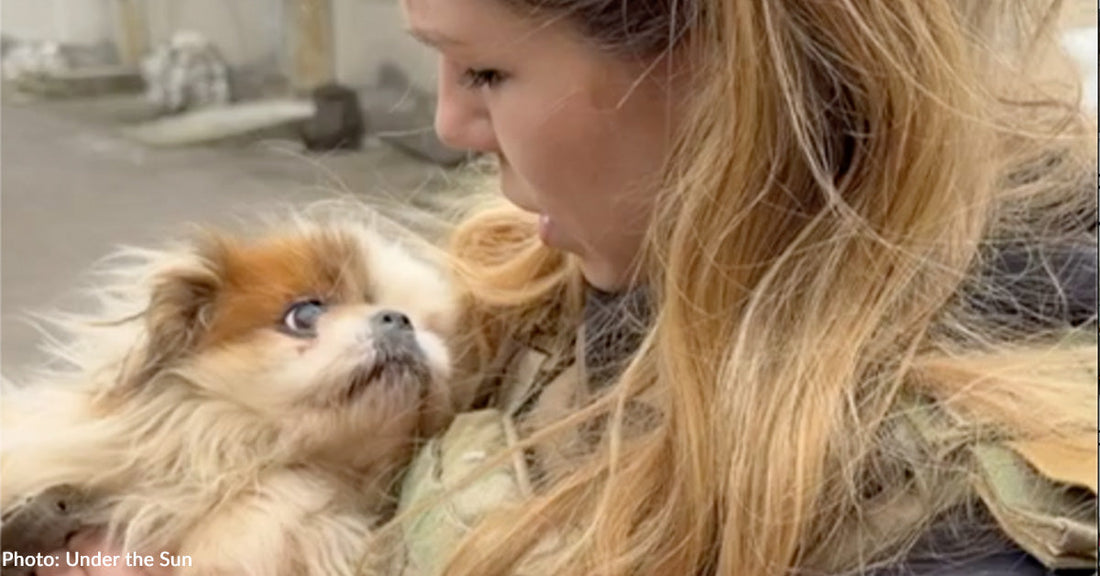
woman holding black and tan dog outside vehicle


Photo: Under the Sun

They quickly captured the dogs and put them in the vehicle before heading to the next destination. They saved many dogs of all ages and sizes. 

three dogs in wire crate togethers looking up at camera


Photo: Under the Sun

The traumatized dogs cowered together at every sound and will need months to heal physically and emotionally. 

GreaterGood CEO, Tim Kuin, was visiting Ukraine at the time and joined a couple rescue missions. He witnessed firsthand Krystina’s bravery and determination to save every dog she can. 

man holding black dog with destroyed building in background


Photo: Under the Sun

He helped comfort the dogs after they were rescued as they headed to a clinic to be examined. 

Your donations are helping care and feed these rescued dogs and hundreds more at Under the Sun Shelter, owned by Krystina. She and her staff are caring for over 250 dogs that were rescued from war zones. 

tan and white dog looking up at young woman holding it


Photo: Under the Sun

Our heroes, Krystina and Lala, continue to risk their lives to save innocent animals, and we cannot thank them enough. We can show our gratitude by continuing to support their life-saving efforts. 

woman holding dog with orange leash next to crates with other dogs


Photo: Under the Sun

Calls for help continue to come in about animals in horrible situations who need to be evacuated. Donate today to help save lives.

Andrea PowellAndrea Powell

Andrea Powell is an animal enthusiast who resides in West Michigan. When not writing, she is exploring the great outdoors with her dogs and horses.

Read more articles by Andrea Powell.


The World's Most Expensive Compact Cameras, Leica Q3 Vs Sony RX1R III


The World's Most Expensive Compact Cameras, Leica Q3 Vs Sony RX1R III

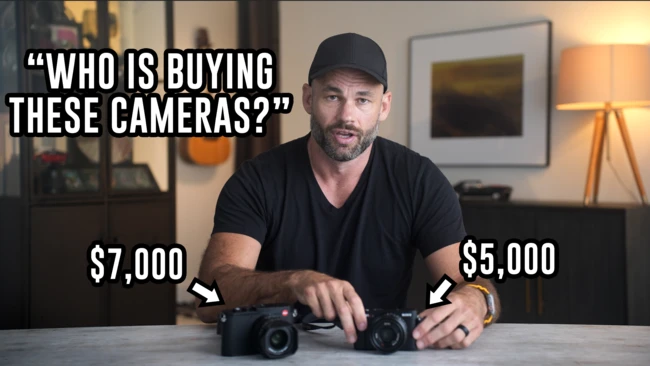
I’ve been testing the Sony RX1R III and Leica Q3 for three weeks, and it’s got me wondering: who is buying this type of camera? 

Whether you’re a casual shooter or a professional photographer, you might be like me and not really understand this “genre” of cameras. These are compact, full-frame, fixed-lens luxury cameras. The Sony costs over $5,000 and the Leica over $7,000.

[Read More]


More Beds


And we return to the Bed Saga…..

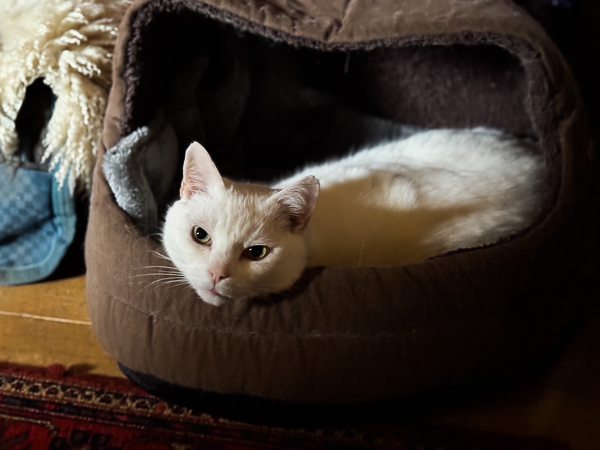
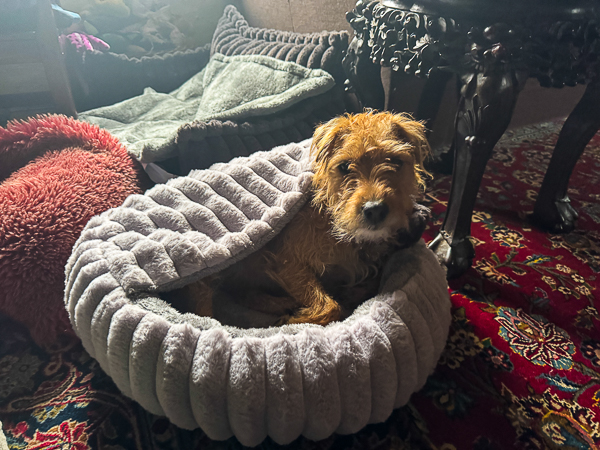
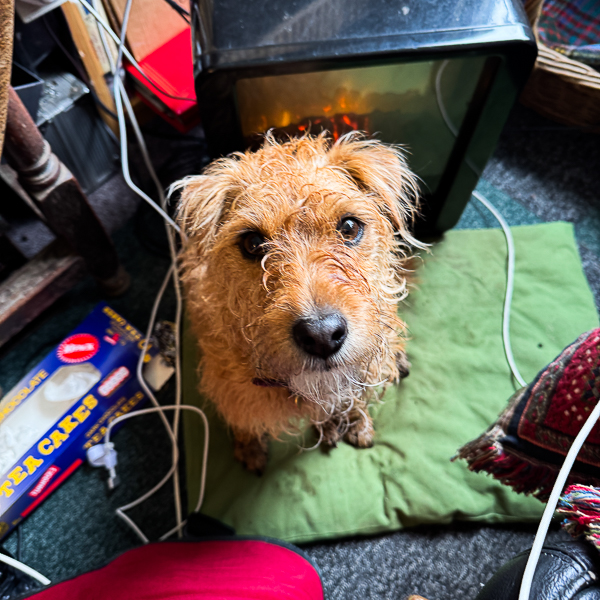
Now this ancient bed has been greatly improved, according to Monster, by the self-heating mat.  He loves that and spends many hours inside snoring.

More Beds

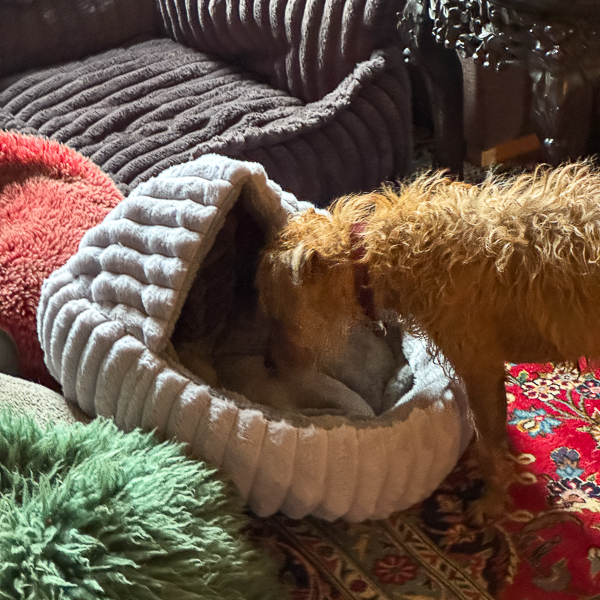
The replacement bed for the tiny furry bed that Monster couldn’t actually fit in, has now arrived.  It’s not very big either (the words “total crap” spring to mind if I am being perfectly honest but I can’t be arsed to send it back again).

And no one is particularly keen to go near this new bed so I am trying to show everyone how to use it properly, other wise they just sit on top, crushing the neat little roof that won’t stay up on its own (I told you it’s crap).

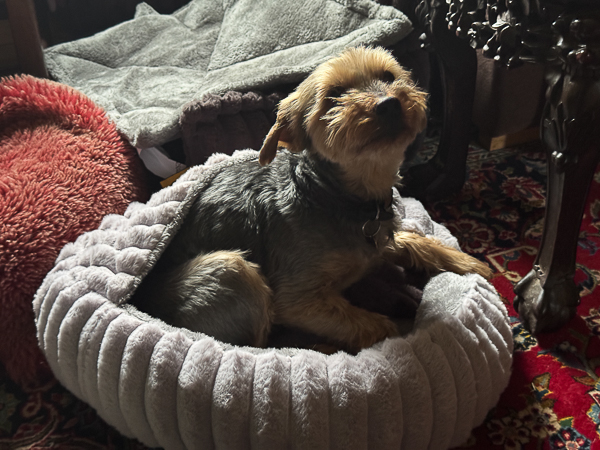
Anyway, I arranged Pepper in it and she looked thoughtful about the bed’s possibilities.  She does like a cave and has been known to squish herself into Monster’s original Fortress of Solitude but it is a tight squeeze and she only does it to annoy him.

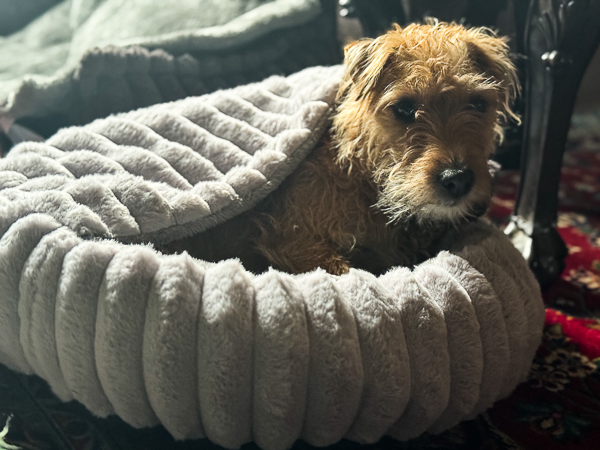
I told Pepper that she liked this sort of bed.  We will see, was her reply.

And I am now officially giving up on this new dog-bed scene, unless someone can recommend a lovely large dog cave that has a roof which stays up on its own, like a large cat cave, but a cheap one. How difficult can that be?

Asking for a friend…… (please ignore my rubbish).


Discover more from My Shetland

Subscribe to get the latest posts sent to your email.


Alaska Bears Face Return Of Baited Killing In National Preserves | The Animal Rescue Site


The National Park Service is again considering whether to allow bear baiting in Alaska’s national preserves. The proposal would hand more control over sport hunting practices back to state rules, reopening the door to a method the agency has repeatedly found dangerous and incompatible with its mission.

According to Alaska Public Media, the rollback would reverse a 2024 rule that restored the federal ban on sport hunting bears over bait in these preserves.

Alaska Bears Face Return Of Baited Killing In National Preserves | The Animal Rescue Site

A federal rollback could bring bear baiting back to Alaska’s national preserves.

Why The National Park Service Flagged Bear Baiting

Bear baiting is exactly what it sounds like. Hunters place food at bait stations to attract bears and bring them into range. The National Park Service has warned that these stations are effectively a form of feeding bears. That matters because bears can become conditioned to human-provided food, and that change can make them more dangerous to people and more vulnerable to being killed later.

The agency has also explained that bears may defend bait stations just as they would other food sources. In a national preserve, where hunting can overlap with hiking, camping, fishing, and other recreation, that creates an obvious problem. A bait pile does not stay contained to the hunter who set it out. It changes the behavior of a wild animal in a shared public landscape.

Young brown bear stands alert among leafy undergrowth in a forest.

The National Park Service has warned that bait stations create safety risks.

Public Lands Should Not Create More Conflict

This debate is not only about hunting policy. It is about what national preserves are for.

As National Parks Traveler reported, the Park Service concluded years ago that baiting poses unacceptable safety risks and encourages unnatural wildlife behavior. The agency also has a legal duty to manage wildlife in ways that protect natural abundance, predator-prey relationships, and the public experience of these lands.

That duty matters in Alaska, where preserves cover vast areas used by many different people. These are not isolated hunting plots. They are federal lands held in trust for the public.

Two young bears play together on a grassy clearing at the edge of a forest.

Bears can become conditioned to human food when baiting is allowed.

The Rule Keeps Swinging Back And Forth

The fight has already lasted more than a decade. Federal protections against bear baiting in Alaska’s national preserves were adopted in 2015, reversed in 2020, then revived in 2024 after new review and legal scrutiny. Now the issue is back again. Coverage from OutdoorHub shows the current proposal would once more align federal policy with state-authorized sport hunting methods in these preserves.

But the Park Service’s own safety concerns have not disappeared. Neither has the risk to bears.

National preserves should keep wildlife wild. They should not lure bears toward bait piles, increase conflict, and call that management. If you believe these public lands should protect animals and people alike, now is the time to speak up and demand that the National Park Service keep bear baiting out of Alaska’s national preserves.


Man Watches Frozen Egret All Day Until A Live Snake Crawls Out Of Her Mouth | The Animal Rescue Site


On a warm summer day in Florida, an ordinary backyard turned into the stage for one of the strangest wildlife encounters shared online in recent months. What began as a homeowner worrying over a motionless bird became a story of an egret, a garden snake, and a rescue group watching in real time as nature wrote its own script. For anyone interested in animal rescue stories or simply in how unpredictable wild animals can be, this unusual egret and snake encounter offers a memorable glimpse into life on the wild side.

According to WILD Florida Rescue, often abbreviated WFR, the incident started when a local man noticed an egret standing in exactly the same spot all day. In a state where herons and egrets are a familiar sight, the bird’s stillness did not seem normal. The homeowner worried that something was very wrong and suspected the bird might have something stuck in its throat. Rather than ignoring it, he decided to act and texted WFR for guidance, hoping to help what he believed could be a sick or injured animal.

Man Watches Frozen Egret All Day Until A Live Snake Crawls Out Of Her Mouth | The Animal Rescue Site

His message reached the group’s dispatcher, identified as Alice, who quickly forwarded the concern to rescuer Heather. The man had shared photos of the bird, so Heather could examine the egret’s posture and appearance before deciding whether to respond in person. That simple step matters in wildlife rescue, where an unnecessary approach can stress an animal that may not actually need help. After looking closely at the images, Heather reached a surprising conclusion. To her, the bird did not look ill at all. Instead, she suspected something far more dramatic was taking place inside that seemingly still silhouette.

As WFR later shared, Heather believed the egret had swallowed a snake, and that the snake was actively trying to get back out. The photos, in her view, showed not a weak or lethargic animal, but one engaged in a high stakes moment of predator and prey. Alice relayed that theory back to the concerned homeowner, explaining that the bird might not be sick but involved in a struggle that could resolve naturally. At the same time, she continued her conversation with Heather, comparing this strange event with similar wildlife stories they had come across in the past.

Minutes later, the man sent another update, and the rescue team’s theory gained instant confirmation. Alice received a new set of images and told Heather that the situation had apparently resolved itself. The updated photos showed the egret still rooted to the same spot, yet the scene had changed dramatically. No longer was the mystery hidden in the bird’s throat. A garden snake had emerged and was now wrapped visibly around the egret’s neck and beak, making the earlier prediction about a swallowed snake come eerily true.

The sight must have been startling. In one moment, observers believed they were seeing a bird suffering in silence. In the next, the true story emerged as a live snake, having made its way up from the bird’s gullet, appeared outside the egret’s beak and coiled around the bird’s face. The encounter illustrated how quickly assumptions about wildlife can shift once a bit more evidence appears, and how strange but natural these confrontations between predator and prey can be.

In spite of how worrisome the scene looked, both animals were ultimately fine. WFR later explained that the snake escaped from the egret’s throat unharmed, and the bird itself appeared annoyed but otherwise okay. The egret stayed where it was while the snake writhed around its neck and beak, yet there was no report of obvious injury to either creature. The main question for everyone watching, whether on the scene or later online, became how to safely separate the two and ensure that each could go on with the day.

That final step fell to the same Good Samaritan who first reported the situation. Moments after showing the snake wrapped around the egret, the man sent WFR another image. This time, the snake was no longer on the bird at all. Instead, it was in the man’s hand, pictured indoors. Outside, the egret had remained in the yard and, once free of the snake, simply resumed its life as if the episode had been nothing more than an unpleasant interruption. The tense standoff had ended with both animals surviving and returning to their separate routines.

Interestingly, the details of how the homeowner managed to detach a live snake from an egret’s beak and neck are still unknown. WFR staff admitted online that they had not asked exactly what he did, and that they were just as curious as social media followers who saw the post. People commenting on the story wanted to know whether he grabbed the bird, the snake, or both, or even whether a sharp command might have convinced the egret to let go. WFR responded lightheartedly to those questions, acknowledging they did not know the specific technique and sharing in the sense of wonder surrounding the improvised backyard rescue.

The group described the entire sequence of events as “a bit comical” in retrospect, noting that what initially looked like a serious emergency for a wild bird eventually turned into an odd and almost slapstick tableau. A seemingly ill egret, a garden snake determined to escape, a worried homeowner with a phone camera, and a rescue team piecing it together from afar all combined into one unforgettable snapshot of Florida wildlife. I found this detail striking because it captures how human concern, animal instinct, and quick communication can intersect in unexpected ways.

The story also highlights the value of organizations like WILD Florida Rescue in guiding the public through confusing animal encounters. The homeowner did not rush in blindly at first; instead, he contacted professionals, sent photos, and followed their feedback. Heather’s insight about the swallowed snake showed how expertise can reinterpret what appears to be a straightforward crisis. At the same time, the man’s willingness to step in personally when it became clear that both animals might need a little help demonstrated how responsible intervention can complement expert advice.

For readers who enjoy unusual animal rescue stories, this egret and garden snake incident offers a vivid reminder that nature often comes with surprises. An apparently sick bird can turn out to be a determined predator facing a surprisingly resilient prey animal. A quiet summer afternoon can suddenly feature a living illustration of the food chain, compressed into a single backyard. Thanks to a cautious neighbor, a responsive rescue team, and a bit of good fortune, this particular encounter ended with no serious harm, only a lingering mystery about how exactly one man separated a snake from a bird’s beak.

Read more at The Dodo