An f/1.2 prime that is small, light, and relatively affordable changes how you think about portrait and video work. Instead of saving that look for rare jobs with heavy, expensive glass, you can consider shooting with it on long walks, travel days, or full wedding schedules.
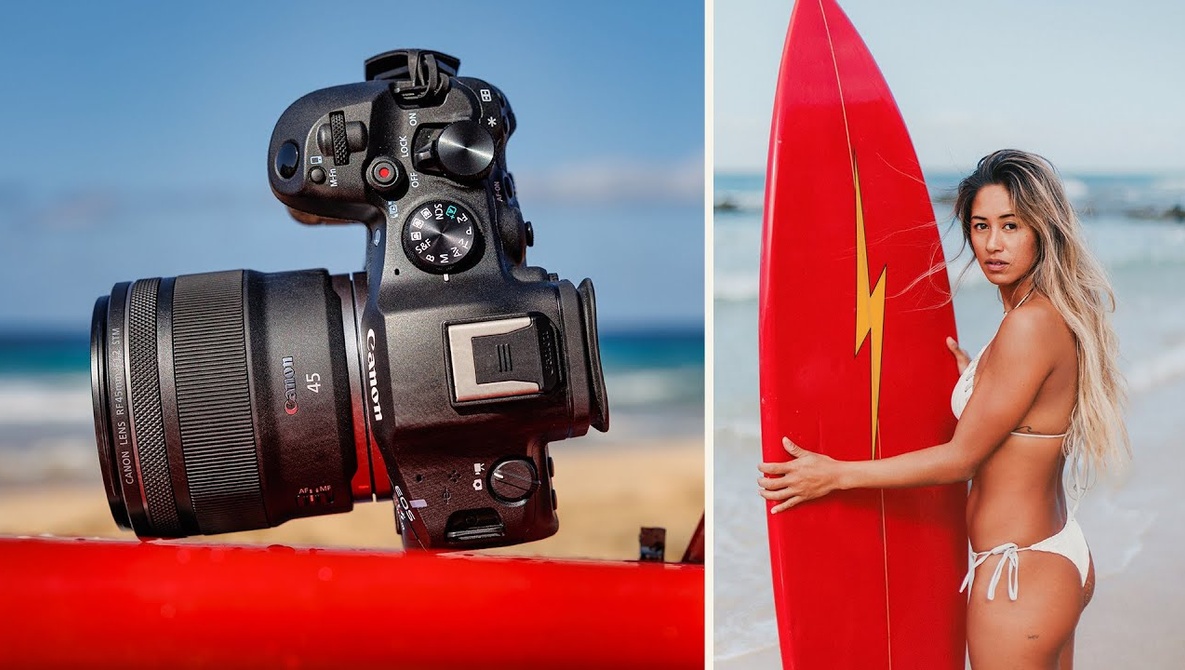
Coming to you from James Reader, this thoughtful video puts the new Canon 45mm f/1.2 STM lens through a real-world portrait session rather than just a studio chart test. Reader takes the lens to a tucked-away beach with a model, mixing full body frames, mid-length portraits, and tighter shots to show how 45mm behaves when you are actually moving around a scene. You see how the focal length sits in that sweet spot between 35mm and 50mm, wide enough to tell the story of a location but still flattering at closer distances. The video also weaves in handheld clips shot on a Canon EOS R6 Mark III, so you can judge the rendering and subject separation in motion, not just in stills. By the time Reader starts hinting at the optical trade-offs, you already have a feel for how the lens behaves when you are chasing real people in changing light.
Reader spends a lot of time on how this focal length works when you treat it as a single-lens solution. At 45mm, you can back up for environmental portraits with strong background blur, then step in for headshots while staying close enough to talk and direct without shouting. Wide open, the lens has a slightly low-contrast, almost “dreamy” look that you can build on in post, while stopping down to around f/2–f/2.8 snaps the contrast and bite into a much crisper result. You see him use that flexibility for portraits, travel-style frames, and general shooting where you would usually grab a 50mm prime. That balance of storytelling width and subject isolation is what gives the sample images their “natural” feel without sliding into the distortion you may notice at 35mm.
Key Specs
Focal length: 45mm
Maximum aperture: f/1.2; minimum aperture: f/16
Mount: Canon RF, full frame coverage
Minimum focus distance: 1.5′ / 45 cm
Maximum magnification: 0.13x (1:7.7 reproduction)
Optical design: 9 elements in 7 groups
Aperture: 9 rounded blades
Focus type: STM autofocus, no image stabilization
Filter thread: 67 mm front filter
Dimensions: approx. 3.1 x 3″ / 78 x 75 mm
Weight: approx. 12.2 oz / 346 g
Where the video gets more interesting is in how Reader frames the compromises that make a compact f/1.2 at this price possible. You see clear examples of how much the lens leans on in-camera or software corrections for vignetting and distortion, and how lifting those dark corners in low light can add noise if you are not careful. He also shows situations where the bokeh takes on slightly harder edges and a bit of nervousness in busy backgrounds, especially compared to more expensive glass, without turning that into drama. Throughout, autofocus performance for stills is shown across several bodies, including the Canon EOS RP, so you can judge whether the hit rate at f/1.2 feels comfortable for your own work. Handling details like the light weight, simple controls, and lack of weather-sealing are demonstrated in context on real shoots instead of just read off a spec sheet.
If you are already invested in RF primes, the second half of the video is where you will want to pay close attention. Reader lines the lens up against options like the Canon RF 50mm f/1.2L USM, Canon RF 50mm f/1.8 STM, Canon RF 35mm f/1.8 Macro IS STM, and even the Canon RF 24-70mm f/2.8L IS USM. You see side-by-side crops that make it very obvious where the 45mm’s central sharpness holds up, where corners fall apart wide open, and how the background blur compares when scenes get busy and contrasty. He also tests video autofocus, focus breathing, and focus noise in controlled setups, which matters if you shoot talking heads or run-and-gun clips and care how your lens sounds next to an on-camera mic. Those deeper tests give you a much clearer sense of whether the character and compromises of this lens fit your style or if you should stick to existing primes or a fast zoom. Check out the video above for the full rundown from Reader.