
Cameco gifts $5 million for mine training at new Sask. Poly campus in Saskatoon
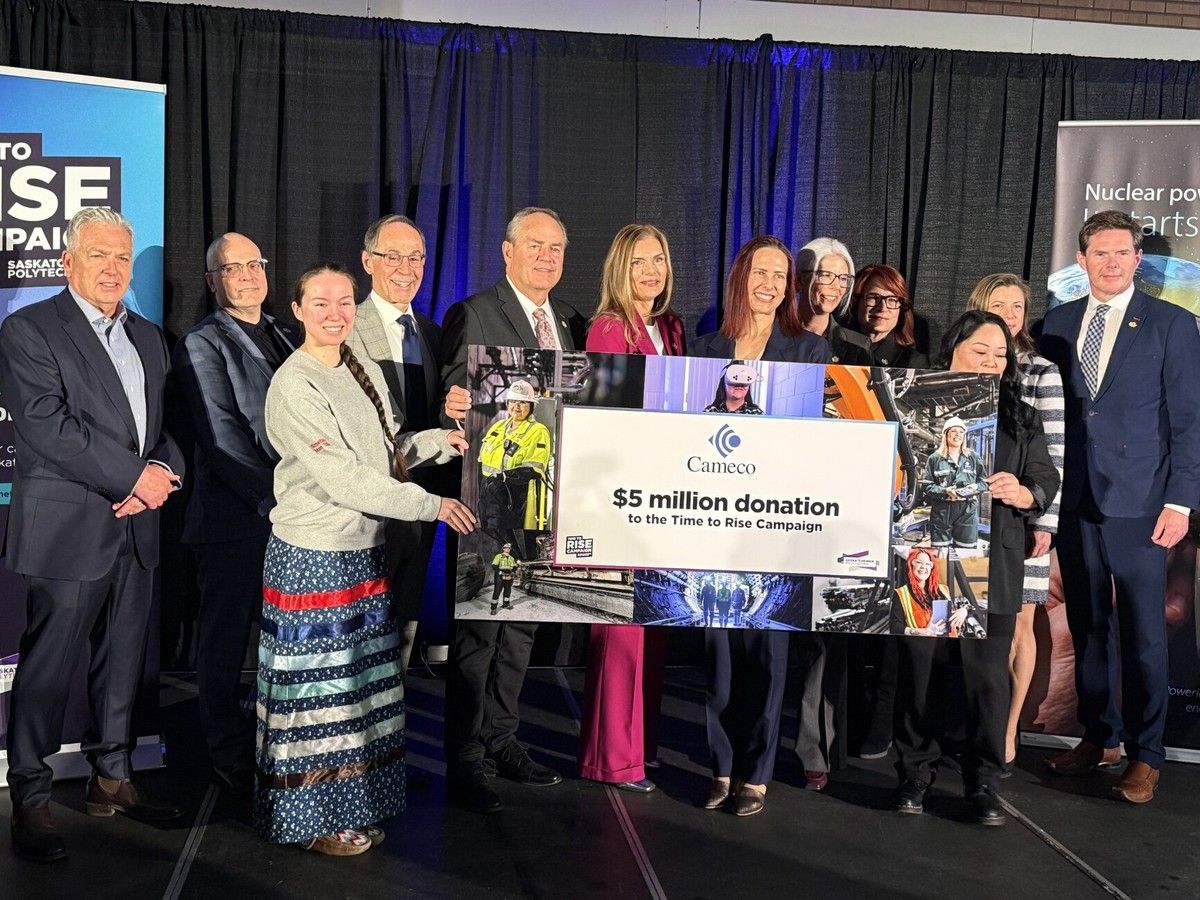
A $5 million gift from Cameco to Saskatchewan Polytechnic’s new Joseph A. Remai campus in Saskatoon will support students pursuing an education in the high-demand mining industry.
Cameco’s CEO, Tim Gitzel
, said Cameco operates the world’s highest-grade uranium mine in Cigar Lake, and graduates from the school are needed to operate it.
“They’ve been supplying us the talent that we need to run our operations for decades now. We work closely with them, and the beauty is that we can tailor programs with Sask. Poly to meet our needs, and so that’s super helpful for us,” Gitzel added.
Around 400 graduates from Sask. Polytechnic go into the mining sector each year, and more than 1,800 have contributed to the workforce since the late 1980s, Mayor Cynthia Block said during Thursday’s announcement at the school’s current Idylwyld Drive location.
Gitzel noted that about 440 nuclear reactors are operating in Saskatchewan, with 70 more under construction and hundreds more to come, and they all need fuel.
“Fuel comes from Saskatchewan, and so that means lots of mining jobs and lots of activity here for years to come.”
President and CEO of Sask. Polytechnic, Dr. Larry Rosia, said the school graduates more than 5,500 students every year, with 95 per cent of them staying and working in Saskatchewan.
Thursday’s donation will also help pilot an industrial mechanics certificate program for northern Indigenous women at the Prince Albert campus.
Rosia said the program is geared to “get Indigenous women interested in industrial management and mechanics programming as a career,” through mentorship and targeted training.
Gitzel noted how Cameco wants to see more Indigenous women working in the mining industry. Block said economic growth must be inclusive for everyone and include new opportunities for Indigenous women in skilled trades.
The new Saskatoon campus will also include “an immersive virtual reality mine to enhance safety training and technical proficiency,” Rosia said. Students will use virtual reality technology to access remote locations to experience what it’s like to be in a mine.
The Time to Rise fundraiser has now raised $75 million for the new campus, out of its $100 million goal. Rosia said there is no
timeline
for when the school will be built, and construction is not yet underway.
Related
The Saskatoon Star Phoenix has created an Afternoon Headlines newsletter that can be delivered daily to your inbox so you are up to date with the most vital news of the day. Click here to subscribe.
With some online platforms blocking access to the journalism upon which you depend, our website is your destination for up-to-the-minute news, so make sure to bookmark thestarphoenix.com and sign up for our newsletters so we can keep you informed. Click here to subscribe.