
U.K. midwife facing deportation from Canada after work permit denied over English test
A Victoria, B.C.-based midwife and her patients have been left in the lurch over a problem with paperwork.
Heather Gilchrist moved to Canada from the U.K., looking for a fresh start after the loss of her husband.
Canadian immigration officials insisted that Gilchrist, a native English speaker, do a language test.
She says she completed the test last July, but the application she filled out didn’t give her the option to upload her results.

As well, she says, the checklist that came with the application didn’t even mention the test.
Now, because she wasn’t able to submit the test, her work permit has been cancelled.
Gilchrist says she has a successful practice. She says she has taught twice as many midwives in Scotland as there are registered in B.C., but that experience wasn’t taken into consideration when federal immigration officials denied her work permit over the missing language test.
“It just doesn’t make any sense, and I just need someone to lift their head and understand that it can’t be this faceless system,” she said.
“You have someone as qualified as myself, and you’re pushing them out the door.”
Immigration, Refugees and Citizenship Canada’s (IRCC) “How to Apply” web page for post-graduate work permits now features a disclaimer that explains the special way in which the test must be uploaded, but that disclaimer was only added in December.

IRCC work permit application. (Canada.ca Image)
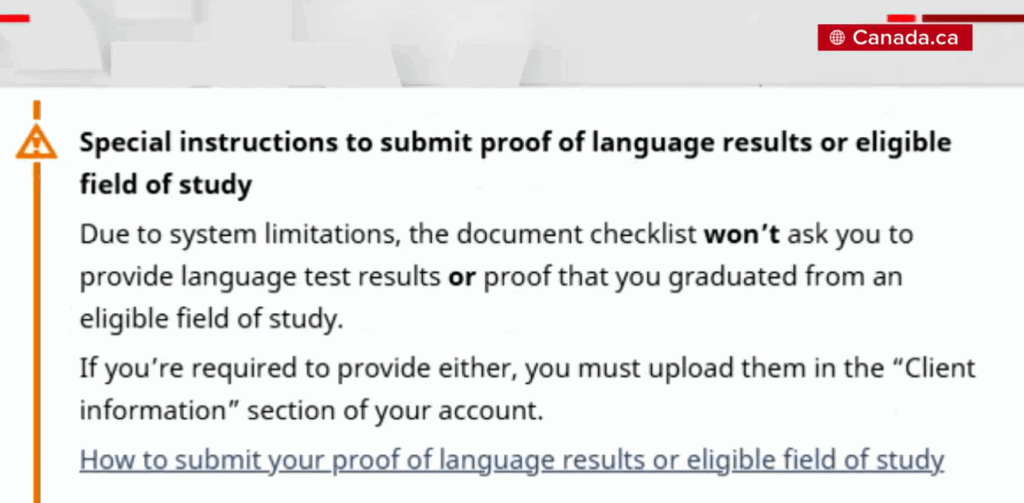
This was too little, too late for scores of people who were summarily denied for not including it. Among them were some of the 1,700 people who signed a Change.org petition asking the government to reinstate applications rejected over the language test.
Gilchrist’s denial put an immediate halt to her practice. This comes on the heels of an announcement by the Ministry of Health touting its progress in recruiting health professionals from the U.S.
“You are going to have me leave, and yet you seem so proud of the people you’re attracting,” she said.
“I’m already here, and now I have to leave? Doesn’t make any sense.”

She points out that midwives in general seem to fall through the cracks in terms of being permitted to work in Canada.
“We’re not like doctors or nurses where there’s a red carpet to welcome you in,” she said.
Maternity ward diversions have become a regular occurrence across the province, something Consultant Specialists of B.C. president Dr. Rob Carruthers says is something midwives could help relieve.
“We don’t have enough obstetrics doctors to cover major hospitals in British Columbia, and certainly there are regions that are quite underserved,” Carruthers said.
“That means that women who are trying to grow their families are not going to have access to the care they need.”

The IRCC says it’s working to make uploading language tests more straightforward, and notes that denied applicants can apply for reconsideration.
But after spending $60,000 out of pocket to get accredited and start a new life in B.C., Gilchrist says she — and her patients who have been left in limbo — can’t afford to wait to reach a resolution.
“That phrase about throwing the baby out with the bathwater seems more relevant than ever as a midwife, because that’s what’s happening right now,” she said.
Gilchrist says the Ministry has not answered her pleas for help, and the whole situation has left her at a loss for words.
“What do I do? How do I…where do I go from here?” she asked.
“It’s just not a good reflection of how I feel about being in Canada. Sorry.”