
Bangladesh rolls out emergency measles vaccination drive after dozens of child deaths
Bangladesh has launched an emergency vaccination campaign targeting more than one million children after the battered South Asian country recorded the highest numbers of measles-related deaths in two decades.
At least 98 children have died from suspected measles between 15 March and 4 April this year, according to the Directorate General of Health Services (DGHS). Officials said the confirmed measles deaths stand at 17.
Measles, among the most infectious of pathogens, requires that 95 per cent of the population be vaccinated in order to prevent its spread.
Health experts have blamed the rise in cases on gaps in immunisation, which included long intervals between special vaccination drives due to socio-political instability. Bangladesh held its last nationwide measles vaccination campaign in 2020, but a planned follow-up in 2024 was shelved amid political unrest.
The government of Tarique Rahman has lowered the vaccination age to six months from nine and plans to launch a nationwide immunisation drive.
The campaign, led by the ministry with support from United Nations Children’s Fund (Unicef), the World Health Organization (WHO) and global vaccine alliance Gavi began on Sunday. The government will roll out the campaign in high-risk areas across 18 districts and eventually spread it nationwide on 3 May, according to reports.
In capital Dhaka and Cox’s Bazar, efforts will be intensified to ensure high coverage in densely populated and high-risk settings, the Unicef said.
Children aged six months to five years are being prioritised, particularly those who missed routine immunisation and face the highest risk of severe complications.
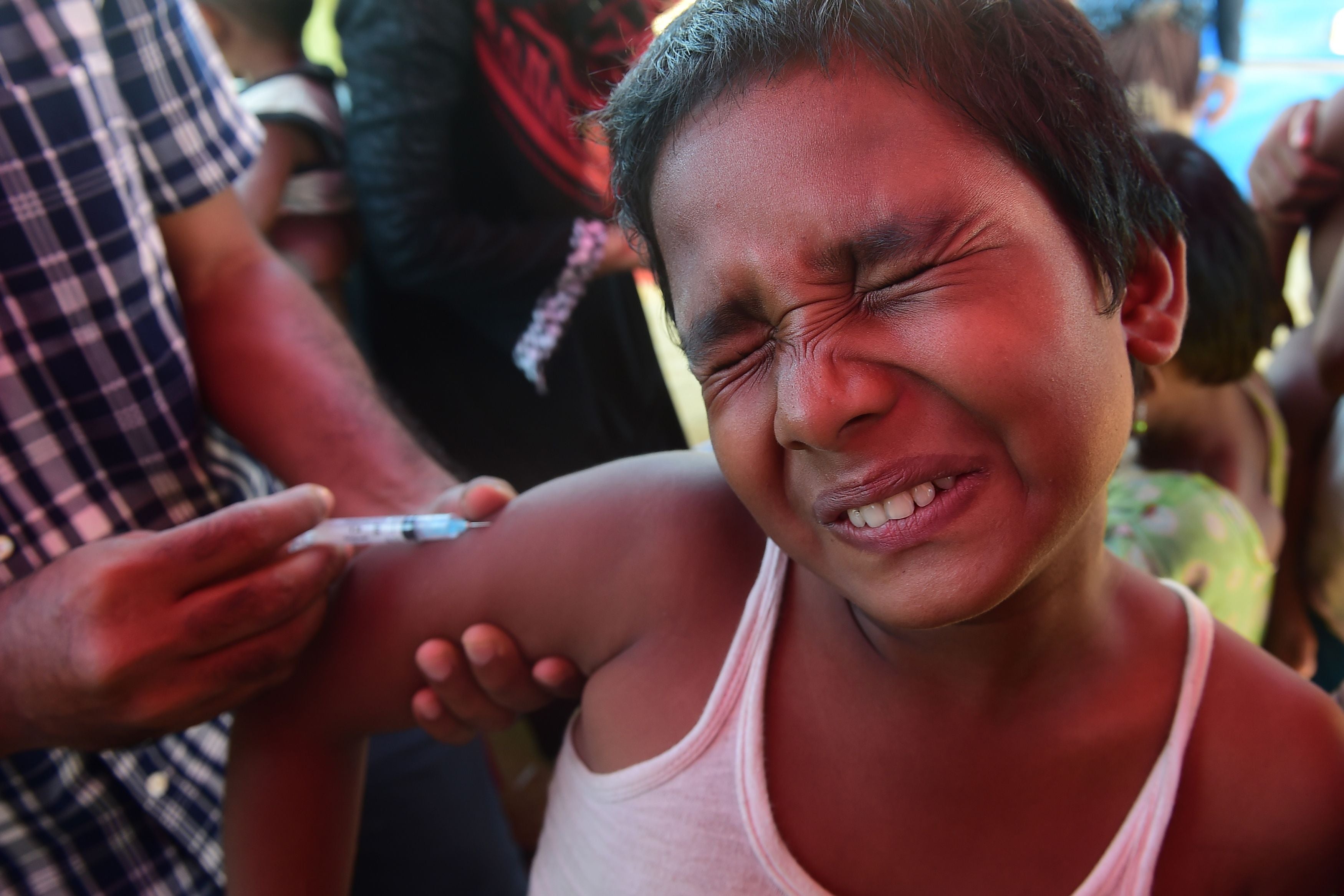
“Unicef is deeply concerned about the sharp rise in measles cases across Bangladesh, putting thousands of children, especially the youngest and most vulnerable, at serious risk,” said Rana Flowers, the charity’s representative to Bangladesh. “This resurgence highlights critical immunity gaps.”
Hospitals in several high-burden regions are already overcrowded and operating with limited capacity, raising concerns about further spread.
Measles is a viral infection that spreads with alarming ease among those not fully protected. Initial symptoms often mimic a common cold, followed a few days later by a distinctive rash. This rash typically begins on the face and behind the ears before spreading across the body, presenting as raised, blotchy patches that are usually not itchy.
The virus spreads through respiratory droplets when an infected person breathes, coughs, or sneezes.
It has been breaking out across the world as vaccination rates have fallen, although now many parents are rushing to get their children immunised and in some places, paediatric hospital wards are overwhelmed.
Bangladesh weathered months of socio-political turmoil following a bloody anti-government protest in 2024, which forced the then-prime minister Sheikh Hasina to flee to India, which derailed its vaccination efforts in June that year.
Bangladesh’s health ministry on Sunday released data which showed that the number of children aged six months to five years old with suspected measles symptoms soared to 6,476.
“Compared with past years, the number of affected children is higher, and the death toll is higher too,” Halimur Rashid, director at Communicable Disease Control, told AFP. He attributed the potential outbreak to “multifactorial causes, including a shortage of vaccines”.
“As far as I can estimate, there has never been a year in which so many patients have died from measles in the country,” he was quoted by Prothom Alo as saying.
Health minister, Sardar Md Sakhawat Hossain, blamed the Awami League administration led by former prime minister Sheikh Hasina for failing to administer measles–rubella vaccines every four years. He said children were due to receive these vaccines in 2020, but the campaign was not carried out under the Awami League government, leaving many at heightened risk of infection.
The WHO estimates that up to 95,000 people die from measles globally each year, with most deaths occurring among unvaccinated or undervaccinated children under five.