
Formula One’s radical new era: leaner and cleaner, sure; but meaner?
‘What we know is a drop, what we don’t know is an ocean’. It is one of the most profound sayings, delineating the limits of human knowledge. While it might be reductive to use it in the context of a professional sport where cars go around a circuit for 90 minutes, it perfectly encapsulates Formula One in 2026.
The 77th running of motor-racing’s most prestigious championship features a radical overhaul of technical regulations on both the engine and chassis fronts. Although the first three pre-season tests — one in Barcelona and two in Bahrain — have offered a glimpse of what to expect, for the first time in recent memory, everyone, from teams to fans, is entering the season with several unanswered questions.
The Hindu examines the main talking points in a primer for F1’s new era.
What’s new?
Well, a lot, to be honest! First and foremost, there is a big change in the heart of F1 — that is, the engines. Since 2014, F1 has embraced hybrid technology to make the engines more eco-friendly. The 2014 rules introduced a 1.6-litre V6 turbo-hybrid engine with an electric component of 120 kW. For 2026, that has increased threefold to 350 kW, and 50% of the car’s power will come from an electric source. This will be produced by the MGU-K component, which harvests energy from braking to recharge the battery.
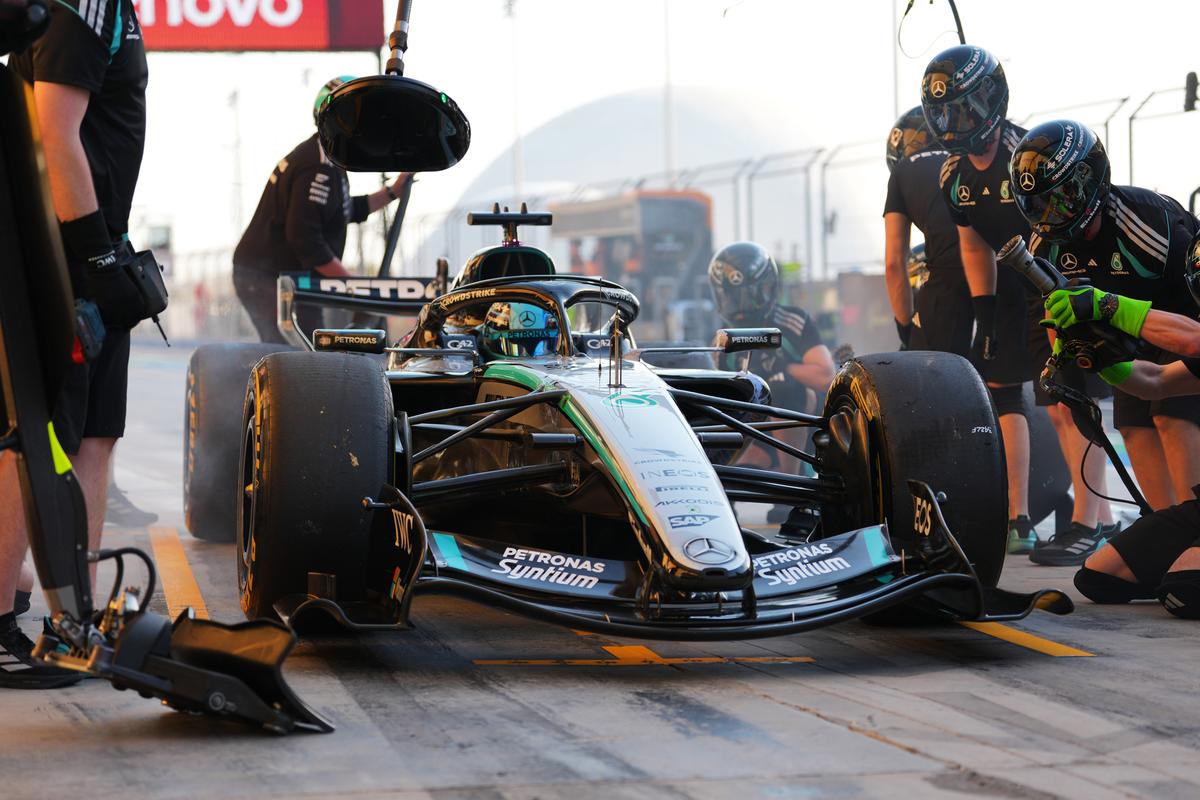
Early benchmark: Mercedes came out of the blocks strongly in testing. The widespread belief is that it might have the strongest engine package. | Photo credit: Getty Images
| Photo Credit:
Getty Images
The increased electrification is part of the sport’s ambitious target to become net-zero carbon by 2030 and also attract new engine manufacturers. Under the previous regulations, Mercedes, Ferrari, Honda and Renault supplied engines, and the first three are continuing. Audi and Red Bull Powertrains are the two new entrants.
Apart from 50% electric power (more likely to be 40-45%), the power unit will use advanced sustainable fuels derived from carbon capture, municipal waste, and non-food biomass, rather than crude oil.
Slim in race trim
Apart from the major engine changes, the cars will look visually different this year.
For starters, they are smaller, making them nimbler and more like proper single-seater racing cars than the wide, long ones we have been used to since 2017. Wheelbase, width, weight, tyre size — everything has been trimmed to various degrees. A maxim of racing cars is that smaller and lighter means faster.
The ground-effect cars from 2022 to 2025 have been discontinued. These cars generated most of their downforce from the underbody, but had other limitations and physically hurt drivers because they tended to bounce a lot on straights.
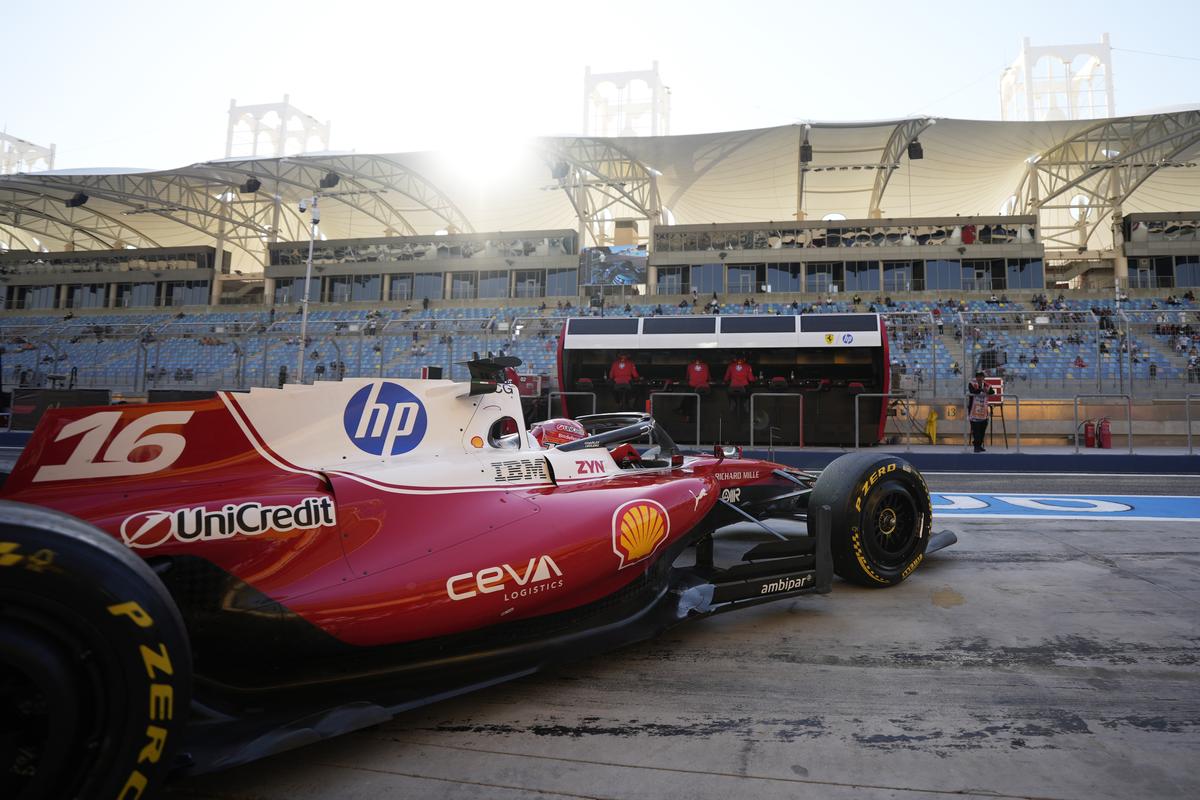
Promising plenty: The scarlet Ferrari, especially in the hands of Charles Leclerc, could start as Mercedes’ closest rival.
| Photo Credit:
Getty Images
Goodbye DRS. Hello active aerodynamics
The 2026 generation of cars features active aerodynamics, with movable front and rear wings. Since 2011, F1 has used DRS (Drag Reduction System) as an overtaking aid, allowing drivers to open only the rear wing flap to reduce drag and increase straight-line speed in a designated part of the track only when they are within one second of the car ahead.
From 2026, drivers will be able to switch from cornering mode to straight-line mode in specific activation zones. In cornering mode, the wings are in the normal state for maximum downforce. In straight-line mode, the drivers open the flaps to reduce drag and downforce, increasing speed.
Are there other overtaking aids?
Yes, drivers can activate overtake mode when they are following within one second of a car before the detection point (nominally the final corner). This allows them to recharge additional energy, which can be deployed on the subsequent lap, either all at once or spread over the lap.
What does the competitive order look like?
Reading the tea leaves from the nine days of testing, it appears the two major works teams, Mercedes and Ferrari, have set the early benchmark. Considering that the two outfits build both the engine and the chassis in-house, they have an edge in integrating the two and understanding how to harvest and deploy energy.
Mercedes came out of the blocks strongly in Barcelona, running reliably and setting some impressive times. The widespread belief is that Mercedes, as it did in 2014, might have the strongest engine package.
Ferrari has also grabbed the limelight, topping the timings in Barcelona and in the final test in Bahrain. The scarlet car, especially in the hands of Charles Leclerc, could start as Mercedes’ closest rival, come Melbourne. The team debuted an innovative movable rear wing that could bring valuable gains.
The only caveat to Ferrari’s pace is that it has won many a ‘testing championship’ in recent times, only for that to prove to be a mirage once the season begins. For the tifosi and the sport, one hopes the Italian marque can fulfil the promise shown in testing.
What about the others?
Reigning champion McLaren gradually improved through testing, but might not start favourite. How quickly it gets to grips with the Mercedes engine’s energy management will define its fortunes.
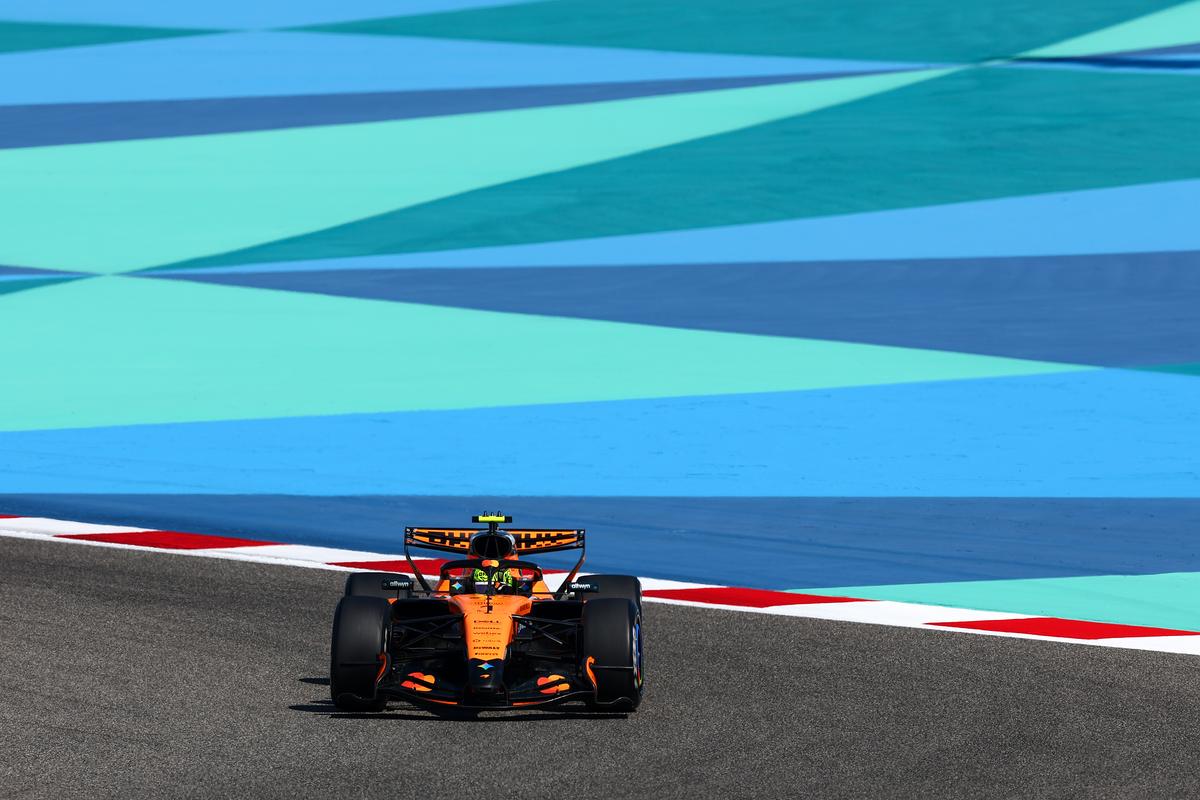
Papaya ripening? Constructors’ title holder McLaren, piloted here by world champion Lando Norris, gradually improved through testing. But it might not start favourite.
| Photo Credit:
Getty Images
Similarly, Red Bull, building its own engine for the first time, has looked quick on a few occasions, but it remains to be seen whether it will immediately be a contender.
Still, for a newcomer, Red Bull Powertrain has hit the ground running — a creditable achievement. Mercedes boss Toto Wolff even reckoned Red Bull has the best energy deployment on the straights.
In contrast, Audi, one team F1 rule-makers drew to the sport by tweaking the engine formula, has had a more chastening initiation and is probably in the middle of midfield.
The one team severely on the backfoot is Aston Martin, powered by Honda. The Japanese major’s power unit has had several gremlins, and by the final test day, it ran out of spare parts, forcing the Silverstone-based squad to curtail running. The Honda engine appears underpowered and unreliable.
The car, designed by Adrian Newey, looks radically different and could be aerodynamically efficient and class-leading. But that won’t matter unless the engine issues are resolved.
How exciting will the races be?
That is the big unknown. The smaller cars, in theory, should make wheel-to-wheel racing slightly better, but there is significant uncertainty about energy management.
Each power unit has its own way of harvesting energy, and the drivers have already reported that they had to unlearn years of driving style to adapt to these cars’ requirements.
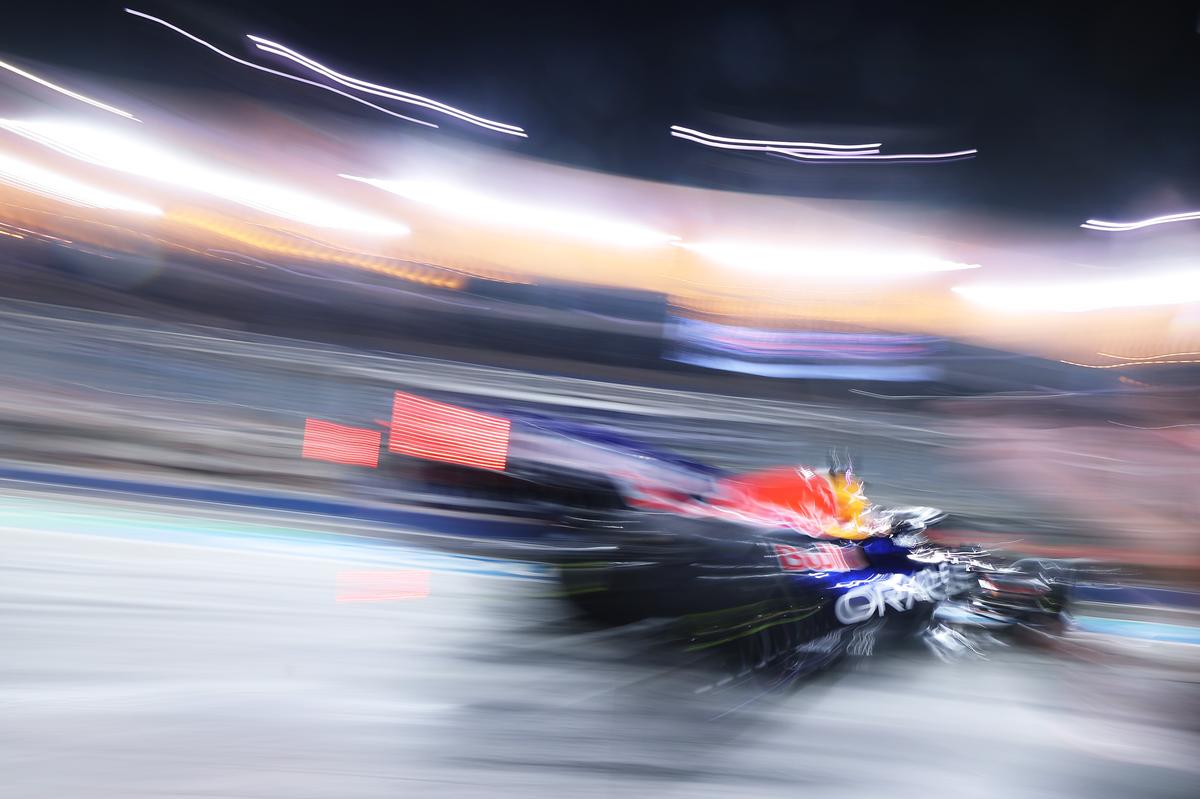
Encouraging start: Red Bull, building its own engine for the first time, has hit the ground running.
| Photo Credit:
Getty Images
One of the biggest concerns about the new engine regulations is that the cars will be energy-starved, leading drivers to be very conservative when coasting through certain parts of the track. It could become tricky, especially in races that don’t have many heavy braking zones, which means less energy is recovered. The only way to mitigate this is to recharge the battery on the straights when the driver is on full throttle. It would mean cars won’t reach maximum speed, which could affect overtaking and make races less exciting.
Max Verstappen has already shared his frustration, saying the focus has veered too much towards energy management, making it like Formula E. He even called it “anti-racing”. The four-time champion’s warning is something to watch out for in the opening races.