
Over 5 million bees found under NY cemetery, one of largest colonies recorded
A quiet cemetery in upstate New York is proving far from still as new research shows it’s buzzing with millions of bees living just beneath the surface.
The East Lawn Cemetery in Ithaca is home to an estimated 5.5 to 5.6 million ground-nesting bees, making it one of the largest and possibly oldest known bee aggregations ever recorded, researchers at Cornell University found.
The bees belong to the species Andrena regularis, or the regular mining bee, a solitary species that nests in the ground rather than forming hives. While bees are often associated with large colonies such as what is seen with honeybees, scientists say roughly 70 percent of bee species in the United States actually live underground and operate independently.
The discovery began almost by accident. In 2022, a Cornell University technician noticed large numbers of bees while walking through the cemetery and brought samples back to the lab. That observation prompted a more detailed study, led by entomologist Bryan Danforth and his team, to determine the scope of the bees living under the graves.
During several weeks in the spring of 2023, researchers placed small emergence traps across the cemetery to catch bees as they surfaced. By measuring how many bees emerged from specific patches of land, the team calculated population density and scaled it across roughly 6,000 to 6,500 square meters. The result: an estimated range of 3 million to 8 million bees, with an average of about 5.5 million.
.png "Over 5 million bees found under NY cemetery, one of largest colonies recorded")
Even at that scale, this isn’t a single, unified colony. Each female bee digs and provisions her own nest, laying eggs in individual chambers stocked with pollen and nectar. The species spends the winter underground as adults before emerging in early spring, synchronizing its activity with the blooming of plants such as apple trees.
“I was completely floored when we did the calculations,” Danforth told Scientific American about the discovery. “I have seen published estimates of bee aggregations in the hundreds of thousands. But I never really imagined that it would be 5.56 million bees.”
In Arizona, researchers estimated that about 1.6 million Centris caesalpiniae bees emerged from a 1,290-square-meter site in a single year, according to a 1990 study. In upstate New York, another 2024 study documented roughly 651,440 Melissodes bimaculatus bees occupying a suburban lawn, while research in Brazil, released in a 2020 report, found a much smaller, but still significant, group of about 13,500 Epicharis picta bees within a 160-square-meter area.
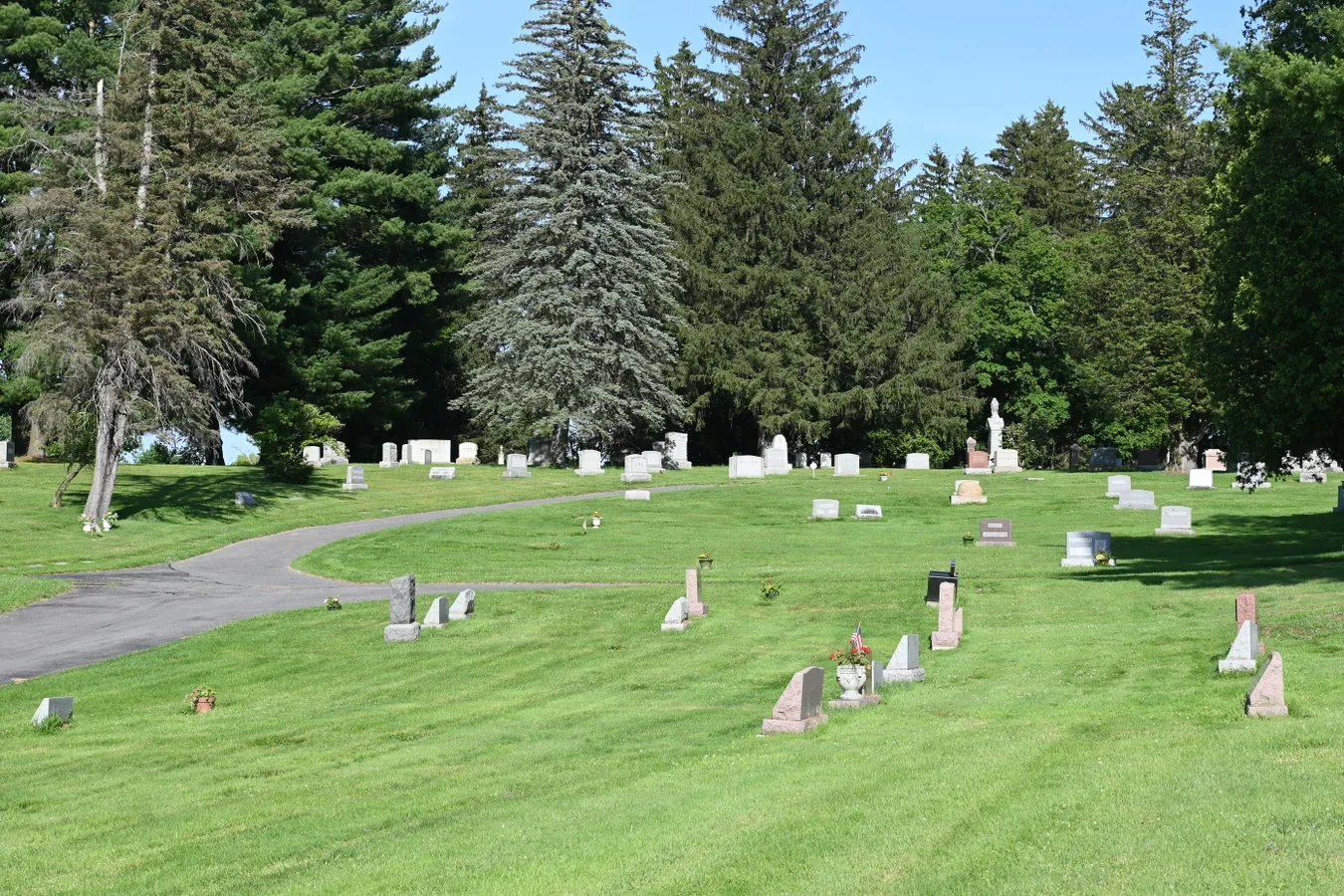
The cemetery’s undisturbed soil, minimal pesticide use and rarely disrupted ground create near-perfect nesting conditions, Danforth told the Cornell Chronicle. The nearby Cornell Orchards and other flowering plants also provide a steady, abundant food supply, making it the perfect bee haven.
The new research makes clear that cemeteries can double as important habitat for ground-nesting bees.
“The solitary bees are totally underappreciated. I spend a lot of time trying to encourage people to appreciate the solitary bees, just because they do so much, and they’re kind of under the radar,” Danforth told Scientific American. “But they’re fascinating creatures.”