
Greece’s new laws crack down on art fakes and forgeries – an expert in the market for shady art explains why they might backfire
The art market is riddled with fakes and forgeries. Yet in most countries, those trading in genuine masterpieces are left to their own devices when it comes to monitoring art sales – creating their own ways to flag problematic objects and verify the authenticity of others.
New art laws in Greece, however, suggest the country is taking the business of art legislation more seriously.
In-depth scrutiny can be extremely lucrative for sellers of art. A reputation for selling only the highest-quality art attracts both moneyed collectors and art investors, with competitive bidding driving prices into the stratosphere.
High commissions pay for entire departments of specialists in major auction houses, as well as connoisseurs, academic researchers and companies offering forensic, art historic and legal advice.
Online marketplaces often adopt a radically different approach to selling art: little or no scrutiny, vague claims of authenticity, and a clear norm of “caveat emptor” (buyer beware).
Anyone buying in this market benefits from low prices for attractive objects, but buyers should not expect them to pass scrutiny in terms of authenticity or legitimacy.
Once you start looking closely, the art market turns out to be segmented into several distinct sub-markets, each with its own rules of play that assure a certain minimum quality. Each institutionalised level of due diligence generates greater buyer trust, and justifies a price premium over the lightly monitored cheap and cheerful objects traded as “collectibles” on internet platforms.
Read more:
Selling stolen art is tricky, so why even bother heisting it? An expert explains
The new art laws in Greece suggest the state may be interested in tidying up the unregulated chaos of this market. It has specifically criminalised the creation and intended distribution of fakes and forgeries for the art and collectibles market, and their misrepresentation as higher value objects to potential buyers.
For those convicted, there is a sliding scale of penalties, depending on the volume and value of the intended fraud. Objects deemed fakes or forgeries may be impounded and destroyed.
Forgeries are big business in the mid-market, which deals in artworks priced from a few hundred to tens of thousands of pounds. In 2024, Italian police forces dismantled a trans-European network producing and distributing sophisticated replicas of the works of Banksy, Gustav Klimt, Andy Warhol and Picasso with an estimated market value of €200 million (£174 million).
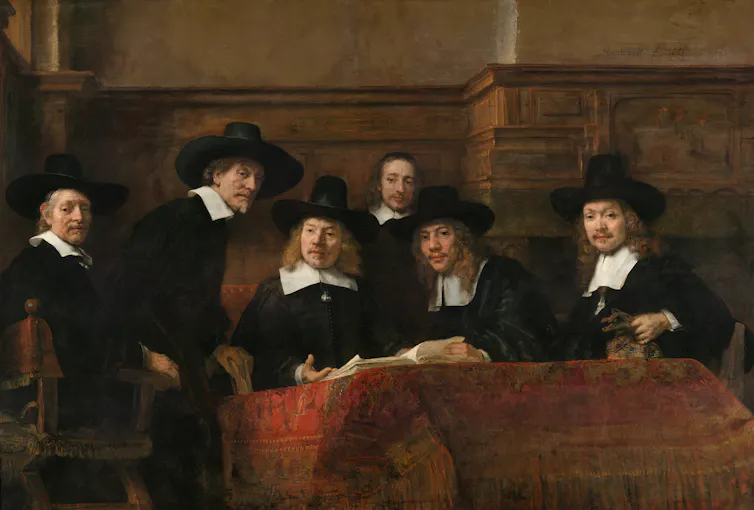
In 2025, German police seized forged Rembrandt, Frida Kahlo and Picasso paintings intended for sale for millions of Euros. They arrested ten people including an elderly man who provided the seller with fake authentication services.
Wikimedia
Given the depth of knowledge in the art market, the reliance on a single “expert” report in many cases suggests there could be a degree of cooperation between forgers, buyers and the distributors of their works.
The new Greek law names and targets all aspects of this value chain. It allows the police to intervene and seize objects even before a sale has taken place. Intended fraud – for example, advertising a forged painting as a genuine masterpiece – is sufficient to merit an investigation.
It is, though, highly unlikely that the Greek police will proactively search for fakes and forgeries. The expertise to identify fraud is held in the art world, and police will continue to rely on tip-offs from experts.
Forgeries mostly come to the attention of genuine experts when a fraud victim tries to resell or donate an artwork to a museum – usually many years after acquiring it. For the scammed collector, the best way forward is to return the object to the seller for a refund. As they have a reputation to protect, dealers are often surprisingly amenable to hushing up the problem.
However, the art world is a close and gossipy community, so information of several suspicious objects from the same source spreads. The re-examination of other artworks connected to that seller sometimes turns up more problems. If the seller is unresponsive to peer pressure, a consensus may emerge that they should be put out of business. It is often only at this point that the police are approached.
The new laws in Greece establish a sound basis for the trial and conviction of egregious fraudsters. They have already been used against the business of a well-known art dealer in Athens, whose stock is alleged to have included hundreds of fakes and forgeries. The dealer now faces charges on multiple offences – including embezzlement, fraud and money laundering, all of which are denied.
The sliding scale of penalties – including lengthy prison terms and significant fines – will probably change the behaviour of dealers and auctioneers who may have laughed off previous sanctions, tempted by excellent profit margins.
In Greece, at least, it is now less attractive to sell fishy objects, and riskier to do so repeatedly. The threat of destroying identified forgeries may backfire, however.
While withdrawing forgeries from circulation protects subsequent buyers, it can also make it less likely that owners choose to investigate or report issues of authenticity. So, the positive short-term effects of this well-intended package of laws may eventually turn negative, as it discourages information about fraud to come to light.