
Monthly Spotlight – Animals Aotearoa
4 minute read
This month, we spoke with Mona Oliver, Operations Director and Co-Founder of Animals Aotearoa, a charity that campaigns to end the suffering of farmed animals across Aotearoa New Zealand and Australia. Animals Aotearoa focuses on chickens bred for meat using corporate campaigning, public engagement, and advocacy to hold food brands and decision-makers accountable.
Mona has a background in political campaigning and animal law, and co-founded Animals Aotearoa in 2021. In this interview, Mona discusses how corporate pressure is driving higher welfare standards for chickens, the challenges of making invisible suffering visible, and what their expansion into Australia means for farmed animals across the region.
1. Can you share an overview of what Animals Aotearoa does?
Animals Aotearoa is a New Zealand-based charity working to end the suffering of farmed animals. We believe in creating lasting change by holding food brands and decision-makers accountable. We improve the lives of animals currently in the food system, through corporate campaigning, public engagement, and advocacy.
In 2024, we branched out to start working in Australia. This gives us a greater chance of success by targeting food brands with Australasian leadership and to improve the lives of even more animals.
2. How does Animals Aotearoa work to address the welfare issues facing chickens bred for meat in New Zealand?
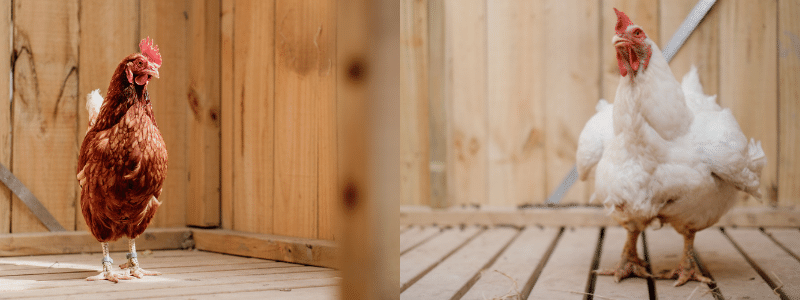
New Zealand farms 160 million land animals every year, 120 million of these are chickens bred for meat. Australia has a much larger farmed animal population, with over 700 million chickens farmed each year. Yet, chicken producers are largely invisible to the public. For most people, chicken is something they buy from supermarkets or food outlets. That creates a key leverage point: companies, not consumers, shape production.
We use the power of corporate campaigning to urge major food companies to adopt higher welfare standards through the Better Chicken Commitment. Similar strategies drove the shift to cage-free eggs, showing how supply-chain pressure can change farming practices at scale. We saw global companies making BCC policies in Europe and North America, leaving behind the chickens in Australia and New Zealand. We knew we had to act and so Animals Aotearoa was founded to focus on the most neglected farmed land animals.
3. What are some of the key findings or “big wins” you’ve had so far?
Before Animals Aotearoa began, there was no Better Chicken Commitment for our region. We convened groups across Australia and New Zealand to create the Australia-New Zealand Better Chicken Commitment, and as an organisation, we have achieved six of the nine commitments in our region. We’ve worked with the Australian Alliance for Animals to launch Better Chicken Australia, broadening the range of companies we’re pressuring and deepening our reach for farmed animals.
We’ve increased public awareness for chickens bred for meat too, with several media stories, including an in-depth story based on a chicken factory farm exposé. We also reach a wide audience with paid advertising about chicken suffering.
4. What are the most significant challenges you currently face in advancing your mission?
One of our biggest hurdles is the lack of awareness about the suffering of chickens bred for meat because producers choose unhealthy, abnormally fast-growing breeds. Unlike caged animals, their suffering is less visible, making it easy for people to overlook. We’re working hard to explain how the suffering of chickens bred for meat is coded into their DNA. They are bred to break.
To challenge the confusion and lack of knowledge about chickens bred for meat, we’ve developed strong messaging campaigns based on research and evidence to refine the way we speak about these animals and the fast-growing breed issue. In the countries where most progress on chicken breed change has occurred (particularly the Netherlands, Norway, and Denmark), a key strategy appears to have been getting a public conversation going, which can lead to corporate and later legal change. We seek to copy what has worked best in other countries.
5. If you had to share a final message with the ACE audience, what would it be?
Progress takes time. For most people, the issue of chickens bred for meat is not on their minds. This means that for years the chicken industry has been able to operate unchecked and in the process, develop chicken breeds and agricultural systems where severe suffering is just ‘business as usual’.
Change is not just possible; it’s essential! A shift in breeds and improvements in farming practices can happen in New Zealand and Australia, but the industry won’t change unless economic and public pressure sway it. With your support, and a bigger and stronger Animals Aotearoa, we can build public pressure to shift breeding practices and improve welfare standards in New Zealand.
Disclaimer/Note:
The responses in this spotlight were provided by Animals Aotearoa and reflect the organisation’s own account of their work.


ACE is dedicated to creating a world where all animals can thrive, regardless of their species. We take the
guesswork out of supporting animal advocacy by directing funds toward the most impactful charities and programs,
based on evidence and research.

167
Recipients working on promising projects

42
Countries across six continents.

$68M
Donations within the animal advocacy movement.
$58,000,000+
in donations already made to our recommended charities between January 2019 and March 2025
Looking to make your first donation? We’re happy to help
Learn more
Donate now