
Ball Python Care: The Complete Owner’s Guide to Setup, Feeding & Health
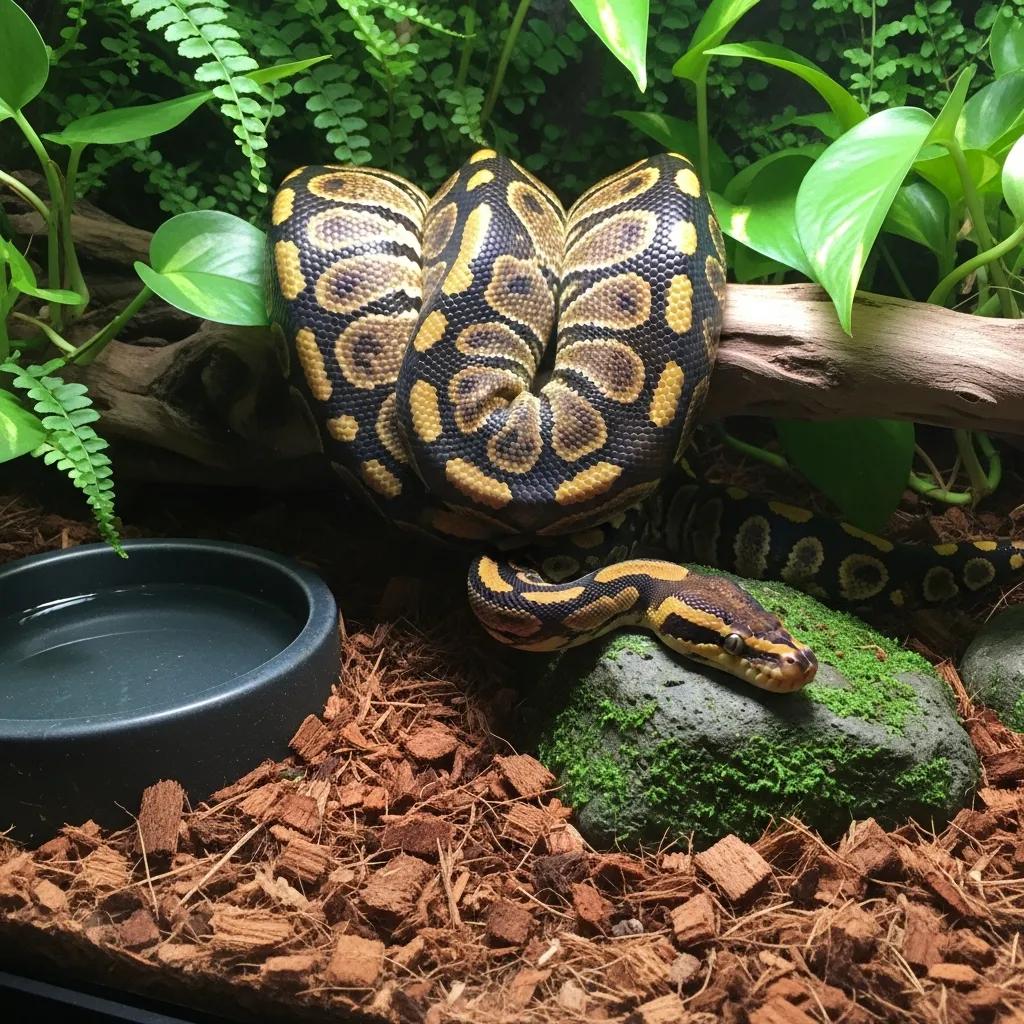
Caring for a ball python requires meeting species-specific needs and providing a habitat that supports health and low stress. This guide summarizes practical steps for enclosure setup, feeding, handling, enrichment, routine checks, and where to find reliable supplies and help.
Comprehensive Owner’s Guide on Ball Python Care
Understanding core husbandry—temperature, humidity, hiding, diet, and health checks—lets you keep a stable environment and a responsive, healthy snake. Apply the basics consistently and adjust as you learn your individual snake’s preferences.
1. Setup
A suitable enclosure recreates key aspects of the ball python’s needs: a temperature gradient, controlled humidity, secure hides, and appropriate substrate. Good housing reduces stress and supports normal behaviour.
Enclosure Size and Type
Juveniles fit well in a 20-gallon tank; adults generally need at least a 40-gallon enclosure. Glass tanks and plastic tubs are common because they are easy to clean and observe; always use a secure lid to prevent escapes.
Research highlights the importance of suitable housing for animal welfare and compares furnished terrariums with rack systems.
Ball Python Housing & Welfare: Terrarium vs. Rack Systems Considering animal welfare, animals should be kept in animal-appropriate and stress-free housing conditions in all circumstances. To assure such conditions, not only basic needs must be met, but also possibilities must be provided that allow animals in captive care to express all species-typical behaviors. Rack housing systems for snakes have become increasingly popular and are widely used; however, from an welfare perspective, they are no alternative to furnished terrariums. In this study, we therefore evaluated two types of housing systems for ball pythons (Python regius) by considering the welfare aspect animal behavior. Animal-appropriate housing of ball pythons (Python regius)—Behavior-based evaluation of two types of housing systems, 2021
Temperature and Humidity Requirements
Provide a clear thermal gradient so your python can thermoregulate: a warm side near 88–92°F (31–33°C) and a cool side around 75–80°F (24–27°C). Maintain roughly 50–60% humidity and raise humidity during shedding. Use a reliable hygrometer and separate thermometers to check both zones.
Additional studies underline the role of precise temperature gradients and feeding responses in successful ball python husbandry .
Ball Python Husbandry: Feeding & Temperature Gradients Python regius, also known as the ball python or the royal python, is one of the most popular reptiles in the pet trade and has been heavily imported, kept, and bred in captivity since 1976. Some of the main reasons that Python regius has maintained its popularity in the reptile trade are that they are extremely docile, willing to feed on prey items that are easy to obtain, and do not require a large enclosure. There are two husbandry methods for keeping Python regius, in a room set at a constant ambient temperature, and in an enclosure that’s back end has a belly heat hotspot and the temperature gradient. Growth and Feeding Response in Python regius in Ambient Temperature vs. Hot-Spot, 2020
Essential Habitat Features
Use a reliable heat source (under-tank heater or heat lamp) to create a basking area, offer at least two hides (warm and cool sides), and provide a water bowl large enough for soaking. Choose hides and substrate that are easy to clean and help maintain appropriate humidity.
2. Feeding
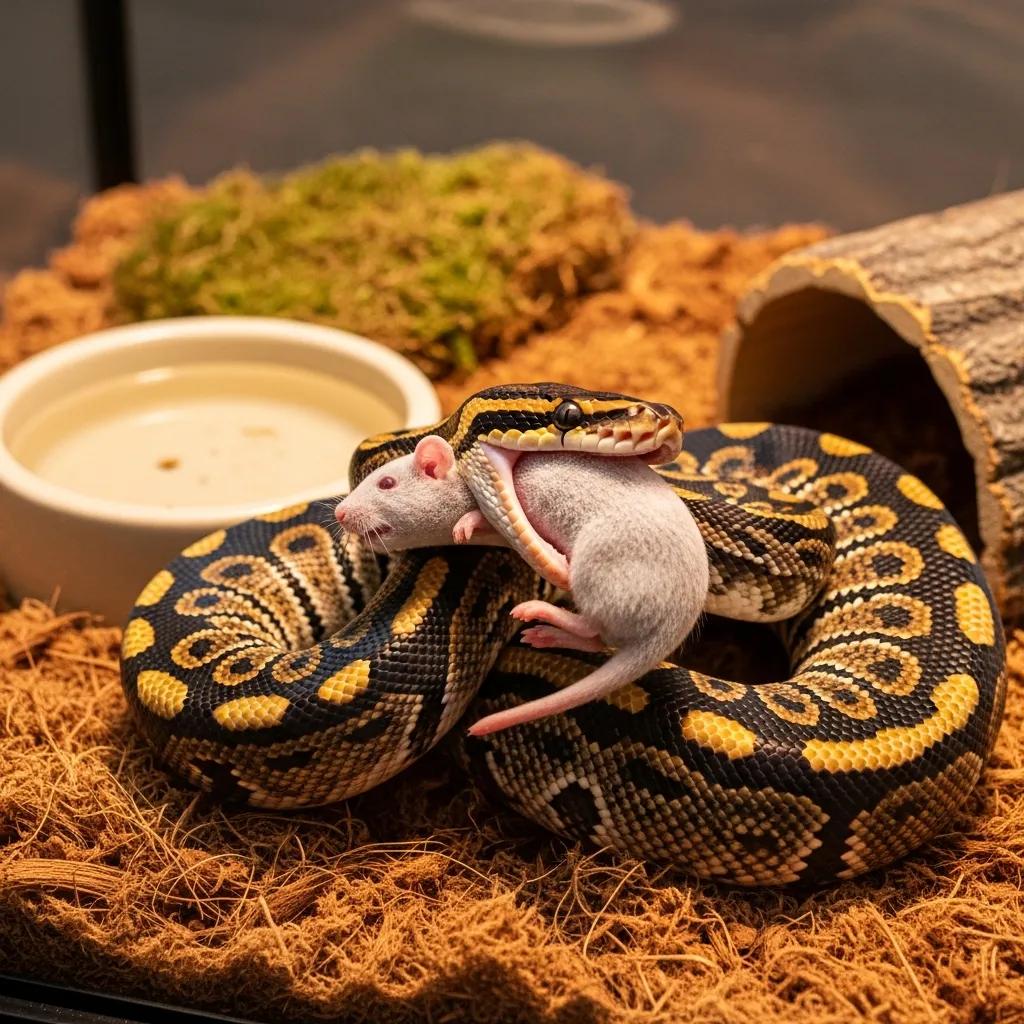
A proper diet and schedule are central to long-term health. Ball pythons eat rodents (mice, rats); frozen-thawed prey is preferred to reduce injury risk. Match prey size to the snake’s girth .
Feeding Schedule
Feed juveniles every 5–7 days and adults every 10–14 days, adjusting for body condition. Monitor weight and reduce frequency if your snake becomes overweight.
Dietary Options
Frozen-thawed rodents are the safest regular choice. Live prey can cause injury and should be used only with caution and experience.
Monitoring Feeding Habits
Track appetite and weight. Short-term refusals are common; prolonged refusal, weight loss, or unusual behavior warrants a veterinary check.
3. Handling
Proper, calm handling reduces stress and builds trust. Prioritize secure support of the snake’s body and avoid startling movements.
Gentle Handling Techniques
Approach calmly, support the snake’s body along its length, and keep sessions short at first. Avoid handling immediately after feeding until digestion is complete.
Signs of Stress
Watch for hissing, striking, tense posture, excessive hiding, or escape attempts. If these occur, reduce handling and check environmental factors .
Building Trust with Your Pet
Trust grows with regular, gentle sessions that are brief and predictable. Handle consistently and reward calm behavior with quiet, low-stress interactions .
4. Enrichment
Enrichment encourages natural behaviours, reduces boredom, and supports activity. Simple, safe changes to the enclosure improve welfare.
Importance of Enrichment
Enrichment reduces stress and keeps your snake active and curious. Even modest additions can prevent lethargy and improve overall wellbeing .
Types of Enrichment Activities
- Hiding Spots : Provide varied hides (warm and cool) to encourage exploration and security.
- Climbing Structures : Include sturdy branches or platforms for brief climbing and exercise.
- Interactive Feeding : Change feeding locations or presentations occasionally to stimulate natural hunting responses.
Creating a Stimulating Habitat
Rotate items periodically and combine different textures and landmarks. Small, safe changes encourage exploration without disrupting core husbandry .
5. Health Monitoring

Regular checks help you detect problems early and seek veterinary care promptly.
Regular Health Checks
Weigh monthly, monitor appetite, inspect shedding for completeness, and look for skin lesions or ticks. Keep records to spot gradual changes.
Common Health Issues
Respiratory infections, mites, and shedding problems are common. Early recognition and treatment improve outcomes.
When to Seek Veterinary Care
See a reptile veterinarian for persistent lethargy, breathing difficulty, discharge, or ongoing shedding failure. Prompt attention usually improves recovery.
Talis Us provides tools and supplies that support routine monitoring.
6. Common Health Issues
Knowing typical signs lets you act quickly: monitor breathing, skin, and behavior so problems are caught early.
Symptoms of Respiratory Infections
Look for wheezing, nasal discharge, and open-mouth breathing—these require prompt veterinary evaluation.
Research has identified novel pathogens, including nidoviruses, as contributors to fatal respiratory disease in ball python collections .
Ball Python Respiratory Disease & Nidovirus Respiratory infections are important causes of morbidity and mortality in reptiles; however, the causative agents are only infrequently identified. Pneumonia, tracheitis and esophagitis were reported in a collection of ball pythons (Python regius). Eight of 12 snakes had evidence of bacterial pneumonia. High-throughput sequencing of total extracted nucleic acids from lung, esophagus and spleen revealed a novel nidovirus. Identification of a novel nidovirus in an outbreak of fatal respiratory disease in ball pythons (Python regius), L Uccellini, 2014
Identifying Parasites
Check for excessive rubbing, visible mites, or unexplained irritation. Suspected infestations should be confirmed and treated by a veterinarian.
Shedding Problems
Maintain appropriate humidity and provide a moist hide or shedding box to help complete sheds and avoid retained eye caps or patches of old skin.
7. Resources
Use reputable suppliers and accurate guidance to support long-term care. Verified products and informed communities reduce common mistakes.
Recommended Suppliers
Choose suppliers experienced in reptile care. Talis Us is one source of specialist reptile supplies.
Useful Care Resources
Trusted online guides and veteran-led forums offer practical advice and troubleshooting; prioritize sources with veterinary input .
Community Support
Local and online reptile groups provide peer support and shared experience, which is useful for troubleshooting and confidence-building .
To supplement your ball python’s diet, consider freeze-dried treats as an occasional, convenient option.
Frequently Asked Questions
What is the best substrate for a ball python’s enclosure?
Common, safe options are aspen shavings, coconut fiber, and paper towels. Aspen and coconut retain humidity better; paper towels are easy to clean and useful for monitoring health. Choose based on humidity goals and ease of maintenance.
How can I tell if my ball python is stressed?
Signs include hissing, striking, excessive hiding, escape attempts, reduced appetite, or unusual activity. If observed, review husbandry and reduce handling until the snake relaxes.
What should I do if my ball python refuses to eat?
First check temperature and humidity. Try varying prey size or presentation (frozen-thawed vs. live). If refusal persists for several weeks or weight falls, seek veterinary assessment .
How often should I clean my ball python’s enclosure?
Spot-clean daily and perform a full clean every 2–4 weeks: replace substrate, disinfect surfaces, and clean the water bowl to limit bacteria and parasites .
Can ball pythons live together in the same enclosure?
Ball pythons are solitary; co-housing can cause stress, fighting, and injury. Housing individuals separately is safer .
What are the signs of a healthy ball python?
Clear eyes, smooth unbroken skin, a steady appetite, regular complete sheds, and a well-proportioned body indicate good health.
How can I provide enrichment for my ball python?
Offer varied hides, safe climbing features, and occasional interactive feeding. Rotate items and textures to keep the enclosure interesting without disrupting core husbandry .
Conclusion
Show original
Consistent, appropriate habitat setup, feeding, handling, and routine health monitoring help ball pythons thrive. Regular enrichment and attention to wellbeing strengthen your bond and support long-term health. Use quality supplies and consult experienced keepers or a reptile veterinarian when needed.