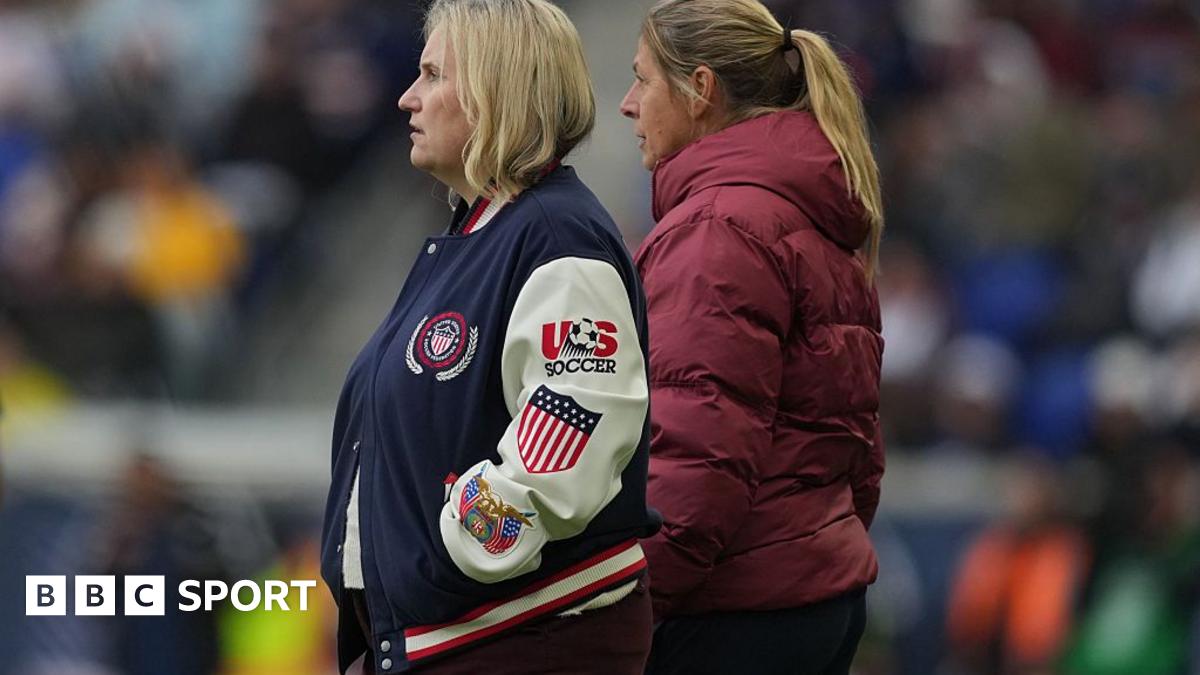

Fifa rules women’s teams must have female coaches on the bench
At the 2023 Women’s World Cup, 12 of the 32 head coaches were female, including England manager Sarina Wiegman.
“There are simply not enough women in coaching today. We must do more to accelerate change by creating clearer pathways, expanding opportunities, and increasing the visibility for women on our sidelines,” said Fifa’s chief football officer Jill Ellis.
“The new Fifa regulations, combined with targeted development programmes, mark an important investment in the current and future generation of female coaches.”
Fifa hopes these new regulations will see a rapid increase in female representation, including at the 2027 Women’s World Cup in Brazil.
Among some of the most high-profile female coaches is London-born Emma Hayes, who is joined by assistant Denise Reddy at the United States.
In 2024, Hayes told BBC Sport that a lack of female coaches in English football is “a massive issue” and urged the game’s administrators to “come up with more creative ways” to address it.
Other female English coaches at international level include Gemma Grainger at Norway, Casey Stoney at Canada and Carla Ward at the Republic of Ireland.
Canadian Rhian Wilkinson led Wales to their first major tournament at Euro 2025 last summer, while Dutchwoman Wiegman has guided England to back-to-back European titles and has been named the Fifa best women’s coach of the year on four occasions.
Wiegman was the only female coach in the quarter-final stage of the 2023 Women’s World Cup.
Speaking at that time, she said: “Of course what we hope is to get more female coaches at the top level and that the balance gets better than it is right now.
“Males are welcome too but if the balance is better than hopefully that will inspire more women to get involved in coaching.”