One male player reported suffering four suspected concussions within a 12-month period at training, while one female reported three. The rate of suspected training concussions for men rose to 27 per cent (up five per cent) and up to nine per cent for women (up two per cent).
Players also reported pressure to keep training despite suffering a suspected concussion, at a rate of 38 per cent for men and 28 per cent for women. Also of concern, 40 per cent of men and 37 per cent of women reported returning to training before getting a medical clearance.
“It will remain a damaging blind spot for the safety of our players and the game more broadly if we don’t make necessary improvements,” Newton said.
The NRL has invested heavily in the Pacific, highlighted by the decision to introduce a PNG team in 2028. The Pacific Championships, won by New Zealand, also captured the imagination of fans ahead of next year’s Rugby League World Cup.
Those developments are timely given that, for the first time in history, players of Pacifica heritage comprise the majority of NRL talent.
“We are incredibly proud of the rich tapestry of cultures that play our game and how strongly our players connect to their families and communities,” Newton said.
“It is very unique in Australian sport. Our region is deeply diverse, with many nations, and we are glad rugby league celebrates what they bring to it.”
Despite the cultural shift, racism and targeted abuse remains an issue; 13 per cent of men experienced targeted abuse, with seven per cent experiencing racism. That’s approximately six players per club. Most of the abuse is experienced online, with 87 per cent of men choosing not to report it.
The biggest names in the NRL earn close to $1.5 million per season under the salary cap, plus endorsements. And given the average salary is close to $400,000, there’s a perception that all rugby league players are well remunerated. However, 51 per cent make less than the average male salary in careers in which 18 per cent play 100 matches or more.

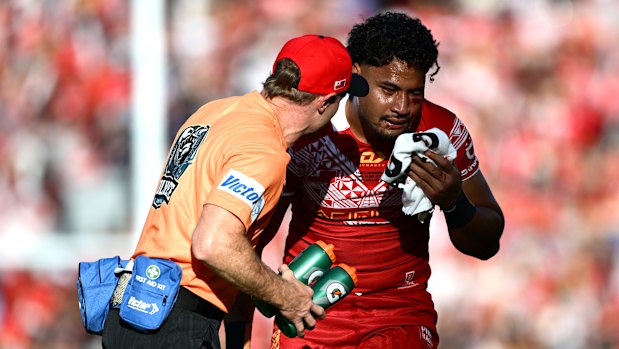
Eli Katoa is helped from the field after a head knock while playing for Tonga.Credit: Getty Images
While 96 per cent of players have engaged a player manager, more than 50 per cent of NRL and NRLW players reported their agent has never negotiated a sponsorship deal for them.
“Agents collectively receive over $15 million per year in fees from players – more than the salary cap of any single NRL club,” Newton said.
“In a salary-capped league, where player earnings are limited, the commercial and sponsorship endorsements must significantly improve. Based on these results, there are not enough agents focused on growing player brands through sponsorship agreements, but instead taking easy money from NRL and NRLW contracts.
Loading
“We view an agent’s responsibility as far more holistic when it comes to serving their player and generating additional revenue from a player’s IP. Many fans would assume all players are topping up their salaries with endorsements, but that is not the case – most players are either trying to do it themselves or not doing it at all.”
While 80 per cent of general population cites money as the main driver for switching jobs, this was only the case for 21 per cent of NRL players (11 per cent of NRLW players) moving clubs. Twenty-one per cent of NRL players revealed they shifted because they were shoulder tapped.
As the women’s game shifts further to professionalism, the survey found NRLW players continue to rely on external income; 89 per cent work in the off season and 87 per cent are engaged in obligations – such as work and study – while playing in-season.