Fujifilm’s X-T30 III takes a body a lot of people already know and pushes it with smarter autofocus, better film simulations, and upgraded video options. If you spend a lot of time juggling stills, clips, and travel, this kind of small camera can change what you carry and when you leave bigger gear at home.
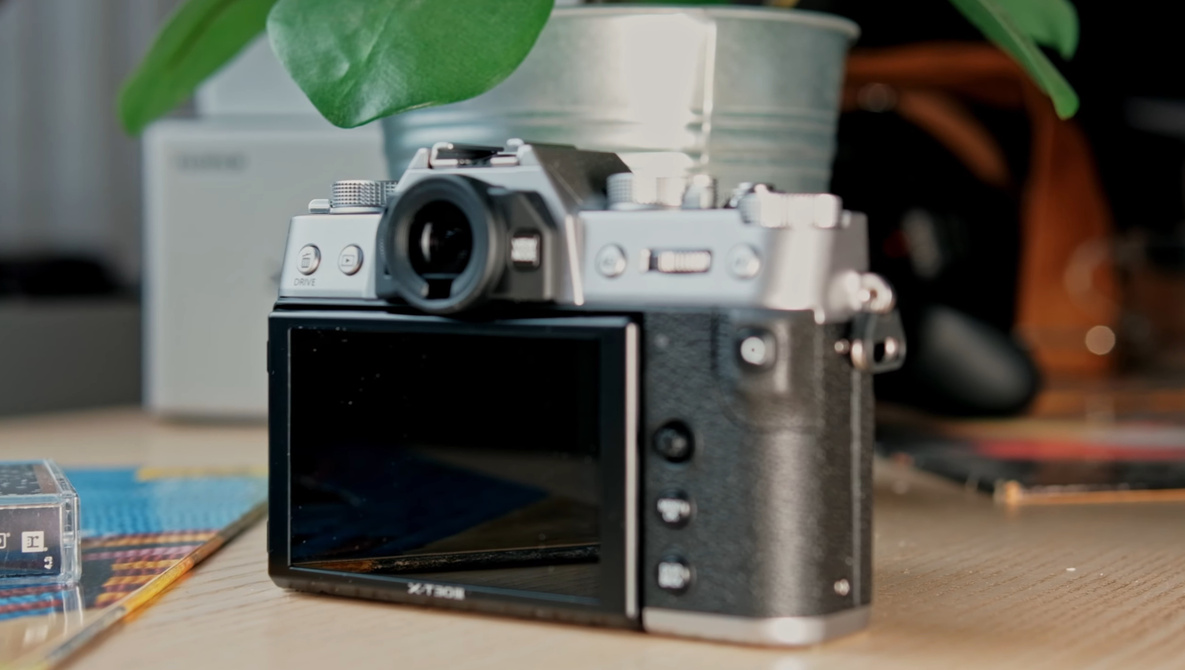
Coming to you from Jacek Sopotnicki, this thoughtful video puts the Fujifilm X-T30 III mirrorless camera in context as a subtle update that quietly changes how it feels in use. Sopotnicki walks through the body and points out that ergonomics are almost identical to the previous model, so you still get the compact rangefinder-style shell, top dials, and joystick that make it quick to work by touch. The new film simulation dial, with FS1, FS2, and FS3 slots, is where things start to feel different, especially if you like building recipes and relying on JPEGs instead of heavy raw editing. He calls out nostalgic film simulation as a standout look, the kind of profile that lets you hand over images with very little tweaking. You also see him appreciate the slightly better battery life from the new processor while still being honest that you should pack two or three batteries for a full day.
Key Specs
26.1-megapixel 23.5 x 15.6 mm APS-C CMOS sensor
Digital image stabilization, plus optical stabilization when using OIS lenses
Native ISO 160 to 12,800, expandable to 80 to 51,200
Mechanical, electronic, and electronic front curtain shutters with speeds up to 1/32,000 second
Continuous shooting up to 20 fps at full resolution (with limits on raw and JPEG buffer)
Internal recording up to 6240 x 4160 at 23.98 to 29.97 fps, plus DCI 4 K, UHD 4 K, and Full HD with frame rates up to 240 fps
10-bit and 12-bit video output over micro-HDMI, including high-resolution stills and multiple video formats
Single SD/SDHC/SDXC (UHS-I) card slot, up to 2 TB capacity
Tilting 3″ touchscreen LCD and OLED electronic viewfinder
Approximate 315-shot battery rating with the included NP-W126S pack
From there, the video shifts into performance rather than specs. Image quality is very familiar if you know the earlier version: same sensor, similar noise pattern, and a dynamic range that stays solid as long as you protect highlights instead of chasing bright exposures. Sopotnicki suggests a slight underexposure bias with this APS-C sensor, since blowing out bright areas gives you less to work with later than lifting shadows. What really changes the camera in practice is autofocus, which he describes as finally reliable instead of something you have to fight. The new processor brings subject detection that can track eyes, animals, motorcycles, cars, and planes without the jittery hunting older bodies were known for, which matters a lot when you are filming yourself or working with moving people. Hearing him compare it to his Fujifilm X-S20, where he often falls back to manual focus for talking-head work, gives you a clear picture of how different the X-T30 III feels in real use.
Video features get just as much attention, especially if you have been waiting for a small Fujifilm body that can punch above its size. Sopotnicki highlights F-Log2 as one of his favorite log profiles and shows how you can pair it with Fujifilm’s LUTs to convert footage into film simulations like Velvia while keeping more dynamic range. He also talks about the 6K open gate 4 x 3 recording with 10-bit capture, treating it as a serious step up for anyone who wants to reframe for vertical and horizontal output from a single clip. At the same time, he is clear that this is still a photo-first design: no in-body stabilization, no dedicated headphone jack (you need a USB-C dongle), and the same tilting screen that makes solo video work awkward if you want to see yourself. The compromises feel intentional, and he hints at where he thinks that trade-off makes sense and where it does not.
The new kit zoom, the Fujifilm XC 13-33mm f/3.5-6.3 OIS, gets a real-world shakeout too, including distortion and sharpness at both ends of the range. At 13mm he notes strong barrel distortion but good central sharpness and corners that are usable once corrected, which suits travel, street, and environmental work. At the longer end the distortion settles down and sharpness stays more even across the frame, so it starts to feel like a flexible everyday lens rather than a throwaway kit option. Sopotnicki also appreciates that Fujifilm has finally dropped the fragile power zoom design and gone back to a manual zoom ring that feels more precise and more durable in daily use. He also touches on price and how the X-T30 III sits as a budget-conscious body that still works for street work, weddings, and casual video. Check out the video above for the full rundown from Sopotnicki.