Film photography has quiet weeks where the news feels like a half-used roll you forgot in a drawer. This wasn’t one of those weeks.
In his November 24 Film Photography News episode, Romping Bronco drops a lineup that actually moves the needle: a new Kodak-branded compact that looks worth loading with real film, the first honest sample frame from the long-teased Analogue aF-1, a restock of a cult-favorite color stock, and fresh toys from Negative Supply for anyone finally ready to break up with their flatbed.
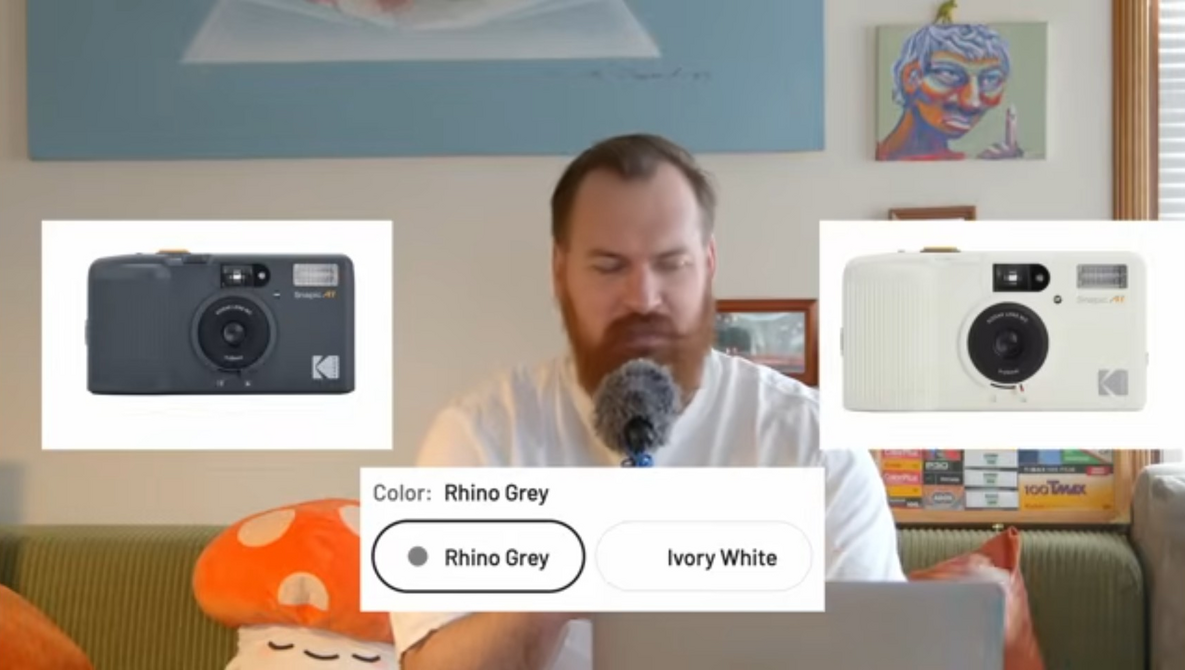
The headliner is Kodak’s Snapic A1. On paper, it’s the kind of camera a lot of us have quietly been hoping for: a 35mm point-and-shoot that uses the full 36×24 mm frame and a simple two-zone focus system—one setting for close-up subjects and one for everything else—so you can keep it simple or trust your instincts more than the camera. There’s even a dedicated double-exposure switch. Bronco walks through the specs, but the real story is tone—this doesn’t feel like another novelty “Kodak” toy. It looks like something you’d actually load with Portra or Gold and take on a trip.
He talks about who this camera is really for: people who want something small and friendly but are tired of disposable camera results. The Snapic A1 isn’t pretending to be a Leica or a Contax resurrection. It’s a gateway drug. You toss it in a backpack, hand it to a friend at a show, let your kid fire off a frame or two, and you don’t flinch. If it holds up in the real world, it might be the camera that bridges the gap between casual shooters and the folks who end up home-developing at midnight.
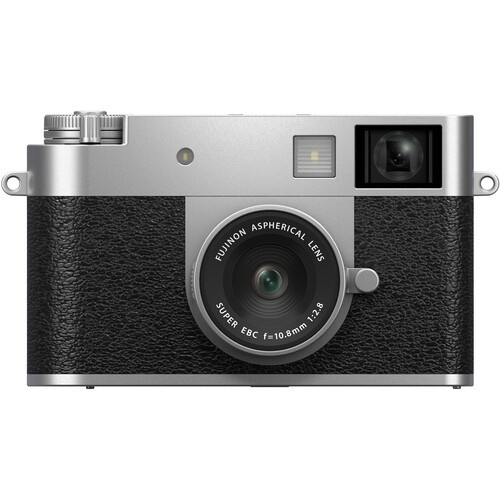
Then he pivots to the Analogue aF-1, a camera that’s lived in rumor territory long enough to become a running joke. A small Dutch team promised a modern premium compact: 35mm f/2.8 lens, Lidar/ToF autofocus, clamshell body, the works. Delivery dates slipped, skepticism grew. This week, we finally see a real portrait shot on a working prototype and get a clearer timeline toward an early 2026 release. One frame doesn’t guarantee anything, but it moves the aF-1 from vaporware to “maybe I should start saving.”
Bronco doesn’t oversell it. He points out the delays, the price tag, the fact that a lot of us already own perfectly good compacts. But he also lingers on that sample frame—a young woman with a gently blurred background—and what it represents. Someone out there is still crazy enough to build a genuinely new autofocus film camera from scratch. In 2025, that alone feels like news.
The film-stock segment belongs to Optik Oldschool’s OptiColour 200, a C-41 daylight color film that has a habit of vanishing every time word gets out. Bronco talks about it the way you talk about a favorite local diner—nothing flashy, just reliable color, friendly latitude, and a look that plays well with both prints and scans. The headline isn’t that it exists; it’s that it’s back in stock, for now. If you’ve ever filled a cart, hesitated, and then come back to find “sold out” where the add-to-cart button used to be, you know exactly why he’s making noise about it.
To round things out, he dives into Negative Supply’s latest camera-scanning gear: updated 35mm carriers that handle everything from half-frame to panoramic, brighter light sources tuned for accurate color, and the Basic Riser MK3 copy stand that looks built to outlive most of our backs. It’s not budget gear, and Bronco doesn’t pretend otherwise. What he does make clear is that if you’re tired of coaxing detail out of an aging flatbed, this is the kind of system that lets your film actually show what it can do instead of what your scanner can’t.
Taken together, this week’s news doesn’t scream “film is back” so much as it quietly proves it never left. New cameras, revived emulsions, and better ways to scan aren’t aimed at nostalgia tourists anymore. They’re for the folks still loading canisters, still squinting at light, still rewinding at the end of the roll. The ones who know that in 2025, shooting film is less about being cool and more about caring enough to do something the slow way, on purpose.