
Fantasy Baseball Today: Week 1 Spring Training updates Fantasy managers should watch closely
Weird things happen in small sample sizes, especially when a given player might be facing as many minor-leaguers as not throughout the spring. This is why we always say around this time of year that Spring Training doesn’t matter.
But that’s not actually true. Spring Training is when players get to experiment with new skills in competitive action, which can make judging performance tough. But Spring Training is also where top prospects are fighting for their spots on the team and where players on the bubble of Fantasy relevance can push themselves onto our radars with their performance.
You shouldn’t worry too much about production during the spring, of course, but there’s a whole lot else we’ll find out between now and Opening Day that definitely matters. Or, at least, probably matters. You just have to know what to look for, and in today’s newsletter, I’m giving you the roadmap.
Here are six types of news stories I’ll be keeping my eyes out for in the spring:
- Injuries
- Velocity Readings
- New Pitches
- Lineup News
- Position Battles
- Prospects Gaining Hype
Let’s go through each one to explain why they matter, roughly in order of importance, followed by some thoughts on some of the biggest spring storylines so far and whether they are real or not:
What matters in Spring Training
Injuries
This one goes without saying: Injuries are bad. A player who isn’t available can’t help your Fantasy team, obviously, though that is less of a concern right now than it will be when we get closer to the season — a four-week injury right now might still leave time for players to get ready. Seeing Cam Schlittler dealing with a back injury when he first started throwing in camp wasn’t a total non-concern, but given how far it happened from Opening Day, it never seemed like it was going to impact his availability. And it still doesn’t.
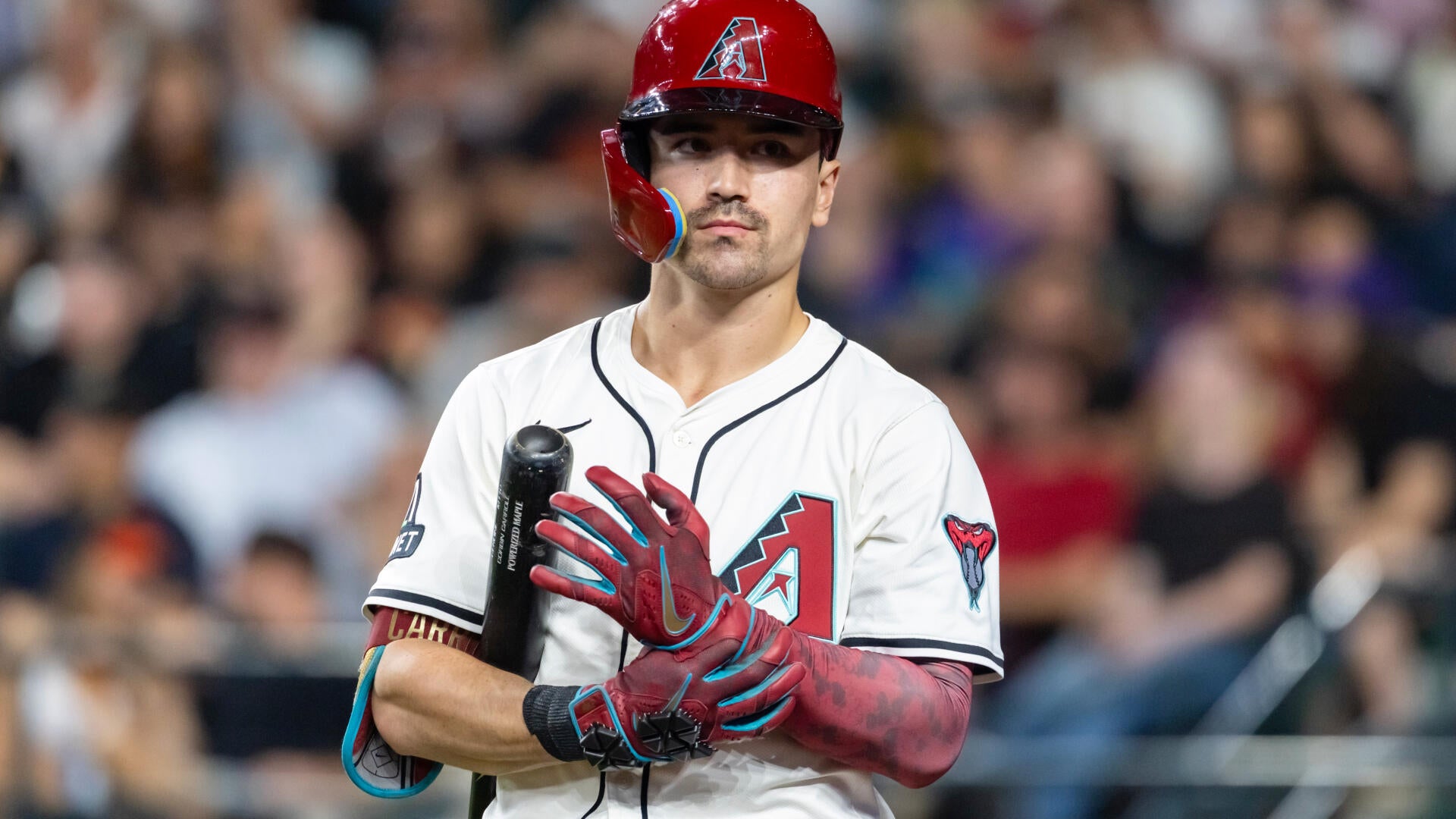
But even players who might be ready for Opening Days should still be discounted for spring injuries. I’m thinking of Corbin Carroll and Francisco Lindor, who will be working their way back from hamate bone surgeries and could potentially be ready for Opening Day. However, if they are, they’re unlikely to see anything close to a full complement of Spring Training at-bats, leaving them at risk of a slow start that could snowball into a wrecked season.
And then we have players like Zack Wheeler (Thoracic Outlet surgery) and Gerrit Cole (Tommy John surgery) who are spending their springs rehabbing from offseason surgeries. Cole is actually already pitching in competitive batting practice sessions, with reports indicating his velocity was already comfortable in the mid-90s, a good sign with a still lengthy rehab process ahead of him. We haven’t seen Wheeler pitch yet, but getting info from a Grapefruit League game would at least get us on the road to knowing what kind of state he’s in. Until we see that, Wheeler looks like a totally unknown entity.
The most concerning injury situation so far? Jordan Westburg, who entered camp with an oblique injury, was subsequently diagnosed with a torn UCL in his right elbow. He’s trying to rehab the injury, but it looks like he’ll miss at least all of spring and the first month of the season, and potentially a lot more than that. He’s just a late-round flier in all Fantasy leagues at this point.
Velocity readings
There are two things I want to say about velocity in particular:
- Velocity jumps early in the spring are more noteworthy than velocity drops.
- Just because a pitcher’s velocity is different from what is expected right now does not necessarily mean it will matter come the regular season.
Velocity drops seem concerning, and sometimes they are. But pitchers are often building up their arm strength at this point in the spring, and many will consciously throw at lower stress while they are building up. Knowing when a pitcher is just building up vs. showcasing early warning signs of an injury is, unfortunately, basically impossible, and it’s usually best not to react too much, especially early in camp.
On the other side of the ledger, we do love to see pitchers throwing hard. It isn’t a cure-all for every pitcher, but all other things being equal, throwing harder is better. Which is why it was so interesting to me to see Braxton Garrett reportedly hitting 95 mph in a bullpen session early in spring. He’s coming off Tommy John surgery, so there is some risk of overdoing it too early. But Garrett has been a pretty solid MLB pitcher while maxing out around 93 mph; if he’s really adding two ticks coming off surgery, it suddenly makes another pretty boring streamer type at least worth a second look.
The thing to keep in mind is that while more velocity is typically better, it isn’t a static thing. Throwing with more or less velocity in February doesn’t mean that’s a new baseline. Players might be working on things besides velocity in bullpen sessions, or even during spring games; alternatively, some pitchers may choose to air it out a bit more, knowing they’re throwing in shorter sessions. We’ll note when velocity is notably lower or higher, but it will rarely fundamentally change how we view a player.
New pitches
The same goes for new pitches. It’s worth noting when a pitcher adds a new pitch, especially when it’s a pitcher with a relatively limited arsenal like Chase Burns or a lack of swing-and-miss upside like Sandy Alcantara. Burns is working to reintegrate his changeup, while Alcantara is working on a sweeper to give himself one more weapon to put hitters away with; both are addressing limitations in their games, but it would be a mistake to assume either is likely to turn into a game-changing weapon overnight.
Here’s the thing: Even when a pitcher adds a new pitch, and even if that pitch sticks in their arsenal, and even if that pitch is a very good one, it might not be enough to dramatically alter their outlook. Even if the pitches themselves rate out well! Bryce Miller has spent his time in the majors experimenting with all kinds of different breaking balls, but despite good marks from the various Stuff+ models, he has never really developed a true plus breaking ball because of the way they interact with the rest of his arsenal.
And then there’s this: Everyone is working on new pitches these days. If they aren’t new pitches, they are experimenting with grip tweaks to try to become the best possible versions of themselves. When I was growing up watching baseball, most pitchers just kind of had the same three or four pitches for their entire careers; now, guys will show up to Spring Training with entirely new arsenals, and pretty much everyone has a different approach for left-handed hitters vs. righties. Even three or four years ago, a pitcher working on a new pitch in spring was news; now, it’s almost expected.
Lineup news
It’s possible to overreact to lineup news in spring training, especially when it comes to spring lineups – is a player batting leadoff in the exhibition games because that’s where he is going to hit when the season starts, or is it because the team wants to get him as many game reps as possible? It’s not always clear from the outside.
That being said, lineup position matters quite a bit. The difference between hitting leadoff and hitting fifth in the lineup might be worth 75 plate appearances over the course of a season on a good team; the difference between leadoff and the ninth spot might be 150-plus!
One thing to keep in mind with these discussions, of course, is that lineups are just snapshots of where a team is at any given point in time. Just because a player starts the season as a leadoff hitter doesn’t mean they’ll stay there; they still have to hit well to keep the spot, and most teams will go through many different variations of lineup throughout the season. But, all else being equal, you’d rather see a guy trending for a top-of-the-lineup spot in spring.
Position battles
This is an obvious one, and there are position battles to watch across both hitters and pitchers. Scott White highlighted the 25 biggest position battles to know heading into spring, and here’s a sampling of some of the most important ones:
We’ll be covering these throughout the spring, and it doesn’t make too much sense to come down on one side or the other too hard — we’ll take the discounts uncertainty can bring!
Prospects gaining hype
It’s not always the ones you expect. Last season, Nick Kurtz was a total afterthought during Fantasy drafts, while Drake Baldwin was a late-round sleeper but not someone everyone was pounding the table to draft in leagues, and they went on to win Rookie of the Year. It’s a little early to identify which prospects are actually helping their standing, but we’ll obviously be keeping a very close eye on Griffin, McGonigle, and JJ Wetherholt as they try to lock up starting jobs. I’ll say right now, I expect to see two of them in Opening Day lineups, at least.