Think you know everything about photography? From the hidden math behind your files to bizarre legal battles over monkey selfies, these facts reveal the fascinating technical quirks and strange history that most photographers never learn.
1. Your F-Stop Is a “Lie” and T-Stops Are the Truth
When you see an f-stop marking like f/2.8 on a lens, that number represents a calculated relationship between how long the lens is and how wide its opening is. It’s geometry on paper, nothing more. A T-stop (or “Transmission-stop”) is the actual, measured amount of light that makes it through all those glass elements and out the back of the lens.
This is why two different 50mm f/1.8 lenses can produce slightly different exposures. One might have simpler optics with better light transmission, while the other has more complex elements that absorb more light. For still photographers, this difference is small enough that we don’t usually worry about it. But in cinema, where you’re cutting between multiple cameras and lenses, perfect consistency is critical. This is why cinema lenses are typically measured and marked in T-stops rather than f-stops. When a cinema lens says T2.8, you know exactly how much light is hitting the sensor, regardless of which lens you’re using. For the record, depth of field is unaffected by transmittance.
2. Your Camera Sensor Only Sees in Black and White
Here’s a fact that surprises many photographers: the pixels on your sensor (called photodiodes) are completely “color blind.” They can only measure the quantity of light hitting them, not its color or wavelength. So how does your camera produce color images?
The solution in most digital cameras is a color filter array (usually a Bayer pattern), a microscopic grid of red, green, and blue filters placed directly over the sensor. Every pixel gets exactly one filter placed on top of it (either red, green, or blue), limiting that photosite to detecting only a single wavelength range. The camera’s image processor then performs “de-mosaicing,” a computational process that interpolates these separate color readings into full-color pixels. It’s essentially making an educated guess about what colors should be in each spot based on the surrounding filtered pixels. The better the algorithm, the more accurate the final color.
3. There Are Twice as Many Green Pixels on Your Sensor
The Bayer pattern isn’t an even split of red, green, and blue. The standard arrangement groups four photosites together: two dedicated to green, with the remaining two split between red and blue. That means 50% of your sensor is dedicated to capturing green light.
Why the green bias? Because human vision is most sensitive to wavelengths in the green part of the spectrum. Our eyes evolved to be particularly good at distinguishing different shades of green, probably because our ancestors needed to spot predators hiding in foliage and identify edible plants. By dedicating half the sensor’s pixels to green, camera manufacturers produce images that look cleaner and more detailed to our eyes. The green channel also typically carries the most luminance information, making it critical for perceived sharpness.
4. The Word “Bokeh” Was Popularized by a Photo Magazine Editor
The Japanese word boke (暈け) means “blur” or “haze,” and Japanese photographers had been using it for decades to describe out-of-focus areas in photographs. But it wasn’t part of the English photography vocabulary until 1997, when Mike Johnston, the editor of Photo Techniques magazine, introduced the anglicized spelling “bokeh” in an article.
Johnston argued that the English word “blur” was too generic and didn’t capture the specific aesthetic quality of out-of-focus rendering. He added the “h” to the spelling to encourage English speakers to pronounce it correctly (boh-keh, not boh-k). The term caught on quickly in the photography community and is now a permanent part of the global photography lexicon. Today, lens reviews routinely evaluate bokeh quality, and it’s become a major selling point for portrait and telephoto lenses.
5. A Monkey Cannot Legally Hold a Copyright
This might sound absurd, but it was actually settled in federal court. In the famous “Monkey Selfie” case (Naruto v. Slater), wildlife photographer David Slater was using a camera on a tripod in Indonesia when a crested macaque named Naruto grabbed it and took several selfies, including some now-famous grinning shots.
When Slater published the photos, PETA sued on behalf of the monkey, arguing that Naruto owned the copyright to the selfies. The legal battle went on for years and eventually reached the Ninth Circuit Court of Appeals, where the court held that the Copyright Act only extends to “works of authorship” by human beings, and that animals lack statutory standing to claim copyright ownership. The ruling was narrow in scope, focused on whether an animal could be a plaintiff in a copyright case, not necessarily resolving every possible question about non-human created works. The case remains a fascinating intersection of copyright law, animal rights, and the question of authorship in an increasingly automated world.
6. The JPEG Is Named After the Committee That Created It
You’ve probably saved thousands of JPEG files without ever thinking about what the acronym stands for. “JPEG” (or “JPG,” which is just the shortened DOS-era filename) doesn’t describe the technology. It’s an acronym for the “Joint Photographic Experts Group”, the committee of engineers and academics who created the compression standard back in 1992.
The committee continues to exist and has developed other standards like JPEG 2000 and JPEG XL. The original JPEG format became so successful because it could dramatically reduce file sizes with minimal visible quality loss, making it perfect for the early internet. The compression works by dividing the image into 8×8 pixel blocks and using mathematical transformations to discard information that the human eye is less likely to notice. That’s why heavy JPEG compression creates those characteristic blocky artifacts.
7. The Name “Leica” Is a Portmanteau
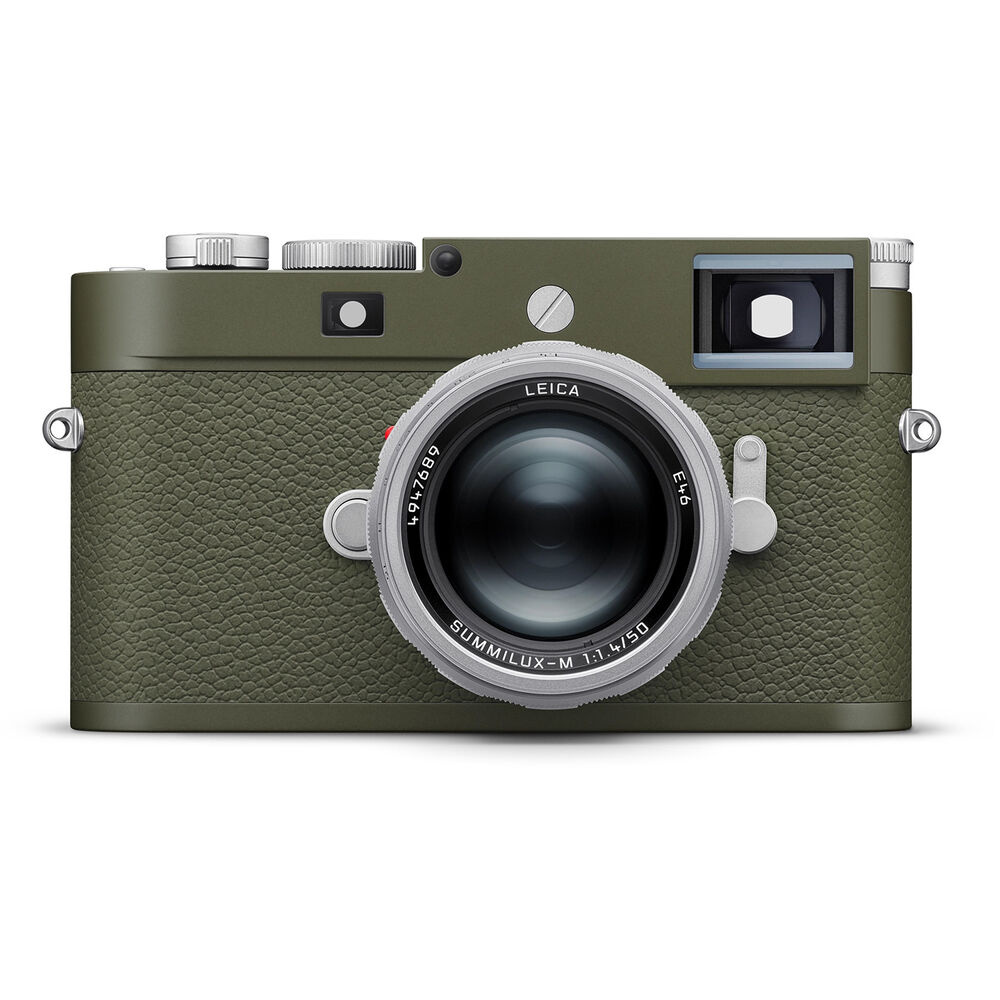
The iconic German camera brand has one of the most elegant names in photography, and it’s actually a combination of two words. Leica comes from the founder’s company name and the product itself: Leitz (the optics company founded by Ernst Leitz) plus Camera equals Lei-Ca.
The first Leica camera, the Leica I, was released in 1925 and revolutionized photography by making 35mm film practical for serious work. Before Leica, 35mm film was considered a motion picture format, and serious photographers used much larger cameras. The compact Leica allowed for street photography and photojournalism in ways that had never been possible before. The name stuck, and today Leica is synonymous with precision German optics and eye-watering price tags.
8. The Math of Bit Depth (Why Your Raw Files Are So Big)
When photographers talk about “bit depth,” they’re describing how many shades each color channel (red, green, and blue) can record. The difference between bit depths isn’t just additive. it’s exponential, and the numbers get massive very quickly.
- 8-bit (JPEGs): 2^8 = 256 shades per channel. Total colors: 256 × 256 × 256 = 16.7 million colors.
- 10-bit (HEIF): 2^10 = 1,024 shades per channel. Total colors: 1,024 × 1,024 × 1,024 = 1.07 billion colors.
- 12-bit (many raws): 2^12 = 4,096 shades per channel. Total colors: 4,096 × 4,096 × 4,096 = 68.7 billion colors.
- 14-bit (some raws): 2^14 = 16,384 shades per channel. Total colors: 16,384 × 16,384 × 16,384 = 4.4 trillion colors.
- 16-bit (TIFF and high-end raws): 2^16 = 65,536 shades per channel. Total colors: 65,536 × 65,536 × 65,536 = 281 trillion colors.
This massive difference is a big part of why you can recover “lost” shadows from a raw file that would be a solid block of black in a JPEG. The raw file is capturing thousands of subtle gradations in those dark areas that the JPEG simply doesn’t have the bit depth to record. It’s also why editing an 8-bit JPEG too aggressively creates banding and posterization, where smooth gradients break into visible steps. There simply aren’t enough shades to maintain smooth transitions after aggressive adjustments.
9. The First Mirrorless Interchangeable Lens Camera Was an Epson
Yep, Epson. Long before Sony’s a7 series or the Panasonic Lumix cameras, the first-ever mirrorless interchangeable-lens digital camera was the Epson R-D1, released in 2004. Yes, that Epson, the printer company.
The R-D1 was a digital rangefinder with a Leica M-mount, an APS-C sensor, and one of the most peculiar designs in camera history. It had a manually cocked shutter that you had to “wind” with a lever, just like a film camera, even though it was completely digital. The camera used an actual mechanical focal-plane shutter that required manual cocking, which Epson and Cosina embraced as a design feature rather than trying to hide. The camera was manufactured by Cosina (who also makes Voigtländer lenses) and cost around $3,000. It was quirky, expensive, and arrived years before the market was ready for mirrorless cameras. But it was technically the first, beating Panasonic’s Lumix DMC-G1 by four years.
10. The First Digital Camera (1975) Took 23 Seconds to Record a Photo to a Cassette Tape
The first digital camera was built by Kodak engineer Steve Sasson in 1975, and it was nothing like the sleek devices we use today. It was an 8-pound contraption the size of a toaster that captured 0.01-megapixel (100×100 pixel) black-and-white images. But here’s the wildest part: the digital data wasn’t stored on any kind of memory card. It was recorded onto a standard audio cassette tape, the same kind you’d use to record music.
The recording process took 23 seconds per image. To view the photos, you had to remove the cassette, put it into a custom playback device, and display the image on a television screen. The whole process took nearly a minute from capture to viewing. When Sasson demonstrated his prototype to Kodak management, their response was less than enthusiastic. They couldn’t see why anyone would want to take pictures without film. Of course, Sasson’s invention would eventually destroy the film industry, including the company that paid him to create it. The camera is now in the Smithsonian, a monument to both innovation and corporate shortsightedness.